Ruth 1-2
My story is not yet over,
I am still here today
in other people who cross your way -
do you see me?
I am the widow who's lost everything.
I am the foreigner - different and strange.
I am the immigrant in a strange new world.
I am the refugee, left homeless suddenly.
I am the mourning one, uncomforted.
I am your neighbour,
waiting for your love,
wanting to be your friend.
Will you, like Boaz, welcome me,
invite me, accept me, help me?
Will you meet me with words of love,
of blessing,
and be a neighbour to me?
I want
your land to be my land -
will you help me?
_______________________________________________________________________
[May 2012]
Ruth was a Moabite, a foreigner. She had lost everything except for her
mother-in-law. What I admire about her is how, despite having
experienced so much trouble herself, she gave everything to help Naomi,
her mother-in-law. But another thing her story impressed on me was how
there's still many Ruths (not only women but also men) around us today.
Foreigners, people who have had hard experiences, people who have lost
everything, people who are trying to adapt to a new country.
So
often, the reaction to foreigners is xenophobia. People are always
complaining about immigrants and foreigners, here in Europe the
far-right are harping on and on about "islamisation" and acting very
coldly towards foreigners, especially Muslims, instead of showing them
love and acceptance.
As a Christian I believe we are meant to meet foreigners - whatever their background, race, or religion - with love and acceptance. It's what Jesus would do. It's what Boaz did to Ruth - a woman from a country which had often been the enemy of his!
Look
around you: are there any Ruths there? People who have been displaced,
who are new in the area and still can't find the post office on their
own, who have trouble with the language, who have a troublesome past
behind them and need comfort, who are waiting for you to give them love
and be their friend?
The story of Ruth is not just a story about a
woman who lived long ago that we can read and think "nice story" and
then put it down again. It should make us think today, it should make us
realise what people around us, especially immigrants, foreigners,
refugees, are going through and how we can help them.
Read Ruth 1-2
Take a look at how Boaz treats Ruth.
Where is there a Ruth today whom you can be a Boaz to?
I wrote this simultaneously in German and English, so as to use the German for a mini-sermon back in '12. Can't find the "decent" German one though, only the scrappy version, so... tut mir leid! :( Vielleicht taucht's noch auf...
05 March 2014
03 March 2014
Orpah: Over
Ruth 1

Over.
It is over.
And I am alone.
Those days with you
turn into dust,
fade away
into cold spaces
where you used to be.
Our hopes, our plans,
like dead leaves fly
and I am left
alone.
Every memory
is a knife to my heart -
little things,
little words,
attacking me
when I least expect it,
paralysing me.
I want to forget -
I don't want to forget -
I want to stay
in this space you've left behind,
before your warmth fades away -
and yet I want to leave.
Can I turn my back
on all these years,
go back to the start,
like waking from a dream?
Can I run home
like a little girl,
cry myself out,
dry my tears
and begin again?
Or shall I walk this stony road
to its bitter end,
get used to this knife
digging deep in my chest,
trust in your God
to give me another chance,
trust it's not over yet?
No.
It is over.
I want to go home.
_____________________________________________________________________________
[24. Feb 2014] [during Philosophy class ;)]
Orpah was Ruth's sister-in-law. Both lost their husbands. Their mother-in-law Naomi gave them the option - no, even pressed them - to go back home. Orpah obeyed and went home - Ruth insisted on staying by Naomi's side. In Sunday school I think we often hear that Ruth made the better, more godly choice by staying with Naomi, and Orpah, who disappears for the rest of the story, is seen more negatively. Perhaps she should have stayed with Naomi. What makes Ruth's choice good and admirable is her insistence on loyalty, staying loyal to Naomi even though it meant probably never getting a chance to marry again. Being a widow in those days wasn't easy; Naomi and Ruth were practically destitute without a man to fend for them. Orpah returned to her home, and by doing so probably had a better chance of finding another husband.
Ruth is the one we look upon (rightly) as good example in this story - and yet that doesn't mean what Orpah did was full-out wrong. But the options the two of them had show us a bit what it was like to be a widow back then: how you could either go home and start again, or stay with your in-laws' family and have less chances. Ruth in the end was rewarded for taking the harder road.
Nowadays in many parts of the world (but not all - that we must remember too!) women without husbands have better chances than back then. Still, losing someone is absolutely not easy and one can be placed before a similar choice Orpah and Ruth had, with how to deal with what is past and what lies before. I tried to illustrate that moment of decision here.
Usually when this scene is illustrated, you see Ruth clinging to Naomi, while Orpah moves away, sometimes in the distance (e.g. this one by William Blake). I chose the picture you see here in the end, because it's a rare one where you see the three women together, before going their separate ways. I don't think we can say Orpah loved Naomi any less.

Over.
It is over.
And I am alone.
Those days with you
turn into dust,
fade away
into cold spaces
where you used to be.
Our hopes, our plans,
like dead leaves fly
and I am left
alone.
Every memory
is a knife to my heart -
little things,
little words,
attacking me
when I least expect it,
paralysing me.
I want to forget -
I don't want to forget -
I want to stay
in this space you've left behind,
before your warmth fades away -
and yet I want to leave.
Can I turn my back
on all these years,
go back to the start,
like waking from a dream?
Can I run home
like a little girl,
cry myself out,
dry my tears
and begin again?
Or shall I walk this stony road
to its bitter end,
get used to this knife
digging deep in my chest,
trust in your God
to give me another chance,
trust it's not over yet?
No.
It is over.
I want to go home.
_____________________________________________________________________________
[24. Feb 2014] [during Philosophy class ;)]
Orpah was Ruth's sister-in-law. Both lost their husbands. Their mother-in-law Naomi gave them the option - no, even pressed them - to go back home. Orpah obeyed and went home - Ruth insisted on staying by Naomi's side. In Sunday school I think we often hear that Ruth made the better, more godly choice by staying with Naomi, and Orpah, who disappears for the rest of the story, is seen more negatively. Perhaps she should have stayed with Naomi. What makes Ruth's choice good and admirable is her insistence on loyalty, staying loyal to Naomi even though it meant probably never getting a chance to marry again. Being a widow in those days wasn't easy; Naomi and Ruth were practically destitute without a man to fend for them. Orpah returned to her home, and by doing so probably had a better chance of finding another husband.
Ruth is the one we look upon (rightly) as good example in this story - and yet that doesn't mean what Orpah did was full-out wrong. But the options the two of them had show us a bit what it was like to be a widow back then: how you could either go home and start again, or stay with your in-laws' family and have less chances. Ruth in the end was rewarded for taking the harder road.
Nowadays in many parts of the world (but not all - that we must remember too!) women without husbands have better chances than back then. Still, losing someone is absolutely not easy and one can be placed before a similar choice Orpah and Ruth had, with how to deal with what is past and what lies before. I tried to illustrate that moment of decision here.
Usually when this scene is illustrated, you see Ruth clinging to Naomi, while Orpah moves away, sometimes in the distance (e.g. this one by William Blake). I chose the picture you see here in the end, because it's a rare one where you see the three women together, before going their separate ways. I don't think we can say Orpah loved Naomi any less.
24 February 2014
Delilah: The Secret of your Weakness
Judges 16
Did they not warn you,
o Man,
that woman is dangerous?
Did they not tell you
she would lure you into her web,
wrap you round her little finger,
conquer you to be her slave?
Did they not warn you,
o Man?
But you thought yourself strong,
and thought womankind weak.
You thought you conquered me,
thought you possessed my heart,
thought I was yours,
trembling in your hand.
Did they not warn you,
o Man?
Tell me, o Man,
the secret of your strength,
and I will tell you
the secret of my weakness.
Tell me, o Man -
let it slip
like honey from your lips,
like the kisses you give
unsparingly -
they prove nothing,
they cannot prove your love.
Tell me, o Man,
if you truly love me,
the secret of your strength.
Did they not warn you,
o Man?
You thought yourself strong -
but you are weak.
You thought me weak -
but I am strong.
You thought you had me captured,
but I had captured you,
ensnared you in my web,
wrapped around my little finger.
You thought my heart
was trembling in your hand -
now you are trembling under mine,
stripped of your power.
O Man,
did they not warn you?
This is the secret
of your weakness:
that you forgot
the secret of your strength.
__________________________________________________________________________
[January 2013]
Don't overestimate yourself.
Don't underestimate women.
And be careful of anyone saying "you don't love me if you don't do (...)". It's what finally made Samson snap and tell Delilah his secret.
Though I think Samson's biggest mistake was that he overestimated himself and forgot that God gave him his strength, and that it didn't just grow on him with his hair. Growing his hair was a sign of belonging to God - by giving himself to Delilah he actually left that calling already, in a way.
The very last bit used to be "you forgot / the secret of my strength" - I changed it today (24. Feb 2014) because I think Samson was not only underestimating Delilah, but not estimating with God.
I must confess I had fun writing this. ;-)
Did they not warn you,
o Man,
that woman is dangerous?
Did they not tell you
she would lure you into her web,
wrap you round her little finger,
conquer you to be her slave?
Did they not warn you,
o Man?
But you thought yourself strong,
and thought womankind weak.
You thought you conquered me,
thought you possessed my heart,
thought I was yours,
trembling in your hand.
Did they not warn you,
o Man?
Tell me, o Man,
the secret of your strength,
and I will tell you
the secret of my weakness.
Tell me, o Man -
let it slip
like honey from your lips,
like the kisses you give
unsparingly -
they prove nothing,
they cannot prove your love.
Tell me, o Man,
if you truly love me,
the secret of your strength.
Did they not warn you,
o Man?
You thought yourself strong -
but you are weak.
You thought me weak -
but I am strong.
You thought you had me captured,
but I had captured you,
ensnared you in my web,
wrapped around my little finger.
You thought my heart
was trembling in your hand -
now you are trembling under mine,
stripped of your power.
O Man,
did they not warn you?
This is the secret
of your weakness:
that you forgot
the secret of your strength.
__________________________________________________________________________
[January 2013]
Don't overestimate yourself.
Don't underestimate women.
And be careful of anyone saying "you don't love me if you don't do (...)". It's what finally made Samson snap and tell Delilah his secret.
Though I think Samson's biggest mistake was that he overestimated himself and forgot that God gave him his strength, and that it didn't just grow on him with his hair. Growing his hair was a sign of belonging to God - by giving himself to Delilah he actually left that calling already, in a way.
The very last bit used to be "you forgot / the secret of my strength" - I changed it today (24. Feb 2014) because I think Samson was not only underestimating Delilah, but not estimating with God.
I must confess I had fun writing this. ;-)
21 February 2014
Jephthah's Daughter: No Ram For Me
Judges 11:30-40
Where is the ram caught in the bush?
Where is the angel to sweep me away?
I'll accept it, let it happen
if you don't stay his hand -
but tell me this: why
is there no ram for me?
So many things I'm going to miss.
I cry for the man I never will meet,
the first kiss that I'll never know,
his touch I'll never feel;
it is too late now -
and there's no ram for me.
Sometimes I've wondered how it feels
in the arms of a man. I used to dream -
only daydreams. Or was it wrong?
But now I'll never know.
They go up in smoke,
for there's no ram for me.
Is it because I am a girl?
No link in the chain of greater events?
Nothing special, no mother blessed,
no daughter of promise;
not special enough
to have a ram for me?
So a child will walk through fire,
and you don't let it stop - oh God, why not?
There's nothing here to save me now,
no lightning, no angel,
no voice from above,
and there's no ram for me.
But soon I'll be with you, safe and at peace
in the arms of the God I don't understand
most of the time - like now.
I will love you nonetheless,
and trust and hope that you know best
and have your reasons which I cannot see.
I'll swallow down my wishes,
forget all my regrets -
let it happen, and when it's through
the first thing that I'll ask of you
is: why
was there no ram for me?
__________________________________________________________________________
[December 2011] [Commentary February 2014]
The ram refers to the sacrifice of Isaac (Genesis 22). God asked Abraham to sacrifice Isaac, but in the last minute provided a ram to sacrifice in Isaac's stead - a beautiful image of what later happened with Jesus taking our place on the cross. But why did Jephthah's daughter not get rescued in that way?
I also had to think of this verse: "You shall not worship the LORD your God in that way, for every abominable thing that the LORD hates they have done for their gods, for they even burn their sons and their daughters in the fire to their gods." (Deuteronomy 12:31) - did God even want Jephthah to make such a sacrifice? (Hint: no.)
Jephthah found himself before an alternative: my child, or my God. I believe that was a false alternative. Are we understanding God correctly, if we get the feeling we have to hurt others in order to please him? The pharisees also thought they were pleasing God by getting rid of Jesus. I believe at the Cross God clearly showed: This is not how it's done. God is on the side of the suffering - because He suffered like them, with them, for them, on the Cross. There He also showed that He does not take pleasure at the brutal things done in His name. Because if we keep doing such things, at some point we kill God Himself - that's what the pharisees ended up doing.
What about Jephthah's daughter? Maybe she did not understand why God was letting this happen to her. Sometimes there is no explanation. Maybe there is no purpose (just read Job)! Sometimes the reasons God allows things to happen just really remains a mystery and we can't understand. Two child sacrifices in the Bible: one He stops, one He doesn't. Why? Judges paints us a picture of a world without God. Israel becomes worse and worse throughout the book. Judges is a criticism of society. None of the terrible things happening in Judges are therefore "endorsed" by God. At least we can be sure of this much. Sometimes God lets us do our thing - and reap the consequences. Jephthah's daughter suffered not because God did not care but because people are terrible.
I do think God gave an answer to the question, "Where is the ram?" though: on the Cross. Because Jesus became like Jephthah's daughter, suffering at the hands of people who thought they were doing God a service by killing Him, and in that showed that this is not right, and that He is on the side of those innocently and needlessly suffering.
Where is the ram caught in the bush?
Where is the angel to sweep me away?
I'll accept it, let it happen
if you don't stay his hand -
but tell me this: why
is there no ram for me?
So many things I'm going to miss.
I cry for the man I never will meet,
the first kiss that I'll never know,
his touch I'll never feel;
it is too late now -
and there's no ram for me.
Sometimes I've wondered how it feels
in the arms of a man. I used to dream -
only daydreams. Or was it wrong?
But now I'll never know.
They go up in smoke,
for there's no ram for me.
Is it because I am a girl?
No link in the chain of greater events?
Nothing special, no mother blessed,
no daughter of promise;
not special enough
to have a ram for me?
So a child will walk through fire,
and you don't let it stop - oh God, why not?
There's nothing here to save me now,
no lightning, no angel,
no voice from above,
and there's no ram for me.
But soon I'll be with you, safe and at peace
in the arms of the God I don't understand
most of the time - like now.
I will love you nonetheless,
and trust and hope that you know best
and have your reasons which I cannot see.
I'll swallow down my wishes,
forget all my regrets -
let it happen, and when it's through
the first thing that I'll ask of you
is: why
was there no ram for me?
__________________________________________________________________________
[December 2011] [Commentary February 2014]
The ram refers to the sacrifice of Isaac (Genesis 22). God asked Abraham to sacrifice Isaac, but in the last minute provided a ram to sacrifice in Isaac's stead - a beautiful image of what later happened with Jesus taking our place on the cross. But why did Jephthah's daughter not get rescued in that way?
I also had to think of this verse: "You shall not worship the LORD your God in that way, for every abominable thing that the LORD hates they have done for their gods, for they even burn their sons and their daughters in the fire to their gods." (Deuteronomy 12:31) - did God even want Jephthah to make such a sacrifice? (Hint: no.)
Jephthah found himself before an alternative: my child, or my God. I believe that was a false alternative. Are we understanding God correctly, if we get the feeling we have to hurt others in order to please him? The pharisees also thought they were pleasing God by getting rid of Jesus. I believe at the Cross God clearly showed: This is not how it's done. God is on the side of the suffering - because He suffered like them, with them, for them, on the Cross. There He also showed that He does not take pleasure at the brutal things done in His name. Because if we keep doing such things, at some point we kill God Himself - that's what the pharisees ended up doing.
What about Jephthah's daughter? Maybe she did not understand why God was letting this happen to her. Sometimes there is no explanation. Maybe there is no purpose (just read Job)! Sometimes the reasons God allows things to happen just really remains a mystery and we can't understand. Two child sacrifices in the Bible: one He stops, one He doesn't. Why? Judges paints us a picture of a world without God. Israel becomes worse and worse throughout the book. Judges is a criticism of society. None of the terrible things happening in Judges are therefore "endorsed" by God. At least we can be sure of this much. Sometimes God lets us do our thing - and reap the consequences. Jephthah's daughter suffered not because God did not care but because people are terrible.
I do think God gave an answer to the question, "Where is the ram?" though: on the Cross. Because Jesus became like Jephthah's daughter, suffering at the hands of people who thought they were doing God a service by killing Him, and in that showed that this is not right, and that He is on the side of those innocently and needlessly suffering.
01 January 2014
Peter's Mother-in-law: Not for Me
Matthew 8:14-15
I have been healed,
but not for me alone.
I have been restored,
not to look selfishly to myself.
No - you have healed me
to be the sunshine of this home,
a light for all this family,
to share the gifts you gave to me -
they are not mine to keep.
I have been healed,
but not for me alone.
I have been restored
to spread this thanks
throughout the world,
my joy in you,
your love for me.
Look, Lord,
I give you what I have,
though it is small.
Take my time this afternoon,
take a seat at this table of mine,
take this food I cooked for you.
Be my guest
and let me serve you
in the small ways that I can,
with the little that I own -
for all I own is yours.
I have been healed
to serve you, Lord,
and I have been restored
to restore others.
_______________________________________________________________________
[May 2012] [Commentary January 2014]
This one was triggered by an experience in one of my churches. It's a sad story, really. At that time I got the impression that members of that church were becoming very much focused on simply consuming, becoming inward-looking, concerned mainly with what God does for them or gives them or promises them, and not as interested in service, involvement and missions. After a sermon that had basically the same message as the second-to-last stanza of this poem (giving what we have to Jesus, even if we think it's just something little), someone went up on the stage and gave a response that showed the sermon had not really been understood, focusing on the gifts only and not the service we can / should do in thanks for those gifts. (If I remember right. It was all very long ago. We all ended up pretty upset. It was a mission event too, actually, and the focus just ended up being turned on inward-looking again.)
Now don't misunderstand me: it is good to rejoice about what God gives us. But what kind of rejoicing or thanks is it if we just take, take, take? If our only answer is "thank you"?
Maybe you need to know more about my understanding of worship. You see, I don't think singing songs is all there is to true, full worship. I think true worship is service. True worship is when we lead more voices to join in God's praise. That's why so many of the Psalms have the imperative "Praise the Lord!" - it's not just one person praising God, but a call to others to praise Him. So I also think going to church and singing songs and saying "thank you" is not all there is to thanksgiving.
And here we get to this lady: Peter's mother-in-law did not just say "thank you". Although she had a right to. She had just been sick. Now you can say Jesus' healing powers were so great that she did not need a recovery time, but still. After you've been sick you might want a little spoiling, a little rest. This lady got straight up and served Jesus. She said thank you by giving what she had, by giving him the gift of her hospitality.
So I think we should not just sit there and say "thank you" but get up and do "thank you". We are blessed by God in order to be a blessing. (Gen 12:2-3) Not to lock up the blessing in a treasure chest and sit on it and be happy. Do something with the borrowed talent, multiply it, and not bury it in the ground. (Mt 25:14-30) The guy in the parable who buried the talent in the ground did it out of fear - isn't it just as bad to bury it out of the wish to just enjoy it for oneself? The Gospel is not a toy to look at, it's meant to be shared. God's gifts and promises are not only for us; sure they are to be rejoiced over and enjoyed, but isn't a joy shared more real than selfish joy that wants to shut everyone else out?
So, rant over. ^^; I'll scuttle back to the paper I should be writing...
I didn't know there were any pictures of this scene - there's some nice ones, the one here is by Rembrandt.
Wish there were a picture of her serving though.
I have been healed,
but not for me alone.
I have been restored,
not to look selfishly to myself.
No - you have healed me
to be the sunshine of this home,
a light for all this family,
to share the gifts you gave to me -
they are not mine to keep.
I have been healed,
but not for me alone.
I have been restored
to spread this thanks
throughout the world,
my joy in you,
your love for me.
Look, Lord,
I give you what I have,
though it is small.
Take my time this afternoon,
take a seat at this table of mine,
take this food I cooked for you.
Be my guest
and let me serve you
in the small ways that I can,
with the little that I own -
for all I own is yours.
I have been healed
to serve you, Lord,
and I have been restored
to restore others.
_______________________________________________________________________
[May 2012] [Commentary January 2014]
This one was triggered by an experience in one of my churches. It's a sad story, really. At that time I got the impression that members of that church were becoming very much focused on simply consuming, becoming inward-looking, concerned mainly with what God does for them or gives them or promises them, and not as interested in service, involvement and missions. After a sermon that had basically the same message as the second-to-last stanza of this poem (giving what we have to Jesus, even if we think it's just something little), someone went up on the stage and gave a response that showed the sermon had not really been understood, focusing on the gifts only and not the service we can / should do in thanks for those gifts. (If I remember right. It was all very long ago. We all ended up pretty upset. It was a mission event too, actually, and the focus just ended up being turned on inward-looking again.)
Now don't misunderstand me: it is good to rejoice about what God gives us. But what kind of rejoicing or thanks is it if we just take, take, take? If our only answer is "thank you"?
Maybe you need to know more about my understanding of worship. You see, I don't think singing songs is all there is to true, full worship. I think true worship is service. True worship is when we lead more voices to join in God's praise. That's why so many of the Psalms have the imperative "Praise the Lord!" - it's not just one person praising God, but a call to others to praise Him. So I also think going to church and singing songs and saying "thank you" is not all there is to thanksgiving.
And here we get to this lady: Peter's mother-in-law did not just say "thank you". Although she had a right to. She had just been sick. Now you can say Jesus' healing powers were so great that she did not need a recovery time, but still. After you've been sick you might want a little spoiling, a little rest. This lady got straight up and served Jesus. She said thank you by giving what she had, by giving him the gift of her hospitality.
So I think we should not just sit there and say "thank you" but get up and do "thank you". We are blessed by God in order to be a blessing. (Gen 12:2-3) Not to lock up the blessing in a treasure chest and sit on it and be happy. Do something with the borrowed talent, multiply it, and not bury it in the ground. (Mt 25:14-30) The guy in the parable who buried the talent in the ground did it out of fear - isn't it just as bad to bury it out of the wish to just enjoy it for oneself? The Gospel is not a toy to look at, it's meant to be shared. God's gifts and promises are not only for us; sure they are to be rejoiced over and enjoyed, but isn't a joy shared more real than selfish joy that wants to shut everyone else out?
So, rant over. ^^; I'll scuttle back to the paper I should be writing...
I didn't know there were any pictures of this scene - there's some nice ones, the one here is by Rembrandt.
Wish there were a picture of her serving though.
21 December 2013
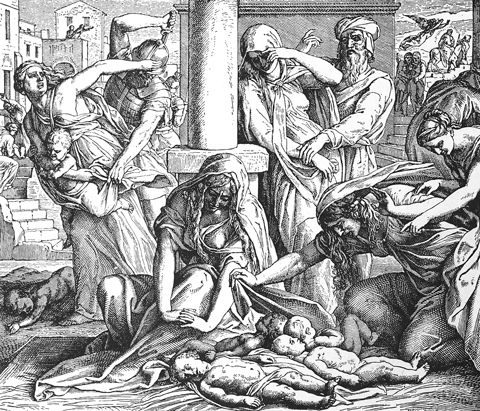
Bethlehem's Lament
Matthew 2:16-18
Lully lulla
thou little tiny child,
bye bye lully lullay.
God, can you count
these tears I cry,
falling like bitter rain?
For this my child
so brutally died -
bye bye lully lullay.
Lord can you hear
these cries of pain?
Are all our tears in vain?
Where is your justice
in this night
where innocents are slain?
Your child goes free,
mine dies for thee -
my child in your child's place.
O Lord above,
you know my pain,
yours are the tears I cry;
for even you have lost a child
given for all our sakes.
Mankind goes free,
you die for me -
your child in my child's place.
____________________________________________________________
[21. December 2013 - at 2.30 because I couldn't fall asleep]
Written as the lament of a mother of one of the babies murdered on King Herod's command, when he was trying to kill Jesus. In case you haven't noticed, it is based around Coventry Carol, a 16th century carol about the murder of the innocents. In fact, it is (kind of) singable to that melody!
Main idea of this one was "my child for yours" (which is also the alternate title). I noticed this recently and find it rather interesting: the baby boys of Bethlehem died in Jesus' place; later, he would die in mankind's place.
A long time ago while writing something else I realised that God knows exactly what it means to lose a child. Because he went through just that, when Jesus died on the cross. Of course, the mothers of Bethlehem could not know that yet. But since I write from the perspective of the Cross and Easter, I wrote it like this.
Here's proof again that I can't write a Christmas poem without the cross in it. Though I think that's perfectly fine theologically, and given in the Bible already, which has this story as part of the story of Jesus' birth. We have watered down the Christmas story into an idyllic, sweet thing, which it definitely wasn't. There's political oppression, bloodshed, poverty and dirt in it, and I think people would find it way easier to identify and accept the truth of Jesus if we stopped cutting out the gruesome, dark - but realistic! - bits.
Let us not forget this part of the Christmas story, but use it as a reminder, even as we celebrate Christmas, of Jesus' suffering for our sake - and use it as a reminder to pray for the innocents being murdered all over the world even now, the children suffering in wars or being abused.
Picture by Julius Schnorr von Carolsfeld
Lully lulla
thou little tiny child,
bye bye lully lullay.
God, can you count
these tears I cry,
falling like bitter rain?
For this my child
so brutally died -
bye bye lully lullay.
Lord can you hear
these cries of pain?
Are all our tears in vain?
Where is your justice
in this night
where innocents are slain?
Your child goes free,
mine dies for thee -
my child in your child's place.
O Lord above,
you know my pain,
yours are the tears I cry;
for even you have lost a child
given for all our sakes.
Mankind goes free,
you die for me -
your child in my child's place.
____________________________________________________________
[21. December 2013 - at 2.30 because I couldn't fall asleep]
Written as the lament of a mother of one of the babies murdered on King Herod's command, when he was trying to kill Jesus. In case you haven't noticed, it is based around Coventry Carol, a 16th century carol about the murder of the innocents. In fact, it is (kind of) singable to that melody!
Main idea of this one was "my child for yours" (which is also the alternate title). I noticed this recently and find it rather interesting: the baby boys of Bethlehem died in Jesus' place; later, he would die in mankind's place.
A long time ago while writing something else I realised that God knows exactly what it means to lose a child. Because he went through just that, when Jesus died on the cross. Of course, the mothers of Bethlehem could not know that yet. But since I write from the perspective of the Cross and Easter, I wrote it like this.
Here's proof again that I can't write a Christmas poem without the cross in it. Though I think that's perfectly fine theologically, and given in the Bible already, which has this story as part of the story of Jesus' birth. We have watered down the Christmas story into an idyllic, sweet thing, which it definitely wasn't. There's political oppression, bloodshed, poverty and dirt in it, and I think people would find it way easier to identify and accept the truth of Jesus if we stopped cutting out the gruesome, dark - but realistic! - bits.
Let us not forget this part of the Christmas story, but use it as a reminder, even as we celebrate Christmas, of Jesus' suffering for our sake - and use it as a reminder to pray for the innocents being murdered all over the world even now, the children suffering in wars or being abused.
Picture by Julius Schnorr von Carolsfeld
19 December 2013
Maria: Selig
Matthäus 5,1-12

In Kälte und Nacht,
Schimpferei und Gedränge -
alle Habe auf einem Esel
und das Kind kommt.
Wohin soll ich es legen?
Was soll ich ihm geben?
Ich habe nichts.
Selig ihr Armen.
Vor geschlossenen Türen,
unter starrenden Augen;
ich weiss, weshalb sie flüstern
und die Tür zufällt.
Wird auch mein Kind so verstossen,
behandelt wie ein Sünder,
der Welt nichts?
Selig seid ihr,
so euch die Menschen hassen
und ausstossen
um des Menschensohnes willen.
Unter dem Kreuz
in tiefster Finsternis -
dich in meinen Armen,
mein Kind, mein Gott!
Ein Schwert durchdringt
auch meine Seele.
Bleibt denn nichts?
Selig ihr Weinenden.
O selig bist du,
die du geglaubt hast!
Denn es wird vollendet werden,
was dir gesagt ist vom Herrn.
Meine Seele erhebt den Herrn
und mein Geist freut sich Gottes,
meines Heilandes.
________________________________________________________________
[November 2010]
Eines meiner extrem wenigen Gedichte auf Deutsch. ;-) Ihr müsst euch bei meiner Mamma bedanken, die mein Maria-Gedicht im Rundbrief mitschicken wollte, das ich zur Zeit nur auf Englisch hatte. Statt Übersetzung ist was anderes (m.E. Besseres) daraus geworden! :-)
Hier funktionierte nämlich die Idee, die ich schon für das Englische hatte aber mir dort nicht gelang: die Verbindung zwischen Marias Geschichte und den Seligpreisungen.
Anfänglich sollte es ein Weihnachtsgedicht sein, aber irgendwie habe ich eine Tendenz, schon an Weihnachten das Kreuz zu sehen (und warum nicht; mit der Menschwerdung fängt Jesu Opfer ja eigentlich an, könnte man sagen - Phil 2,6-11). Mich hat das Wort des Simeon an Maria beeindruckt: dass ein Schwert auch ihr Herz durchdringen wird (Lukas 2,35). Irgendwie denken wir nicht genug an das, was Maria am Kreuz durchgemacht hat. Kann uns das vielleicht nicht auch helfen, uns vorzustellen, wie es für sie war? Ich sehe Maria als ein starkes Vorbild für die Gläubigen. An ihr können wir den Preis der Nachfolge sehen - aber eben auch die Seligpreisungen, die an ihr wahr wurden. Sie tat frei und freudig, wozu Gott sie bat, stellte sich ihm zur Verfügung.
Für mich wäre eine "protestantische Mariologie" so etwas dieser Art: Maria als Vorbild sehen, als eine Art exemplarische Gläubige, der wir nachahmen können. Wie sie dürfen wir dann auch hoffen, dass, auch wenn der Weg mit Gott und im Gehorsam zu ihm nicht immer leicht ist, er seine Verheissungen erfüllt, und uns die Freude gibt, gerne zu tun, was er uns aufträgt. Mit ihr das Magnificat singen. :-)
In Kälte und Nacht,
Schimpferei und Gedränge -
alle Habe auf einem Esel
und das Kind kommt.
Wohin soll ich es legen?
Was soll ich ihm geben?
Ich habe nichts.
Selig ihr Armen.
Vor geschlossenen Türen,
unter starrenden Augen;
ich weiss, weshalb sie flüstern
und die Tür zufällt.
Wird auch mein Kind so verstossen,
behandelt wie ein Sünder,
der Welt nichts?
Selig seid ihr,
so euch die Menschen hassen
und ausstossen
um des Menschensohnes willen.
Unter dem Kreuz
in tiefster Finsternis -
dich in meinen Armen,
mein Kind, mein Gott!
Ein Schwert durchdringt
auch meine Seele.
Bleibt denn nichts?
Selig ihr Weinenden.
O selig bist du,
die du geglaubt hast!
Denn es wird vollendet werden,
was dir gesagt ist vom Herrn.
Meine Seele erhebt den Herrn
und mein Geist freut sich Gottes,
meines Heilandes.
________________________________________________________________
[November 2010]
Eines meiner extrem wenigen Gedichte auf Deutsch. ;-) Ihr müsst euch bei meiner Mamma bedanken, die mein Maria-Gedicht im Rundbrief mitschicken wollte, das ich zur Zeit nur auf Englisch hatte. Statt Übersetzung ist was anderes (m.E. Besseres) daraus geworden! :-)
Hier funktionierte nämlich die Idee, die ich schon für das Englische hatte aber mir dort nicht gelang: die Verbindung zwischen Marias Geschichte und den Seligpreisungen.
Anfänglich sollte es ein Weihnachtsgedicht sein, aber irgendwie habe ich eine Tendenz, schon an Weihnachten das Kreuz zu sehen (und warum nicht; mit der Menschwerdung fängt Jesu Opfer ja eigentlich an, könnte man sagen - Phil 2,6-11). Mich hat das Wort des Simeon an Maria beeindruckt: dass ein Schwert auch ihr Herz durchdringen wird (Lukas 2,35). Irgendwie denken wir nicht genug an das, was Maria am Kreuz durchgemacht hat. Kann uns das vielleicht nicht auch helfen, uns vorzustellen, wie es für sie war? Ich sehe Maria als ein starkes Vorbild für die Gläubigen. An ihr können wir den Preis der Nachfolge sehen - aber eben auch die Seligpreisungen, die an ihr wahr wurden. Sie tat frei und freudig, wozu Gott sie bat, stellte sich ihm zur Verfügung.
Für mich wäre eine "protestantische Mariologie" so etwas dieser Art: Maria als Vorbild sehen, als eine Art exemplarische Gläubige, der wir nachahmen können. Wie sie dürfen wir dann auch hoffen, dass, auch wenn der Weg mit Gott und im Gehorsam zu ihm nicht immer leicht ist, er seine Verheissungen erfüllt, und uns die Freude gibt, gerne zu tun, was er uns aufträgt. Mit ihr das Magnificat singen. :-)
Subscribe to:
Posts (Atom)