Showing posts with label Psalms. Show all posts

11 June 2023

Psalmist's Mother: My God, my God

 Psalm 22

"Yet it was you who took me from the womb; you kept me safe on my mother’s breast. On you I was cast from my birth, and since my mother bore me you have been my God. Do not be far from me, for trouble is near and there is no one to help." (Ps 22:9-11)
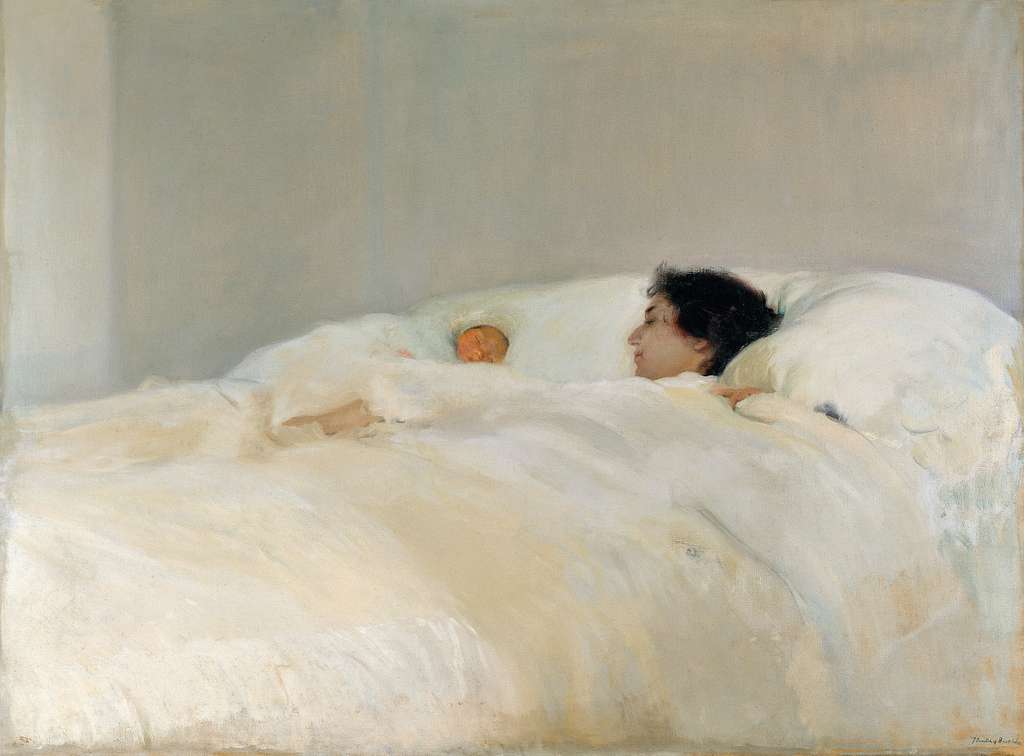


"My God, my God"
I moaned, I cried
and then he was out,
delivered.

Then there I was
swamped with feeling,
a tiny purple thing
latched to my breast
overwhelmed with love.

My child, my child,
how can I love you
how shall I protect you
from the baying dogs
and the charging bulls,
from people who will laugh
and scorn and abuse,
from death that lurks
for us all in the end
who am I
to take you by the hand
in this world where I have no control
helpless
just like you?

My God, my God,
I cast him onto you
for what else can I do?
When I am too weak
when I am too small
when one day I am gone
You will be there.
A Love even greater
than the one that's threatening
to tear my heart in two.
My God, my God
never forsake him,
do not be far from him
in his time of need.

Can a mother forget her child?
Never.
And neither can you.

___________________________

[11. June 2023]

Reading through the Psalms right now and found out Ps 22 mentions a mother and a birth scene and I was inspired.

In my daughter's first night I looked at her at one point and just had to burst into tears ober the realisation that God loves her with a love even greater than I could ever have. For me as a mother, knowing that God is there when I can't be is such a great help with so many things in motherhood and in life just not being in my control.

Ps 22 is the famous "My God, my God, why have you forsaken me?" Psalm that Jesus quotes on the cross. Having this little scene of the mother entrusting her child to God in the middle of it for me is a reminder of how we are dependent on God from the beginning. These verses set a contrast to the negative beginning. But also emphasises again the question: Where is God now in my suffering?

The Psalm ends with the experience that God is still there and does not really turn away or abandon anyone. The lament of the first half abruptly turns into praise. God can be trusted. I wanted to make this poem less about the lament (though I picked up some elements from the Psalm) and more about the trust, and that decision to entrust one's child to God because we can't do this parenting thing alone.

Picture by Joaquin Sorolla y Bastida

25 October 2014

Bride of the King: Reconciliation

Psalm 45

Today
is reconciliation.
Today
we forge the bond
between you and me,
between your land and mine.
Today
we seal the covenant.
Today
is the start of peace.

Can I forget my people
and my father's house,
and leave them forever
for you - a stranger?
Can I forsake
all I have known
and dare this alliance
with a stranger - with you?

You are different
from other kings -
you reign with peace and equity,
truth, justice and humility.
You look upon me,
your former enemy,
enthralled -
You are altogether beautiful, my love;
there is no flaw in you.

Can I forget my people
and my father's house,
for you?

Here is reconciliation,
here is peace.
Here is your hand, reaching out
to accept me as your queen.
Here is love
that brings an end to enmity.

So I will take your hand
and enter this alliance,
as joy and song envelop us
into the hopes
of all who long for peace.
And so today
we seal the covenant,
we forge the bond -
today
is reconciliation.

____________________________________________________________

[25. October 2014]

Been wanting to write this ever since reading Psalm 45 some days ago... the Psalm is a wedding song about the wedding of a King with a girl from another country who is called upon to "forget your people and your father's house" (v.10). Some verses seem to point to Jesus (e.g. v.6-7).

Anyway, the Psalm got me thinking about royal "alliance marriages", i.e. where a king married a princess from a foreign country to secure peace and to seal a covenant between the two nations. This was still happening some 100 years ago, actually. On the one hand, I do think one can see it as a problematic practice: a girl being carted off to some foreign country (in a time when people hardly travelled and she probably wouldn't have seen her home and family ever again), to marry a stranger who probably already had a whole load of other "alliance wives" (Solomon had quite a few...). On the other hand, I think that the concept of "alliance marriage" can tell us something about God - since the church (and in the Old Testament Israel) is frequently described as the "bride of Christ" or of God.

Alliance marriages were (a) to seal a covenant between two nations, (b) to secure peace.
In 2. Cor 5:18-20, the message of Jesus is described as a message of reconciliation. God wants reconciliation with us. And the way I see it, it's not God who throughout history has kept a sulky distance - it's us. The Bible shows God approaching us again and again, seeking relationship with us. God does not deny us peace - we are the only ones fighting, by insisting on managing by ourselves and rejecting the love of God. But in Jesus God became one of us, and Jesus died to reconcile us to God. And He wants to accept us as His bride - a gesture of peace, and actually of raising us into honour.

So the "wedding" of God with His people can maybe be seen like an alliance marriage: God wants to seal His covenant with us, and He wants to secure peace. He wants reconciliation with us, wants us to stop fighting off His love. And maybe accepting this love of God and following Jesus means forgetting and forsaking other things - like the bride in the Psalm is called upon to forget her people and her family. It means starting a completely new life, being changed by Him.

The "bride" imagery comes up quite a few times in the Bible, especially in prophetic texts (e.g. Ezekiel 16, Hosea, Jeremiah 3) but also in Revelation. Song of Songs is also often read as an allegory about the love between Christ and the church (and btw, the italicised bit in the poem is SoS 4:7). I find it does good to meditate on such texts and reflect what it means to be the "bride of Christ", how to compare our relationship to Jesus with the relationship of husband and wife.

Picture by Dante Gabriel Rossetti.