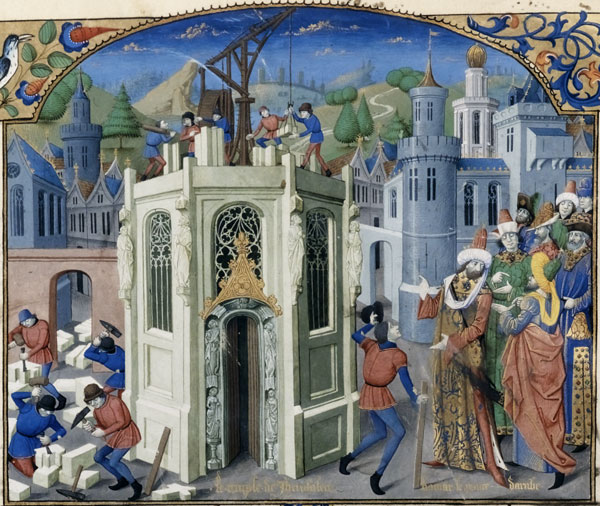
Judges 4:1-16
When men run and hide
their heads in the sand
I'll fight like a girl.
When men stand and falter,
their hearts in their pants,
I'll fight like a girl.
When no man will rise
and take up the sword
I will arise
and fight like a girl.
And I will advise
and I will encourage,
steady their shaking legs
because a mother
knows how to teach little boys to walk.
And I will be there
to hold sweaty hands,
give that little push
into the right direction
because a wife knows the words
a man needs to hear.
Why should I not teach,
correct and encourage?
Why should I not lead
or show them the way?
Why should I not heed
God's call above culture?
Why hide my gifts
in the face of need?
Even if men did not
hide their heads in the sand,
I'd fight like a girl.
Even if men would rise
and take up the sword,
I'd fight like a girl.
Because God called a girl,
so a girl will answer,
and fight and lead
and teach and encourage
as God commanded her to.
___________________________________
[31. October 2018]
It's unbelievable that even today there are still people who, based on two verses in the Bible, believe women can't be pastors or, going even further, can't teach or lead or have any authority whatsoever over men.
Reading her story again (Judges 4) I feel Deborah pretty much does the job of a woman pastor. She advises Barak, passes on messages from God, she accompanies him when he doesn't want to go into battle without her, as something of a "pastoral presence" to encourage him. Deborah is not even the only example of a prophetess / teacher / female leader / woman in authority in the Bible. There are no good biblical arguments for excluding women from positions of authority and many good biblical examples of women who were called by God to lead.
Go Deb!
And people who say the Bible is rough on women have no idea either - so many strong women, so many women depicted as way stronger than the men in the story. The Bible is what makes me feminist, and especially the Old Testament stories are very empowering in my opinion.
Picture by Otto Semler
Showing posts with label consecration. Show all posts
31 October 2018
14 August 2016
Nympha: Make This House Your Own
"Give my greetings to the brothers and sisters at Laodicea, and to Nympha and the church in her house." (Colossians 4:15)
O Lord our God
who has brought us together,
turned this hodge-podge mix of people
who has brought us together,
turned this hodge-podge mix of people
into a family -
take this house, we pray,
and make it your own.
May this be a place
that strangers call home;
an open door
to the far and the near,
the lost and the seeking,
sinners and righteous,
Gentile and Jew.
May this be the place
where we can show our true face:
be ourselves without fear,
confess and find forgiveness,
be radically accepted
into bottomless grace.
May this be the place
where we learn to love each other
as you have loved us,
where enemy becomes brother
and stranger becomes friend.
take this house, we pray,
and make it your own.
May this be a place
that strangers call home;
an open door
to the far and the near,
the lost and the seeking,
sinners and righteous,
Gentile and Jew.
May this be the place
where we can show our true face:
be ourselves without fear,
confess and find forgiveness,
be radically accepted
into bottomless grace.
May this be the place
where we learn to love each other
as you have loved us,
where enemy becomes brother
and stranger becomes friend.
O Lord our God
who has brought us together,
take this house, we pray,
and make it your own.
Save us from the temptation
of making it a fortress,
fenced off from the world,
from which we defend
our values and beliefs.
Save us from the temptation
of shutting ourselves in
and keeping for ourselves
what we were meant to share.
Save us from the temptation
of trying to create
a perfect kingdom here on Earth
at the cost of the broken
whom you have come to heal.
May it be the table
at which we are strengthened,
prepared for the task you have set us to do,
from which we carry your gifts
to a waiting world.
______________________________________________________________
[14. August 2016]
A prayer for a church...
In the early church, Christians met in each other's houses. More well-off people offered their houses to be used as meeting places. Nympha is one such "benefactress" who opened her house - probably quite a challenge, because the Church was and is truly a "hodge-podge mix of people", not all of whom would have been pleasant house guests.
Writing this poem, I had to think about what the Church is, or is meant to be. I believe that Jesus came to reconcile us to God and to each other, to heal broken relationships and begin reconciliation in this broken world. Jesus came to save everybody. The consequence of belonging to Jesus is, then, that I will be part of a very mixed group of people (the church), PLUS I have the call (together with this community) to bring reconciliation and the love of God into the world - to people who are different from me and whom I might prefer to avoid. A major challenge in the early church, for instance, was a cultural / racial one: overcoming the gap between Jews (the "original Christians" were all Jews) and non-Jews (Gentiles).
I believe the church is meant to be a community, like a new sort of family - but a family that is open to all, not just self-obsessed and closed off to strangers, or so tight-knit it's hard for people to get into. (Sometimes, I've realised, we Christians have developed a kind of language that non-Christians don't understand. We talk about the Gospel but our explanations make no sense because we don't speak the way non-Christians do; we throw around vocab that they don't really know the meaning of - and maybe we don't know the meaning either!) I have experienced church most strongly there where I was a visitor and felt completely adopted into the community. E.g. this April I visited an Anglocatholic church with a friend (beautiful church service with incense!! Loved it! Will go again!). In the prayers, people from the congregation were mentioned by name. When the priest found out that my friend and I are getting ordained later this year, he said they would pray for us. That's what I call Church. It doesn't matter whether your worship service has a band or incense or flashing lights or whatever, but it matters that we care for each other as the worldwide Christian family, no matter whether we know each other "personally" or not.
Another thing about church as family is that it is open for all. We need to learn to accept all the way Jesus accepted us - no matter the background, political leaning, race, "sinfulness", etc. The great miracle of the Church is that it is the place where "enemy becomes brother / and stranger becomes friend". Our old enmities or boundaries that we had in our "worldly thinking" no longer should count! Because Jesus wants us to love others the way He loved us.
And that is a challenge! But I believe that is what Jesus is calling the church to... not just to celebrate our salvation in comfortable groups of like-minded people we get along well with, but to go where it's dirty and invite more people into the embrace of Jesus, and to celebrate together with people who are different from us - an even greater celebration, don't you think?
One more thing: Church is where we can "show our true face". I realise that is not at all easy. Churches are often the first place we expect to be judged in. Why, though? Why has the church become a place where we feel the need to "fake ourselves"? I'm not saying there should be no reaction to sin in the church - where we hurt each other or make choices damaging for ourselves and others, it is right for the church (and with that I mean the people, the members, the "family", not "church leadership") to step in and say something. But any correction should be done carefully and in love. The Church needs to be a place where we are not afraid to be ourselves, where we can also be open about our mistakes and sins. I think a first step is to take away the pressure to be "perfect"... then also, to take away the fear of being shamed. Best way to do this is precisely by being the loving family I believe the Church is called to be. We are not the perfect elected, but people growing towards Jesus - and all supporting each other on this way, not punishing each other for every slip-up.
For me, the Church is the community of reconciled people who have come into touch with Jesus and want to follow Him. We are all at different stages of our walk with Him, we all come from different backgrounds, we might even be "natural enemies" if not for Jesus. It is a challenge to overcome old assumptions and old boundaries, but that is a first thing Jesus calls us to when He calls us into the Church. The second thing is the call that goes to the Church as a whole: we are to be messengers of reconciliation. I believe we do that by living the love of Jesus (by fulfilling the first calling of accepting each other within the church) and by sharing it in the world through word and deed. That is my personal "ecclesiology" for you, in a nutshell... ^^;
of making it a fortress,
fenced off from the world,
from which we defend
our values and beliefs.
Save us from the temptation
of shutting ourselves in
and keeping for ourselves
what we were meant to share.
Save us from the temptation
of trying to create
a perfect kingdom here on Earth
at the cost of the broken
whom you have come to heal.
O Lord our God
who has brought us together,
take this house, we pray,
and make it your own.
May it be a refuge
from the storm of persecution,
a safe haven
in a world that's torn apart,
a rock for the castaways to cling to.
May it be a greenhouse
where your children can grow
ever deeper in the fullness
of your love and your mercy,
bringing fruit to feed
those who hunger for you.
from the storm of persecution,
a safe haven
in a world that's torn apart,
a rock for the castaways to cling to.
May it be a greenhouse
where your children can grow
ever deeper in the fullness
of your love and your mercy,
bringing fruit to feed
those who hunger for you.
May it be the table
at which we are strengthened,
prepared for the task you have set us to do,
from which we carry your gifts
to a waiting world.
O Lord our God
who has brought us together,
take this house, we pray,
and make it your own.
______________________________________________________________
[14. August 2016]
A prayer for a church...
In the early church, Christians met in each other's houses. More well-off people offered their houses to be used as meeting places. Nympha is one such "benefactress" who opened her house - probably quite a challenge, because the Church was and is truly a "hodge-podge mix of people", not all of whom would have been pleasant house guests.
Writing this poem, I had to think about what the Church is, or is meant to be. I believe that Jesus came to reconcile us to God and to each other, to heal broken relationships and begin reconciliation in this broken world. Jesus came to save everybody. The consequence of belonging to Jesus is, then, that I will be part of a very mixed group of people (the church), PLUS I have the call (together with this community) to bring reconciliation and the love of God into the world - to people who are different from me and whom I might prefer to avoid. A major challenge in the early church, for instance, was a cultural / racial one: overcoming the gap between Jews (the "original Christians" were all Jews) and non-Jews (Gentiles).
I believe the church is meant to be a community, like a new sort of family - but a family that is open to all, not just self-obsessed and closed off to strangers, or so tight-knit it's hard for people to get into. (Sometimes, I've realised, we Christians have developed a kind of language that non-Christians don't understand. We talk about the Gospel but our explanations make no sense because we don't speak the way non-Christians do; we throw around vocab that they don't really know the meaning of - and maybe we don't know the meaning either!) I have experienced church most strongly there where I was a visitor and felt completely adopted into the community. E.g. this April I visited an Anglocatholic church with a friend (beautiful church service with incense!! Loved it! Will go again!). In the prayers, people from the congregation were mentioned by name. When the priest found out that my friend and I are getting ordained later this year, he said they would pray for us. That's what I call Church. It doesn't matter whether your worship service has a band or incense or flashing lights or whatever, but it matters that we care for each other as the worldwide Christian family, no matter whether we know each other "personally" or not.
Another thing about church as family is that it is open for all. We need to learn to accept all the way Jesus accepted us - no matter the background, political leaning, race, "sinfulness", etc. The great miracle of the Church is that it is the place where "enemy becomes brother / and stranger becomes friend". Our old enmities or boundaries that we had in our "worldly thinking" no longer should count! Because Jesus wants us to love others the way He loved us.
And that is a challenge! But I believe that is what Jesus is calling the church to... not just to celebrate our salvation in comfortable groups of like-minded people we get along well with, but to go where it's dirty and invite more people into the embrace of Jesus, and to celebrate together with people who are different from us - an even greater celebration, don't you think?
One more thing: Church is where we can "show our true face". I realise that is not at all easy. Churches are often the first place we expect to be judged in. Why, though? Why has the church become a place where we feel the need to "fake ourselves"? I'm not saying there should be no reaction to sin in the church - where we hurt each other or make choices damaging for ourselves and others, it is right for the church (and with that I mean the people, the members, the "family", not "church leadership") to step in and say something. But any correction should be done carefully and in love. The Church needs to be a place where we are not afraid to be ourselves, where we can also be open about our mistakes and sins. I think a first step is to take away the pressure to be "perfect"... then also, to take away the fear of being shamed. Best way to do this is precisely by being the loving family I believe the Church is called to be. We are not the perfect elected, but people growing towards Jesus - and all supporting each other on this way, not punishing each other for every slip-up.
For me, the Church is the community of reconciled people who have come into touch with Jesus and want to follow Him. We are all at different stages of our walk with Him, we all come from different backgrounds, we might even be "natural enemies" if not for Jesus. It is a challenge to overcome old assumptions and old boundaries, but that is a first thing Jesus calls us to when He calls us into the Church. The second thing is the call that goes to the Church as a whole: we are to be messengers of reconciliation. I believe we do that by living the love of Jesus (by fulfilling the first calling of accepting each other within the church) and by sharing it in the world through word and deed. That is my personal "ecclesiology" for you, in a nutshell... ^^;
09 January 2016
Shallum's Daughters: Called
"Next to him Shallum son of Hallohesh, ruler of half the district of Jerusalem, made repairs, he and his daughters." (Nehemiah 3:12)
A call has gone out: "Who will come
rebuild the city of the Lord?
Who will restore our ruined home
back to her glories from of old?"
I heard the call, and here I am,
even though I am no man,
to help rebuild Jerusalem.
I heard the call, and I obeyed -
so do not turn me now away,
but let me in God's service stay.
A call has gone out - who are we
to limit God in whom He sends?
On men and women equally
He pours His Spirit from His throne.
The giver of our gifts is He;
He chooses who fulfills His ends.
The work we do is His alone -
you looked for men, and He sent me.
I heard the call, and I have come
a woman working for her Lord.
So let us now restore our home
back to her glories from of old.
______________________________________________
[2./9. January 2016]
Shallum's daughters are women included in the list of builders in Nehemiah 3. I find them a great example of how we need to drop gender stereotyping. There are no such things as "men's jobs" and "women's jobs" - I believe instead we ought to be thinking in terms of gifts and talents. There are certain gifts that are more common to the one sex or the other - but if someone has gifts and a calling, they are not to be suppressed because of our stereotypes. Because what God is interested in (I believe) is our gifts and calling, not the boundaries set by society. Often what we imagine as men's or women's roles are cultural - you can see that quite plainly when comparing with traditional roles in other countries (did you know that in many African groups it is traditionally the women who work the fields, not the men?).
I believe God gives His Spirit, as well as gifts and calling, on men and women equally (Joel 2:28-29). Women are sometimes given gifts that lead them to do "men's jobs" - and it would be a sin to bury their talents. Shallum's daughters helped rebuild the wall of Jerusalem after the return from the Exile. And I believe in doing so they were living out their passion for God - and listening more to God than to the dictates of their culture.
In the background of this is a little something I picked up while researching for my bachelor thesis about women in missions (there used to be controversies over whether women, especially single women, should be allowed to be missionaries at all):
Another sentence I like to quote from my bachelor research is this one from "Miss Fielde", a baptist missionary to China (which I found in an old missionary journal from the 1870s!):
(I'm usually too lazy and uncreative to try meter and rhyme, but after reading some of Emily Brontë's poems last night I felt ashamed of the fact, so here's a rare one that rhymes and has a kind of tetrameter - with some irregularities of course because I'm too impatient for this kind of thing)
A call has gone out: "Who will come
rebuild the city of the Lord?
Who will restore our ruined home
back to her glories from of old?"
I heard the call, and here I am,
even though I am no man,
to help rebuild Jerusalem.
I heard the call, and I obeyed -
so do not turn me now away,
but let me in God's service stay.
A call has gone out - who are we
to limit God in whom He sends?
On men and women equally
He pours His Spirit from His throne.
The giver of our gifts is He;
He chooses who fulfills His ends.
The work we do is His alone -
you looked for men, and He sent me.
I heard the call, and I have come
a woman working for her Lord.
So let us now restore our home
back to her glories from of old.
______________________________________________
[2./9. January 2016]
Shallum's daughters are women included in the list of builders in Nehemiah 3. I find them a great example of how we need to drop gender stereotyping. There are no such things as "men's jobs" and "women's jobs" - I believe instead we ought to be thinking in terms of gifts and talents. There are certain gifts that are more common to the one sex or the other - but if someone has gifts and a calling, they are not to be suppressed because of our stereotypes. Because what God is interested in (I believe) is our gifts and calling, not the boundaries set by society. Often what we imagine as men's or women's roles are cultural - you can see that quite plainly when comparing with traditional roles in other countries (did you know that in many African groups it is traditionally the women who work the fields, not the men?).
I believe God gives His Spirit, as well as gifts and calling, on men and women equally (Joel 2:28-29). Women are sometimes given gifts that lead them to do "men's jobs" - and it would be a sin to bury their talents. Shallum's daughters helped rebuild the wall of Jerusalem after the return from the Exile. And I believe in doing so they were living out their passion for God - and listening more to God than to the dictates of their culture.
In the background of this is a little something I picked up while researching for my bachelor thesis about women in missions (there used to be controversies over whether women, especially single women, should be allowed to be missionaries at all):
God does not always give us what we expect! And very often in history, where men were expected, God sent women!"[T]hey would regularly pray for men – and for pioneer work, they usually meant men – but in a strange way, which they were slow to accept as a divine answer to their prayers, a considerable number of women usually completed the numbers." (Valerie Griffiths, Not Less Than Everything, 2004 - good book!)
Another sentence I like to quote from my bachelor research is this one from "Miss Fielde", a baptist missionary to China (which I found in an old missionary journal from the 1870s!):
"A true Christianity can never debar woman from showing her gratitude to her saviour by setting Him forth as the true and sufficient Helper of her sex, both for the life that now is and the life that is to come."So yes... don't limit God. Don't tell women not to do men's jobs. Because firstly: men's jobs and women's jobs are culturally relative. And secondly: the Spirit blows where He chooses.
(I'm usually too lazy and uncreative to try meter and rhyme, but after reading some of Emily Brontë's poems last night I felt ashamed of the fact, so here's a rare one that rhymes and has a kind of tetrameter - with some irregularities of course because I'm too impatient for this kind of thing)
05 September 2015
Junia: Hidden
Salute Andronicus and
Junia, my kinsmen, and my fellow-prisoners, who are of note among the
apostles, who also were in Christ before me. (Romans 16:7)Give me no fame, o Lord.
I need no glory, no applause,
for what good is it?
Instead,
let me stay hidden,
like foundations underground,
like the backstage hands,
like wallpaper no one sees
until it is missed.
Unseen, unnamed,
melting into the background,
hidden from view
but nonetheless there,
essential
like the spices in a curry,
like stitches in embroidery,
like the threads of a rope.
Let me work in patience
for love alone,
in the shadows, unnoticed,
holding the strings.
Let me do what is needed,
though none know my name,
though no one says "thanks",
though I am ignored.
I will be satisfied,
for I seek no renown,
and my work is for you
and for your eyes alone.
_______________________________________________________
[20.6. - 20.7.2012]
Ever tried reading through the "greetings" at the end of a Pauline letter? All those names... can one learn anything out of texts like that?! I think the greetings show us quite a few interesting things. They show us the relationship ties between early Christians, how they worked together and supported each other. Also, they give us a small glimpse into the kind of things Paul's addressees were up to. For instance, we find out a lot about women in ministry. People who skip the greetings don't realise that women were active in ministry in Paul's day, and Paul supported them (despite those famous "women be silent" texts which people like to quote at me when I say I'm going to be a pastor, heh...).
In Romans 16, we read about Phoebe, a female deacon (and deacons were people like Stephen and Philipp who did quite a bit of preaching and evangelising). Phoebe was involved in ministry in a way certain Christians say women shouldn't be (read Phoebe's poem here). Romans 16 also mentions a couple, Prisca and Aquila, who are mentioned together as working together with Paul for the church. Plus, Prisca is mentioned before her husband, which I believe shows she definitely was not a subdued little wife letting her husband do everything. They were a team, in ministry together.
And then we have Andronicus and Junia in Romans 16:7. This verse has an interesting story because, due to Greek grammar confusion, some people translated (female) Junia as (male) "Junias". Might also have ideological reasons because no way could there have been a female apostle! Or?! The word "apostle" has two uses in the New Testament. Often it is applied only to the 12 selected by Jesus. However, Paul also uses it to describe his own role, which gives the word a broader application. "Apostle" comes from the verb "apostello" which means "to send". In this way it means someone sent by God (not only the 12 disciples who were close to Jesus). The word "apostle" does, however, carry quite "high" connotations. And here we have a woman apostle, Junia! Why not?
I wrote this poem thinking of the many women working in the background, not fully recognised because they are women and because of the belief that women can't take on a full ministry. In the 19th century, people were still fighting over whether women should be allowed to be missionaries / evangelists at all, because "women are not supposed to teach men", or because "women should put their family first". People have told me that it's wrong for me to become a pastor, because women should not take leadership positions and whatnot. People have mistranslated Romans 16:7 and hidden Junia for centuries, and I think some would still rather have "Junias" than Junia, because they don't want to let the Bible change their theology. But it's all right - because we don't need to be acknowledged by people in order to serve God.
Picture shows (from left to right): Andronicus, Athanasius (an important saint in the Orthodox Church), and Junia.
23 June 2015
Sulamith: Desiring You
Song of Songs
I want to get drunk
with you,
with the sweet, heady wine of your love.
I am starving for you;
my whole body aches
with desire like a fire
consuming me until
I am satisfied in you.
Intoxicate me,
let this love go to my head;
take me now
and fill me up with you.
I want to drown
in you,
in the endless depths of your love.
Parched in the desert I cry for you;
all of my being needs you.
How can I exist
apart from you?
I want to spill myself out
and be consumed by you.
Surround me,
drag me down into the floods;
take me now
and make me part of you.
I want to hide
in you,
in the cool, quiet shade of your love.
Let me lie in your arms
entranced by your presence,
dreaming in the comfort
of your warm embrace.
Cover me with your mantle,
hide me beneath your wing,
take me,
marry me,
make me your own.
Take me now
and make me one with you.
_____________________________________________________
[22. June 2015]
In case you didn't notice, this is about God. ;-)
I got inspired to write this while reading Everything Belongs by Richard Rohr (really good and thought-provoking book!). In one chapter, he speaks of the connection between divine love and human love. In that chapter, Rohr says on prayer: "Often the imagery becomes sexual, because it is the only adequate language to describe this contemplative experience." - "Religious images were once 'sexual': passionate, suffering, naked, bleeding, familial, and relational."
So if you're thinking I was "pushing boundaries" with the imagery here: it was intentional (sorry, not sorry). If you have a problem, go read Song of Songs.
In general, Song of Songs gets interpreted in these 2 ways:
- It is about the love of a couple.
- It is a parable of God's love.
Some references in this poem: Psalm 42 and 63 (thirsting for God), and the "mantle" and "wings" imagery from Ezekiel 16 and the Book of Ruth. Covering with a mantle is a symbol for engagement.
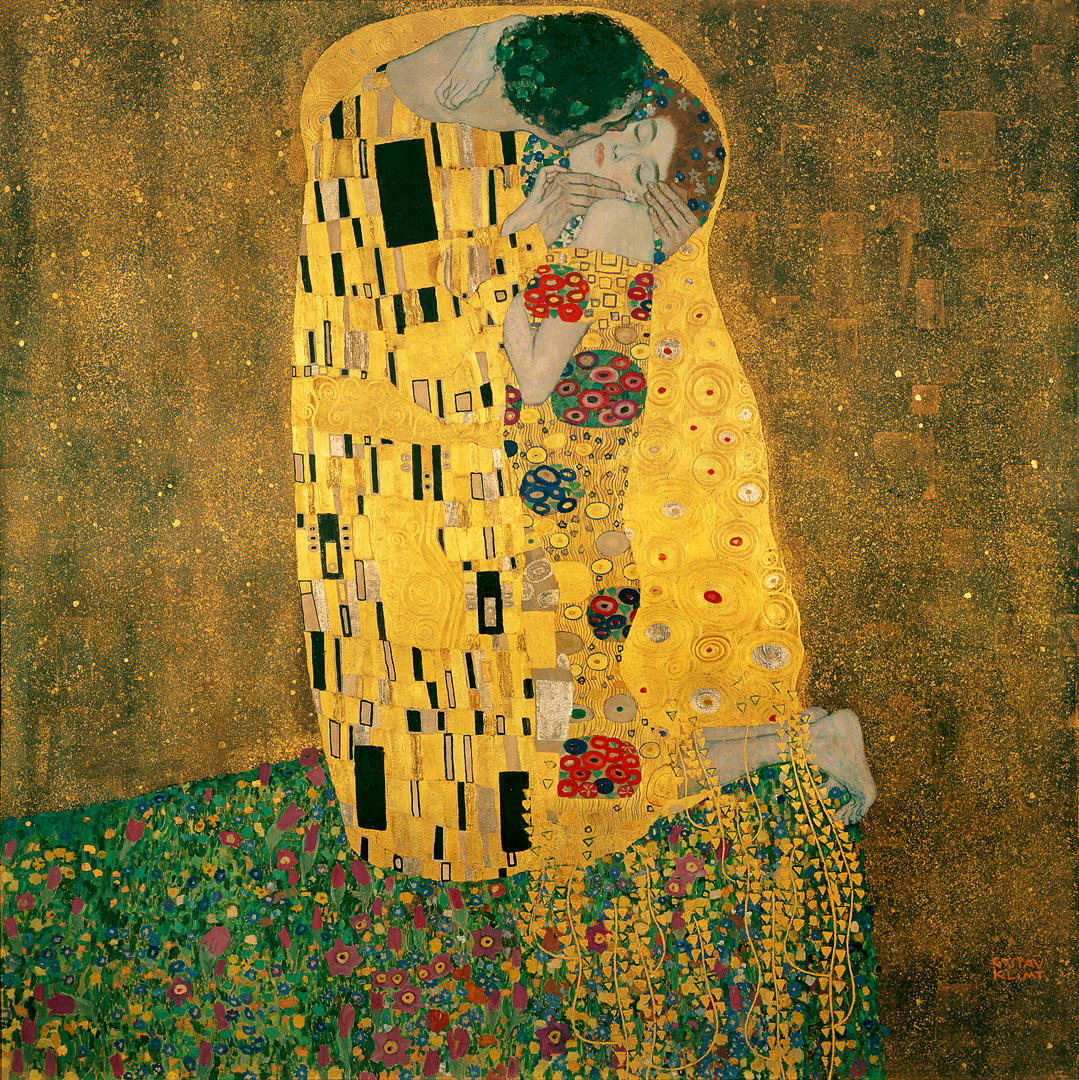
Picture by Gustav Klimt.
17 March 2015
Pregnant
"May the Holy Spirit, by whose overshadowing Mary became the God-bearer, give you grace to carry the good news of Christ." (Common Worship)
"My little children, for whom I labour in birth again until Christ is formed in you..." (Galatians 4:19)
I want to bear You into this world,
although it may turn my life upside-down -
changing some of my tastes,
dropping some habits,
making me feel sick some of the time,
making life harder,
but more beautiful.
Let me be pregnant
with Your Good News.
I want to bear You into this world,
although it may mean rejection and shame -
foolishness to the world,
unacceptable,
making me want to hide it sometimes,
but the more You grow,
the less I can hide.
Let me be pregnant
with Your Good News.
I want to bear You into this world,
although it will mean giving birth in pain -
enduring contractions,
suffering for You,
until I think I can bear it no more -
but all is worthwhile
when in my arms
I hold my victory at last.
Let me be pregnant
with Your Good News.
________________________________________________________
[16. March 2015]
Is this very weird??
I got the idea for this Christmas Eve 2013, because the blessing I quoted at the start of this poem was part of the liturgy that night (and I loved it). Took me all this time to actually write it, though. Since I've never been pregnant (yet) I hope what I wrote makes sense (esp to those with more experience haha).
In case you didn't catch all the references:
1: "changing tastes" = getting cravings
"dropping habits" = e.g. not drinking alcohol during pregnancy
(You should check this list about the physical changes caused by pregnancy and giving birth. It's a bit intimidating...)
--> Knowing Jesus changes how we live; we change for His sake. Also, when we want to share the Gospel, we actually have to live according to it, and live in such a way that we can pass it on (e.g. by adapting to the culture we are sent to).
2: "rejection and shame" / "unacceptable" = Mary being pregnant out of wedlock
"foolishness to the world" - 1 Cor 1:18 (the Cross is foolishness to the world)
--> The Gospel isn't necessarily what society likes to hear - and it's true sometimes we might be tempted to hide it away (wear big jumpers so one can't see the baby bump lol), but if Jesus is truly working in you, sooner or later He'll become visible, whether you like it or not! :D
3: Here's where the Galatians verse fits in: "My little children, for whom I labour in birth again until Christ is formed in you."
--> Bringing Jesus into the world can mean suffering and pain, not only through persecution but also simply in the kind of pain Paul describes in Gal 4:19, waiting for the people we know and care for to turn to Jesus and truly understand what it means to belong to Him. But it's all worthwhile!
The "victory" at the end sort of implies the "heavenly reward", although I think it can also be felt already on this earth when we see our work come to fruition. :)
Picture by the Master of Erfurt: "The Virgin Weaving."
23 December 2014
Bride of Christ: Vows
Revelation 19:6-8 | Jeremiah 31:3 | Isaiah 61:10
Here,
with you,
before the altar,
words fail.
What joys now lie within my grasp -
but oh what fears
that even now
it could all slip away.
For what vow can I make,
what words can I say?
Nothing is enough.
Only this little handful of love,
a paper boat
that capsizes with every wind.
There will be days
when my trust in you
will be smothered by my useless fears,
days when I will have affairs
with worries and doubts
instead of hiding myself
in your strong arms.
I am not good enugh for this -
my days are doomed
to infidelity
and broken vows
will litter my paths
because I am too weak
to hold your hand.
Here,
with you,
before the altar,
I fail.
But
your love does not,
and you reach out to me,
and hold me where I can't hold you.
Not my vow counts,
but yours alone,
sealed with blood -
your grace is enough.
"I have loved you with an everlasting love;
Therefore with lovingkindness I have drawn you."
I will greatly rejoice in the LORD,
My soul shall be joyful in my God;
For He has clothed me with the garments of salvation,
He has covered me with the robe of righteousness,
As a bridegroom decks himself with ornaments,
And as a bride adorns herself with her jewels.
_______________________________________________________________
[January 2011]
Recently God helped me realise how helpful the bridegroom / bride imagery in the Bible can be. I was fretting again as I usually do, and then wrote this, and then noticed: I should imagine what I'd do if I had a problem and I had a husband. I think I'd want to tell my husband everything instead of spooking around the house at night worrying my head off.
Then why do I not in the same way tell Jesus everything and trust that I'm safe with Him???
More poems connected to the "bride of Christ" imagery here.
with you,
before the altar,
words fail.
What joys now lie within my grasp -
but oh what fears
that even now
it could all slip away.
For what vow can I make,
what words can I say?
Nothing is enough.
Only this little handful of love,
a paper boat
that capsizes with every wind.
There will be days
when my trust in you
will be smothered by my useless fears,
days when I will have affairs
with worries and doubts
instead of hiding myself
in your strong arms.
I am not good enugh for this -
my days are doomed
to infidelity
and broken vows
will litter my paths
because I am too weak
to hold your hand.
Here,
with you,
before the altar,
I fail.
But
your love does not,
and you reach out to me,
and hold me where I can't hold you.
Not my vow counts,
but yours alone,
sealed with blood -
your grace is enough.
"I have loved you with an everlasting love;
Therefore with lovingkindness I have drawn you."
I will greatly rejoice in the LORD,
My soul shall be joyful in my God;
For He has clothed me with the garments of salvation,
He has covered me with the robe of righteousness,
As a bridegroom decks himself with ornaments,
And as a bride adorns herself with her jewels.
_______________________________________________________________
[January 2011]
Recently God helped me realise how helpful the bridegroom / bride imagery in the Bible can be. I was fretting again as I usually do, and then wrote this, and then noticed: I should imagine what I'd do if I had a problem and I had a husband. I think I'd want to tell my husband everything instead of spooking around the house at night worrying my head off.
Then why do I not in the same way tell Jesus everything and trust that I'm safe with Him???
More poems connected to the "bride of Christ" imagery here.
03 December 2014
Out in the Desert
Isaiah 43:18-19
"Therefore, I will charm her, and bring her into the desert, and speak tenderly to her heart." (Hosea 2:14 CEB)
"He who believes in Me, as the Scripture has said, out of his heart will flow rivers of living water." (John 7:38 NKJV)
You led me
into the desert,
stripped me
of all but you,
emptied me
till I was dry,
parched.
Out in the desert
I found your living water.
Out in the desert,
when all was stripped away,
I learnt that you are all I need,
all I could want.
Jesus.
You led me
into the desert -
the desert land of my heart.
You showed me
my deepest need
was you -
you alone.
Out in the desert
I found your living water.
Out in the desert
you changed my heart,
became in me a fountain
turning this desert
into a garden
flowering for you.
You lead me
into the desert -
your water-bearer,
to heal dry land
and water hopeless cases
and lead them to you.
Out in the desert
your living water
flows out from my heart.
Out in the desert
flowers are growing,
rivers are spreading,
until the desert
becomes
Paradise.
____________________________________________________
[3. December 2014]
Wrote this during a "prayer night" organised by fellow students.
During the opening worship time, a friend read Isaiah 43:18-21 - some of the prayers afterwards expounded on the image of living water, of the desert blooming and becoming green wherever the water touches it, also quoting John 7:38 and bringing in the thought of reaching "dry people" with the living water of Jesus. Later, we had a text meditation on Hosea 2:16 and the desert image just fit so perfectly! As my "response" to the meditation, I put together all those images that had moved me.
Picture by Antal Ligeti.
25 October 2014
Bride of the King: Reconciliation
Today
is reconciliation.
Today
we forge the bond
between you and me,
between your land and mine.
Today
we seal the covenant.
Today
is the start of peace.
Can I forget my people
and my father's house,
and leave them forever
for you - a stranger?
Can I forsake
all I have known
and dare this alliance
with a stranger - with you?
You are different
from other kings -
you reign with peace and equity,
truth, justice and humility.
You look upon me,
your former enemy,
enthralled -
You are altogether beautiful, my love;
there is no flaw in you.
Can I forget my people
and my father's house,
for you?
Here is reconciliation,
here is peace.
Here is your hand, reaching out
to accept me as your queen.
Here is love
that brings an end to enmity.
So I will take your hand
and enter this alliance,
as joy and song envelop us
into the hopes
of all who long for peace.
And so today
we seal the covenant,
we forge the bond -
today
is reconciliation.
____________________________________________________________
[25. October 2014]
Been wanting to write this ever since reading Psalm 45 some days ago... the Psalm is a wedding song about the wedding of a King with a girl from another country who is called upon to "forget your people and your father's house" (v.10). Some verses seem to point to Jesus (e.g. v.6-7).
Anyway, the Psalm got me thinking about royal "alliance marriages", i.e. where a king married a princess from a foreign country to secure peace and to seal a covenant between the two nations. This was still happening some 100 years ago, actually. On the one hand, I do think one can see it as a problematic practice: a girl being carted off to some foreign country (in a time when people hardly travelled and she probably wouldn't have seen her home and family ever again), to marry a stranger who probably already had a whole load of other "alliance wives" (Solomon had quite a few...). On the other hand, I think that the concept of "alliance marriage" can tell us something about God - since the church (and in the Old Testament Israel) is frequently described as the "bride of Christ" or of God.
Alliance marriages were (a) to seal a covenant between two nations, (b) to secure peace.
In 2. Cor 5:18-20, the message of Jesus is described as a message of reconciliation. God wants reconciliation with us. And the way I see it, it's not God who throughout history has kept a sulky distance - it's us. The Bible shows God approaching us again and again, seeking relationship with us. God does not deny us peace - we are the only ones fighting, by insisting on managing by ourselves and rejecting the love of God. But in Jesus God became one of us, and Jesus died to reconcile us to God. And He wants to accept us as His bride - a gesture of peace, and actually of raising us into honour.
So the "wedding" of God with His people can maybe be seen like an alliance marriage: God wants to seal His covenant with us, and He wants to secure peace. He wants reconciliation with us, wants us to stop fighting off His love. And maybe accepting this love of God and following Jesus means forgetting and forsaking other things - like the bride in the Psalm is called upon to forget her people and her family. It means starting a completely new life, being changed by Him.
The "bride" imagery comes up quite a few times in the Bible, especially in prophetic texts (e.g. Ezekiel 16, Hosea, Jeremiah 3) but also in Revelation. Song of Songs is also often read as an allegory about the love between Christ and the church (and btw, the italicised bit in the poem is SoS 4:7). I find it does good to meditate on such texts and reflect what it means to be the "bride of Christ", how to compare our relationship to Jesus with the relationship of husband and wife.
Picture by Dante Gabriel Rossetti.
06 October 2014
Parable of the Yeast: God is a Baker Woman
God
is a baker-woman
elbow-deep in dough,
kneading, kneading,
making bread
preparing for a feast.
Taking flour,
adding yeast,
until the dough is leavened through,
working, working
patiently
till all is ready for her feast.
God,
you became bread
for us to feast upon,
for us to be fed,
strengthened, restored,
filled by you.
You became bread
for us to devour,
consumed for our sakes,
fulfilling our needs,
our hunger for you.
God,
we are your bread
to be shared with this world.
You knead us, prepare us,
to feed hungry mouths
in need of you.
You spread your yeast
into each corner
that we may rise
and glorify you
at your feast
where all will be fed.
So let us feed on you
in thanksgiving
as you knead us
into your image.
Give us grace
to feed the world
as you fed us,
with these gifts
you gave to us -
Bread of Life.
______________________________________________________________________
[5. - 6. October 2014]
One could say this is the first time I have ever used feminine pronouns on God - I'm not usually that kind of feminist, but since it suits the parable I hope no one's going to complain, since the image of the baker-woman was made up by Jesus, not me...
The topic of "bread" kind of stalked me all day yesterday, so I ended up writing this, bringing together different thoughts that had been impressed on me during the day...
- In the morning, I read this month's "Word of Life" from the Focolare movement. The verse of the month happens to be all about bread! "I am the bread of life. Whoever comes to me will never be hungry, and whoever believes in me will never be thirsty." (John 6:35) You can read Chiara Lubich's interpretation here, it really inspired me and flowed into this poem. God is bread - Jesus became bread for us, in multiple senses. He fulfills our deepest needs - and we remember Him through bread in Communion / Eucharist.
- On the way to church in the evening, the words "God is a baker woman" sort of whacked into my brain and I started meditating on Lk 13:20-21 because I remembered that parable. It's one of a set of parables about what the "Kingdom of God" is like. The "feast" image slid into the poem because that is another image from another parable - sort of what the bread is being prepared for (the feast at the end of time).
- The sermon in my church also ended up involving bread and communion imagery! One thing that stayed with me was sharing: that we are not meant to hoard what God gives us, but share it. And I really loved this image: when we break the bread for communion, one half represents what we receive - the other half what we share. We are meant to share. In a sense, we can become bread to share with others what Jesus shared with us. And that can mean suffering too: being "consumed" like Jesus was.
- The "parable of the yeast" is basically about the influence of Jesus spreading through the world. In that sense, it's very much about sharing. What is the influence of Jesus, though? I believe it's becoming like Him, following Him, living like He did. But that means giving ourselves like He did, denying ourselves, being willing to be "consumed" by hungry people. Helping people in all their needs, be it literal hunger, or a hunger for love and acceptance, or another need. Bringing people the "Bread of Life", which is Jesus - but in a sense becoming bread too, by becoming like Him.
"Loving means 'making ourselves one' with everyone, making ourselves one in all the others want, in the least and most insignificant things and in those that perhaps might be of little interest to us but are important to them. [...] This is love, to make ourselves one in a way that makes others feel nourished by our love, comforted, uplifted, understood." (Chiara Lubich)
Picture by Jean-François Millet.
04 September 2014
Damaris: Foreign God
Acts 17:16-24
What is this message that you bring,
what is this "good news" that you preach?
Who is this strange God from afar -
and what should it matter to me?
We are Greeks - we have our gods,
enough gods,
more gods than you.
What's a foreign god to me?
Your story's nice -
but what's it to me?
But you say
this God
was always there,
even when I did not see Him.
This God
has always cared
for all the world
even though we did not know Him -
for this God
is the creator
and all mankind is His -
this God
is the sustainer,
who provides for all that is.
This is no foreign God
but the one true God of all -
and that's why it matters to me.
This God
is the one who made me.
This God
is the one who knew me
before I even knew myself.
This God
cares not only for one people -
for all the peoples on earth are His.
In Him we live,
in Him we move,
in Him we have our being -
this God
is the true God
of all.
____________________________________________________
[July 2014]
Damaris was one of the people who came to faith in Athens after Paul preached there.
Reading Acts I've been noticing how the Apostles often emphasised the fact that their message was not a strange new message, but a continuation and fulfillment of the first covenant with Israel, and a message relevant also for non-Jews because God is the true God of the whole world. When speaking to non-Jews, Paul would speak especially of God as creator: because God created everything and everybody, and still keeps on sustaining and providing for the whole world, His message is relevant for everybody.
Today, there are still many cultures in which the principle "to be (x nationality) means to be (x religion)", and that often makes it hard to reach them with the Gospel, partly because they believe that makes Jesus irrelevant to them ("it's a foreign religion"), and partly because it leads to difficulty for anyone who decides to be a Christian (they get treated like a traitor not only of their religion, but of their culture, tradition and family). So I see the relevance of Paul's method for today.
In Athens, the philosophers thought Paul was bringing them a foreign God and was bringing them something new and strange. What Paul did in his sermon, though, was point out that God is not a foreign God, but, as the creator, is everybody's God. He is not tied to one nation, but the God of all people, because all people - being created by Him - belong to Him already.
Picture by Raphael. Note the lady in the far right corner.
29 July 2014
Lot's Wife: I Turn Around
"No one who puts a hand to the plough and looks back is fit for the kingdom of God." (Luke 9:62)
It was easy
when all was fine
and I did not have to choose
between you
and all my other loves.
It was easy
to follow you
when I could have the rest as well.
But now
with the choice before me
I see it was never
easy at all.
And in one moment
I think back
and think of the cost
and what I have to leave.
Family, possessions, home,
all I have known,
all I have loved.
And I think of the things
you want me to let go.
Can I let go
and trust in you -
give it all away
believing
that you return it all
more than a hundredfold?
No.
It is too much.
It is too hard.
I can't give it to you.
Or: I don't want to.
Now that it comes to it
I don't think
I want to give it up at all -
and so
I
turn
around.
_________________________________________________________________
[March 2012]
Counting the cost...
I tried in this poem to portray Lot's wife as one person who has the chance, who knows about God and stands before the choice of following Him - and in the end decides it's too much, and she doesn't want to give up all the other things of life.
Following Jesus can be costly - it means a change of priorities, a change of allegiance, God now ruling our lives, and that can mean giving up on things we love. So it's something we need to be serious about. God gives us grace, but it's not a cheap grace! In the end, though, it's worth it - it is better to lose out now, and suffer the consequences of following Jesus, than suffer the consequences of not following Him. He wants to save us, and He knows what is good for us - like God led Lot's family out of Sodom in order to rescue them, when He calls us to follow Him it is in order to save us.
Why did Lot's wife turn back? Isn't it in some way understandable - all the things she knew and grew up with behind her, and no chance for a last good-bye? It seems a bit harsh what happened to her. But was her changing into a pillar of salt God's punishment, or the consequences (e.g. of not running away quickly enough from the effects of the "fire and brimstone") He was trying to save her from when He forbade her to turn around?
Obedience to God can be costly... but when He asks us to do difficult things, painful things, it is for our good (even if we might not see it at first), and the benefits outweigh the loss.
Picture by Gustave Doré
20 June 2014
Sapphira: Not A Mite Would I Withhold
Acts 5:1-11
Take my silver and my gold,
not a mite would I withhold
- because all the others do it,
and it won't do to fall behind;
- because it's a good deed,
and gives us a good name;
- because no one will know
how much we withhold
as long as we say,
Take my silver and my gold,
not a mite would I withhold
- but isn't the cost too high?
isn't His cross too heavy?
isn't this asking too much
from us who must live
in this dog-eat-dog world
that revolves around money
and tramples the weak
who give and love and forgive
like He tells us to?
Take my silver and my gold,
(some of it at least)
not a mite would I withhold
(we know they must mean spiritually,
for in real life how could this be?)
But do not tell;
let them admire
a cheerful giver;
let them see
good Christians,
so committed
(aren't we?)
What's so wrong
with sneaking in the back door
and paying half the price
if no one knows
and grace is free?
Take my silver and my gold,
not a mite would I withhold,
not a mite,
not a mite,
no - more
but no one need know,
no one -
but you do.
And heaven takes no stowaways
who flee the cross
to come in cheap;
and it's too late now
to give everything,
because we withheld
ourselves.
_____________________________________________________________________
[20. June 2014]
Like other early Christians, Sapphira and her husband Ananias sold their property and donated their money for the Apostles to distribute to the poor and needy. What they did differently was that they kept a little bit for themselves - but lied and told the Apostles they were giving everything.
I think what's significant in their story is that they could have just kept their property - or just kept their money (v.4) - or even done half-and-half and honestly declared it. Why did they lie? I think their reason was a false motivation for giving in the first place. Maybe they wanted everyone to think they were giving so much, to admire them. Maybe they just wanted to keep up with the rest, and weren't really giving out of their own heart. Why keep the money? Maybe they were worried, maybe they thought giving a whole lot of what they owned would be a rather risky thing and not very realistic in the "real world" (stanza 2+3).
Sometimes being a Christian with all it entails, all the giving-up, the service to others, might not seem "realistic" or even "safe". Being "too nice" can get you in trouble, they say. It brought Jesus in trouble! But He wants us to take up the Cross, to follow Him (which actually means: learn from His example, do as He did), and sometimes - or even often! - that can mean doing things the world wouldn't find very sensible, and that involve giving up comforts we'd rather hold on to, or that the world tells us we "need". But taking up the Cross, paying the full cost of discipleship (obedience to Jesus), does not lead to deprivation but rather to gaining a lot more than we would otherwise lose. There is false security in money and possessions (and those other things that are hard to give up) - in God there is true security.
Sapphira's story is one of the spookier ones - since it all ends with her and her husband dropping dead. It's a pretty stark warning... and I think on the one hand it's a warning not to lie to God, not to attempt to hide things from God who truly sees everything. But on the other hand I think it's also a warning against hypocrisy: pretending on the outside, while not being willing to fully surrender and truly obey. Grace is free but it's costly. Costly because it cost God everything - He gave His Son, He gave Himself, to save us. We need to keep up our part of the deal by obeying - because faith and obedience are tightly interlinked. We aren't truly believing if we don't obey - and we can't truly obey if we don't believe (Dietrich Bonhoeffer, The Cost of Discipleship). We need to have the right motives for what we do - in Sapphira's case, it should have been to serve God and serve the poor, not give a good appearance and gain admiration for herself.
The guy-sneaking-in-the-backdoor sneaked in at the end; he's actually from Jesus' parable of the great feast (Mt 22:1-14). I realised he actually fits to this story...
And the line "Take my silver and my gold / not a mite would I withhold" is from the hymn "Take my life and let it be" by Frances Ridley Havergal. It just fit so I decided to fiddle with it a bit.
04 June 2014
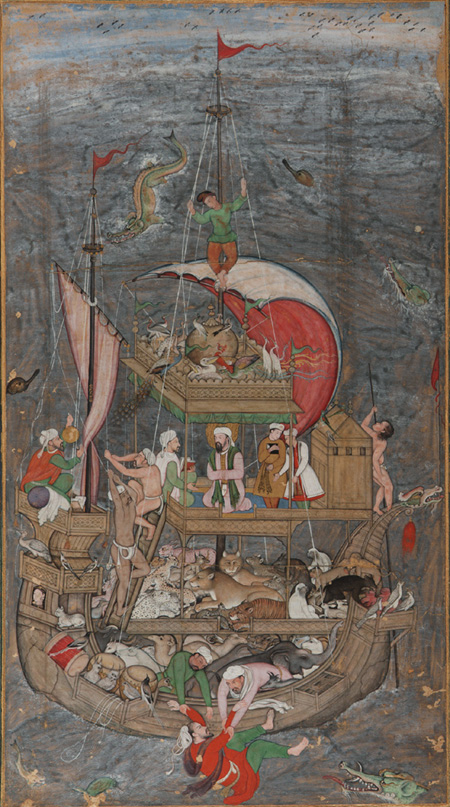
Mrs Noah
"Hotel Mama"
just turned into a zoo.
A floating zoo.
I didn't really ask for it
just when my world has drowned away,
just when I'm hurting, tired, lost,
waiting for respite
and new solid ground -
didn't ask to mop up vomit
or keep the dogs and cats apart,
didn't ask to cook for armies
and have much more to clean.
And yet
I see this is a gift,
a blessing you've poured down on me,
the comfort I've been longing for,
for caring for others
comforts me.
This is my service,
this is my comfort:
Loving those who are displaced
- displaced like me.
Mothering the motherless,
comforting those in distress,
the homesick, seasick, miserable,
feeding tigers, frogs and men,
a shoulder to cry on,
a rock in this ocean,
solid ground
though I don't even feel
so solid myself.
But as I serve them
I begin to see
that you're the solid ground for me.
And so I go and pass it on,
sharing life
and sharing love.
_______________________________________________________________________
[September 2012 - commentary 2014]
This poem went through MANY phases. Some lines remain from the original version, but the theme has completely changed, as has the tone. (But I can't remember anything of the old version anymore haha)
The thought of service bringing healing, of being comforted by caring for others instead of worrying about oneself, is a recurring theme in some of my older poems (e.g. this one). When I was going through a very dark valley my mother gave me wise words of advice: to focus on caring for others, to forget my own worries by being concerned for others instead. I think it makes a lot of sense - and can say from experience it works, with God's help. ;-)
Noah's wife was faced with quite a lot of things at once: losing everything (probably family as well), having a lot of extra work to do (and not necessarily pleasant work, either), and really having no chance to get away (imagine being cooped up in a smelly stable for 40 days and 40 nights, knowing there's a couple of snakes and other unpleasant characters next-door). I think when faced with this kind of flood of unpleasant things, one can either get mad and frustrated and upset (which would be dwelling on oneself in self-pity), or view the extra work as an opportunity to serve others, and do it freely and with joy (and I think that's an act of the will).
Whether we find healing or frustration in work depends on our attitude to what we have to do: do we do it because we have to and are forced to, or do we freely accept it and in that way turn it around into something that's not so bad anymore? "A spoonful of sugar helps the medicine go down..." :-D
Of course it's not always so simple, but I believe with God's help we can do even unpleasant things with joy. It starts with attitude though: whether I focus on how unfair it is that I have to do such annoying things, or whether I focus on the good that comes out of it, or how it serves others.
More of the family: Noah's daughter-in-law
01 June 2014
Woman who blessed Mary: Ave Maria
Luke 11:27-28
Hail Mary,
full of grace -
blessed are you
among women.
Blessed is your womb
that bore our Messiah,
blessed your breasts
that nursed the Saviour of souls -
blessed are you
among women.
Hail Mary,
full of grace -
I want to be like you,
but I can't.
Only one womb
could bear our Messiah,
only you were chosen
to nurse the Saviour of souls -
from afar I can admire
and wish it had been me -
blessed are you -
not me.
Lord,
blessed is the womb that bore you,
and the breasts that nursed you!
Blessed is the woman
who can call herself your mother.
Blessed
among women.
- But you say: no.
Blessed are those
who hear the word of God
and obey it.
Hail Mary,
full of grace -
blessed are you
and blessed am I,
for what makes you great
is not your womb,
though it bore the Messiah,
nor that He suckled at your breast.
No, blessed
are your ears that heard
the uncomfortable call of God,
and your heart that submitted
in obedience to His will.
And blessed are all women
who do the same
and follow your footsteps
as you follow the Lord.
_______________________________________________________________________
[1. June 2014]
A woman came up to Jesus and called out a blessing on Mary - Jesus' reply was: "Blessed are those who hear the word of God and obey it." As I understand it, this means: instead of just admiring Mary as someone "unreachable", who through God's grace became something none of us can ever be, we should follow her example and do as she did. Only Mary could be Jesus' mother, but we can all learn from her obedience to God and acceptance of a calling that can't have been easy, and that brought her not only joys but lots of pain. I find it very interesting how this little exchange in Lk 11 is so similar to what Jesus said in Mt 7 about how we should not just say "Lord, Lord" but do the will of God. Personally I find that if we admire Mary, it should not be as a wonderful saint with quasi-goddess status, but as an example that, with God's help, we can and should emulate.
P.S.: Dear protestant friends: I'm not turning catholic - the Ave Maria just fit the poem (besides, the Reformers still used the Ave Maria and most of it actually is biblical, based on Gabriel's greeting. The ending part which we protestants usually stumble over I left out). This is not meant to promote any "Mary-worship", on the contrary the focus I mean to make (and believe I have made; hopefully it's clear enough) is that Jesus wants us to hear and obey God's word, to do His will. Mary can be our example in that.
P.P.S.: In case anyone is bothered by the profusion of breasts in this poem: sorry, it's in the Bible. :P
Picture is "The Madonna of the Roses" by William-Adophe Bouguereau.
Hail Mary,
full of grace -
blessed are you
among women.
Blessed is your womb
that bore our Messiah,
blessed your breasts
that nursed the Saviour of souls -
blessed are you
among women.
Hail Mary,
full of grace -
I want to be like you,
but I can't.
Only one womb
could bear our Messiah,
only you were chosen
to nurse the Saviour of souls -
from afar I can admire
and wish it had been me -
blessed are you -
not me.
Lord,
blessed is the womb that bore you,
and the breasts that nursed you!
Blessed is the woman
who can call herself your mother.
Blessed
among women.
- But you say: no.
Blessed are those
who hear the word of God
and obey it.
Hail Mary,
full of grace -
blessed are you
and blessed am I,
for what makes you great
is not your womb,
though it bore the Messiah,
nor that He suckled at your breast.
No, blessed
are your ears that heard
the uncomfortable call of God,
and your heart that submitted
in obedience to His will.
And blessed are all women
who do the same
and follow your footsteps
as you follow the Lord.
_______________________________________________________________________
[1. June 2014]
A woman came up to Jesus and called out a blessing on Mary - Jesus' reply was: "Blessed are those who hear the word of God and obey it." As I understand it, this means: instead of just admiring Mary as someone "unreachable", who through God's grace became something none of us can ever be, we should follow her example and do as she did. Only Mary could be Jesus' mother, but we can all learn from her obedience to God and acceptance of a calling that can't have been easy, and that brought her not only joys but lots of pain. I find it very interesting how this little exchange in Lk 11 is so similar to what Jesus said in Mt 7 about how we should not just say "Lord, Lord" but do the will of God. Personally I find that if we admire Mary, it should not be as a wonderful saint with quasi-goddess status, but as an example that, with God's help, we can and should emulate.
P.S.: Dear protestant friends: I'm not turning catholic - the Ave Maria just fit the poem (besides, the Reformers still used the Ave Maria and most of it actually is biblical, based on Gabriel's greeting. The ending part which we protestants usually stumble over I left out). This is not meant to promote any "Mary-worship", on the contrary the focus I mean to make (and believe I have made; hopefully it's clear enough) is that Jesus wants us to hear and obey God's word, to do His will. Mary can be our example in that.
P.P.S.: In case anyone is bothered by the profusion of breasts in this poem: sorry, it's in the Bible. :P
Picture is "The Madonna of the Roses" by William-Adophe Bouguereau.
14 April 2014
Woman who Anointed Jesus: Precious Pearl
Mark 14:3-9 | Matthew 13:45-46
Many things
are precious to me,
treasures collected
over the years.
Fulfillment of wishes,
my heart's desire -
I love them,
would not let them go.
But you, o Lord,
are so much more -
I see it day by day:
your love to me
is worth so much
that I could never pay.
So what can I do?
You've covered me
with blessings so abundantly,
undeserved.
The most precious pearl.
So I let it go
and give all up
to have only you,
for you are enough.
I pour out on you
all that I have,
this precious oil,
my sign of love.
___________________________________________________________________________
[8. April 2012]
Based also on the parable of the precious pearl.
I was thinking about how difficult it can be to convince people to leave behind their previous beliefs and follow only Jesus. When I read the parable, I realised that (at least in the translation I was reading) the man was described as a collector of pearls. He had quite a few pearls! A bit like many people nowadays who mix and match their religion? But when he found the most precious pearl, he gave up everything. Jesus is worth giving up everything we own, everything we know, everything that was precious to us before.
Picture by Frank Wesley.
01 January 2014
Peter's Mother-in-law: Not for Me
Matthew 8:14-15
I have been healed,
but not for me alone.
I have been restored,
not to look selfishly to myself.
No - you have healed me
to be the sunshine of this home,
a light for all this family,
to share the gifts you gave to me -
they are not mine to keep.
I have been healed,
but not for me alone.
I have been restored
to spread this thanks
throughout the world,
my joy in you,
your love for me.
Look, Lord,
I give you what I have,
though it is small.
Take my time this afternoon,
take a seat at this table of mine,
take this food I cooked for you.
Be my guest
and let me serve you
in the small ways that I can,
with the little that I own -
for all I own is yours.
I have been healed
to serve you, Lord,
and I have been restored
to restore others.
_______________________________________________________________________
[May 2012] [Commentary January 2014]
This one was triggered by an experience in one of my churches. It's a sad story, really. At that time I got the impression that members of that church were becoming very much focused on simply consuming, becoming inward-looking, concerned mainly with what God does for them or gives them or promises them, and not as interested in service, involvement and missions. After a sermon that had basically the same message as the second-to-last stanza of this poem (giving what we have to Jesus, even if we think it's just something little), someone went up on the stage and gave a response that showed the sermon had not really been understood, focusing on the gifts only and not the service we can / should do in thanks for those gifts. (If I remember right. It was all very long ago. We all ended up pretty upset. It was a mission event too, actually, and the focus just ended up being turned on inward-looking again.)
Now don't misunderstand me: it is good to rejoice about what God gives us. But what kind of rejoicing or thanks is it if we just take, take, take? If our only answer is "thank you"?
Maybe you need to know more about my understanding of worship. You see, I don't think singing songs is all there is to true, full worship. I think true worship is service. True worship is when we lead more voices to join in God's praise. That's why so many of the Psalms have the imperative "Praise the Lord!" - it's not just one person praising God, but a call to others to praise Him. So I also think going to church and singing songs and saying "thank you" is not all there is to thanksgiving.
And here we get to this lady: Peter's mother-in-law did not just say "thank you". Although she had a right to. She had just been sick. Now you can say Jesus' healing powers were so great that she did not need a recovery time, but still. After you've been sick you might want a little spoiling, a little rest. This lady got straight up and served Jesus. She said thank you by giving what she had, by giving him the gift of her hospitality.
So I think we should not just sit there and say "thank you" but get up and do "thank you". We are blessed by God in order to be a blessing. (Gen 12:2-3) Not to lock up the blessing in a treasure chest and sit on it and be happy. Do something with the borrowed talent, multiply it, and not bury it in the ground. (Mt 25:14-30) The guy in the parable who buried the talent in the ground did it out of fear - isn't it just as bad to bury it out of the wish to just enjoy it for oneself? The Gospel is not a toy to look at, it's meant to be shared. God's gifts and promises are not only for us; sure they are to be rejoiced over and enjoyed, but isn't a joy shared more real than selfish joy that wants to shut everyone else out?
So, rant over. ^^; I'll scuttle back to the paper I should be writing...
I didn't know there were any pictures of this scene - there's some nice ones, the one here is by Rembrandt.
Wish there were a picture of her serving though.
I have been healed,
but not for me alone.
I have been restored,
not to look selfishly to myself.
No - you have healed me
to be the sunshine of this home,
a light for all this family,
to share the gifts you gave to me -
they are not mine to keep.
I have been healed,
but not for me alone.
I have been restored
to spread this thanks
throughout the world,
my joy in you,
your love for me.
Look, Lord,
I give you what I have,
though it is small.
Take my time this afternoon,
take a seat at this table of mine,
take this food I cooked for you.
Be my guest
and let me serve you
in the small ways that I can,
with the little that I own -
for all I own is yours.
I have been healed
to serve you, Lord,
and I have been restored
to restore others.
_______________________________________________________________________
[May 2012] [Commentary January 2014]
This one was triggered by an experience in one of my churches. It's a sad story, really. At that time I got the impression that members of that church were becoming very much focused on simply consuming, becoming inward-looking, concerned mainly with what God does for them or gives them or promises them, and not as interested in service, involvement and missions. After a sermon that had basically the same message as the second-to-last stanza of this poem (giving what we have to Jesus, even if we think it's just something little), someone went up on the stage and gave a response that showed the sermon had not really been understood, focusing on the gifts only and not the service we can / should do in thanks for those gifts. (If I remember right. It was all very long ago. We all ended up pretty upset. It was a mission event too, actually, and the focus just ended up being turned on inward-looking again.)
Now don't misunderstand me: it is good to rejoice about what God gives us. But what kind of rejoicing or thanks is it if we just take, take, take? If our only answer is "thank you"?
Maybe you need to know more about my understanding of worship. You see, I don't think singing songs is all there is to true, full worship. I think true worship is service. True worship is when we lead more voices to join in God's praise. That's why so many of the Psalms have the imperative "Praise the Lord!" - it's not just one person praising God, but a call to others to praise Him. So I also think going to church and singing songs and saying "thank you" is not all there is to thanksgiving.
And here we get to this lady: Peter's mother-in-law did not just say "thank you". Although she had a right to. She had just been sick. Now you can say Jesus' healing powers were so great that she did not need a recovery time, but still. After you've been sick you might want a little spoiling, a little rest. This lady got straight up and served Jesus. She said thank you by giving what she had, by giving him the gift of her hospitality.
So I think we should not just sit there and say "thank you" but get up and do "thank you". We are blessed by God in order to be a blessing. (Gen 12:2-3) Not to lock up the blessing in a treasure chest and sit on it and be happy. Do something with the borrowed talent, multiply it, and not bury it in the ground. (Mt 25:14-30) The guy in the parable who buried the talent in the ground did it out of fear - isn't it just as bad to bury it out of the wish to just enjoy it for oneself? The Gospel is not a toy to look at, it's meant to be shared. God's gifts and promises are not only for us; sure they are to be rejoiced over and enjoyed, but isn't a joy shared more real than selfish joy that wants to shut everyone else out?
So, rant over. ^^; I'll scuttle back to the paper I should be writing...
I didn't know there were any pictures of this scene - there's some nice ones, the one here is by Rembrandt.
Wish there were a picture of her serving though.
22 September 2013
Mary: Beautiful Feet
Luke 10:38-42 | John 12:1-7
Sitting at your feet
- hiding mine,
my feet full of scars
from all the troubles I have faced,
from all the thorns on which I trod,
as I ran so far away,
away where I should not have gone.
Here they are now, bleeding,
muddy and dirty from all the way,
from where I walked in dark despair
away from you.
Sitting at your feet
- your beautiful feet,
your feet full of scars
- my scars.
Bleeding, from thorns on which you trod,
to find me, and to bring me home;
muddy and dirty from all the way
that you walked into darkness, calling my name.
No oil is precious enough for this,
no gift I give could do;
but now I'll pour out all I have,
because, for me, you did it too,
and kiss these feet that bore it all
to bring me back,
to take me home.
___________________________________________________________
[November 2010]
In the story of Mary and Martha, Mary is sitting at Jesus' feet. Later, she annoints Jesus' feet. So I thought I'd focus on feet! :-)
2010 for me really was a year of learning that whatever I'd tracked along in my life, whatever dirt I'd picked up on my feet, Jesus had come looking for me. The dirt did not keep Him away - rather, He walked right into it too, to find me. Jesus knows what you have gone through, and He suffered for the sake of rescuing you. The "lost sheep" was a bit on my mind here, too.
Btw, here's a good song with a similar theme: https://www.youtube.com/watch?v=MA_bo8DSOwg
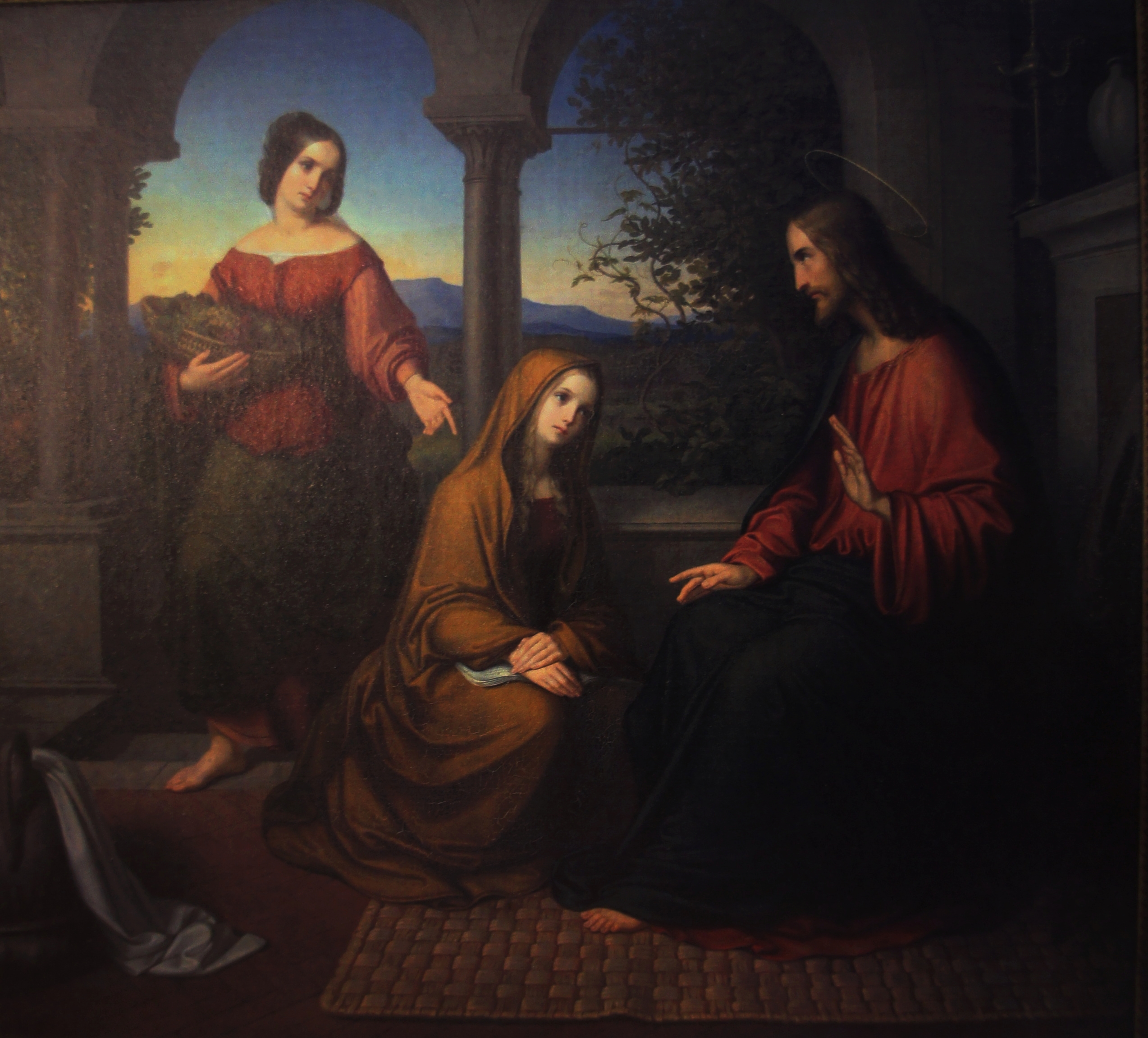
Picture by Adolf Zimmermann.
21 September 2013
Martha: One Thing Is Needful
Luke 10:38-42
I want to make it right for you,
to give you, Lord, what you deserve.
I want to burn and die, instead
of rusting, Lord, and sitting still;
to make you happy, Christ, with me;
let mine a life of service be.
And yet I fear I'm not enough,
and worry, Lord, of failing you.
I spend myself, all just for you,
but in my heart still there's no joy.
Accusingly it's haunting me:
"let mine a life of service be".
Martha, Martha, you are careful
and troubled about many things:
But one thing is needful.
Mary has chosen that good part.
Oh Lord - What do you want of me?
Is serving you not what you wished?
Should I not your commandments keep
instead of lazing at your feet?
Is not your first desire of me
that mine a life of service be?
But no - just one thing do I need:
the faith that sits down at your feet,
to be with you, so quietly,
accept the grace you give to me;
for not my works bring joy to you
but that you've found me - the lost sheep;
and I'm not saved by what I do,
but all because you first loved me.
So let my service for you be
like flowers blossoming in spring:
not toil or worry, but the fruit
that fellowship with you does bring.
__________________________________________________
[October 2010]
I get the impression that we often get into the story already seeing Martha negatively. While actually I think she's a good and eager woman who straight away wants to invite Jesus to her house, and serve Him in the way she can do it best! Isn't that what many of us want to do? I mean, "let mine a life of service be" is something one hears and reads all over, something I'd expect to find in an old hymn. Burning and rusting - that bit I took from a quote by G.L. Mackay (missionary to Taiwan): "It is better to burn out than rust out." Many good Christians have been like Martha: wanting to serve the Lord. Nothing wrong with that, is there?
On the last day before my father left me in Switzerland, he told me something really valuabe. And that is, that before Jesus sent out His disciples, He called them to be with Him. Mary is doing just that: being close to the Lord. If we jump straight-out into serving and sweating and burning (like Martha), that is just going to turn into works-righteousness or stress. While if we just sit at Jesus' feet like Mary did, that will grow into service too - service not out of fear or out of trying to be good enough for God, but out of love for Him and accepting His grace. YES, we should serve the Lord eagerly. But not out of fear - for He has given us a spirit of love.
I just love that picture, don't you??
Subscribe to:
Posts (Atom)


.jpg)
.jpg)