Showing posts with label God's promises. Show all posts

23 January 2022

Widow of Zarephath: My Cup Overflows

1. Kings 17

I am alone
but my cup overflows.
No husband to support me
but my cup overflows.
Sole provider for my child
but my cup overflows.
Troubled are our times
but my cup overflows.

Your abundance
comes flowing down
covering our needs.
My cup overflows.
All the strength that I needed
to live through this time,
endurance and joy,
my cup overflows.

Faced with starvation
but my cup overflows.
Faced with illness
but my cup overflows.
Faced with loss
but my cup overflows.
In all adversity
my cup overflows.

All your riches,
your luxurious love,
pouring into our lives,
more than enough.
My cup overflows
enough to share
with hungry prophets
and weary guests.
My cup overflows.

_____________________________________________________

[23. January 2022]

The other day I randomly pondered whether there were any single mothers in the Bible. Of course there are quite a bunch. This is one of them and the first who came to mind.

Her story really spoke to me in the moment that I thought about her. She is a single mother like me. She lives in challenging times like we do currently (for her: drought and famine, for us: pandemic). She experiences miraculous provision - which I have been experiencing too ever since the separation. Oil in the Bible is a symbol of joy and abundance. She experiences the miracle of her tiny remainder of oil never being used up. What if we read this not only as the literal kitchen ingredient never running out, but as God providing all she needs? Personally these past few months I have somehow always had the strength and courage to get through all the challenges of becoming a single mother. Reading the widow's story, the "oil" in my life is these things.

So yes this is one of those cases where I write a poem for a woman of the Bible from the perspective of my own current experience. This story is an encouragement to me.

I also find it interesting how the whole thing connects to hospitality. The widow has too little for herself and her son, then suddenly has a guest on her hands when Elijah basically invites himself. It is in this situation that the oil and flour never run out. The widow dared to be hospitable - and it paid out. I have also made this experience that sometimes when I'm going through a hard time, helping others actually helped me. Weird maybe, but it happens - miracles of provision I think are more common than we might expect.

"My cup overflows" from Psalm 23:5 jumped into my head for this one, and I decided on the repetitive pattern to emulate the "his love endures forever" refrain in Psalm 136.

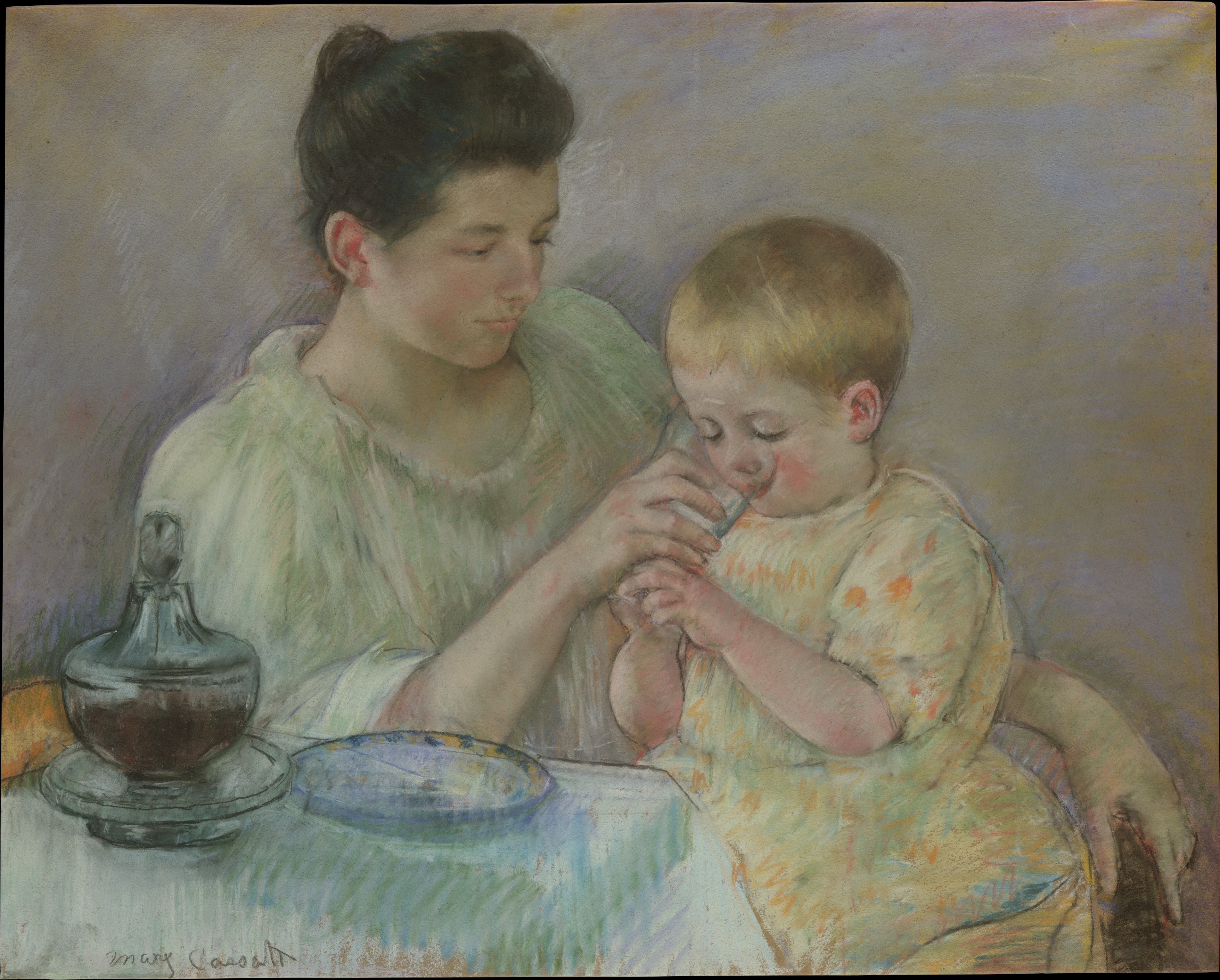
Picture by Mary Cassatt

20 August 2016

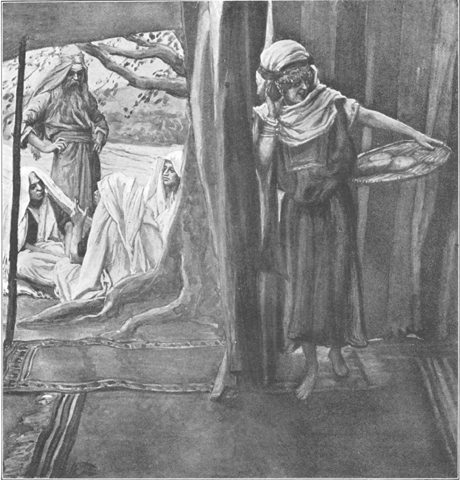
The Poor Widow's Offering: Generous

Mark 12:41-44

Generous God,
you have given me
all that I need -
not very much,
but it is enough.
Open my eyes
to see all you've provided -
more than possessions,
a wealth more than wealth.
I want to give thanks
for the riches you've given:
the breath in my body,
enough food to eat,
my beautiful children,
the knowledge of You.

Mysterious God,
it is true
my cup was not always sweet,
and much bitterness
has stained my years.
And I've cried and complained,
not understood your ways -
except this: you are love
and you understand my pain.
I have swallowed the dregs
of loss and poverty,
of loneliness
and a mother's worry.
Daily I struggle,
yet stubbornly believe,
though you lead me rocky ways,
that you care for me.

Bountiful God,
all I have is yours -
that's so easy to say,
yet so hard to do.
Give me the peace
to share generously -
just like You.
Let me live out the love
you have given to me,
with no fear of tomorrow,
with no fear of suffering.
Let me open my hand
knowing that yours
is always open to me.
You have covered my needs -
how can I not seek
to cover those
of others I meet?

Loving God,
I know my gift is small,
disappearingly small
beside the greater gifts
greater people can bring.
It shames me
as they give me looks
as though I were stingy,
whisper of "impertinence"
or say, "The more you give
the more you shall receive."
You see my gift,
worthless in their eyes -
worthy in yours,
for you see my heart
and what this means to me.
So here I bring
everything,
though to them it's nothing,
and I won't be ashamed,
for it's not their approval I seek.

Take my silver and my gold,
not a mite would I withhold -
and if I have no silver nor gold,
take my mite - take them both.

___________________________________________________

[20. August 2016]

Italicised bit at the end is from Frances Ridley Havergal's hymn "Take my life and let it be" (an old favourite of mine).
Parts of this poem were inspired directly by yesterday's "3 minute retreat" from Loyola Press - highly recommended; it's an app too, try it out (Apple / Android)!

A widow gives two small coins as an offering in the temple (the temple offering would probably have been for supporting the Levites / priests working there - they had no land to farm so were dependent upon tithes etc - and upkeep of the temple). Others give a lot more. Jesus, who is watching, says that the widow in fact gave more than those who brought big gifts, because she gave all she had while the wealthy gave just a portion. I believe she is a perfect example of what Jesus taught about giving in Mt 6. She received no admiration for her gift - and yet it was a big move for her (and God saw it).

There's a lot of (false) preachers pushing for congregations to give money. A huge deal is made out of tithing - often with the tagline "give and you will receive". Giving is good - that "tagline" is dangerous. Because if you give in order to get back, you are in fact acting like an idol-worshipper. A principle I have watched often when I grew up in Taiwan was "give and get back". In traditional religion, you give sacrifices so that the god will give his services to you. It's basically a "business contract". I believe this is the "natural" human way of living religion. But Jesus has taught us a new way. Which means giving is no longer part of a "business contract" with God, where God is "indebted" to give us something back, and where God's blessing is in proportion to the size of our gifts. We are in a relationship with God, welcomed to freely give out of love, not because we "must" and not because we "get something" out of it.

And that's how I view this widow's actions here. She gave out of the generosity of her heart (and possibly out of the experience of God's generosity despite her hardships), gave what she had (trusting in God's provision), and was brave enough to give what must have looked pretty measly to onlookers. Generosity is not giving with the hope of getting something back... it's also not something only possible if you have a lot to give. Generosity (not only when it comes to money, but also e.g. in treatment of others, giving time, giving kindness) takes courage - the trust that we are not going to "lose out" by giving to others.

I have discussions with my boyfriend about tithing sometimes (because he doesn't really believe in it, or the way some people do it). If we're tithing because "it's what one does", or because we "ought to", or because we think we'll "get something back", then I believe we are not tithing in the right way. The size of our gifts doesn't matter, the frequency of our gifts doesn't matter, what matters is our attitude. What matters is our relationship with God. So I believe ultimately it's better not to tithe regularly (but e.g. give randomly when we see a need) than to tithe out of a wrong attitude of legalism (just keeping the rules) or because we want to look good to others.

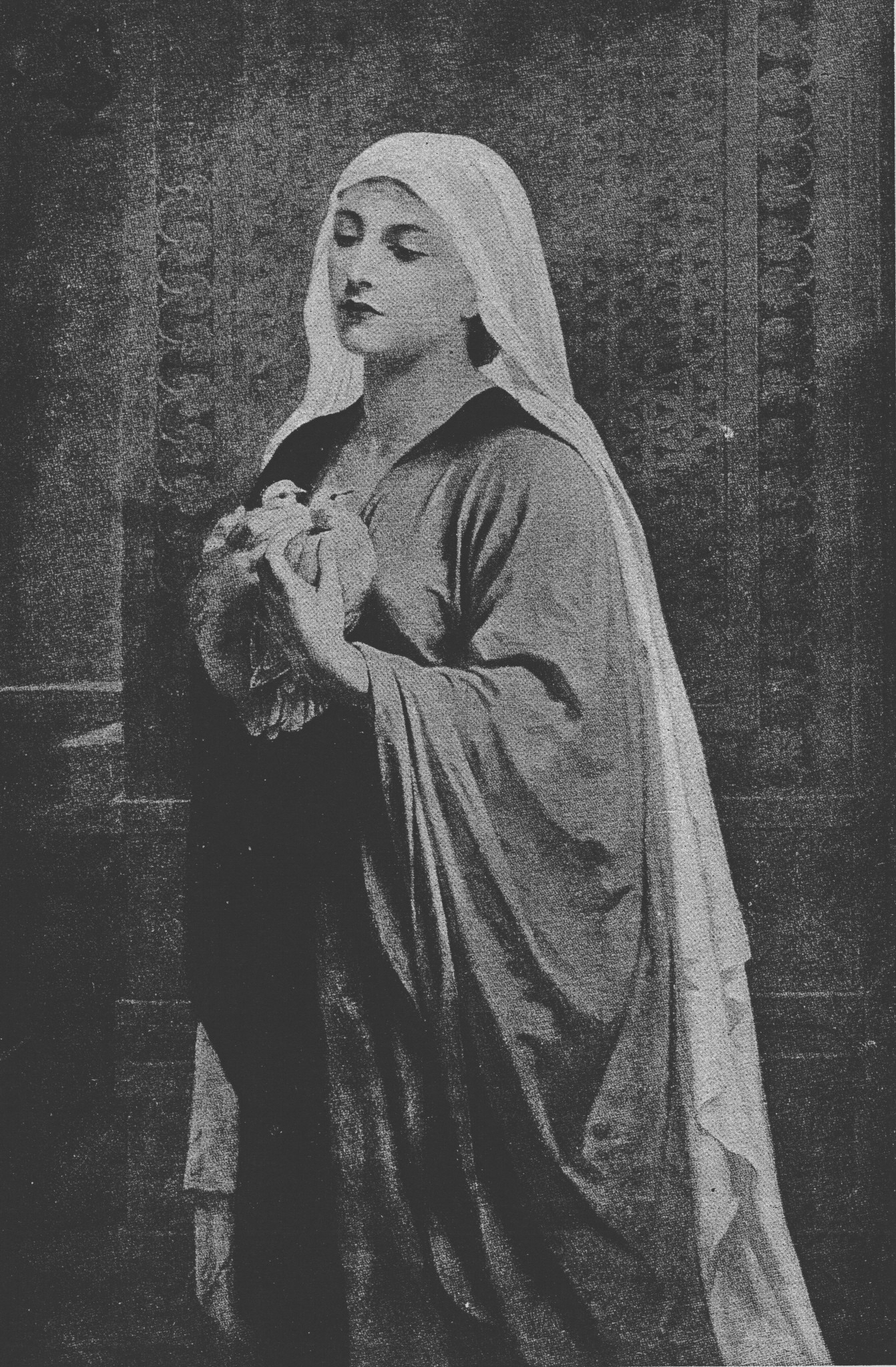
Picture is by Frederick Goodall.

08 April 2016

Eli's daughter-in-law: Ichabod

1. Samuel 4:12-22

My God, my God,
why have you forsaken me?
Here I lie in my blood alone,
robbed of my husband, my family,
dying, leaving behind a child
even more forsaken than me.

My God, my God,
why have you forsaken us?
Why let your glory be taken away,
withdrawing your presence, causing defeat?
Why leave us here in our blood alone,
your people - forsaken by you?

My God, my God,
why have you forsaken him?
Why give him life on this darkest of days,
born fatherless, motherless - godless?
Why bring him into this dark, cruel world,
empty, forsaken by you?

"My God, my God,
why have you forsaken me?"
I hear my cry
from your lips, o God,
as you die on a cross alone,
robbed of all glory,
cast out and shamed,
forsaken
with your people
with my child
and with me.

So maybe I am no longer alone,
for you are here,
forsaken like me.
Maybe my cries are not in vain,
for you are here,
crying out with me.
Maybe your glory is not far away -
for you fill this forsakenness
with your presence
and turn this brokenness
into glory.

_______________________________________________________

[8. April 2016]

This was going to be my Good Friday poem for this year, but I had too much going on so didn't get to finish it in time...

I was reading 1. Sam 4, the story of the ark of the Covenant being taken away by the Philistines. In the middle of this story we have Eli's daughter-in-law, giving birth to her son and naming him "Ichabod", which means "The glory has departed from Israel." The ark of the Covenant stood for the presence of God with His people, His glory among them. That it was lost was a heavy blow - the Israelites understood it as God forsaking them. They had thought He would give them victory if they brought along the ark into the battle - instead they were defeated, and instead of concluding from that that the ark "didn't work", that God wasn't stronger than the Philistines (which would have been a plausible thought in the worldview of those times), they realised God had allowed the defeat and distanced Himself from them.

Eli's sons, priests who lived only for themselves and abused their position, were both killed in the battle. Eli died upon hearing the news. Eli's daughter-in-law was the last who was left - and she too died while giving birth to Ichabod, the poor forsaken child whose name expresses the deep forsakenness his mother felt.

Is God cruel? He had warned beforehand that he would punish the family of Eli because of the injustices they committed. It seems harsh that a new-born child has to suffer because of that. I see it this way: Much evil happens in this world where people harm other people, just like Eli's sons. And we want God to take away this evil. But all that we do, all our actions, connects and knots up and in the end, there is no solution without more problems, without more people being hurt - that is the consequence of sin. We can't escape the consequences, even if God intervenes. In this case, God's intervention led to the hopeless situation of new-born Ichabod.

And this is where I had to think of the Cross - the place of Jesus' forsakenness. Jesus was forsaken too, just like Ichabod. He was in a position of deepest shame: the cross, a place not just of torture and death, but of public shaming! The glory had been taken away. And this too was part of an intervention of God to set aright what we had messed up. Jesus bore those consequences. Jesus became Ichabod.

And by doing so, He turned the whole forsakenness around. Because God Himself experienced being forsaken by God, our feeling of forsakenness no longer separates us from Him, but is a place where we can meet Him - because He is right there with us. Because the Cross as place of shame became the place of glory (the Gospel of John focuses on the Cross as the place where Jesus reaches His highest glory, it is where He is enthroned), Ichabod no longer needs to be Ichabod - God's glory is no longer absent, but right there in the middle of our shame. We can no longer be forsaken by God because God, in Jesus, is right there in our forsakenness sharing it with us!

Picture by Diego Velázquez

26 February 2016

Anna: An Old Woman

Luke 2:36-38


Lord,
I am an old woman.
My body hurts and aches,
my teeth have all but disappeared,
and wrinkles line my face.
Let this not be a hindrance
as I lift up your praise.

Lord,
I am an old woman.
There is not much I need.
But one thing I must ask of you,
o Father, hear my plea:
Send us the promised Saviour
to set your people free.

Lord,
I am an old woman.
I've known you many years.
I've known you in both joy and pain,
in laughter and in tears,
and so I know your faithfulness
and love will never cease.

Lord,
I am an old woman.
I have seen many things,
but I'd never have imagined
THIS.

You are too wonderful for words,
for you have heard my prayer
and in my arms the Saviour lies:
a poor woman's child,
helpless and small,
beautiful -
not what I'd have thought -
no: BETTER.

People!
I am an old woman,
but hear the words I have to say:
the Saviour has come here today,
meek and mild,
only a child,
the power of God
in weakness revealed.

Thanks be to God.

_________________________________________________________

[January 2012]

Anna sees Jesus when Joseph and Mary bring him to be presented at the temple.

Isn't it sad how old age, and old people, are nowadays being sort of relegated to the edge, as if they don't exist? If you look at magazines, you see no old people. I find old people really beautiful. You know, the really wrinkled faces and the only-two-really-black-teeth smile? I love that. It's much more beautiful than all these painted celebrities caked with make-up.

Anyway, old people still have a LOT to say. And two old people, Simeon and Anna, were among the first to recognise Jesus as Lord and pass it on. I really admire their joy. I recently read Luke 2 and I'm really setting these two old people as my examples now. I keep praying that I'll have joy like Anna.

13 January 2016

Jairus' Wife: Asleep?


Luke 8:40-56

They were all weeping and wailing for her; but he said, ‘Do not weep; for she is not dead but sleeping.’ And they laughed at him, knowing that she was dead. (Luke 8:52-53)

Asleep?
Is this a joke -
not taking us seriously
as thinking adults?
Do you think we can't see
the grim reality,
do you think it will help us
to pretend she's not dead?

Asleep?
Are you a fool
unable to face reality,
needing delusions
to find comfort from pain,
ignoring in vain
what cannot be undone,
as though calling death sleep
could wake her again?

Asleep?
Is this a comfort,
telling me she is in peace,
not in fear and not in pain?
Are you saying she is fine,
that I need not pine -
that death is not a threat,
but peace and quiet rest?

Asleep?
Is this a promise,
a still and gentle hope
that death is not the end?
That she will be returned to me,
and we shall reunited be -
that death's not irreversible
and sleepers will awake?

________________________________________________

[13. January 2016]

Play Bach's "Sleepers Awake" after that last line ;-)

This is the result of talking about death and funerals these past two days, during a course on how to do weddings, baptisms and funerals. This morning my classmates and I had the opportunity to look at different texts (poetic and biblical) and pictures concerning death and collect our thoughts to them (as preparation for funeral sermons). Anyway all of that seems to have seeped in somehow and I found myself scribbling this during lunch.

In the background of this is on the one hand the story of Jairus' daughter - a girl who died and was raised back to life by Jesus. On the other hand I was thinking of the situations of families who have just experienced a loss. As a pastor one visits the family, partly to be with them in that time (some deaths are harder to deal with than others - I've been at three difficult funerals so far where someone died young, unexpectedly, or even before being born) and partly with the aim of organising the funeral (e.g. what songs will we sing, what text should the pastor preach on, plus preparing a short biography of the deceased which either the family or the pastor will share during the service).

One challenge is to not give the mourning family unhelpful answers. So: what with Jesus' statement that Jairus' daughter was "just sleeping"? Is that a helpful way to talk about death? In the texts and images I looked at this morning there were various different metaphors, ideas and images for death. So here I thought I'd look at this image of "sleeping". It can be taken as a kind of affront (stanza 1), or as an unhelpful delusion (stanza 2) - or as a comfort (stanza 3) or hope for resurrection (stanza 4). I believe in stanza 3 and 4. I also view this as a kind of "progress" from being closed off and suspicious (stanza 1+2) to opening up to the positive meaning in what Jesus said (stanza 3+4). Sometimes we also need to leave people time to get to that point.

And: I wanted to leave this all as questions. I think we need to give the bereaved the space to ask questions. And I believe the best way to understand what resurrection and life after death means is to ask questions, to imagine, to use images and metaphors, because until we are there we only see "through a glass darkly" (1 Cor 13:12).

Jairus' daughter's poem is here.


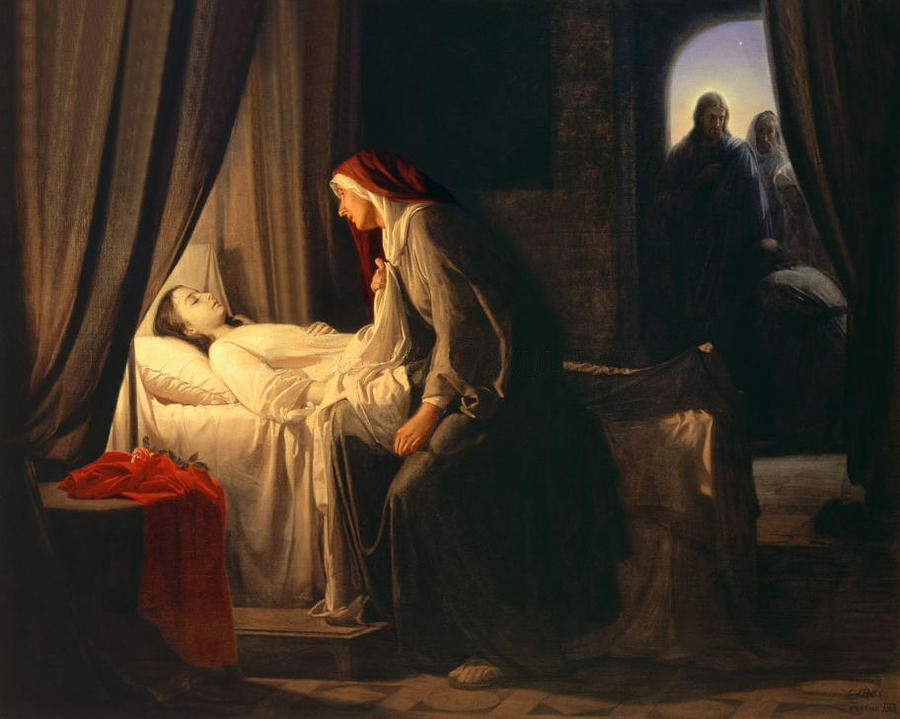
Picture by Carl Bloch - I love it: mother and daughter, and Jesus on his way in the background...

03 October 2014

Naamah: A Name

"Zillah bore Tubal-cain, who made all kinds of bronze and iron tools. The sister of Tubal-cain was Naamah." (Genesis 4:22)

I am a name
without a story.

Because one day someone decided
a girl's story is not worth telling.
Because one day someone decided
a girl has no story
except that written by a man,
husband-father-son.
What is a girl alone,
but a burden,
cursed,
reminder of what
a woman once lost -
a woman with a story.
How can they risk
a woman having a story again?

They forget
that men's stories
bring hurt and damage too,
that we are all
equally responsible,
spiralling down together,
down
down
down.

But
Someone is reaching
into our stories,
reaching to catch us as we fall -
Someone who wants to be a part
of this sad, doomed, sordid tale,
who wants to risk
a story of His own.

I am a name
without a story -
but I have a name.
And He knows me,
and He calls me by name:
"Naamah."
They may deny me
the chance to share my tale -
but He won't let them hide
my name.

________________________________________________________________

[30. / 31. August 2014]

I tend to not write poems about the "story-less names" (otherwise I'd have to sift all the genealogies and make up hundreds of stories!). But my mother pointed out Naamah to me once and wanted me to write a poem for her too, so now I did...

I hope what I meant to say is visible between the lines... it's basically about inequality, more focus being put on men's stories, and women not really being mentioned much except in connection to "their men". The "woman with a story" is Eve: she lived free and equal and could make her own choices, but they led to destruction. Often when people think of "the Fall", they push blame on Eve, forgetting that Adam was there too and took the fruit as well, forgetting that all of us are responsible for our own sins. I can imagine men shortly after the Fall trying to deny responsibility, and pushing down women because if given freedom, wouldn't they just do damage again? But denying responsibility and blaming others, to the point of treating them as lesser beings, is not the way to go.

What's interesting about Naamah is that, unlike most other women who only appear by name in the Bible, she really appears only by name, and not in connection to any man (except for her brother). And now anyone who reads the Bible and does not skip the genealogies will read her name. (Probably not remember it, but still...) So even if people want to hem us in and make us small, we are still all equal before God: He knows us by name, He cares for each of us, no matter what society says.


28 June 2014

Noah's Daughter-in-Law: Tears of God

Genesis 6:5-22

God -
I don't understand
this salvation of yours
that leaves me here in the dry
while outside people drown.
The door is shut
and I can hear them scream
and scrabble at the wood,
panicking -
while here I sit
as my world is washed away
with people I knew
and people I loved -
I don't understand.

God -
they say you are love -
so why this cruelty?
Why wipe all away
and destroy what you made?
Why so violent an end
to a world that once was good?
I don't understand.

But this rain falling down -
are these not your tears?
Tears of love and tears of pain
for the many who suffered
under human cruelty
that became too great to bear
for this earth,
and for you.

How cruel must we have been
for these tears to be so many
that they fall without end,
forty nights and forty days,
covering the mountains,
an unfathomable sea?
Deep as this sea
was our evil on this earth -
deep as this sea
was the suffering and pain;
deep as this sea
was your sorrow and compassion -
deep as this sea
your love in sparing me.

This rain falling down
is not your cruelty
but your love that cannot bear
the cruelty it sees below.
This rain falling down
is an answer to the cries
of the innocent whose blood
screams to you from the ground.
This rain falling down,
these are your tears,
drowning a world
too evil to remain.

God -
I don't understand
this salvation of yours
that rescues us, even though
you know it will happen again.
Your tears will fall,
again and again,
for the innocent who suffer,
as evil lives on -
but a rainbow spans the skies
as again and again
you give a new chance
to this broken world.


_________________________________________________________________________

[29. June 2014]

I have observed that certain people like quoting the many people drowning in Noah's day in order to make a point about God not being particularly loving in the Old Testament. So I decided to look into the question and here's the result...

What I think is very important for us to realise about God's judgement is that:
1. It is always fair,
2. It is about God standing up for those who suffer.

When God brings judgement over people, it is not out of cruelty or senseless anger, but out of love and compassion for the suffering, and bringing an end to human cruelty and evil. In the case of the great flood, the cruelty of mankind must have been pretty bad, for God to actually regret having created us at all! The main emotion of God that comes through in Genesis 6:5-22 in connection to the situation on earth seems to me to be not anger but sadness: "it grieved him to his heart." (v.7)

So at some point while thinking about this the connection between the rain and God's sadness popped up. We need to realise that God's judgement is not out of cruelty, but out of love for those who suffer under cruelty. God is not cruel - we are. One thing I heard someone say after one of the big natural disasters of the last few years was: in such situations, we should not be asking why God lets bad things happen to good people, but why God lets good things happen to bad people. Because even the people God saved in the Ark went on to sin more and do more cruel things. If we look at the world today, it is full of cruelty again! So shouldn't we be all the more grateful for all the times God spares us from the punishment we deserve?

Picture by Gustave Doré

More of the family: Mrs Noah

14 June 2014

Mrs Cain: God-forsaken World


Genesis 4

They say that, not so long ago,
the world was young and beautiful,
the earth brought fruit, and work was joy,
there was no pain, no hate, no fear,
no guilt, no shame, no hiding away,
but peace, true peace,
and You.

But now I lie on blood-stained ground,
staring out into a void
of distant stars so pale and cold
in this god-forsaken world.

I carry his burden of guilt and shame,
as we move from here to there,
fleeing - from whom? - from you? ourselves?
from the blood on his hands -
afraid, alone,
in this god-forsaken world.

What are we now but helpless exiles,
trying to survive in a god-forsaken world,
conscience eating away inside,
nowhere to run, nowhere to hide
in this world made cruel by ourselves.
Where is the peace,
where are You -
is there no end to this curse,
this curse of our own making?

And yet
we're not forsaken
in this god-forsaken world,
for You show mercy still:
You guard us from falling
(if only we'd hear!),
You give us protection
(a sign on his brow),
You bless us to be
a creative people,
creative like You -
our Creator.
It is not hopeless yet.

Distant You seem -
hidden behind a veil
that I can't draw away -
but still You are there,
watching me,
guiding me,
speaking, wanting us to hear
Your words of mercy
that we don't deserve,
Your promise of peace
(just like before!),
Your breath that still
gives life to this world,
this god-forsaken world
that You have not forsaken
after all.

_______________________________________________________________________

[12. - 14. June 2014]

Cain (son of Adam and Eve) was the "first murderer": he killed his brother Abel, out of jealousy. Because when Abel sacrificed to God, God accepted the sacrifice - but when Cain did the same, God did not accept it. It doesn't say why, I also don't think it means Abel was the better guy and Cain had something "wrong" about him.

The interesting thing in the story is how God speaks to Cain. You see there is a relationship there, it's not like Cain isn't interested in God or God doesn't like Cain (in fact Cain cares enough about God's opinion that he gets frustrated when, to his eyes, God shows Abel preferential treatment). God in fact warns Cain not to give in to his anger and jealousy (v.6-7). Cain does not listen, however, and commits the first murder. God punishes him by sending him away from his family and his former livelihood (farming). There again we see the interesting relationship between God and Cain: Cain is afraid of being hunted down and killed for what he has done - and God, even while letting him feel the consequences of what he did, gives Cain protection by putting a mark on his brow that will keep people from hurting him.

If you look at the genealogy that comes after the story, you can see that Cain's descendants were a creative people: musicians and metalworkers.

So when writing about Cain's wife, I tried to imagine the "feeling" in a dark new world just newly fallen into sin, where there still was a living memory of Eden where there was peace and the nearness of God. Also I tried to capture the situation of Cain fleeing - partly also fleeing from his conscience - and his wife feeling with him and carrying his burden with him.

Of course the conclusion of all this is that, even though the poem is called "God-forsaken World" and Mrs Cain laments about the distance of God, God has not forsaken the world but still is here, still cares about the fate of humanity, and has a greater plan in store to bring everything right. Think about it: in Jesus, God Himself came down into this "god-forsaken world" and experienced all the pain of being forsaken when He died on the cross. God is not far away, but came right here among us, became one of us, and that way He has broken the curse that we brought on ourselves. So now what has been dividing us from God has been taken away; He is not distant but near, and if we believe in Jesus then He lives right with us and even in us, making us His temple - which if you read some of the Old Testament texts about the temple, is quite an amazing thing.

The hope that was there for sinners at the very beginning, in the time of Adam and Eve and Abel and Cain and his wife, has been fulfilled in Jesus. If the world was not yet forsaken then, then it definitely is not forsaken now - though we still wait for the completion of God's promise when He will make all things new, and the very last divide will be gone, and we will see God face to face. :)

Picture by Fernand-Anne Piestre Cormon. Picked it because it actually shows us Cain's wife!

30 May 2014

Joanna: Finished


Luke 23:50-24:10

It is finished
- over,
our hopes as broken as your body.
There's nothing you can give me now.
Your healing hands are pierced and torn,
your loving heart - cold.

There's nothing you can give me now,
no benefit in staying here -
but here I am
by your side
not taking anymore,
but giving
a last gift to you.

It is finished
- over,
or
 complete?
We wrap you in linen -
one last look at your face.
We roll the stone before your grave -
finished?

The seed has fallen
into the ground.
Will it awake
to bring forth fruit?
Lord, is it finished -
or has it just begun? 

____________________________________________________________________

[30. May 2014]

Actually this is long overdue; I was going to post this on the Saturday just before Easter, but was really busy and not happy with the first draft, so now more than a month later here it is... I suppose other things I've written go a bit deeper but I dunno. Was focusing on the double meaning of "finished": over, or complete. "Over" would mean it's the end, there's nothing more, this is where it stops. "Complete" means fulfillment, that something has been done. To many of Jesus' disciples, seeing Him die must have made them feel all was over. But when Jesus said it is finished, He meant complete: He had fulfilled what He came to do. It was not the end though.

The "setting" of this poem, or the scene in the background, is supposed to be the burial (because Joanna was probably one of those present). Might be visible in the third stanza.

Maybe the second stanza is a bit of a "mistake" in the sense that it makes a point which does not appear in the rest of the poem... so maybe I should either have left it out or elaborated the thought somewhere. But I'd find it a pity to cut it and I don't know how to elaborate so I'll just leave it for now. The thought there is that at Jesus' grave, we have a powerless Jesus. Those who stayed with Him there knew that they could not "get" anything out of Him, because He was dead. What do we stay with Jesus for - the things we get from Him? Or His own sake? I believe that we should not just believe in Jesus and follow Him because He promises us eternal life, or because we might get good things and blessings from Him, but believe in Him just because of who He is. Because even if He does not give us what we want or expect, e.g. if He leaves some prayers unanswered, that does not change anything about who He is, or change the fact that He is worthy of glory just because of who He is.

Last part is a reference to John 12:24 - "Very truly, I tell you, unless a grain of wheat falls into the earth and dies, it remains just a single grain; but if it dies, it bears much fruit."

Because this is a "passion" poem for Holy Saturday, it only hints at Easter, doesn't directly talk about the Resurrection yet. But for us it is certain: Jesus rose again~ So we already have the answer to Joanna's uncertainties.
But even after the Resurrection, when we have a powerful, living Jesus, not a dead and helpless one, I think we need to ask ourselves: do we stick with Jesus because of the benefits we expect to get, or do we stick with Him for His own sake? Do we believe in Him in order to get something out of Him, or do we submit to the true Lord just because He is the true Lord?


Picture by Caravaggio... my favourite depiction of this scene actually (so far).

18 April 2014

Mary Mother of James and Joses: Calvary

Mark 15:21-41


"Come down off the cross!
Save yourself!"
I hear them jeering from afar,
as I watch from a distance
in agony
how you suffer, forsaken by all.

They taunt and they jeer,
they gamble for your clothes;
no one shows pity,
no compassion anywhere.
Nails have pierced
your hands, your feet,
and blood runs down
your thorn-crowned brow.

If I could but cling
to that cruel cross,
and kiss those blood-stained feet,
and show you someone loves you still -
why am I too afraid?

Come down off the cross -
save yourself!
Why don't you?
I know that you can.
Why do you let them do this to you?
Why do you suffer, forsaken by all?

So many hopes,
so many dreams -
what of them now?
Weren't you the Messiah?
Weren't you the King?
Now you are helpless,
crying in pain,
broken, thristy,
dying.
What becomes of us
when you are gone?

"My God, my God,
why have you forsaken me?"
Jesus, Jesus,
why are you forsaking us?
Why now, when everything was just beginning?
Why do you let them do this to you?
Why do you suffer, forsaken by all?
Come down off the cross -
save us
because without you
what can we do?

A final cry -
you die
and all is lost.
The sky is dark,
the ground is shaking -
this is the end
of the world.

Or am I wrong
and this is the beginning,
and this is where life
and salvation spring?
Did you not promise
that death would not win?
Can I hope,
can I believe
that this is the start
of something new,

that if I cling
to that cruel cross
and quietly believe,
you show me that you loved the world
so much you would not save yourself
but died,
saving me?

____________________________________________________________________

[18. April 2014]

There were three Marys at the crucifixion... Mary Magdalene, Mary Jesus' mother, and this Mary. They were watching from a distance (according to Mark - John situates some people under the cross). I tried to write from their pre-Easter point of view, where they actually had Jesus' hints about resurrection but probably were still confused - though I also didn't want it to be only depressing and hopeless and "let's all give up now, we must have been wrong", but to have an outlook towards Easter...

Also was playing with the whole "saving" thing: people wanted Jesus to save Himself, but He didn't - because by staying on the cross, He saved us. Though before the resurrection, people didn't understand yet - that's why Mary for a while thinks by getting off the cross He'd save them because He wouldn't be dead but could go on being the Messiah the way they expected. But Jesus brought salvation in a different and unexpected way; His death was not the end but the beginning.

Hope you don't mind the irregular repeats - I like working with refrain-like stanzas, or "mirroring" (similar wording / structure but different words / direction of thought), but usually I just have one. Here there were two, the "come down off the cross" one and the "clinging to the cross" one. Seems to have worked, though....

Picture by Gebhard Fugel.

31 March 2014

Woman at the Well: Thirsty


John 4:1-45

All my life, I have been longing,
thirsting,
for I knew not what.
I have been waiting,
looking, searching,
but I never find.

I thought my longing
was for security,
the strong arms of a man,
to hide in, protected.
But strength failed me,
and I was left
alone and thirsty again.

I thought my longing
was for riches,
a well-off husband
to grant me every wish.
But money failed me,
and I was left
alone and thirsty again.

I thought my longing
was for pleasure,
the touch of a man,
his warm, fond embraces.
But love failed me,
and I was left
alone and thirsty again.

So I thought my longing
was for a future
won by my man
who'd secure it for me.
But hope failed me
and I was left
alone and thirsty again.

So I thought my longing
was for normality,
a peaceful life
with husband, family.
But life failed me,
and I was left
alone and thirsty again.

I do not know
what this longing is
and try to sate it
with whatever I find -
but always I am thirsty again,
insecure,
poor,
unhappy,
hopeless,
and don't know how to live.
Am I to die here,
parched?

Everyone who drinks of this water
will be thirsty again.
But those who drink
of the water that I will give them
will never be thirsty.


Lord,
all my life I have been longing,
thirsting -
now you open my eyes.
I have been waiting,
looking, searching -
now you let me find.

My longing has always
been for you,
for only you can fill it.
Peace and security come from you,
treasures worth more than earthly gold,
joy that lasts eternally,
hope for a future with you.
For you are the one
who gives me life
and stills my thirst.

A fountain
is welling up in me,
a torrent
begging to flow free -
I cannot but share
this water I've found
that stills the thirst
of all around.

________________________________________________________________

[16. March 2012]

A favourite text of mine... and a lesson I have found important to learn: only Jesus truly satisfies. We can work ourselves to death looking for answers and satisfaction of our needs in the wrong places - what we really need is found in Jesus.
I sort of based this around the Samaritan woman's 6 men (that's why every stanza mentions a man).

Picture by Henryk Siemiradzki

10 March 2014

Naomi: Bitter

Ruth 1 | Isaiah 54

Call me no longer Naomi, call me Mara, for the Almighty has dealt bitterly with me. I went away full, but the Lord has brought me back empty; why call me Naomi when the Lord has dealt harshly with me, and the Almighty has brought calamity upon me? (Ruth 1:20-21)

Call me Bitter.
Bitter is the cup
the Lord gave me to drink,
and I drank it
down, down,
down to its shuddering dregs.

Call me Bitter,
no longer pleasant and sweet,
for all my worth
is stripped away,
and I am nothing now:
childless and barren,
widowed and poor.
Bitter and bitterer
the dregs of my days.

If a woman's worth
lies in having a man,
somebody to love her;
if fulfillment can be found
only in his arms,
then what am I?

If a woman's worth
lies in having children
and bringing up sons,
if she can be complete
only as a mother,
then what am I?

In a world
where the worth of a woman
is measured by her men
- father, husband, sons -
there is no place
for me.
Call me Bitter.

And yet
o Lord
YOU are my Saviour
and you have seen my need.
And I can hear you whisper
my worth is elsewhere:
not in circumstances,
not in wealth and not in man,
not in husbands, nor in sons,
not in love, or duty fulfilled.

YOU, o Lord, are my worth.
You, o Lord, are my fulfillment.
In you, o Lord, I have husband and sons,
you are my riches and finery,
you make me sweet and pleasant again,
for you alone can satisfy.

_____________________________________________________________________

[September 2013]

Naomi = "pleasant"
Mara = "bitter"

Actually I wrote this coming from Isaiah 54. Isaiah 54 hit me as a text which is all about "women's problems", actually: barrenness, widowhood, etc. It's actually talking about Jerusalem personified as a woman, but reading it I felt it can also speak to women who feel disgraced because of their circumstances - women like Naomi.

I think often we seek our worth in outside things: having a boyfriend or getting married, getting good grades, etc. In Naomi's days, being married and having children was what brought good status, as well as security. Nowadays a woman's worth is no longer as dependent on men as it used to be - but still I get the feeling that many of us (encouraged by the media) think we need a boyfriend, or need to be beautiful, or need to be successful and make a career, to be worth anything. What if you can't? What if something gets in the way and your plans are dashed, like Naomi's were?

We need our priorities straight. Of course, there's nothing wrong with depending on other people, or getting a confidence boost when it turns out a guy likes you. But I think we need to remember that our worth, our value as a person, does not depend on our circumstances or attainments - our worth comes from God who created us in His image. It's a worth that does not go away.

Picture by Thomas Matthews Rooke

01 January 2014

Peter's Mother-in-law: Not for Me

Matthew 8:14-15


I have been healed,
but not for me alone.
I have been restored,
not to look selfishly to myself.

No - you have healed me
to be the sunshine of this home,
a light for all this family,
to share the gifts you gave to me -
they are not mine to keep.

I have been healed,
but not for me alone.
I have been restored
to spread this thanks
throughout the world,
my joy in you,
your love for me.

Look, Lord,
I give you what I have,
though it is small.
Take my time this afternoon,
take a seat at this table of mine,
take this food I cooked for you.
Be my guest
and let me serve you
in the small ways that I can,
with the little that I own -
for all I own is yours.

I have been healed
to serve you, Lord,
and I have been restored
to restore others.

_______________________________________________________________________

[May 2012] [Commentary January 2014]

This one was triggered by an experience in one of my churches. It's a sad story, really. At that time I got the impression that members of that church were becoming very much focused on simply consuming, becoming inward-looking, concerned mainly with what God does for them or gives them or promises them, and not as interested in service, involvement and missions. After a sermon that had basically the same message as the second-to-last stanza of this poem (giving what we have to Jesus, even if we think it's just something little), someone went up on the stage and gave a response that showed the sermon had not really been understood, focusing on the gifts only and not the service we can / should do in thanks for those gifts. (If I remember right. It was all very long ago. We all ended up pretty upset. It was a mission event too, actually, and the focus just ended up being turned on inward-looking again.)

Now don't misunderstand me: it is good to rejoice about what God gives us. But what kind of rejoicing or thanks is it if we just take, take, take? If our only answer is "thank you"?

Maybe you need to know more about my understanding of worship. You see, I don't think singing songs is all there is to true, full worship. I think true worship is service. True worship is when we lead more voices to join in God's praise. That's why so many of the Psalms have the imperative "Praise the Lord!" - it's not just one person praising God, but a call to others to praise Him. So I also think going to church and singing songs and saying "thank you" is not all there is to thanksgiving.

And here we get to this lady: Peter's mother-in-law did not just say "thank you". Although she had a right to. She had just been sick. Now you can say Jesus' healing powers were so great that she did not need a recovery time, but still. After you've been sick you might want a little spoiling, a little rest. This lady got straight up and served Jesus. She said thank you by giving what she had, by giving him the gift of her hospitality.

So I think we should not just sit there and say "thank you" but get up and do "thank you". We are blessed by God in order to be a blessing. (Gen 12:2-3) Not to lock up the blessing in a treasure chest and sit on it and be happy. Do something with the borrowed talent, multiply it, and not bury it in the ground. (Mt 25:14-30) The guy in the parable who buried the talent in the ground did it out of fear - isn't it just as bad to bury it out of the wish to just enjoy it for oneself? The Gospel is not a toy to look at, it's meant to be shared. God's gifts and promises are not only for us; sure they are to be rejoiced over and enjoyed, but isn't a joy shared more real than selfish joy that wants to shut everyone else out?

So, rant over. ^^; I'll scuttle back to the paper I should be writing...


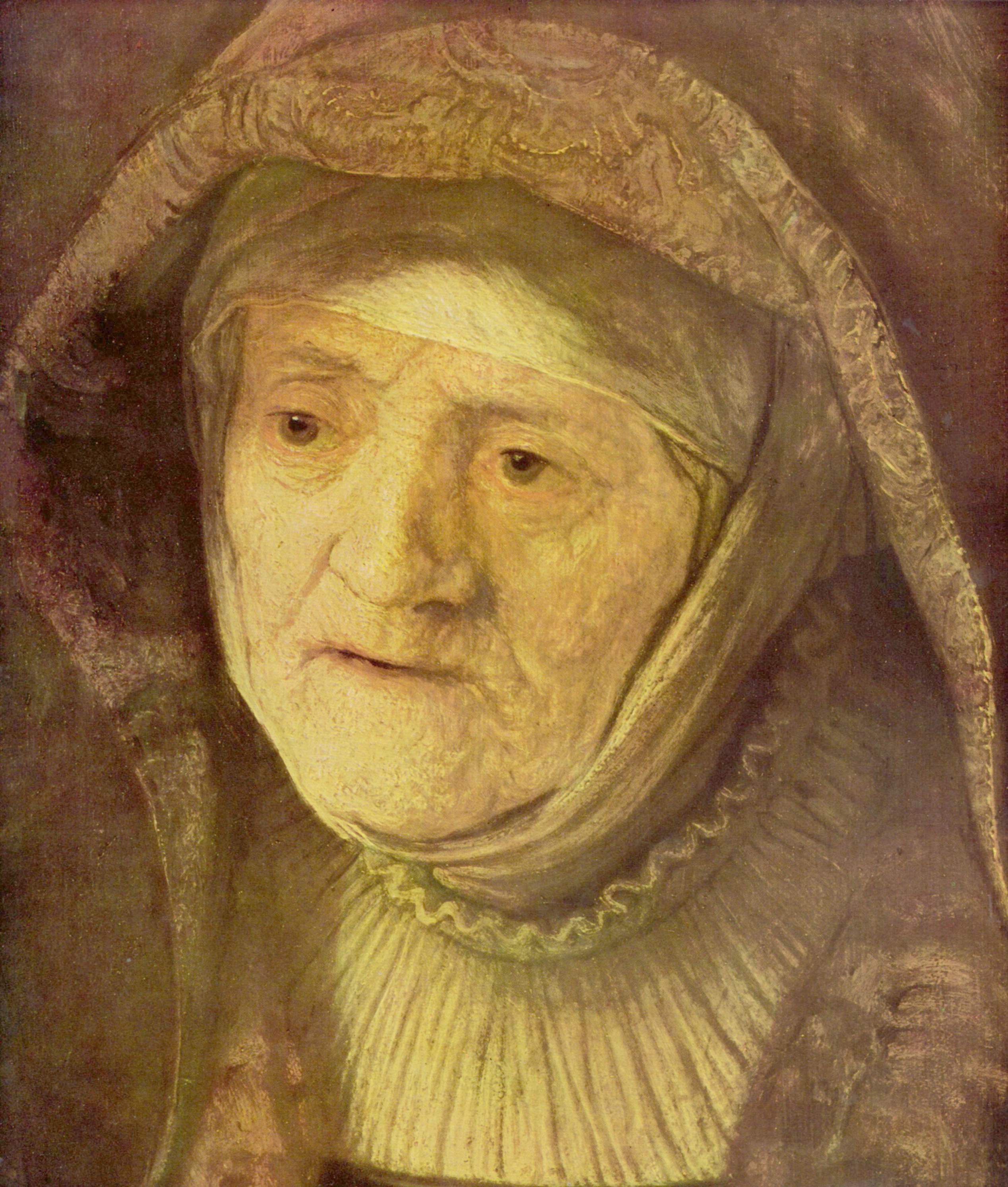
I didn't know there were any pictures of this scene - there's some nice ones, the one here is by Rembrandt.
Wish there were a picture of her serving though.

16 December 2013

Mary: Blessed

Rejoice,
highly favoured one,
the Lord is with you;
blessèd
are you among women.


Shaken around
in the middle of the night
by an old donkey
and labour pains.
Blessèd.

Standing in the cold
before locked doors,
a shape unsightly
and forbidden.
Blessèd.

Crying in the rain
with you in my arms,
my child; my God -
a sword through my soul.
Blessèd.

Blessed
to bear on my body
the shame of you,
the foolishness of God.
Full of grace.

My soul magnifies the Lord,
and my Spirit has rejoiced
in God my Saviour.
__________________________________________________________

[October 2010] 
[Commentary December 2013]
Mary is sometimes called the "Blessed Virgin Mary" - but her life was not at all easy and probably not what many of us would, at first sight, find particularly "blessed" (depending on how you define blessing). Becoming pregnant out of wedlock must have caused some scandal, rejection and ostracism (would conservative Christians accept Mary if she came knocking at their door, or would they send her to the stable or even leave her outside in the cold??). Being the mother of the Messiah was not all roses. She had to flee to Egypt with a baby, live in a foreign country. Afterwards she had to put up with the strange things Jesus did and the Gospels show us she did not always understand. In the end, at the cross, she had to watch her child die a gruesome death.

Mary chose obedience - obedience is not the easy way. But nonetheless, she can be called blessed. Because God's ways are higher than ours, and Mary recognised that. Obeying God and doing His will can be hard, but it is worth it, because HE is worth it, and knowing His love is better than anything. Are we willing to go as far as Mary did, to say YES to God even if it means pain, rejection, and loss? Can we, like Mary, still sing the Magnificat - see beyond our own pain to what God is doing for the world, and doing through us for the world?

Here's a story from Chiara Lubich that has been inspiring me lately: she was asking God why he had not left a way for Mary to remain present among us the way Jesus is. And then she felt his answer was: I did not leave her with you, so that you can be another Mary. (or something like that)
Protestants need more of a "Mariology", if only to recognise her as the important example for the Christian life she can be.


In case you're interested in the cogs and wheels stuff behind the poem:
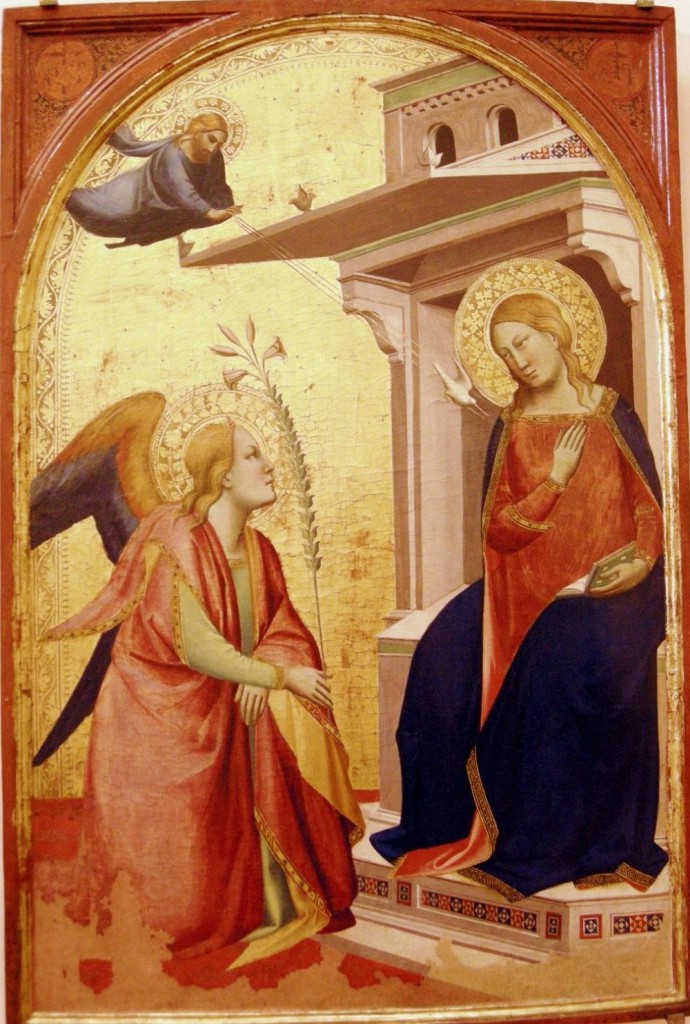
stanza 1: Luke 1:28 / The Annunciation
stanza 2-3: Bethlehem
stanza 4: beneath the cross (had the Pietà in mind) (and Pergolesi's Stabat Mater keeps playing in my head every time I even glance at this poem). I honestly can't think of Christmas without thinking of the cross. Important here is also Simon's prophecy from Lk 3:23, "a sword will pierce through your own soul also."
"My child, my God" reflects how Jesus is at the same time fully man and fully God.
stanza 5: see 1 Corinthians 1:18-31 
stanza 6: the Magnificat / Lk 1:46-55
And the Beatitudes were at the back of my mind a bit too; though I did not succeed in weaving them in the way I wanted to - until I wrote the German version of this same poem, which is a little different mainly in that it's closer to the Beatitutes.

01 December 2013

Elisabeth: Barren as a Desert


Luke 1:5-25

I'd come to terms with it.
No longer cried about it,
though I still felt the pain.
Nor did we talk about it,
though we still felt a pang
every time we saw them:
pregnant women, babies, children.
I'd come to terms with it,
but it still hurt.

It hurt to wonder:
WHY?
It hurt to hear my friends
gossipping behind my back,
questioning why someone
who lives by faith
and walks with God
can go without blessing,
barren
as a desert.

I'd come to terms with it.
We no longer even tried.
We hardly even prayed -
it was too late anyway.
I'd come to terms with it -
I had no other choice.
I trusted you knew
what you were doing,
though I could not understand.

How much greater the wonder,
how much greater the joy,
to see you turn this barren desert
into blossoming spring!
You have answered the prayers
I forgot that I said,
and in such a way
as I'd never imagined.
In me grows
the fulfillment of promise,
the beginning
of more wonders to come.

A voice cries out in the wilderness:
Prepare the way of the Lord!
He turns a desert into pools of water,
a parched land into springs of water.


_______________________________________________________________________

[December 2011]

Verses quoted at the end are Isaiah 40:3 and and Psalm 107:35. Isaiah 35:1 and 51:3 would also have done very nicely here. Actually the whole desert image comes pretty often in Isaiah, and it's what I suddenly had to think about while writing this. :)

Written while I was supposed to be listening to a lecture on Bultmann (well, I half listened...)

Note: the first two stanzas are hinting at the common belief back then that if someone lives a godly life, it shows itself in blessing; i.e. people expected God to answer a good person's prayers, and bless that person.

Picture by Louis Jean François Lagrenée

13 November 2013

Leah: He Loves Her, He Loves Me Not

Genesis 29:14-35

He loves her,
he loves me not.
He loves her -
the pretty one.
I was always meant to be
the spinster aunt,
the old maid sister,
destined to remain
in her beautiful shadow.

He loves her,
he loves me not.
Who would notice me
when she is there?
And now she is
always here
always between
me and him
making him
love her, not me,
not plain old me.

He loves her,
he loves me not.
He loves me not -
the plain one.
Here I am,
forever overshadowed,
in a loveless marriage,
fighting for him,
for the least bit of attention,
and still always remaining
in her beautiful shadow.

And yet
you see my plight, o Lord.
You see me, the plain one,
and take pity.
The one less loved
becomes a mother of children -
children, the symbol of love.
He loves me not -
still it hurts,
but your love comforts me.
He loves her,
he loves me not -
but
you love me.

____________________________________________________________

[June 2013]

I thought of Leah, the plainer sister, always in her sister's shadow, less loved by Jacob.
Thankfully we don't have to share husbands nowadays, but still I think the feeling of being overlooked because of someone prettier, or not being loved by the one we want love from, or being left for another, is something pretty universal (sadly). What Leah's story shows is that even if you don't get the love and attention from a man, God loves you - and His love is, in the end, what counts more. Though I don't think the hurt completely goes away; it's natural after all to long for love. But I think there is something really comforting in realising that God loves you more than a man ever can, and I think it's important to realise that a man can never fulfill and satisfy you; only God can. It's something I've been learning.

03 October 2013

Sarah: He Who Laughs Last

Genesis 18:1-15

I laughed:
What a ridiculous notion!
Me: a mother?
At my age?
Yeah right.
We've been waiting for years,
and always: nothing.
You said and you promised,
but always: nothing.
Believe you now?
Not gonna happen.

We laughed:
What a wonderful moment!
Me: a mother!
At my age!
And yet -
after waiting for years,
and always: nothing,
I laughed at your promise,
and now, there's something!
Now this has wiped
the grin off my face...

I guess
you're laughing now
at this gobsmacked woman -
me - who laughed
at you.
You left us waiting for years,
and we saw nothing,
but you've done as you promised,
because nothing
is impossible for you.
And now, I am sure
you're laughing much louder
than I did before.

__________________________________________________________

[October 2011]

Here's one thing you find out if you learn Hebrew: Isaac is, in Hebrew, Yizchak, which means: "He laughed." But who was laughing here? It was Sarah, wasn't it? So my Hebrew prof likes to say that Isaak should have been called Tizchak ("she laughed").

But maybe not only Sarah laughed. Writing this poem I had to think of the saying, "He who laughs last laughs loudest."

Picture by James Tissot.