Showing posts with label Old Testament. Show all posts

11 June 2023

Psalmist's Mother: My God, my God

 Psalm 22

"Yet it was you who took me from the womb; you kept me safe on my mother’s breast. On you I was cast from my birth, and since my mother bore me you have been my God. Do not be far from me, for trouble is near and there is no one to help." (Ps 22:9-11)


"My God, my God"
I moaned, I cried
and then he was out,
delivered.

Then there I was
swamped with feeling,
a tiny purple thing
latched to my breast
overwhelmed with love.

My child, my child,
how can I love you
how shall I protect you
from the baying dogs
and the charging bulls,
from people who will laugh
and scorn and abuse,
from death that lurks
for us all in the end
who am I
to take you by the hand
in this world where I have no control
helpless
just like you?

My God, my God,
I cast him onto you
for what else can I do?
When I am too weak
when I am too small
when one day I am gone
You will be there.
A Love even greater
than the one that's threatening
to tear my heart in two.
My God, my God
never forsake him,
do not be far from him
in his time of need.

Can a mother forget her child?
Never.
And neither can you.

___________________________

[11. June 2023]

Reading through the Psalms right now and found out Ps 22 mentions a mother and a birth scene and I was inspired.

In my daughter's first night I looked at her at one point and just had to burst into tears ober the realisation that God loves her with a love even greater than I could ever have. For me as a mother, knowing that God is there when I can't be is such a great help with so many things in motherhood and in life just not being in my control.

Ps 22 is the famous "My God, my God, why have you forsaken me?" Psalm that Jesus quotes on the cross. Having this little scene of the mother entrusting her child to God in the middle of it for me is a reminder of how we are dependent on God from the beginning. These verses set a contrast to the negative beginning. But also emphasises again the question: Where is God now in my suffering?

The Psalm ends with the experience that God is still there and does not really turn away or abandon anyone. The lament of the first half abruptly turns into praise. God can be trusted. I wanted to make this poem less about the lament (though I picked up some elements from the Psalm) and more about the trust, and that decision to entrust one's child to God because we can't do this parenting thing alone.

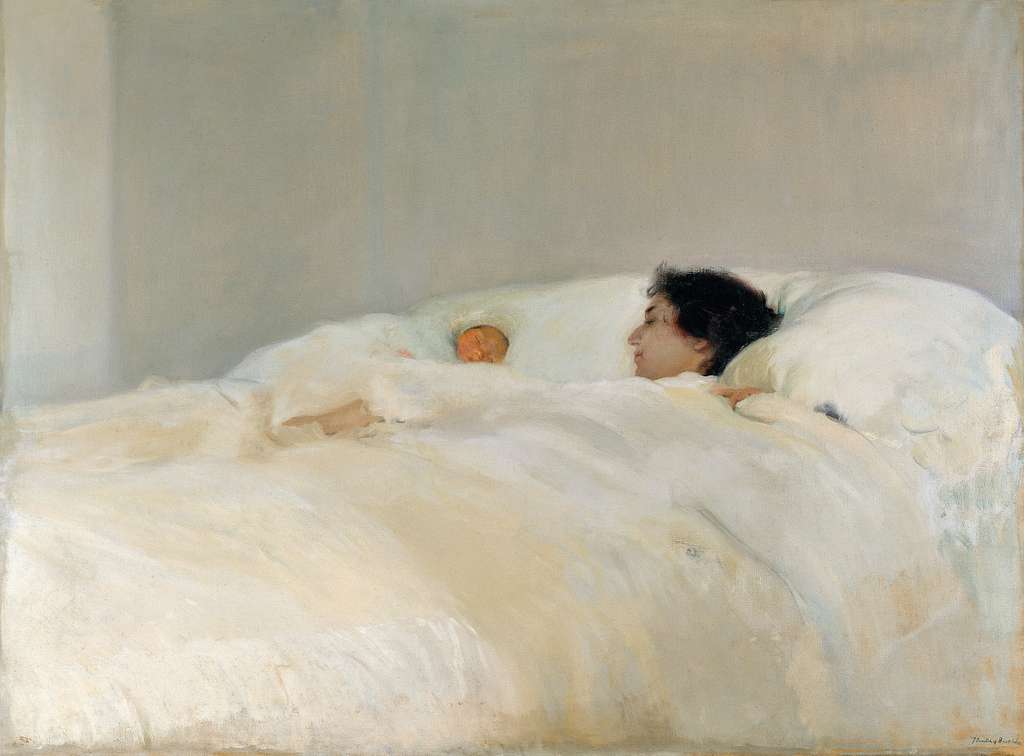
Picture by Joaquin Sorolla y Bastida

11 February 2023

Bathsheba: Butchered

TRIGGER WARNING: rape


2. Samuel 11:1-12:15

I could not say no.
I would not have said yes.
I was not asked,
and if I had been,
what could I have said?

Caught
like a deer in the hunter's sight,
should I flee?
should I fight?
maybe
if I cower before him
and fawn at his feet
do what he wants
he'll be kind to me?

(but still
in the end
he'll butcher me,
won't he)

I could not say no.
I would not have said yes.
If I had screamed,
who would have cared?
who would have dared
come to my rescue?

I could not say no.
Should I have?
I should.
Does that make me complicit?
Does that make this my sin?
Is it my fault
that it went so far
because I didn't say stop,
couldn't say no?

I could not say no.
I would not have said yes.
"Come," he said,
and sanctimoniously:
"I won't do anything you don't want"

and just like that
the burden is on me
and it's my responsibility
and I can go home with the guilt
of "maybe he didn't know better"
"maybe he misunderstood"
"maybe it's my own fault".

I could not say no.
I would not have said yes.
But who will know?
Who will care?

Now I am set before the door
to gather up the shattered pieces of my dignity
with the tattered remains of my clothes
butchered
bearing the shame
questioning myself
while he rests free and easy
certain he's not to blame
because I couldn't say no

but
I did not say yes.

__________________________________________________________

[11. February 2023]

Growing up I always learnt David "had an affair", or the even worse version: "Bathsheba seduced David" (by "bathing on the roof"). It was only more recently, during my theological studies, that I discovered this is actually a story of rape. And there are still Christians who will fight against this interpretation and insist Bathsheba was somehow at fault! I feel like how we handle this story has a lot in common with how abuse and rape are still handled in the wider culture and by Christians.

Here in Switzerland at the moment feminists are fighting for the legal definition of rape to be changed so that "only yes means yes". At the moment, it's only rape if you said no, pretty much. But what if you can't say no?

Recently I have been thinking about the complexities of consent (partly because of this initiative in Swiss politics, partly from watching "Anatomy of a Scandal" which handles this question). And really it should not be so hard. But the way stories like Bathsheba's are still handled shows that society has not learnt at all yet. As long as we still say things like "she could have said no", "why didn't she call for help", "what was she wearing", etc, there's still something very wrong in society. This kind of mentality endangers women.

The Bible is really, really clear on Bathsheba's story though. The prophet Nathan in 1. Sam 12 gives a very clear explanation of how the incident should be understood, in his story of the rich man slaughtering the poor man's lamb. The Bible itself compares Bathsheba to a lamb being slaughtered, a sacrifice to David's lust. There is no way a sheep can be complicit in its butchering. I feel like we have spent so much energy trying to make David a "good guy" because there's this half verse somewhere about David being a "man after God's own heart" - instead of just honestly reading the Bible and letting the Bible speak for itself. The Bible is on Bathsheba's side, God is on Bathsheba's side. Bathsheba was raped. And it shouldn't matter to us whether she said no or not. Because without a yes it was rape. The Bible text uses only passive verbs for Bathsheba in this story, she is all victim here.

I need to write another poem though for later in Bathsheba's life, because she rose up and became very influential in David's court, so much so that it was through her actions that her son Solomon became king after David's death despite being pretty far down in the line. She does not remain passive.

Other Bathsheba poem: O Child (about the child she lost after this)

Picture: 17th Century Anonymous

16 October 2022

Daughters of Shiloh: In Your Own Eyes

 Judges 21:15-25


And we danced
in the sunshine

not a care in the world
and we sang
our God's praise
without trouble or fear
free
like our mothers
who left Egypt by His hand
free
in the shelter
of His justice and love.

But now
I am loot
to be carried away.
I am your quarry
to be hunted down.
I am prey to be caught,
a prize to be captured,
I am flesh to be used.

Oh you pious men
keeping your vows before God,
oh you righteous men
looking out for your brothers,
oh you faithful men -
you do what is right,
what is right in your own eyes -
but is it right in God's?

In God's,
whose will is shelter
in justice and love?
In God's,
who led our mothers
out of Egypt by His hand?
Would this Saviour of Slaves
have us treated like loot,
like quarry, like prey,
a prize to be captured,
flesh to be used?

You do what is right
in your own eyes
and think yourselves pious
and righteous and good
free
like your fathers
led from Egypt by His hand
but as long as your daughters
remain so enslaved,
as long as your actions
are not justice and love
your hearts will be stuck
in Egypt's land
and you'll still be slaves to sin.

Turn around, then.
Turn around and dance with me.
Dance with me
in the love of the God
who created us as equals.
Turn around to the King
whose commandment is love.
Turn around and let justice reign.
Then you and I can all be free
dancing in praise of the Saviour of Slaves,
not a care in the world,
without trouble or fear
doing right in the eyes
of God our king.

____________________________

[16. October 2022]

This story is so horrible (and this is just one part of the horror, the beginning of Judges 21 is about genocide as well as rape). At the end of the book of Judges, Israel is a mess. They just decimated the tribe of Benjamin as revenge for what happened with the Levite's concubine (awful, awful story of gang rape - the Bible really is not silent about the horrors of the human race). Anyway after the massacre the other tribes feel sorry and want to prevent the entire tribe of Benjamin dying out. However, they have vowed not to give any of their daughters as wives to the men of Benjamin. What follows is a lot of unnecessary pain and violence all to keep that vow while still helping the Benjaminites come to women.

The "daughters of Shiloh" are girls participating in a religious festival, the Israelites set up a kidnapping so that they won't have "given" the girls freely.

Like a refrain in the book of Judges, and again at the very end (Judges 21:25) is the sentence: they did what was right in their own eyes. Judges is about things going wrong. When we read about genocides and murder and gang rape and here the kidnapping and rape of hundreds of young women, it's nothing "condoned" by God. It's people making a big hash of things after having been shown by God how society can actually be different (law given on Sinai). And the tragic thing is, so often we human beings are capable of thinking we're on the right path while actually doing horrible things that are opposed to the will of God. These guys thought they were being good people doing their best to keep a vow, helping out their countrymen, etc.

Which is why I think we need to keep in connection with God, and always be open to repent and turn around. So many things were thought to be okay for the longest time, even by Christians (slavery, racism, subjugation of women). Change is hard but true salvation is not just a change of what we believe or a spiritual thing, but a change in how we live our lives and how our societies work. That's why the giving of the law,at Sinai was an important step on the way out of Egypt: Okay, you're not slaves anymore - here's how to live so you won't be slaves again! True freedom is not in having no one tell us what to do (doing what is right in our own eyes) but letting ourselves be guided to a way of living that is best for everybody.

Picture by Franz von Stuck


20 July 2022

Jochebed: Weaning

Exodus 2:1-10


How often now
have I said "I'm done" -
when you bit me
or had a trying night.
"I can't do it anymore,"
I thought
so many times.

And yet
I'm just not ready.
Every time
you turn away your head
or would rather play,
every time you prefer
meat or rice or figs
sadness overcomes me
and fear
as I realise:

Our time is coming to an end
and soon
you'll be no longer mine.
Even this borrowed time
must come to a close
and I'll have to give you away.

No, child, no - 
stay small
stay mine
I'm not ready
I'm so done
but I'm not ready.

I'd rather hold you
wriggling and screaming
to this dry breast you no longer want
than let you go
and give you up
for good this time.

______________

[Feb / July 2022]

Jochebed, Moses' mother, put her son in a basket after it became impossible to keep him hidden in Egypt where all Hebrew boys were killed. It was her last resort to keep him safe. By a miracle, he ended up being found by the Pharaoh's daughter, who took pity and wanted to adopt him. Through the quick thinking of his sister Miriam, Jochebed got her son back through the role of wet nurse.

But then what would it have been like for Jochebed to have that time come to an end as Moses started weaning? It's likely she was allowed to nurse way past 2, it's only modern Western culture where breastfeeding less than 2 years is thought to be the "norm". But still. That time ends. Every child weans. No more wet nurse. A second goodbye.

I'm in a bunch of breastfeeding groups and have observed that weaning is a complex topic. Sometimes as a mother one just has enough and wants to wean, other times the child abruptly stops before Mama is ready. Often the end is bittersweet. I'm not there yet 😆 but have experienced odd days where my daughter showed no interest for hours and I felt oddly offended by it. 🤣 So I imagine it must have been an extremely conflicting experience for Jochebed. You can't force a toddler to nurse (hence the "wriggling and screaming"), when they're done they really are done. But to have that mean not only the end of the breastfeeding relationship but also the end of your time with your child - terrible! 

I first wrote this in German this Feb at a workshop I did in my church (I like taking Ex 2 because there are 4+ women in the story), translated it today because I'm doing another workshop and just rediscovered it among my notes. 😆 

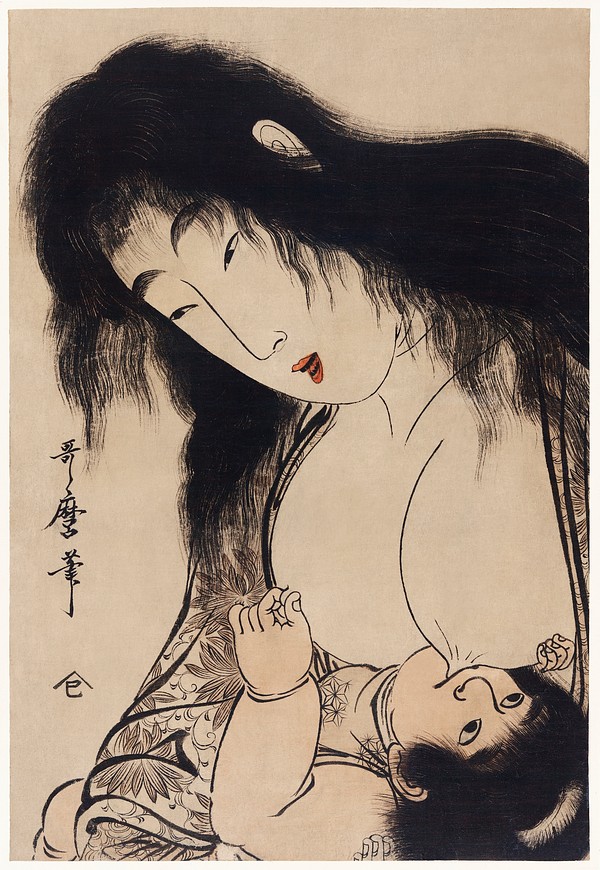
Picture by Utamaro Kitagawa. A very "toddler nursing" picture. 🥴 

19 July 2022

Haggith: Don't Heal Me


Don't heal my broken heart, God.
I want to feel the pain.
I want the wound
to stay open, bleeding.
I want to stay shattered;
Don't gather my pieces.
Let me grieve.

Don't heal my broken heart, God.
Let me stay here instead,
wallowing in bleeding love,
bleeding for him.
Healing would feel
like forgetting
getting over him
betraying him.
Losing him forever.

Don't heal my broken heart, God.
Don't take the pain,
don't comfort me.
For as the pain fades
so does he.
Keep my tears flowing.
Silence my laughter.
Keep me broken;
I don't want to be fixed.
I need him to stay present
in my pain, in my tears.
I need him to keep haunting me,
I need it to keep hurting me.

So don't heal my broken heart, God.
Let me grieve.

___________________________

[19. July 2022]

I read about a most terrible loss of a baby today. While I was praying for the mother the thought came to me that with such a loss, I would not want to be comforted. "Feeling better", ever, would feel like a betrayal.

Modern-day Western culture is very uncomfortable about grief. We try to make people feel better because that makes us feel better. But sometimes we just need to feel our feelings. It is so important to have and give permission to grieve. To feel all of it for as long as it takes, in whatever way it takes (everyone grieves differently!), instead of feeling under any pressure to "go back to normal".

I chose Haggith for this poem because she is one of many grieving mothers in the Bible. Her son Adonijah is one of the contenders for David's throne and almost becomes king. Bathsheba manages to get her son Solomon on the throne instead. Solomon then has Adonijah and his supporters killed. Politics and intrigue and we can have all sorts of theological conclusions about what went on here, but in the end you will always have people experiencing loss and grief.

I believe God allows us to grieve, that being a Christian does not mean having to be always happy, that it is perfectly fine to not want to get better yet. God lets us take our time to grieve. He will heal when we are ready.
So this also makes me think about how I am there for people in grief. How I pray for them. "Heal the broken hearts" - yes, but are they ready to be healed? What do they actually want and need? Maybe instead of being released from their feelings, they want a safe place to express them? Maybe I can be that safe place for someone. Just listening, not trying to comfort. Maybe a better prayer would be that grieving people can receive what they need - be that comfort, sleep, a listening ear or the courage to be angry.

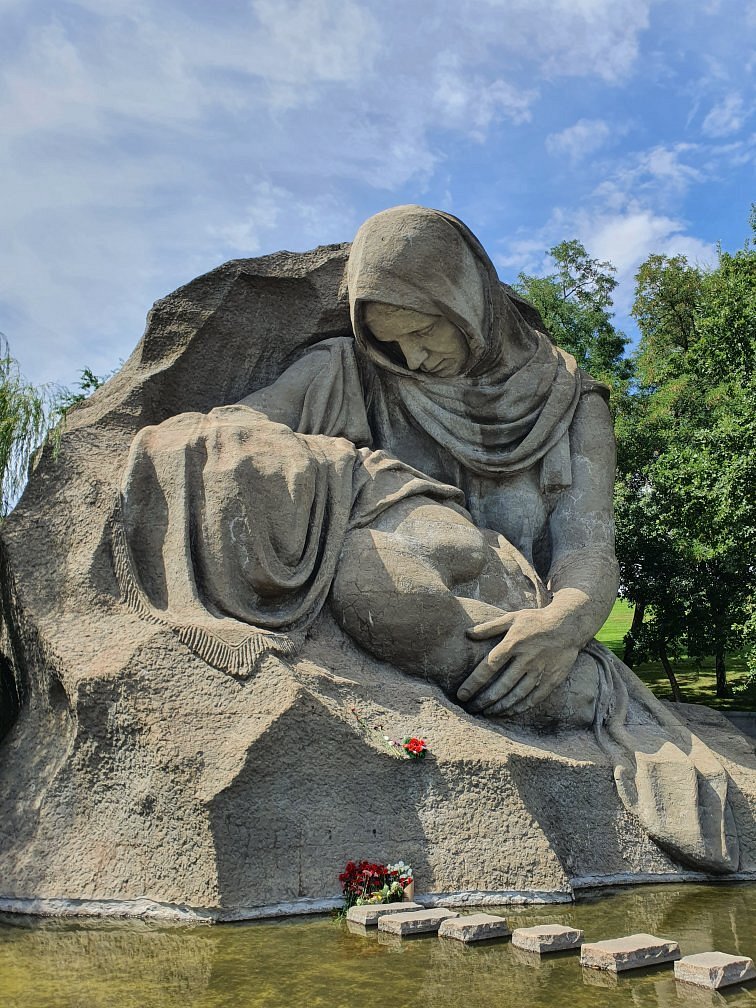
Picture: "Grieving Mother" in Volgograd

23 January 2022

Widow of Zarephath: My Cup Overflows

1. Kings 17

I am alone
but my cup overflows.
No husband to support me
but my cup overflows.
Sole provider for my child
but my cup overflows.
Troubled are our times
but my cup overflows.

Your abundance
comes flowing down
covering our needs.
My cup overflows.
All the strength that I needed
to live through this time,
endurance and joy,
my cup overflows.

Faced with starvation
but my cup overflows.
Faced with illness
but my cup overflows.
Faced with loss
but my cup overflows.
In all adversity
my cup overflows.

All your riches,
your luxurious love,
pouring into our lives,
more than enough.
My cup overflows
enough to share
with hungry prophets
and weary guests.
My cup overflows.

_____________________________________________________

[23. January 2022]

The other day I randomly pondered whether there were any single mothers in the Bible. Of course there are quite a bunch. This is one of them and the first who came to mind.

Her story really spoke to me in the moment that I thought about her. She is a single mother like me. She lives in challenging times like we do currently (for her: drought and famine, for us: pandemic). She experiences miraculous provision - which I have been experiencing too ever since the separation. Oil in the Bible is a symbol of joy and abundance. She experiences the miracle of her tiny remainder of oil never being used up. What if we read this not only as the literal kitchen ingredient never running out, but as God providing all she needs? Personally these past few months I have somehow always had the strength and courage to get through all the challenges of becoming a single mother. Reading the widow's story, the "oil" in my life is these things.

So yes this is one of those cases where I write a poem for a woman of the Bible from the perspective of my own current experience. This story is an encouragement to me.

I also find it interesting how the whole thing connects to hospitality. The widow has too little for herself and her son, then suddenly has a guest on her hands when Elijah basically invites himself. It is in this situation that the oil and flour never run out. The widow dared to be hospitable - and it paid out. I have also made this experience that sometimes when I'm going through a hard time, helping others actually helped me. Weird maybe, but it happens - miracles of provision I think are more common than we might expect.

"My cup overflows" from Psalm 23:5 jumped into my head for this one, and I decided on the repetitive pattern to emulate the "his love endures forever" refrain in Psalm 136.

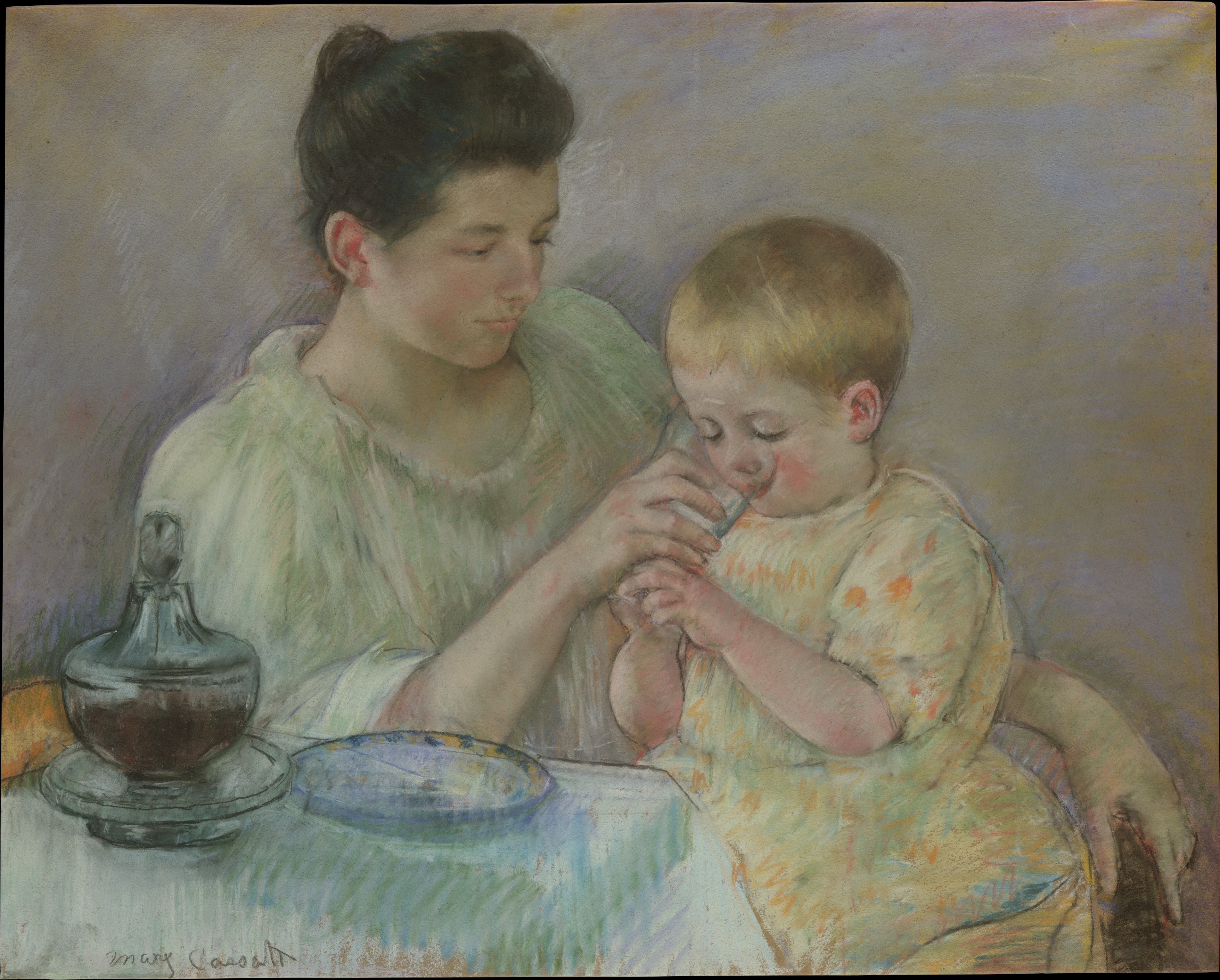
Picture by Mary Cassatt

13 September 2021

Hiobs Frau: Fluche Gott, und stirb!

Und seine Frau sprach zu ihm: Hältst du noch fest an deiner Frömmigkeit? Fluche Gott und stirb! (Hiob 2,9)


Fluche Gott
und stirb!
Was ist der Sinn
weiterzugehen?
Er hat alles genommen.
Was ist der Sinn
an ihm festzuhalten
wenn das der Lohn ist
für all deinen Glauben,
für all deine Treue.
Wenn sogar Gottlosigkeit mehr bringt,
warum noch glauben?
Warum noch leben
wenn er uns schon verflucht hat,
das Leben zur Hölle gemacht,
nicht mehr lebenswert?

Gott.
Ich verstehe nicht.
Ist das was du Liebe nennst?
Ist das wie du uns verdankst
für Glauben und Treue?
Ist das was wir verdient haben?

Was soll ich tun
mit diesem Loch in meiner Seele?
Ich klage an
gegen den Himmel,
rüttle an deinen Thron,
denn ich kann nicht mehr,
kann nicht verstehen,
kann nicht glauben,
ich mag nicht.

Wer hört meine Geschichte?
Wer heilt meine Wunden?
Wer lässt mich weinen, und tröstet mich?
Wer lässt mich fluchen und klagen
so viel wie ich muss
bis das Gift raus ist?
Wer
wenn nicht du?

Oh Gott,
der Gott der mich verwundet,
der Gott der mich heilt –
ich verstehe dich nicht,
kann dich manchmal nicht einmal leiden,
und doch
bist du mein Gott
den ich suche
sogar wenn ich dich hasse.

Ich kann nicht vergeben
was du getan hast –
hilf mir, zu vergeben.
Ich kann dich nicht lieben
weil du das zugelassen hast –
hilf mir, zu lieben.
Ich kann nicht vertrauen
der Hand, die mich fallen liess –
hilf mir, zu vertrauen.

Ich kann nicht glauben
an einen "Gott der Liebe"
der dieses Leid zulässt –
hilf mir,
Gott der Liebe,

an dich zu glauben.

Wenn ich es nicht alleine kann,
wenn ich ertrinke in der Finsternis
meiner Trauer und Wut,
rette mich vor mir selbst
und mach mich wieder dein.

______________________________________

[Übersetzung: 13. September 2021, Original: Job's Wife]

Wir haben im Konfirmandenunterricht heute Abend das Thema "Warum müssen Menschen leiden?" und ich dachte, eventuell baue ich dieses Gedicht irgendwo ein, und so habe ich es jetzt schnell übersetzt. Keine Ahnung ob ich es jetzt in der Stunde verwende oder nicht, aber jetzt ist es zumindest mal übersetzt. XD

Was mir wichtig ist aus dem Hiobsbuch: Es gibt keine Antwort zur Frage, warum Menschen leiden müssen - Gott gibt uns keine Antwort. Aber wir dürfen klagen. So habe ich auch dieses Gedicht geschrieben: wir dürfen klagen, dürfen Gott anklagen, dürfen fluchen, dürfen auf Gott wütend sein, vielleicht hassen wir Gott auch zeitweise wenn wir mitten im Leid sind. Gott hält das aus. Oft haben wir gelernt, solche Gefühle nicht auszudrücken, nicht nur nicht gegenüber Gott sondern auch gegenüber Mitmenschen. Lieber still in sich hineinfressen. Was nicht wirklich so gesund ist. Gerade die Geschichte von Hiob zeigt uns aber, dass wir klagen dürfen. Von Hiobs Frau lesen wir wirklich nur diesen Satz, Hiob selbst lässt aber so einiges raus, was wir uns vielleicht nicht getrauen würden, Gott zu sagen. Aber Gott hält es aus! Gott kommt damit klar, und er ist es auch, der uns trösten kann und mit der Zeit auch wieder zu sich führen kann. Aber wenn wir im Moment auf Gott wütend sind dann glaube ich dürfen wir das. Gott hält das aus.

Vom Buch Briefe die ich niemals schrieb von Ruth van Reken habe ich den Gedanken aufgenommen, dass wir manchmal "Gott vergeben müssen". Wenn man so aufgewachsen ist wie ich, dass Gott doch nie Fehler macht usw., dann kann das ein fremder Gedanke sein. Aber auch wenn Gott keine Fehler macht: vielleicht habe ich  mal Mühe mit etwas, das Gott zugelassen hat. Da kann es mir guttun, wenn ich Gott sagen kann: Ich fand das nicht richtig. Und da kann es entlasten, wenn ich Gott vergeben kann. Mehr als wenn ich das Ganze in mich hineinfresse in der Meinung "Gott macht ja keine Fehler usw". Das schadet der Beziehung zu Gott finde ich mehr als wenn ich das wie einen Fehler behandle. Gott kommt damit klar. Ich denke Gott hält in der Beziehung mit uns so viel mehr aus als wir oft meinen. Bei Hiob hat er ganz viel Klage und Anklage ausgehalten und Hiob am Ende recht gegeben.

Wir verstehen zwar nicht, warum Menschen leiden müssen, und Gott gibt uns keine Antwort. Aber wir dürfen klagen. Wir dürfen anklagen. Wir dürfen wütend und traurig sein. Und Gott ist in dem allem bei uns. Für mich ist Gottes Antwort auf das Leiden das Kreuz: Gott der mitleidet. Gott der mitten in das Leiden hineinkommt, es selber am eigenen Leib erlebt, und unsere Klage zur seinen macht, "Mein Gott, mein Gott, warum hast du mich verlassen?" Für mich ist das die "christliche Antwort auf das Leid", und das ist wohl keine Erklärung aber mir gibt es Kraft, wenn ich leide.

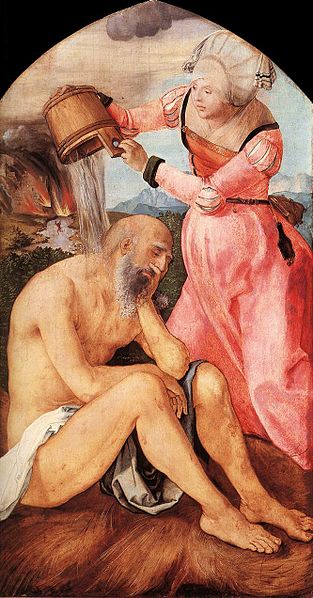
Bild von Albrecht Dürer.

29 August 2021

Solomon's Judgement: Rent Hearts


 I.
You were all I had.
My bright light
in this dark life,
something to live for,
a small thread of meaning
in the drudgery.
You were all I had.

But now
the light is snuffed out,
the thread is cut.
My arms are empty.

My arms are empty,
longing,
desperate to be filled.
So I will fill them -
I must, I must.
I will pretend
that he is you
back in my arms again.

You were all I had.
I can't give you up.
I will pretend
that he is you.
And if I can't - then so be it.
Let them rend him with a sword,
my heart is rent already.
I'm too broken to care,
too deep in grief
to grant her what I can't have.
If I must suffer,
she should too.
If I can't have you
no one should.

Let them rend him with a sword.
My heart is rent already.


II.
You are all I have.
My bright light
in this dark life,
something to live for,
a small thread of meaning
in the drudgery.
You are all I have.

But now
the threat of losing you -
snatched, stolen, ripped from my side,
my arms are empty.

My arms are empty,
fighting,
fighting to get you back.
I love you,
I need you,
I need you to be safe.
Come back to me,
back to my arms again.

You are all I have.
I can't give you up.
I need you
back in my arms -
but if I can't, then please be safe.
My heart is rent without you,
but I need you to be whole,
need you to live
and shine your light,
if not for me,
then for yourself.
If the only way 
to keep you safe
is letting you go -
then so be it.

My heart is rent without you,
but I need you to be whole.

_________________________________

[29. August 2021]

Actually had other ladies higher up on my to do list but spontaneously decided to write the p.o.v. of the two prostitutes who fought over a baby. One had accidentally smothered hers in her sleep and now both were claiming the living one. Solomon suggested cutting the baby in half to find out who the real mother was, because she would be more concerned with keeping her child alive.

Anyway because this poetry project is about compassion with the characters / trying to imagine what they are feeling, I did not want to do a "bad mother / good mother" thing. Was the mother of the dead baby selfish for not caring if the live one was killed? Maybe, or maybe she was just too full of grief (which can make us not think straight). One mother's primary concern is her grief, which makes her care about little else. The other's main concern is her child's safety, which makes her willing to sacrifice. Both women are in a terrible situation though - each in some way has her heart broken. One can't do anything for her child anymore - the other can still try to keep him safe.

Picture by William Blake


21 July 2021

Dienerin: Hinter dem Schilf

 Exodus 2,1-10


Ich habe nie hinterfragt.
Warum auch?
Es hat mich nie betroffen.
Es waren nur Die Da.
Die Anderen.
Ausländer.

Ich habe mich nie gekümmert.
Warum auch?
Es war weit weg.
Fast wie ein Gerücht.
Dachte nicht daran,
denn was war dran wichtig?
Es hat mich nie berührt.

Bis jetzt.
Plötzlich
trennt sich das Schilf
über ein schreiendes Kind,
eröffnet sich mir
eine Welt von Schmerz und Trauer.
Ich öffne den Korb
und sehe Leid
das ich nie an mich rangelassen hab.

Jetzt
ist es nicht mehr weit weg.
Jetzt ist es hier.
Tod und Verlust,
kinderlose Mütter,
dieses Kind, ausgesetzt
als letzte sterbende Hoffnung.

Vielleicht
kümmerte ich mich nie
weil es zu schwer ist.
Es ist zu viel.
Denn jetzt
wie kann ich zurück
und es einfach heschehen lassen?
Wie kann ich zurück
jetzt wo ich dieses Kind -
ein Kind wie meines -
gesehen habe,
verlassen zu seiner Rettung,
nur ein kleiner Teil des Leidens
das jeden Tag geschieht?

Ich habe nie hinterfragt.
Jetzt muss ich.
Ich habe mich nie gekümmert.
Aber jetzt habe ich gesehen,
und es ist mir nahegekommen,
und ich kann nicht mehr
zurück.

_____________

[20. Juli 2021]


Wie viel Ungerechtigkeit lassen wir an uns vorbeigehen, weil wir nicht direkt betroffen sind? Manchmal brauchen wir die direkte Begegnung mit dem Leid, die direkte Konfrontation mit dem Unrecht, das geschieht, um es wirklich zu bemerken und ernstzunehmen. Das kann unangenehm sein aber ist heilvoll.

Der Pharaoh wollte die Israeliten in Schach halten und liess alle Jungen töten. Wie sahen das die "gewöhnlichen Ägypter"? Vielleicht war es für sie auch einfach weit weg. Waren ja "nur die Sklaven". Vielleicht war die Entdeckung des Mose so eine Begegnung, die die Perspektive geändert hat...


Bild von James Tissot

20 July 2021

Servant Girl: Parting The Reeds

 Exodus 2:1-10


I never questioned.
Why should I?
It never affected me.
It was always Them.
The Others.
Foreigners.

I never cared.
Why should I?
It was far away.
Almost like a rumour.
Didn't think about it,
because why should it matter?
It never touched me.

Until now.
Suddenly,
parting the reeds
to a screaming baby,
I part the curtains
to a world of pain and sorrow.
I open the basket
to suffering
I never let myself care about.

It's not far away
anymore.
It is right here.
Death and loss,
childless mothers,
this child left to drift
a last hope against hope.

Maybe
I never cared
because this is too hard.
It is too much.
Because now
how can I go back
and let this keep happening?
How can I go back
now that I have seen
this child just like mine,
abandoned for his safety,
a fragment of the suffering
that happens every day?

I never questioned.
Now, I must.
I never cared.
But now I have seen
and it's come close to me
and I cannot go back
to before.

_____________________

[20. July 2021]

Another one who wasn't on my list... XD I tell you, there are way more women in the Bible than we often realise. Today I led a workshop on my method of interpreting the Bible through identifying with figures in the text and writing poetry from their perspective - and this was our text. And I realised I had missed a bunch of women in here, namely the servant girls! So while everyone was writing I wrote too.

I considered the situation in Egypt with the Hebrews being persecuted, their boys murdered, and how the servant girl as an almost "ordinary" Egyptian might have perceived it. Often when we belong to the privileged group it's easy to ignore or overlook the oppression of other groups. Not even on purpose necessarily: it's simply not "on our radar", it doesn't affect us, we never even have to think about it. Or maybe we know but don't realise how terrible it actually is, maybe we even have our excuses to support the injustice.

Actually getting to know someone who is directly affected changes everything. Suddenly it comes much closer, we are confronted with the issue, we have to form an opinion, we have to grapple with our prejudices and maybe revise what we used to think. It's easier not to care when we don't need to come face to face with those who suffer.

So maybe the servant girl had her first brush with what was actually going on with the Hebrews, when she fished that basket out of the water. 

Picture: James Tissot

03 July 2021

Rizpa: Ich bin Mutter

 1. Samuel 21,1-17


Ich bin Trauer –
zerrissen von Verlust,
ein Loch in meinem Herzen
wo du einmal warst.

Ich bin Verlust –
allein nun, verlassen,
meiner Söhne beraubt –
grausames Menschenopfer
im Namen Gottes getan.

Ich bin Liebe, ausgegossen
aus gebrochenem Herzen,
fliessende Tränen
die dich nicht auferwecken können,
schützende Arme
die dich umhüllen
dass dich am Tag die Sonne nicht steche
noch der Mond des Nachts.


Ich bin Zorn
der kämpft für meine Kinder
gegen alle Gewalten der Natur,
wenn es sein muss: gegen Gott;
gegen die Verwesung,
gegen den Tod.

Ich bin Treue
mächtiger als Hass,
schärfer als ein Schwert,
stärker als der Tod;
ich ertrage jeden Sturm,
ertrage jeden Schmerz –
deine Beschützerin
über das Ende hinaus.

Ich bin Mutter.
Meine Liebe stirbt nie.
Ich würde den Tod töten
wenn ich es nur könnte.

Wo ist nun Gott?
Freut er sich über Menschenopfer?
Oder bekämpft sie den Tod mit mir?

__________________________________

[Übersetzung 7. Mai 2021]

Bild von George Becker

01 May 2021

Mephibosheth's Nurse: Forgive Myself


Jonathan son of Saul had a son who was lame in both feet. He was five years old when the news about Saul and Jonathan came from Jezreel. His nurse picked him up and fled, but as she hurried to leave, he fell and became disabled. His name was Mephibosheth.
(2. Samuel 4:4)

I will hate myself forever.
I will carry this guilt
for as long as I live.
Maybe you can forgive me,
but God, it's hard
to forgive myself.

They trusted me -
a trust that I shattered
with his poor little bones.
Responsibility
weighs me down like gravity
that pulled him to the ground.
How I wish
those seconds could have slowed
where he slipped from my hands.
Maybe they can forgive me
but God, it's hard
to forgive myself.

It was an accident,
they will say.
I did my best,
they will say.
Better that I ran,
ran for our lives,
ran for his life
and dropped him,
better he live on like this,
better crippled than dead.
Maybe they can forgive me
but God, it's hard
to forgive myself.

They say that I saved him -
I see that I ruined his life forever.
What if some nights
the thought crossed his mind
that he'd rather be dead?
Maybe he can forgive me
but God, it's hard
to forgive myself.

God, help me
to forgive myself.

_____________________________________________

[1. May 2021]

Mephibosheth was a son of Jonathan, son of Saul the first king of Israel. After Saul was defeated by the Philistines, Mephibosheth's nurse fled with him - and dropped him. This had lifelong consequences for him.

What a thing for the poor nurse to be living with! I'm hard enough on myself when I make a mistake with my own child - with someone else's child (the king's son's child!) you have the added burden of others having entrusted their child to you. Ican't imagine the burden the nurse will have carried with her. Even though she saved him and the accident happened in the act of saving him, sometimes our failures impress us more strongly than our successes. Sometimes we are the ones who are hardest on ourselves.

So I made this about the inability to forgive oneself even when forgiveness is there, even when we are not actually at fault.

Picture: Wilhelm Amberg

22 November 2020

Cannibal Mothers: In the Destruction of my People

The hands of compassionate women have boiled their own children; they became their food in the destruction of my people. (Lamentations 4:10)

Oh my dear, beloved child,
why
did I bring you into this world
in such a time as this,
in the destruction of my people?

How selfish of me
to give you life
when life can only be suffering -
to inflict on you
something you could not choose
in such a time as this,
in the destruction of my people.

I see you suffer,
I hear your cries,
my dear, beloved child.
No future,
no hope,
no light,
no life -
why
did I bring you into this world
in such a time as this,
in the destruction of my people?

How I wish
I could protect you,
shield you from the threats,
spare you,
save you
from the destruction of my people.

How I wish
you could crawl right back,
back into my body, where you were safe.
How I wish
I could take you back
into my womb, warm and at peace,
protected
from the destruction of my people.

So come now,
my dear, beloved child -
I'll make you a part of me again.
Back to how it used to be,
back where I can keep you safe,
back to where you can be free -
free from the pain,
free from the fear,
where I can forever hold you near
in the destruction of my people.

__________________________________________________

[22. November 2020]

Creepy? ^^;

I actually had the idea for this months ago and never got to write it until now. I'm having a "Corona baby" so I have on and off been thinking about what it means to bring a child into a very messed up world. Even without the pandemic there's climate change which is pretty much inevitable now. We can't necessarily expect our children to be as privileged as we have been (speaking as a 90s kid). Is it still "responsible" to bring children into this world? Is it "fair" to bring children into this world who will have to deal with things like climate change, more frequent pandemics, etc? Is it selfish to want children in this day and age? My husband and I have discussed this off and on a bit.

I had to think of this terrible verse in Lamentations about "compassionate women" eating their own children. And the image that came to my mind was of taking the child back into one's body - back into safety, in a sense. "Compassionate women" - maybe the cannibalism isn't a crass breach of their compassion, but their attempt to be compassionate with their children and free them from suffering? Horrible, yes - but I decided to pick up that idea here. What if they felt death would be better than life for their children, in all the disasters they were experiencing? What if they felt it would be more compassionate to administer that death themselves, from a loving hand, instead of watching their children suffer and die agonisingly?

I don't think that makes it excusable to kill and eat your own child. But what I was going for here was that strong desire to keep your child safe - a desire that can get completely irrational (title of the picture here btw is "Faim, folie et crime" and the mother looks like she has lost her mind and does not really know what she's doing).

Our conclusion by the way to the whole "is it right to bring a child into the world now" question is best summed up by something Martin Luther said: "Even if I knew that tomorrow the world would go to pieces, I would still plant my apple tree." Having children is about having hope, about having faith. We have no control over our children's future, but it does not have to be a bleak one. To me, every child is hope - because every child is also potential for good, for change, for new things. And while the prophets in the Bible paint a lot of very dark and bleak images, almost all of them also give hope and talk about how God will heal and rebuild.

So I don't feel bad for having a baby in the middle of a pandemic. I do think about how some things may be more challenging for my child than they were for me. But on the whole I'm not afraid. It's not all destruction. And the safest place is not my womb but the womb of God which is everywhere, so ;-) I let go and trust in the mothering power of God.

Picture by Antoine Wiertz

07 June 2020

Rebecca's Nurse Deborah: The Flesh Is Willing But The Spirit Is Weak

"And Deborah, Rebekah’s nurse, died, and she was buried under an oak below Bethel. So it was called Allon-bacuth." (Genesis 35:8)

"Keep awake and pray that you may not come into the time of trial; the spirit indeed is willing, but the flesh is weak." (Mark 14:38)


If only
if only
if only it were easy
if only it were quick
blink of an eye
pass through a veil
cross over a threshold
and then I am there

Instead
this pain
this battle
every breath a rattle
waiting
waiting
fighting
wanting to leave
wanting to let go
but no
I can't

not yet

The flesh is willing 
but the spirit is weak.

I am ready
so ready
my body is tired
exhausted
finished
done

I want peace
I want rest
I want to stop
breathing
stop
living


The flesh is willing
but the spirit is weak.


I wish
I could see them
my children
my grandchildren
growing up
and what they accomplish
I wish
I could say
so many things
but my lips are dry and cracked
and where has my voice gone
I wish
I could forgive
I wish
I could be forgiven
instead I wait
and breathe
and fight

The flesh is willing
but the spirit is weak.


The flesh is ready
this body wants to go
but no
my spirit
clings on
with iron might
to all my loves
and all my hopes
and all my pain
if only

if only
I could just let go


The flesh is willing
but the spirit is weak.

Maybe that is why
we say
Into your hand, O Lord

I was a midwife in life
will you be
my midwife in death
and help me
cross that threshhold
pass through that veil
let go at last
and find rest and peace?

"Into your hand
I commit my spirit;

you have redeemed me,
O Lord, faithful God."


______________________________________________________

[7. June 2020]

The only thing we hear about Rebecca's nurse (a different Deborah from this more famous one) is about her death - so I decided to write about dying from her perspective.

I'm a hospice chaplain part-time so this was somewhat inspired by experiences and conversations I have had in the hospice with the dying. The other week I got the sentence in my head "The flesh is willing / but the spirit is weak" - a turning-around of what Jesus said in Gethsemane. Because sometimes the body is just so ready to go but you're not able to let go yet.


Art by Claude Monet.

07 May 2020

Oholibamah: Girl

Genesis 36

Please be a girl.
So I can dress you up and style your hair.
So I can have small helping hands.
So I can have a companion
in this man's world
to talk to and share with
all the wisdom and beauty of womanhood.
I want you to know the wonder
of living in a woman's body,
of carrying the potential for creating life.
I want you to be free
to show your emotions,
to cry sometimes, to be weak,
which they wouldn't let you
if you were a boy.

Please don't be a girl.
Because they will forget your name.
They won't count you
in their genealogy lists.
They won't value you
the same as your brothers.
I don't want you to suffer
as so many of us have done,
to bear the heavy weight of womanhood.
I don't want you to fear
the footsteps behind you,
don't want you to second-guess
a man's look, a man's touch.
I don't want you to be hurt
but I know you will be
if you are a girl.

I wish I could keep you
in this safe little bubble
of neither-nor;
no expectations,
no stereotypes,
just you
yourself
for this little while.
No "boys should do this",
no "girls should be that";
no rules what to wear,
who to be, how to act.

How I wish this were a world
where I need not be scared
of having a girl
and keeping her safe.
I long for a girl -
still I pray you're a boy,
for your sake
precious child.

______________________________________

[7. May 2020]

I just had this idea in my head and I picked Oholibamah, one of Esau's wives, to "carry" it. She is one of many "women without a story" who appear in genealogies. The genealogy talks about Esau's "sons and daughters", but none are listed by name in the genealogy, so I felt it would be fitting to put Oholibamah's name to this poem. (I chose her of the three because the other two have a bit more "story" to them by being described to have caused grief for Isaac and Rebecca - whatever that means. To Be Written About Later...)

I imagine it would not have been easy being a girl or raising a girl in the world of Genesis - seen e.g. by the missing daughters in genealogies, stories like the rape of Dinah, the predicament of childless Tamar or the "handmaidens" (Bilhah, Zilpah) of Jacob's wives. In such a "man's world", I imagine a woman would have been torn between wanting a daughter (someone to be her companion in the "woman's sphere" which was probably pretty separate from the men's world), and being afraid of having a daughter. Not just because of the pressure to have "sons", but because she knew how hard it was being a woman in that world, dependent on the men around her, viewed as "less than" and sometimes even truly in danger.

It's still like this in many parts of the world today, where being a girl is hard and even dangerous. I keep hearing people say "we don't need feminism" - but we do. As long as mothers still need to be afraid for their daughters, as long as girls are being aborted just for being girls, AND as long as boys are being taught that it's "not manly to cry" (boys suffer under toxic masculinity too!), as long as the sexes are not treated fairly and equally, and for so many more reasons, we need feminism.

The image of the "bubble of neither-nor" was what came first for this poem (though I was playing with the idea for weeks). I don't want to know the sex of my child in advance, and I realised why when that image came to me. There are so many fixed notions about boys and girls, so many expectations, so many stereotypes, starting with the "pink and blue", gendered clothing, things like that. These expectations and stereotypes do so much damage - to both boys and girls. Why not let at least the time in the womb be completely free of all that? I think it's important even afterwards to not push a child into what is stereotypically "expected" of their sex - to view the child as a person, a human being with a dynamic personality, not a "princess" or whatever. I think we CAN keep that "bubble" even afterwards by not making "being a boy" or "being a girl" such a fixed, "you-can-only-be-like-this" / "you-can-only-have-these-interests" thing. Of course there are gender-specific things - but not all girls like pink glittery tutus and not all boys like trucks. Girls like trucks too (I did - and pirates, and soldiers), and boys like pink glittery stuff too. Just my thoughts.

Art by Gustav Klimt - "Hope II". I felt the skulls and the (weeping?) women at the bottom of the picture were kind of fitting.

I FINALLY WROTE A POEM AGAIN!!!!1!11!1
Sorry I'm so unproductive. 
This lady was not even on my list yet. This project is going to take YEARS more...

15 December 2019

Rachel: Give me Children or I Die


When Rachel saw that she bore Jacob no children,
she envied her sister; and she said to Jacob,
“Give me children, or I shall die!” (Genesis 30:1)

Give me children or I die -
die of yearning
after waiting all this time.
All my life
it was all I ever wanted,
taken for granted -
I never thought
it would be this hard,
never dreamed I might become
one of Those
whose arms stay empty
all their lives.

Give me children or I die -
die of envy,
surrounded by others,
my maid, my sister,
who become pregnant
if you but cough at them.
Why not I?
Don't I deserve
something good as well?
Why does she have four,
and I not even one?
Is that fair?

Give me children or I die -
die of frustration
at the remarks and the comments,
the stupid questions,
the useless suggestions,
unwanted advice.
"Your clock is ticking."
Believe me, I know.
"You gained weight -
could you be -" NO.
Don't people see
how much it's hurting me?

Give me children or I die -
die alone and destitute,
some day,
as yet far away,
but that day will come.
That day without a husband
and no son to support me,
no value to society,
just the poor barren woman
with no family to care.
If you loved me
wouldn't you provide?

Give me children or I die.
Yes, I wish it was in our control.
I wish I could blame,
I wish I could explain,
I wish there were
some four-step recipe,
one-size-fits-all solution.
I wish it really were
in your power
and cajoling you enough
could grant me my wish.
Instead, I go on,
month after month,
repeating my cry:
Give me children
or I die.

_____________________________________________________________________

[14. December 2019]

I have always found this proclamation of Rachel's intriguing. Even though I've written a poem for her already (here), I decided to write another one. :-)

Rachel desperately wanted children. She ended up having two (Joseph and Benjamin), but it was a long struggle getting there - and ironically, she ended up dying in childbirth. There are many reasons to want a child so desperately. In ancient times, children played an important social role, kind of like an "insurance" for old age. Childless women were at risk of ending up alone and poor if they were widowed.

I used to think the whole "childbearing contest" and Rachel's tantrum ("I shall die") were rather childish. In the meantime, though, I have come to know people who struggled similarly. We all need more compassion for people who have experiences different from our own. The Bible is one place where we can start, by reading about people who are different from us. I think sometimes we all too easily read the Bible with a "judging" eye already, trying to figure out which are the examples we're supposed to copy and which are those we should avoid. But the people we read about in the Bible are first and foremost people - and I think all of them have a bit of both in them, like all of us too. It helps me feel less alone when I find stories I can relate to. But I think it can also teach us compassion when we read stories we can't really relate to. That's part of why I write these poems. What happens when we try to put ourselves into these women's shoes just for a moment, and imagine what they feel, what they might want to tell us?


Art: William Adolphe Bouguereau

21 July 2019

Woman of Thebez: Mightier than the Sword


Judges 9

O great tyrant, powerful king,
you thought you had won,
thought power was strong.
See: you were wrong.

Now you lie
in a pool of blood
dying
at a woman's hand,
your head bashed in
by kitchenware.

The millstone is mightier than the sword.

Fear went before you,
destruction followed,
fire swallowed
women and men.
They said you were unstoppable,
they said you were unbeatable.
They thought power was strong.
Seems they were wrong.

Ashamed to die
at woman's hand,
your head bashed in
by kitchenware.

The millstone is mightier than the sword.

Not power is strong,
but furious love,
the love that burns behind the stove,
the love that feeds little open mouths,
the love that like a millstone
works hard day after day,
invisible until
she is unleashed,
protective
fearless
mightier
than a thousand armies.

The millstone is mightier than the sword.
Mother is mightier than king.
Woman is mightier than all your armies.
I am mightier than you.

_________________________________

[21. July 2019]

During the time of the judges Abimelech, son of Gideon, attempted to start a monarchy. He killed all 70 of his brothers to remove all competition. He reacted harshly against resistance, e.g. by burning a thousand people alive at Shechem. Thebez was his next stop - and his last. While he and his army were besieging Thebez, a woman threw a millstone down on his head - dying, he asked his armour-bearer to kill him so he wouldn't have to bear the "shame" of having been killed by a woman (eye-roll).

Anyway when I re-read this story last, I realised the fact that a millstone is a kitchen utensil (used to grind grain and things like that) - and liked the irony of that. In fact the Bible is full of ironies like this - mighty men losing to women who aren't using weapons, but household items or other "weak"-seeming things (Jael and the tent peg, Delilah and a haircut, Judith an flirting...). Looks like true power is not where we are used to finding it...

Art: Charles Foster

20 July 2019

Mother of Abimelech: No Mother Knows

Judges 8:31 / Judges 9

No mother knows
what will become of her son -
and if she did
would that change anything?

Maybe I should have seen.
Maybe I should have suspected.
Little misbehaviours,
small cruelties.
Maybe I should have known.
Maybe I could have
if not
for that thing that clouds
a mother's eyes.

But
even if I did
would that have changed anything?

No mother knows
what will become of her son -
that he might be a king,
that he might be
a killer,
murderer
of his on flesh and blood,
tyrant,
oppressor.
Maybe
I could have known
if not
for that thing that clouds
a mother's eyes.

No mother knows,
but sometimes,
sometimes,
no, often,
she asks herself:
Why did I not know,
what should I  have done,
what did I do wrong,
is it my fault
that he has become
this?

No mother knows,
and if she did
would that change anything?
Maybe
I could have
changed all our fates
had I known
had I
Done Something
(what?)
(drowned him?)
(suffocated him in his sleep?);
if not
for that thing that clouds
a mother's eyes,
that thing that
even now
clouds my eyes with tears.

Because
how could I love him
any less?


____________________________________

[19. July 2019]

Abimelech was the son of Gideon (of Sunday School fame) (I don't know why they like to teach small children stories from Judges as hero stories... Judges is a terrible book about terrible people). His mother, Gideon's concubine, is mentioned in one small verse that talks about his birth (Judges 8:31). Yesterday I re-read his story (Judges 9) - a terrible story of extreme violence. To become king, Abimelech killed his 70 brothers. He laid entire cities to waste and burned people alive. He was a horrible person.

Thinking of his mother, then. A mother loves her child, expects and hopes good things for him. Sometimes, horrible people come from horrible family backgrounds, neglect, abuse etc. But I decided to assume here that Abimelech's mother was a "normal" mother. And to consider what might go through the head of a mother who realises her beloved son has become something terrible, maybe feeling guilty, maybe wondering what she could have done differently in bringing him up, how she might have prevented this happening... but still not being able to hate him. I imagine she would feel really torn and conflicted.

While writing this I had to think of the Swiss German song "Kei Mueter weiss, was ihrem Chind wird gscheh" (no mother knows what will happen to her child). Actually a Christmas song about Jesus. But true for any mother, and any child. There is only so much you can do as a mother (or father, or teacher, or any role in bringing up a child).

Art: Christian Krohg

19 July 2019

Shiphrah and Puah: Breaking the Law


Exodus 1:8-21

I would love to
be an upstanding citizen,
do what the law says.
Usually, I do.
I would love to
submit to authority,
obey my rulers.
Usually, I do.
But I cannot, now.

For how can I obey
the laws of man
if they would have me break
the Law of God?

Don't you see
the death all around you?
No - you only see the law.
Don't you hear
the piercing cries of bereft mothers?
No - you only hear the law.
Don't you care
for the vulnerable trampled underfoot?
No - you only care about the law.

How
can you value something dead
above pulsing, screaming life?
How
can you expect me,
a servant of life
to obey the rule of death?

Sorry.
No.
I don't care anymore.
Take me.
Put me behind bars if you will.
Do what you like.
But don't speak to me
about your laws
when lives are at stake.
Don't expect me
to do what is wrong
just because it's the law.
For how can I obey
the laws of man
if they would have me break
the Law of God?

I will resist.
I will tell lies.
I will disobey.
I will fight.
And you may look on
in horror and disgust
as I trample your law.
But in the end,
in the eyes of God
I will be right.


_______________________________

[18. July 2019]

So I was sitting here with writer's block, not knowing how to start, when I realised that the story of Shiphrah and Puah is so very relevant right now. It has actually been replaying in the news recently. I ended up writing this with Captain Carola Rackete in mind, as well as other modern-day Shiphrahs and Puahs: brave people who stand up against unjust laws to do what is right.

Thousands of refugees trying to cross from Africa to Europe drown in the Mediterranean every year. Last year, 2'277 died or went missing (stats from UNHCR here). Meanwhile, many European countries are extremely restrictive. Carola Rackete, who does rescue missions on the Mediterranean, was arrested for docking a migrant rescue ship in an Italian port without authorisation - "against the law". Discussions about this on social media became truly sickening: people (many of them would call themselves "Bible-believing Christians") argued that people like Rackete are doing wrong rescuing the drowning because these actions break the law. One should not encourage illegal immigrants to come to Europe. In these discussions, the people suffering and drowning on the Mediterranean are dehumanised. I have in all honesty seen people claim it's "their own fault" and they should just stay in their countries. I can't believe this kind of terrible rhetoric. Since when is saving lives wrong? Since when is following "the law" more important than serving human beings loved by God?

I had to think of all this when I decided to write about Shiphrah and Puah - two Midwives who broke laws, told lies, and pretty much acted in a way that I know certain people, certain Christians even, would think wrong. They were commanded by the Pharaoh to kill Hebrew boys upon birth. They refused, saving many lives. They covered up their disobedience by lying that the Hebrew mothers gave birth too quickly for them to arrive on the scene in time.

Sometimes, we need to break laws to do what is right. Because it is more important to obey God than man (Acts 5:29). The worldly authorities are not God. I on purpose referenced Romans 13 for the first stanza, since that is often quoted to support submission to authority. But Paul is not talking about total, blind obedience in all things. He is talking about, as Christians (who will always be foreigners in this world because we serve a different master and belong to a different kingdom) respecting the society we live in as well as its rules. But it should be obivous to us that there is a very, very clear line in how much we can obey what other authorities dictate. Because ultimately, Jesus is our Lord, not our country or our government, and our allegiance should be to the Kingdom of God, not any country on this earth. There is a place for civil disobedience in obedience to God. Just because something is law does not mean it is right.

We need to discern and follow the will of God. Ask ourselves what Jesus would do - Jesus who died a criminal's death on a cross because he broke the law.

Art: Ancient Roman relief carving of a midwife