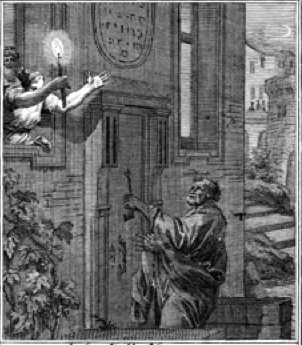
Showing posts with label self-image. Show all posts

11 February 2023

Bathsheba: Butchered

TRIGGER WARNING: rape


2. Samuel 11:1-12:15

I could not say no.
I would not have said yes.
I was not asked,
and if I had been,
what could I have said?

Caught
like a deer in the hunter's sight,
should I flee?
should I fight?
maybe
if I cower before him
and fawn at his feet
do what he wants
he'll be kind to me?

(but still
in the end
he'll butcher me,
won't he)

I could not say no.
I would not have said yes.
If I had screamed,
who would have cared?
who would have dared
come to my rescue?

I could not say no.
Should I have?
I should.
Does that make me complicit?
Does that make this my sin?
Is it my fault
that it went so far
because I didn't say stop,
couldn't say no?

I could not say no.
I would not have said yes.
"Come," he said,
and sanctimoniously:
"I won't do anything you don't want"

and just like that
the burden is on me
and it's my responsibility
and I can go home with the guilt
of "maybe he didn't know better"
"maybe he misunderstood"
"maybe it's my own fault".

I could not say no.
I would not have said yes.
But who will know?
Who will care?

Now I am set before the door
to gather up the shattered pieces of my dignity
with the tattered remains of my clothes
butchered
bearing the shame
questioning myself
while he rests free and easy
certain he's not to blame
because I couldn't say no

but
I did not say yes.

__________________________________________________________

[11. February 2023]

Growing up I always learnt David "had an affair", or the even worse version: "Bathsheba seduced David" (by "bathing on the roof"). It was only more recently, during my theological studies, that I discovered this is actually a story of rape. And there are still Christians who will fight against this interpretation and insist Bathsheba was somehow at fault! I feel like how we handle this story has a lot in common with how abuse and rape are still handled in the wider culture and by Christians.

Here in Switzerland at the moment feminists are fighting for the legal definition of rape to be changed so that "only yes means yes". At the moment, it's only rape if you said no, pretty much. But what if you can't say no?

Recently I have been thinking about the complexities of consent (partly because of this initiative in Swiss politics, partly from watching "Anatomy of a Scandal" which handles this question). And really it should not be so hard. But the way stories like Bathsheba's are still handled shows that society has not learnt at all yet. As long as we still say things like "she could have said no", "why didn't she call for help", "what was she wearing", etc, there's still something very wrong in society. This kind of mentality endangers women.

The Bible is really, really clear on Bathsheba's story though. The prophet Nathan in 1. Sam 12 gives a very clear explanation of how the incident should be understood, in his story of the rich man slaughtering the poor man's lamb. The Bible itself compares Bathsheba to a lamb being slaughtered, a sacrifice to David's lust. There is no way a sheep can be complicit in its butchering. I feel like we have spent so much energy trying to make David a "good guy" because there's this half verse somewhere about David being a "man after God's own heart" - instead of just honestly reading the Bible and letting the Bible speak for itself. The Bible is on Bathsheba's side, God is on Bathsheba's side. Bathsheba was raped. And it shouldn't matter to us whether she said no or not. Because without a yes it was rape. The Bible text uses only passive verbs for Bathsheba in this story, she is all victim here.

I need to write another poem though for later in Bathsheba's life, because she rose up and became very influential in David's court, so much so that it was through her actions that her son Solomon became king after David's death despite being pretty far down in the line. She does not remain passive.

Other Bathsheba poem: O Child (about the child she lost after this)

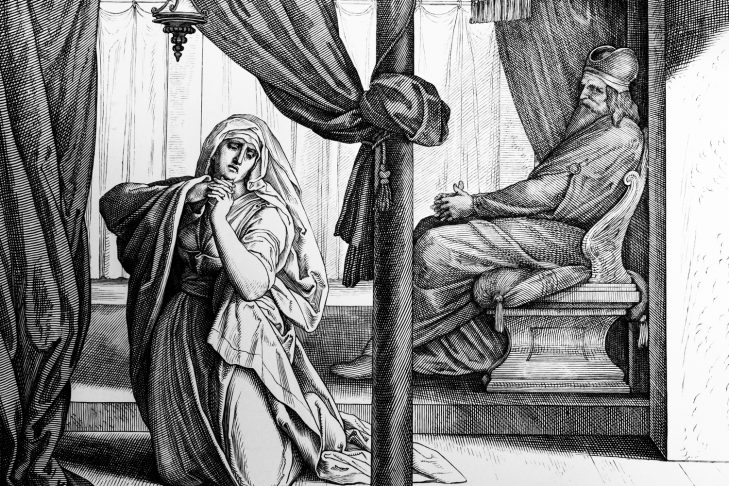
Picture: 17th Century Anonymous

26 December 2018

Lo-Ruhamah: What's in a Name?

Hosea 1:2-8

What's in a name?
Any name would be sweet
unless you are burdened
with the name they gave me.
Two letters too many
and the Loved becomes the Damned:
"No-Mercy" they called me -
just fancy that!

"No-Mercy" - imagine
the awkward looks
every time I introduce myself.
Picture little me,
shunned by other kids,
the brunt of every bully's jokes,
a victim from the start
of my father's stupid choice.

What the hell, Dad?
Did you even
stop to think what it does to me?
"God told me" - whatever!
What about me?
You made me your message
but also made me messed up,
blessed me with childhood trauma
and chronic doubt in God.

But guess what:
I have learnt
to grow beyond my bitterness.
I have learnt
that I am more than this name.
And now, I forgive you.
I want to try to understand.
I forgive God
if this was really from his hand.

It took me so long to see
that God never hated me.
That for God
all along
they were just two letters.
And God was for me
all the time they called me damned,
waiting
to strike two letters off my name,
"No-Mercy" no more.

And maybe the message
that I bear with my name
is that God loves the damned
and wants them saved -
just like his people
who went astray,
who lost trust in a God
they thought was far away.

So I drop two letters
and I become
Mercy.

__________________________

[26. December 2018]

You know what they always say about choosing a child's name. Make sure it's not too hard to spell. Make sure it's not too easy to twist into something nasty by bullies (because children can be horrible to each other). Make sure the name has an appropriate meaning.

Recently there was that news item about a girl called "Abcde" being mocked by a flight attendant and more people were angry at the poor child's mother than the flight attendant. Well, a parent does have to think about the consequences of their name choice!

Enter Hosea who named his children Jezreel (i.e. place where revenge will happen), No Mercy, and Not My People. I am sure the children did not get away completely unscathed psychologically.

Anyhow, here some thoughts from her perspective.

And another thought: biblical prophecy is poetry. It may well be that Hosea did not actually give his children horrible names, but that the idea of him naming them like this gives an important message.


Picture by William Adolphe Bouguereau

27 July 2016

Abishag: Pity is not Love

[Warning: mild sexual content]

1. Kings 1:1-4

Here I lie,
afraid, ashamed,
in the arms of a man
who can no more;
trying to give you
what you cannot take,
caught in an embrace
that cannot satisfy.

Ashamed of my thoughts.
Ashamed of my feelings.
Ashamed that I recoil
at the sight of your body.
Ashamed that I flinch
at the feel of your touch.
Ashamed of my daydreams
of younger men,
the temptation to seek
my fulfillment elsewhere.

I want to be a good wife,
to make you happy -
but it's trapping me
in unhappiness.
It hurts to watch you
frustrated with yourself,
trying and failing
to be a husband again.

It fills me with revulsion,
it fills me with pity -
how I wish I could respect you
and love you instead!
But pity is not love,
and it can't help me endure.
Pity is not enough
to keep me true to you.

How I wish
they could just let you be old
and live out your days
calm and at peace.
How I wish
you must not bear this pressure
of being a king,
a potent man to the last.
How I wish
we could just admit weakness,
that failure must not be a shame.
How I wish
we could just be friends,
talking, playing games,
not trying every night
to do what we cannot.

Here I lie,
afraid, ashamed,
in the arms of this man.
Pity is not love.

__________________________________________________

[25. July 2016 above the South China Sea]

I've read a few interpretations about Abishag (including a feminist one I rather liked according to which Abishag had some power in government). I based this poem mainly on a quote from the Interpreter's Bible which I found on Wikipedia:
[T]he Hebrews...believed that the fertility of the soil and the general prosperity of the people were bound up with the fertility of the king. David by this time was old and decrepit and his sexual vigor is called into question. Attempts are made to remedy the situation. The first cure is to heap clothes upon his bed in order to secure such physical heat as might render him capable. When this fails a search is made for the most beautiful woman in the land. Great emphasis is placed upon her [Abishag's] charms. The LXX supports this by translating in vs. 2, "and let her excite him and lie with him." The fact that the king did not have intercourse with her is decisive in the story. If David was impotent he could no longer be king.
I also felt (after having read the story of someone who married an old man she was caring for out of pity, and then felt guilty for feeling disgusted, unsatisfied or attracted to other men) that I wanted to write about this situation of being a young woman with many opportunities (Abishag was said to be very beautiful), in an unhappy relationship with an older man.

What I realised while writing (and it comes out in the second-to-last stanza, "How I wish...") was that the attempt to keep David potent, and the belief that he could only be a proper king if he was, is once again the kind of human thinking that won't allow for weakness - a way of thinking that is not (from my understanding of the Bible) God's way.

In an ethics class I read a book by Wolfgang Huber (German bishop and ethicist) in which he differentiates between the "olympic man" and the "Jesus man". Human thinking wants the "olympic man", the athlete, strong and able, healthy, successful. This is what David's people were going for when they tried to keep him sexually fit to the last. You're not allowed to get old and decrepit and weak - and if you do, in today's Western culture, you all too often get pushed out of society e.g. into an old-age home. Contrast to that the "Jesus man": Jesus on the cross, weak and suffering. Jesus on the cross means that we are allowed to be weak, that there is nothing wrong about not being completely fit, active and capable of everything. God allows us to be weak and to fail, it is not "bad" or sinful to fail. In fact Jesus' failure on the cross was His victory!

So we ought to change our thinking... David's and Abishag's relationship could have been so different, if he had been allowed to be old and impotent. And I believe this also says something about how men need to be liberated and emancipated too from wrong ideas about manhood (an issue which - some of you might be surprised - feminism has started touching upon) which focus too much on strength and power. There is nothing "unmanly" about weakness - and thinking it is will only cause difficulty when, like David, you are stuck in a position where you are weak and there is no way out. We need to accept ourselves instead of trying to fit some human standard. Because that human standard is not God's standard...

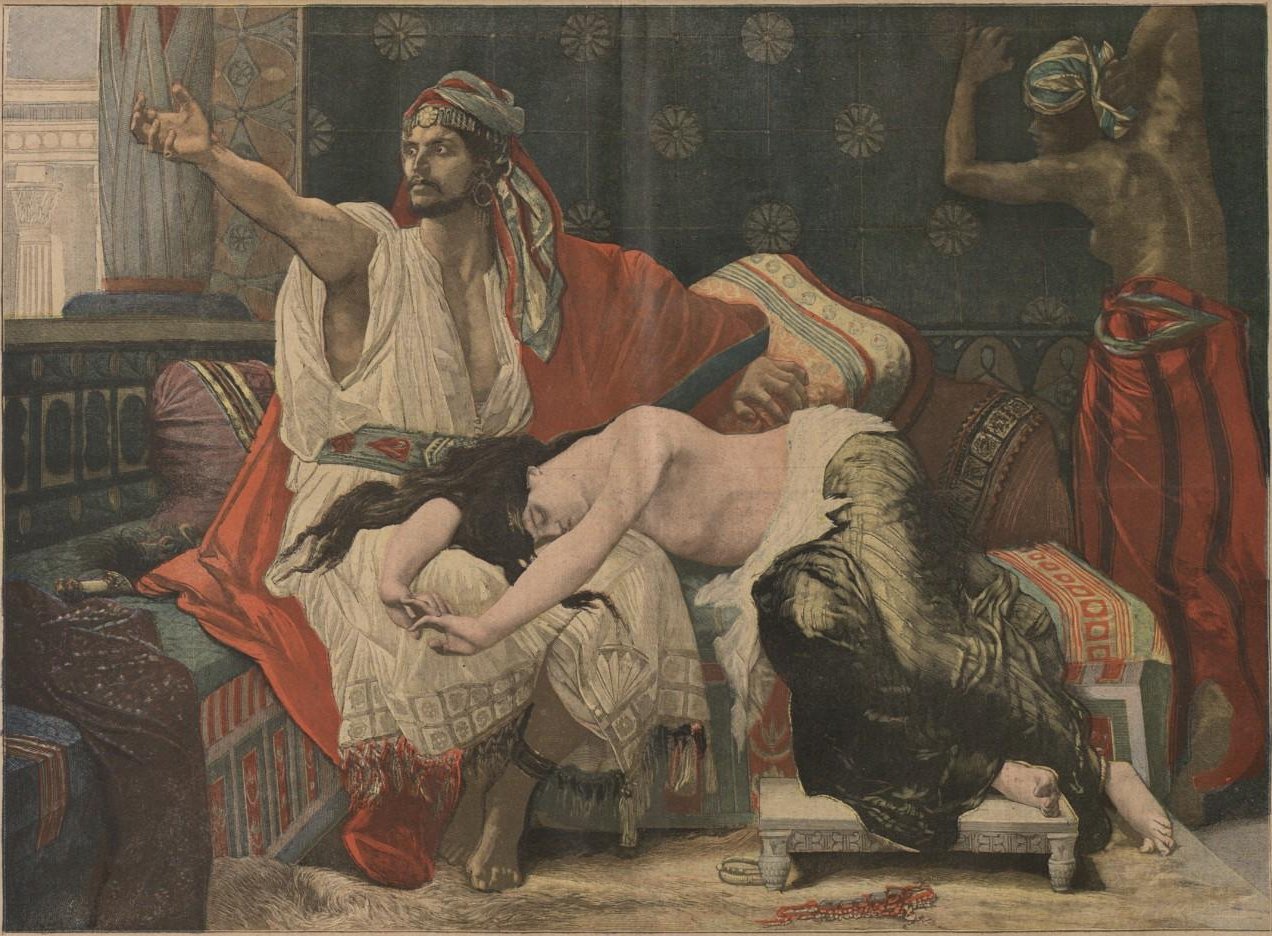
Picture by Pedro Americo

03 May 2016

Zelophehad's Daughters: What Makes Us Stay

Numbers 27:1-11

This is what makes us girls:
always coming second
because they put boys first;
shackled to men,
our fate is bound to theirs -
we pay for what we cannot help.

This is what makes us girls:
always losing double
just because of our birth.
Now our father's gone,
our fate is bound to his -
left destitute, we'll lose everything.

Is this what makes us girls?
Must we remain victims,
and take this lying down?
No - we won't cry about it
but do something about it,
for we are bound to God
who sees everything.

This is what makes us stay:
knowing our God
created us the same;
trusting He's above
this culture we are in,
not preferring boys,
not preferring girls
but caring for our needs
and giving us our right.


____________________________________________________________

[7. June 2013 / edited 3. May 2016]

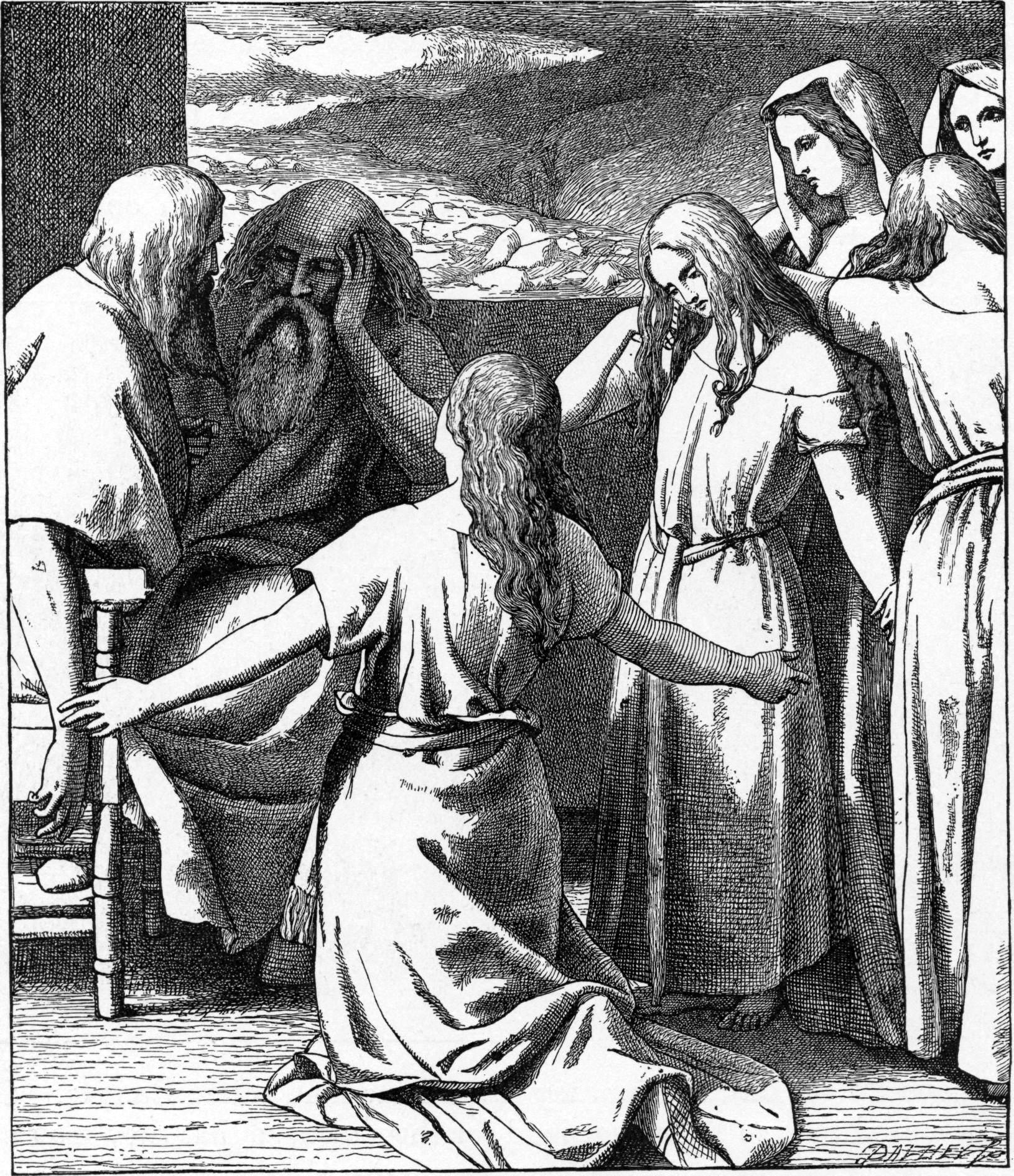
Zelophehad, an Israelite in the exodus before they reached the promised land, had five daughters. He died. Because women couldn't inherit, this would basically leave them with nothing (hence the "losing double": they lost their father and at the same time were bound to lose all they had). But they went to Moses and asked in the presence of God to be allowed to inherit. And this was granted to them.

The last part ("This is what makes us stay") was inspired by the conference on women's contribution to religions I went to recently (June 2013). One of the speakers started the conference with the question: "Why do women choose to stay in a system which oppresses them?" In many religions (we looked at Christianity, Judaism, Islam and New Religious Movements) women are, let's admit it, restricted a bit. For instance, in some of my churches I would not be allowed to preach or be ordained (though this appears to be changing).

Why do we stay? The answer I got through writing this poem was: God is not a patriarchalist; He created both men and women in His image so in His eyes, we have the same worth. In the end it doesn't matter what society / culture thinks and says, but what God says. In my opinion, if read in context, the Bible is way less oppressive of women than certain churches. The Bible is for equality, but the fallen world (culture) has created a false hierarchy.

Picture by Charles Foster.

And yes I'll admit that I was thinking of the Lana del Rey song "This Is What Makes Us Girls" while writing this. I was thinking there's more to being a woman than what the song portrays, and considering the kinds of things that "make us girls". Then I thought of Zelophehad's daughters and - voilà.

13 February 2016

Keturah: Ghost


Genesis 25:1-6

She never left;
she is still here,
filling the spaces
between you and me.
She never left;
she reappears
every time that I fail,
every time that we fight,
filling the gaps
as they widen between us -
haunting me.

She never left;
she is still here.
I hear her voice,
a whisper in my ear
that what you want is her,
what I can never be.
I see her eyes,
following me
reproachfully,
accusing me
of stealing your love.
I feel her presence
lying between us,
cold and unyielding,
clinging to you
and pushing me away -
haunting me.

And yet I know there is no ghost -
only my fear, haunting me.
I am afraid of not reaching her standard,
afraid that you might love me less,
that when you see me you think of her
and wish you could have her instead.
I want to be free.

Set me free from insecurity
so I can love you fearlessly,
and be who I am
with no more ghosts
haunting me.

________________________________________________________

[9. / 12. February 2016]

Keturah was Abraham's other wife... and from the text it kind of looks like she became his wife after Sarah died (which means he must have been crazy old by then) - I just assumed that here. This is mainly about dealing with "the Ex" or the tendency to compare oneself... We don't read anything about Keturah in the Bible other than the children she had, so we don't know how she felt about being the new wife of a widower - but here I looked a bit into what it might be like to feel insecure about the previous wife, to the extent of actually feeling her present.

One problem with the feeling of being "haunted" by the previous wife / the ex / etc is that - I believe - in many cases (especially when we're talking about dead people) it's based on the assumption that this ex is against the new match. Which is not really fair towards her: why assume that she is cruel and unkind and jealous?

Anyway I decided to start out with the "ghost" (the other woman being a threat to the relationship, being "against it") and then move on to the realisation of what is actually going on inside, namely the fear and insecurity that turns the other woman into a threat. It's not the other woman interfering - it all comes from inside Keturah herself. What needs to be "exorcised" is the fear.

(Probably the idea to write about ghosts is the result of reading Northanger Abbey and looking up some gothic horror...)

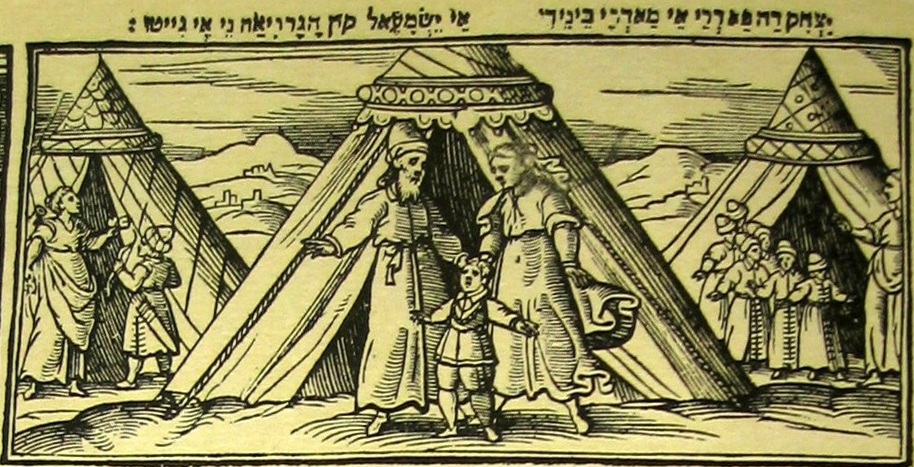
Picture is from the Venice Haggadah... Abraham and his 3 women - Keturah is the one with the many sons, on the far right.

08 January 2016

Tamar: Unashamed


"There were born to Absalom three sons, and one daughter whose name was Tamar; she was a beautiful woman." (2. Samuel 14:27)

Ashamed
of my name:
Tamar.

Tamar,
my namesake:
a girl who was shamed.
A fallen woman,
violated, disgraced;
raped by her own brother,
then shunned, hidden away.
A story "not for children's ears",
hushed up, censored,
ignored or forgotten.
Tamar,
a heavy name to bear.

Why
name me after
Tamar?

Tamar,
my namesake:
a girl loved by you.
A human being
with a life and dignity;
no less precious, no less pure
after all that she endured.
And I am named
to honour her,
this innocent so wrongly blamed,
a pure woman,
wrongly shamed.
Tamar,
a name I am honoured to wear.

Proud
of my name:
Tamar.

______________________________________________________

[8. January 2016]

There are (at least) 3 women called Tamar in the Bible. One is Judah's daughter-in-law, the other David's daughter who was raped by her brother, the third (the one this poem is about) the daughter of Absalom, who was the second Tamar's brother and most likely named his daughter after his sister. So as you may have noticed, this poem refers to her story too (2. Samuel 13:1-22).

What do your namesakes mean to you? My father is interested in the Napoleonic wars, so pretty early on he told me all about my namesake who was Napoleon's first girlfriend and became queen of Sweden. There's a novel and a movie about her, which I of course delved into. And simply because of the shared name, I felt somehow connected to her.
I've met a few girls who are named after women who don't appear in children's Bibles (because their stories include violence, sex or sexual violence). I had a Tamar in my class when I first heard the Tamar story. I know a few girls called Jael. What do you do with an uncomfortable namesake?

Writing this I was partly thinking about namesakes, but also thinking about the response to rape. Even today, victims of rape are often shamed, blamed or ignored. David's daughter Tamar, after being raped by her half-brother, disappears into seclusion - we don't hear about her anymore. She was "damaged goods" because she had lost her virginity - while no one really bat an eye about Amnon who had raped her (except Absalom, who killed him after David failed to react). So I wanted to move here from shame in the first part, to honouring her in the second part. Because putting shame on the victim is the wrong response. Rape victims are most of the time innocent and need support, not blame. They need to be appreciated and valued, not judged.

So I think it is right and good to be named after someone who suffered, who was judged, who was looked down upon - because the naming shows love, and honours the namesake. Absalom wanted to remember and honour his sister, and express his love for her - so he named his daughter Tamar. After what had happened, his sister was still just as precious to him as before.

I was influenced a bit by Tess of the d'Urbervilles while writing this. The sub-title for Tess of the d'Urbervilles is "A Pure Woman" (and as you might notice, in the second-to-last stanza "pure woman" comes up a few times - that was on purpose). Tess is an example of a girl who suffered under the reactions of the world around her after she was raped. She was judged because of her lost virginity - but in truth she was pure, purer than those who judged her. Excellent book, you should read it. ^^

Picture by Alexandre Cabanel.

28 November 2015

Crippled Woman: Worth Much

Luke 13:10-17

Who looks twice
at a crippled woman,
except to give her crooked looks,
crooked like her crooked back?
Crooked, not friendly -
for I am not normal,
I am a mistake,
a burden, not a blessing,
to all and to myself -
not worth much.

I am "just a woman".
I am "that cripple".
I am a failure
in this world bent on success.
Not worth much.

But now I see
your love, o Lord,
which values even me -
"Abraham's daughter"
is what you call me -
not an outcast anymore.
You look at me so differently,
you lift me up,
you make me new.

I don't need to be perfect
to be perfect for you;
you love me
just as I am,
the one the world had thrown away.
And now I know: to you
I am worth much.


_______________________________________________________

[August 2012]

I wrote this back when a new Trisomy 21 test was introduced in Switzerland (a test enabling pregnant mothers to check whether their baby has Down's Syndrome). In the meantime I learnt in an Ethics course that in America nowadays, most children with Down's Syndrome are aborted, and if parents opt to keep theirs, they are criticised for "burdening society".

How do we view disabled people? Are they "incomplete people"? Are they (as to the Pharisees in Lk 13) worth less than a donkey or an ox that falls into a ditch? Jesus questions why one is allowed to rescue a wounded animal on the Sabbath, but not a sick or disabled person. He calls the crippled woman a "daughter of Abraham", honours her as a complete person, as a person for whom the blessing of Abraham counts just as much as for the healthy people.

What I learnt in that Ethics class (from reading Wolfgang Huber) is that nowadays people tend to have an "olympian" idea of the "perfect human being" as someone athletic and healthy. The Bible, on the other hand, shows us the suffering Christ. According to the Bible, humanity reaches its perfection not in a healthy young athlete, but in a weak and dying wreck on a cross!

We need to change our way of looking at people. We need to value the broken, not only give it value once it's become whole. Jesus heals the crippled woman - but to him she is a "daughter of Abraham", a complete human being, before she is able to stand straight again. Even if she were to remain crippled, she would be equally valuable to him. And she should be equally valuable to us, because biblically, health and physical perfection are not what make out a complete human being.

28 September 2015

Eve: Naked

And they were both naked, the man and his wife, and were not ashamed. (Genesis 2:25)

I'm all dressed up,
wearing my finest -
I've made myself pretty for you.
I've put my best dress on
and done myself up,
want to look perfect
and beautiful,
attractive,
impeccable -
to make you fall for me
all over again.

But what is beneath
all the nice, fancy clothes?
Is it not my fear
that you wouldn't care
the way that you do
if you really knew
what I'm hiding beneath?
I hide my imperfections,
cover them up,
veiled and robed,
masked from view.
I want to be perfect
but I hide myself -
my thoughts, my feelings,
opinions you might not like,
things I'm afraid will put you off -
I hide myself
beneath a fine façade,
afraid, ashamed,
not trusting you enough.

But I don't want this anymore.

I want
to take off all these clothes,
to strip naked
and stand before you
just as I am,
stitchless,
with every blemish,
every mistake,
every feeling and thought
laid bare before you.
I'll pull off this dishonesty
and show you every part of me.
I want to be naked,
no longer ashamed.


__________________________________________________________

[20. December 2012]

(I did not really write this from Eve's perspective, but am still adding it to the "Eve" set because it's based on stuff I learnt from Gen 2)

Original commentary from 2012:
I've been trying to write this for WEEKS; maybe God wanted me to be personally confronted with the issue a bit more before writing this.

The way I understand Genesis 2:25 is that Adam and Eve had nothing to hide from each other. Not just physically but also when it comes to being honest, talking to each other about things, not hiding things from each other. Honesty and communication are really important in a relationship. (Look who's talking. = = This is something I desperately need to work on, which is the reason why I wrote this...)

And isn't it interesting: we tend to make ourselves especially pretty when meeting someone, make sure we're well dressed for a date, put more effort into personal appearance than usual, and show our best side. (I know I get really uptight about not saying / doing anything that might bother him...) But shouldn't we actually be showing our true selves? Be honest?

Another poem based on Genesis 2:18-25 is Helper.
Recently I discovered how interesting and inspiring and awesome that text is. :D I think it says a LOT about relationships and marriage.

Picture: detail from "Garden of Earthly Delights" by Hieronymus Bosch.

26 August 2015

Vashti: Museum Piece

Esther 1


What is a wife?
An ornament?
A pretty vase
to look at,
polish,
play with,
and then put away
till another day?
What am I to you?
A decoration?
I don't exist
until you want me
or want to show me off
like a rare artefact,
a prized possession.

Why can't you see me?
Why can't you see
that I don't want admiration
but love?
I don't want to be
your museum piece,
don't want to be
a picture on your wall
or a statue
to grace your halls.

I want to be
etched into your heart,
a part of you
you can't live without.
I want to be more
than my lovely face,
for when my beauty fades,
what will I be then?
A moth-eaten garment,
a crumbling masterpiece,
a faded painting
worth nothing to you.
Why can't you see me?

So tonight
I'll put my foot down
and stand up for myself
and for women everywhere.
Disobedience? Who cares -
it has to be said,
it has to be done.
We are not your ornaments,
your pretty little things,
collectors' items,
fine rare gems.
We are people
with hearts and souls,
with needs and wishes.
We want more.

Treat me like a human being.
Love me,
see me,
hear me.
Rather than be called a beauty
I would have you look
when I'm my ugliest
and say you love me
for me.

I put my foot down.
I disobey.
I'm your museum piece
no more.

______________________________________________________

 [January 2012]

Vashti was the wife of King Xerxes before Esther became queen to replace her. The king called her to show her off to guests at a feast - and she refused to come. It's interesting how some interpreters admire her for it, while others see her actions as wrong, an act of disobedience. Here's my take on the story.

The whole idea of wives being treated like ornaments or pretty vases comes very much from the influence of my very feminist best friend, who I am certain used those exact words once. Also, the "masterpiece" idea came from A Room with a View, where Cecil (a rather unlikeable guy haha) likes to call Lucy (the main character) "my Leonardo". If I remember right she also stands up to him about that once.

It is nice to be called pretty, but in the end we are more than that. If someone likes you for your looks, they won't like you for very long. Because unless we die early we all end up wrinkled and crinkled (which I find really beautiful and cute btw). We're all more than our looks - men and women both. We can't prevent attraction to looks (I think that's quite natural), but it shouldn't be all.

And I think an important verse for this poem is Ephesians 5:25. "Husbands, love your wives, just as Christ also loved the church and gave Himself for her." It's not right to place a wrong emphasis on the part about wives submitting to their husbands while ignoring this second, equally important part!

Picture by Gustave Doré

02 December 2014

Peninnah: Insecure

1 Samuel 1

It slips out of me
constantly:
a comment here,
a snide remark there.
I don't even think -
it just blurts out
and when the regret comes
it's already too late.

Why must I be
so horrible to her?
Why can't I be friendly,
why can't I be nice?
Sometimes when we're together
mending clothes
or cooking stew
I think I almost like her -
but then it comes again
like bile:
a hateful word
I should not have said.

I know,
deep down,
I'm insecure,
afraid of just being
Number Two.
It's as if
if I don't bring her down
she'll bring down me
and he'll love her more -
the one he fell for first.

Who can tame
this dark creature in me,
this insecurity,
this fear of being second-best
to the man that I love?
One of us
must come second
and I don't want it to be me -
but is hurting her
really the right way?

I want his love
so desperately
but nothing can change
his love for her,
and all my attempts
only backfire
as I pace up and down
night after night
plagued by my conscience.
This can't be right.

__________________________________________________________________

[August 2012]

 Peninnah is the "rival" of Hannah (mother of Samuel). She was nasty to Hannah because Hannah had no children.

I had to think a bit about polygamy while writing this one. What does it mean to be Wife Number Two? What does it feel like to have to share one's husband? I'm sure there must be lots of competition and insecurity involved (one can see that with quite a few OT wives, e.g. Sarah and Hagar, Rachel and Leah, Hannah and Peninnah). I can imagine that Peninnah pestered Hannah not so much out of spite as out of insecurity and wanting to prove herself against the first wife.

Polygamy is no longer so common, fortunately. But I think we can still get into similar situations. Marrying a widower or divorcé for instance, and having to deal with the memory of the first wife and all that she could do better. Or being someone's girlfriend and knowing there's still an ex or more out there whom he might just still have feelings for if only she was willing to take him back. Men probably go through such insecurities too, though I guess they react differently. Then there's insecurities about other things, too.

What do we do with our insecurities? Do we, like Peninnah, try to make ourselves feel better by bringing the other person down? Or do we take our insecurity to God, who knows how we feel and can heal all our pain if we just let Him?

27 November 2014

Hannah: The Other Woman


1 Samuel 1:1-2:11

Forgive these tears -
I can't stop them anymore.
My sadness is an ocean
so deep I cannot eat,
so deep I cannot sleep.

Awake at night I hear them
sometimes, in the room next door -
him and her -
the other woman.
It had to be, he said.
And I understand.
But that doesn't help.
You'll always be my first love, he says.
And I believe him.
But that doesn't help either.
For my problem is not jealousy -
my problem is me.

Who is the other woman?
She, or me?
Who of us fulfills her purpose
as woman and as wife?
Who has done her duty -
and who has had to be replaced?
Are her tauntings true?
Sometimes I think they are
and I cry and I cry
and I can't tell him why
because he wouldn't understand.

Am I not more than sons? he says.
Of course he is -
but that doesn't help.
I love you even so, he says.
I know -
but that doesn't help either.
For nothing can help me -
nothing
but YOU.

Lord, you are the island
in my stormy ocean,
the rock I can hold on to,
the only hope for me.
You lift up the weak,
you feed the hungry,
you turn the barren woman
into a mother.
Your power can turn
the world upside-down.

Turn my world upside-down.
Change this sadness into joy,
and my begging into thanks.
Fill my empty rooms
with children's laughter
and give my life purpose again.
But not for me -
no, for your glory,
that your power can be seen
on a small, weak thing like me.
And I will give you all I have,
my greatest treasure,
my most valued gift:
the child
that you are giving me.

________________________________________________________

[January 2012]

I was trying to imagine what it might feel like for Hannah to be one of two wives - especially because she was the one who couldn't have children. In those days, a central part of a woman's life was bearing children. There's still cultures where women mainly exist as "baby machines" (extremely said). I can imagine that Elkanah married Peninnah because Hannah couldn't have children, and sort of "added" her so that he'd have heirs. Anyway, those were my background thoughts to this poem. ^^

I based a lot around Hannah's prayer in 1 Sam 2 - which is very similar to the Magnificat (Mary's prayer) in the Gospel of Luke: God turns the world around, He does things differently from our expectations, He is not like us. To the world, Hannah was a failure: a woman who couldn't fulfill her purpose in life, namely that of bringing children into the world. But God loved her - and He loves all of us too, even if the world does not accept us. God loves broken people - and He can make them whole.

01 September 2014

Rhoda: Until I am Equal

Acts 12

"Even on the male and female slaves, in those days, I will pour out my spirit." (Joel 2:29)

 A servant girl
should be seen, not heard,
speak when spoken to,
do her chores,
obey the Madam,
stay out of the way,
serve.

A servant girl
means little in society,
has no say,
no future of her own;
her words weigh nothing,
her opinion goes ignored -
what does a servant girl know?

But then I met You
and You changed my world;
You showed me I had worth,
that I was loved by You.
You showed me that a servant girl
can be a child of God,
can have a voice,
can have an opinion,
be part of a family
where all are the same.

But even though
I am free in Your eyes,
in their eyes
I am still a slave.
Though they belong to you
just as much as I,
though my Mistress is my Sister,
though they say that all is new,
deep down
so much is still the same.

I bring a message -
they do not hear.
What does a servant girl know?
A servant girl
should be seen, not heard,
serve,
not prophesy.

Lord,
I am free,
I am free in Your eyes,
though man would make me a slave.
Lord,
give me patience
until they have learnt
we all are equal in your sight.
Open their eyes
and help them to grow
beyond the lies of this world.
Help me to love them
although they're hurting me,
until they understand
your revolutionary truth,
until I am equal
in their sight as in yours.

___________________________________________________________________

[30. August 2014, on the plane]

When Peter was miraculously freed from prison, Rhoda the servant girl was the one who met him at the door. But when she told her mistress and the others gathered in prayer for his release, they did not believe her. Usually I view this as a case of lack of faith: praying, but not expecting anything to actually happen (see this one's sister poem, Prayer of Faith). Writing Rhoda's poem, though, I came to think of another aspect: lack of faith in the message-bearer, old prejudices taking a while to die even among Christians who were learning that "there is no longer slave or free [...] for all of you are one in Christ Jesus." (Galatians 3:28)

At Pentecost Peter quoted Joel 2:28-29 about God pouring out His Spirit on all people: men and women, young and old, slave and free. The church was to be something new, where all people could be family, equal before God, no longer split into hierarchies but one in Christ, of equal worth, equally endowed with the Holy Spirit to do God's work. But old habits die hard and it must have taken a while for Christian masters to fully accept their slaves as brothers and sisters, not inferiors.

There is still much prejudice today, even among Christians. And that prejudice has to go, because it is not Christian. We are all one in Christ, so we need to respect one another and treat one another as equals, no matter what categories the world would put us into.

Picture by Johann Christoph Weigel.

10 March 2014

Naomi: Bitter

Ruth 1 | Isaiah 54

Call me no longer Naomi, call me Mara, for the Almighty has dealt bitterly with me. I went away full, but the Lord has brought me back empty; why call me Naomi when the Lord has dealt harshly with me, and the Almighty has brought calamity upon me? (Ruth 1:20-21)

Call me Bitter.
Bitter is the cup
the Lord gave me to drink,
and I drank it
down, down,
down to its shuddering dregs.

Call me Bitter,
no longer pleasant and sweet,
for all my worth
is stripped away,
and I am nothing now:
childless and barren,
widowed and poor.
Bitter and bitterer
the dregs of my days.

If a woman's worth
lies in having a man,
somebody to love her;
if fulfillment can be found
only in his arms,
then what am I?

If a woman's worth
lies in having children
and bringing up sons,
if she can be complete
only as a mother,
then what am I?

In a world
where the worth of a woman
is measured by her men
- father, husband, sons -
there is no place
for me.
Call me Bitter.

And yet
o Lord
YOU are my Saviour
and you have seen my need.
And I can hear you whisper
my worth is elsewhere:
not in circumstances,
not in wealth and not in man,
not in husbands, nor in sons,
not in love, or duty fulfilled.

YOU, o Lord, are my worth.
You, o Lord, are my fulfillment.
In you, o Lord, I have husband and sons,
you are my riches and finery,
you make me sweet and pleasant again,
for you alone can satisfy.

_____________________________________________________________________

[September 2013]

Naomi = "pleasant"
Mara = "bitter"

Actually I wrote this coming from Isaiah 54. Isaiah 54 hit me as a text which is all about "women's problems", actually: barrenness, widowhood, etc. It's actually talking about Jerusalem personified as a woman, but reading it I felt it can also speak to women who feel disgraced because of their circumstances - women like Naomi.

I think often we seek our worth in outside things: having a boyfriend or getting married, getting good grades, etc. In Naomi's days, being married and having children was what brought good status, as well as security. Nowadays a woman's worth is no longer as dependent on men as it used to be - but still I get the feeling that many of us (encouraged by the media) think we need a boyfriend, or need to be beautiful, or need to be successful and make a career, to be worth anything. What if you can't? What if something gets in the way and your plans are dashed, like Naomi's were?

We need our priorities straight. Of course, there's nothing wrong with depending on other people, or getting a confidence boost when it turns out a guy likes you. But I think we need to remember that our worth, our value as a person, does not depend on our circumstances or attainments - our worth comes from God who created us in His image. It's a worth that does not go away.

Picture by Thomas Matthews Rooke

30 October 2013

Bilhah: Shackled

"While Israel lived in that land, Reuben went and lay with Bilhah his father's concubine. And Israel heard of it." (Genesis 35:22)

I wear my body
like a shackle;
enchained,
enslaved,
bound
to what is not my own -
no escape.

They see me -
they see my body.
They use it
for pleasure,
for gain,
for themselves,
not asking me,
for my body is not my own
and I cannot be free.

How I wish that,
like clothes,
I could take it off,
let it drop to the floor,
slip out of it, free -
but would I still be me?

I wear my body
like a shackle -
how I wish I could love it
like a friend.
Instead
it is my trap,
locking me
in the arms
of man after man
who wants it,
who owns it -
no escape.

___________________________________________________

[30. October 2013]

Huge family drama: Jacob had two wives, Leah and Rachel (who were two sisters). Leah had children, Rachel had none, so Rachel became jealous. They ended up having a sort of "baby war", competing for Jacob's love and attention, so because Rachel could have no children she gave her maid Bilhah to Jacob to have children in her stead. When Leah couldn't have children anymore, she gave Jacob her maid Zilpah. Bilhah and Zilpah often "go under" and aren't remembered (maybe because they don't make it into children's Bibles) - but what could it have been like for them, stuck in their mistresses' fight?

And then Reuben slept with Bilhah too (incest, and it got him disinherited). With that story, I was wondering: what was Bilhah's part in it? Some people might like to paint it as a seduction (blame the woman, as always). Or one could see it as Bilhah rebelling in a sort of 'bid for freedom' and 'true love' (which is understandable but maybe a more 'modern' reaction). Or was it rape?

When I got to writing, I ended up focusing on Bilhah's position of no choice, and the problem of being treated as a sex object.
I was thinking in particular of the relationship one has to one's own body
(inspired actually by one half-sentence in Tess of the d'Urbervilles: "Tess had spiritually ceased to recognize the body before him as hers - allowing it to drift, like a corpse upon the current, in a direction dissociated from its living will." - good book btw).

I think we should have a good relationship to our body, not just see it as "the flesh" (contrasted to the soul) but as part of who we are (as was the original Hebrew notion, actually; the concept of "soul" as a separate entity is Greek). If someone destroys that, e.g. through abuse, then that is a terrible thing. Terrible because we might end up not caring what happens to our body, or might end up harming ourselves. Terrible also because you can hardly escape from your body - and I think our body is a major part of who we are, especially as a woman (our emotions being connected to what goes on in our bodies, and all that). It's not really "good" to reject your body. But it's terrible when people force you to, or when they turn your body into something that imprisons you - e.g. by viewing you only as a sex object.

Anyway, that's sort of what flowed into this poem...


Picture by Etienne Dinet

23 October 2013

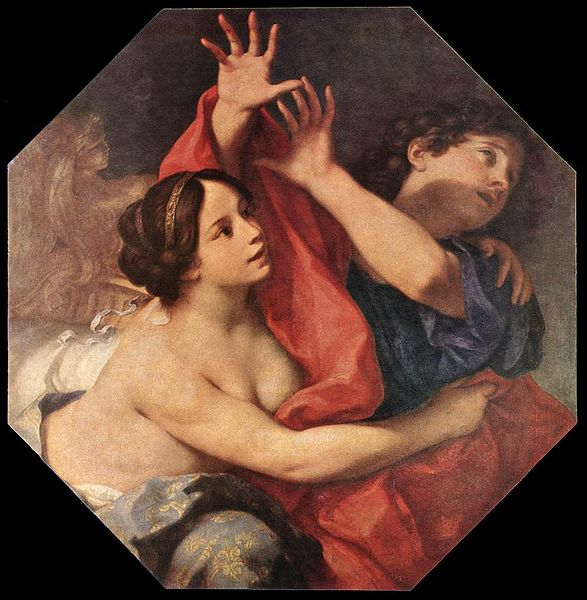
Potiphar's Wife: Seduction

Genesis 39


It is a strange feeling,
this power over men
- and I'm drunk with it.

I love it
how a single look
    a single touch
    a single word
can set them crawling at my feet
like worms.

I love it
being irresistible
      dangerous
      seductive,
turning them into grovelling dogs,
puppets.

It is a strange feeling,
this power over men
- and I'm drunk with it.

But what happens
when one says NO,
won't take the bait,
and runs away?
When my power fails,
abandons me?

Then I'm just a girl,
desperate for attention,
yearning for true love,
weak behind my mighty mask,
hiding my fears
beneath the blankets.
Lost,
so lost,
and so alone.

NO.
I will hide it,
put my mask on again,
make myself drunk with power,
and
lie.

____________________________________________________________

[December 2011]

Some time ago I realised for the first time how powerful we women can be - and how good that can feel! It's pretty dangerous. And I can imagine it can be a way we try to hide from ourselves our problems and weaknesses.

I think what we need to see first is that it's not the right solution. If I have self-esteem issues, or really need attention, then hiding it by temporarily feeling a bit powerful is not going to help. Problems are overcome when we face them, when we admit them, when we bring them before Jesus who can heal them. Because His love is real and permanent.

Another thing I think we need to see is that women who "sleep around" and look for men's attention all the time are not "evil", but people with needs which maybe they're trying to fill the wrong way. We should remember this before judging, and instead of putting them down as "bad people" give them the love they're looking for in the wrong places.

Picture by Carlo Cignani.

29 September 2013

Philipp's Daughters: Emancipation

On the next day we departed and came to Caesarea, and we entered the house of Philip the evangelist, who was one of the seven, and stayed with him. He had four unmarried daughters, who prophesied. (Acts 21:8-9)

There is neither Jew nor Greek, there is neither slave nor free, there is no male and female, for you are all one in Christ Jesus. (Galatians 3:28)


I may be a woman,
but that does not decide my fate -
for the Spirit of God
has set me free.

No longer bound
to hearth and home,
no longer is marriage
the sole option for me,
no longer my purpose
child-bearing alone -
for the Spirit of God
has chosen me.

I will not be silenced
or voiceless anymore:
I have a message from God.
I will not be second-class,
worthless or ignored:
for I am a daughter of God.
In Him there is no woman,
in Him there is no man,
no servant or free,
no Jew or Greek,
but all one in Christ
and Christ in us.

I may be a woman
but that makes me no less
in the eyes of the Lord.
I may be a woman
but that will not keep me
from preaching His Word
of salvation for all -
for the Spirit of God
is working in me.

_____________________________________________________

[January 2013]

Christianity did a lot for women's rights, actually. If you look at these girls, for instance: they were unmarried (not dependent on a husband), and they were prophetesses (they actually had something important to say and could say it). Something new in a culture where marriage was usually the only option for a woman, and where women had hardly anything to say (or they did, but no one listened)!

In the church, women actually had a chance to participate and a chance to be heard. Because God gives equally of His Spirit to men and to women, and calls both men and women to His service. Something that keeps getting lost a bit in the church (sadly) but that has kept reappearing, e.g. with nuns or women missionaries who were very involved. In fact, in the 19th Century women missionaries had a lot more freedom than the women who stayed at home - being allowed to preach, for instance, and take over leadership roles.

There are Christians who have trouble with "feminism". I think it depends how feminism is defined. I believe that what happened at Pentecost - the Spirit being given to women too and not just men - was a major step in emancipation. God empowers women for His service - not just men. We are equally important, and can be equally involved.

Picture by Amrita Sher-Gil

27 September 2013

Phoebe: Misbehaving

Romans 16:1-2

Well-behaved women
(society says)
live for their husband,
or father, or brother;
are there to make babies,
take care of the kids;
stay at home,
rule the household,
Queen of the domestic kingdom;
stick to their sphere
and not interfere
in men's business
(politics, religion)
but sit and knit
and gossip in private
and keep to womenly things.

Maybe
I am not well-behaved.

I am not known as a changer of nappies
or renowned for the meals that I cook.
They do not mention me
as the wife of so-and-so,
or praise my mothering skills.
Is it stepping out of line
to speak, to share, to have a voice,
to talk of that which moves my heart
even outside of the sewing group?
Is it going beyond my role
to lead a church,
to lead over men?
Is it strange
that I serve beyond the kitchen,
that I live for God and not for man,
that I have a say
beyond female spheres?

Maybe
I am not well-behaved.
Or maybe
your definition is wrong.

I may not be well-behaved
but I am a woman of God.
A woman of God
has a voice
and uses it
to shout truth from the rooftops
and speak up for the suffering.
A woman of God
is part of God's kingdom
as much as any man of God.
A woman of God
is free because
God sets her free
to do her chores in joy for Him
or do more, gratefully serving Him,
to turn her house into a church,
to mother the brothers and sisters in Christ,
to shine for God wherever she is,
to speak, to shout, to sing,
to give God everything -

The Spirit of God
makes us daughters and sons
of the Most High -
but a gift and a command
that I yearn to fulfill,
not for my sake alone
but for the Lord I love.

So this is all I ask:
that you don't prevent
me misbehaving
for my God.

-----------------------------------------------------------------------------------------

[June 2013]

I was in a conference on women's contribution to religious movements and thinking about which lady to write about next, and then had this old well-known quote in my head: Well-behaved women never make history. So I checked my Bible ladies list for women who might qualify as "misbehaving" or, conversely, as "well-behaved". I can tell you now I found no woman on that list whom I would class among the well-behaved.

Maybe it depends on what you define as "well-behaved". I had to think of Phoebe, a deacon in the early church - mentioned in Romans 16:1-2 Greek society probably had a really strict idea of what women should be and do (stanza 1). But a lot of what the Christian message says goes beyond that. I'm not saying women should not do their home duties - I'm saying God defines "well-behaved" in a different way which goes beyond home duties, to serving Him. And that transforms the way we do our usual duties, while also bringing in new things like - for Phoebe - serving as a deacon in her church, actually taking on a special role.

The last bit was especially inspired by stuff I learnt from my research on women missionaries in China. What various advocators of women's participation in missions said was that women are just as bound by the Great Commission as men. Here's some wise words from Miss Fielde, a baptist missionary: "A true Christianity can never debar woman from showing her gratitude to her saviour by setting Him forth as the true and sufficient Helper of her sex, both for the life that now is and the life that is to come."

Why block women from serving God? There are many examples of "misbehaving" women in the Bible whom the world would generally not deem "well-behaved" - but who are women of God, following God and serving Him. God's categories are different from the world's.

Though we should also not overdo it. The women of the NT did push limits to some extent I think, but they did not overdo - as texts like the "head covering" bit in 1 Corinthians 11 show. We don't need to shock our cultural surroundings. It does take sensitivity. But within the church, I don't think there should be a hierarchy of men or women anymore - we are one in Christ. We are to use our gifts to serve God - and gifts are not gender-based.

 Picture from catacomb of St Priscilla - some view this fresco as evidence that women could in fact take on "priestly" duties in the early church.