Showing posts with label Tamar & Amnon. Show all posts

10 June 2017

Maacah Mother of Tamar: Mother Lioness

2 Samuel 13

Tear my clothes,
throw ash upon my head.
Today my daughter is dead.

Why do we bear daughters
only to watch them be consumed
by the fires of the lust of a man
eating them alive?
Today my daughter is dead,
alive but dead,
an empty shell,
a rejected husk,
a ghost condemned
for another's lust.
Why do we bear daughters
only to watch them be destroyed
by a world that blames the helpless
and lets evil win the day?

They say a snake corrupted Eve -
today, it speaks to Adam
for it lives between his legs.
Why do we bear daughters
only to watch them be devoured
by merciless greed,
then cast away shamed,
a broken reed?

I want to tear him apart,
I want to rip his throat,
I want to bite off his manhood,
show no mercy to this merciless brute
who had no mercy for her.
Why do we bear daughters
only to watch them be regarded as objects,
playthings to be used and cast aside?
Why do we bear sons
if this is what they become?

I want to devour him
and leave nothing left,
I want him destroyed
the way he destroyed her.
I want to wail to the skies
forty days and forty nights,
tear my clothes,
throw ashes on my head
for today my daughter is dead.

Why did you create us
only to watch us like this,
tearing at each other
like wild beasts?
O God, like me you bore children
and you watched them fall apart.
Does your Mother-heart
break like mine?
O God, do you mourn
every day and every night
for your degenerate children
who wander as though dead?
O God, do you long, like me,
to go out in fury
like a mother lioness,
tearing evil limb from limb?

Or do you, like me,
tear your clothes,
throw ash upon your head,
and mourn your broken children,
alive but dead?

_______________________________________________________

[10. June 2017]

Thought I'd write from the point of view of Maacah, mother of Tamar. Tamar, daughter of David, was raped by her half-brother Amnon. With "alive but dead" I try to refer to how in a shame culture, being shamed in this way (by rape) can make a woman completely lose her worth in society. Tamar would have been made unmarriagable, all her chances for a future destroyed. To society, she was as good as dead.

Victims of rape generally reap more consequences than the perpetrators. Perpetrators get away; punishments are all too often not at all proportionate to the crime. A raped woman is innocent of what happened, but all too often is treated like a sinner. She suffers because of the sin of another.

When the Bible talks about justice and punishment and judgement, I believe it talks about things like this... about God standing in for the suffering and abused.

I decided to play with female imagery of God again here... not everyone's cup of tea, but it is a fact that God as God is "genderless", i.e. definitely not male, and that the Bible uses a lot of feminine imagery for God. I think the mother lioness fits to God... mother animals can be extremely ferocious when their children are attacked. While I am certain that God loves both perpetrators and victims, and salvation is about restoration and healing for both, I also believe (also from some of the pretty gory imagery that we read e.g. in the prophets) that God can be as ferocious as a worried mother animal when it comes to defending those who are wronged. The hard part is that we are all His children (tried to touch on that a bit in the last two stanzas which talk about all the children, not just the daughters), perpetrators and victims alike. God wants all to be saved; at the same time He does not stand for injustice. God's mourning over us must be all the greater, then... a combination of Maacah here, and Ahinoam, Amnon's mother.

Other poems about Tamar and Amnon here.

15 May 2017

Wise Woman of Tekoa: Justice and Mercy


2. Samuel 14:1-24

Justice must be served,
the guilty must be punished;
justice must prevail
through the hand of the King.
As a just ruler
you must deal out judgement,
appeasing the masses
that clamour for blood.
Wrongs can't be ignored,
evil can't be covered -
the guilty must be punished,
justice must be served.

But, Lord,
I am a Mother,
and you, Lord, are a Father.
Does not your father's heart
throb in you like mine?

Justice must be served
on my son who killed his brother;
the thirsty masses cry for blood.
I can't ignore his wrongs
that tear my heart asunder -
but vengeance will not heal me,
retribution won't atone my loss.
I have lost one son -
would you have me lose another?
Justice must be served,
but is this truly justice?

For, Lord,
I am a Mother,
and you, Lord, are a Father.
Does not your father's heart
throb in you like mine?

Justice must be served
on your son who killed his brother.
As a just ruler
you must deal out judgement.
But Lord,
you are a Father
and he is your son.
Close the eyes of the ruler,
look with the eyes of a Father,
and tell me what you see.
Put aside the ruler's iron mind
and listen to your father's heart.
See your child
and find mercy.

Evil can't be covered,
but mercy covers all.
Wrongs can't be ignored,
but a Parent's heart sees
the broken child beneath the sin.
Open your arms,
give in to your longing,
invite your child home
to the embrace where he belongs.
Let love restore
that which was broken;
let the tears of mercy
wash away the pain -

For justice is not retribution;
wrongs can't be healed by revenge -
justice is mercy and restoration,
justice is a parent's love,
justice is God
sparing His weak children,
granting us life again and again.
Justice is a Mother's embrace,
a Father's grace.

________________________________________________

[15. May 2017]

So: King David's eldest son Amnon raped his half-sister Thamar. Thamar's brother Absalom, seeing David do nothing, took justice into his own hands and murdered Amnon. David reacted by banishing Absalom. The wise woman of Tekoa comes in as an attempt of David's general Joab to convince David to end the banishment and let Absalom return.

I really like this story. It shows the complexity of justice and mercy and a parent's love - and it made me think about God's mercy and what that means.

The wise woman of Tekoa basically told a story similar to David's: the case of one of her sons killing his brother, and the people demanding punishment. The way she told the story she nudged David into saying the murderer should be spared for the mother's sake - because otherwise she would lose both sons. That way she could "twist" David into realising that the right decision for him would be to call Absalom back. That's how Bible wisdom works, apparently. ;-) (Nathan used the same method to bring David to indict himself on the Bathsheba incident...)

What the wise woman of Tekoa showed David was: he should look at the matter not as a ruler, but as a father. She showed him it was all right to give in to his love for his son - that it was not any less "just", but more so, than punishing him.

How do we imagine God looking at us and "judging" us? As a ruler? Or as a Father? A ruler or judge looks at the law and how well we followed it. He is completely neutral. A parent is not neutral: a parent loves his/her child. I believe God looks upon us as a parent; He sees us as His children and wants to save us. His aim is salvation, not ensuring all the rules are followed. "We must all die; we are like water spilled on the ground, which cannot be gathered up. But God will not take away a life; he will devise plans so as not to keep an outcast banished for ever from his presence." (v.14)

And, yes, there are perpetrators and victims, as the complicated story of Amon, Thamar and Absalom (including later Absalom's rebellion) shows all too well! But both perpetrators and victims are loved by God. God wants salvation for all. God's justice is justice for perpetrators and victims - which means it is more than just retributive justice or "paying back" what was done. I love the concept of "restorative justice"; I believe that is what all of us actually need... because victims are not really served by retributive justice either. The woman of Tekoa, a victim because she was robbed of her son, is not helped by the execution of her second son! I believe the justice of God is restorative justice: healing and restoring relationships, helping perpetrators to stop being perpetrators, bringing victims to their rights. And that is the kind of justice we Christians are called to live as well.. giving people a chance to change, helping up the downtrodden, working for peace and healing between people who otherwise would hurt each other.

As for "justice is mercy"...this is on my mind a lot. It bothers me how, very often, I see the word "justice" abused in the Christian context, as though justice were the opposite of mercy. As in: "God is a merciful God but He is also just", as if justice and mercy were opposites. Biblically, they are not - they are tightly and inseparably interlinked.

26 January 2017

Mother of Amnon: My Son, my Son


2. Samuel 13:1-32

My son, my son,
what have you done?
My son, what have you become?
Have I taught you nothing?
Has my love meant nothing?
How can I still look at you
after this?

Where is my sweet, sensitive boy?
Where has he gone?
Who is this selfish, brutal man?
What have you done?
Have I taught you nothing?
Who are you now?

Don't you see
the pain you're causing me,
digging claws into my heart,
tearing it apart?
Don't you have a mother?
Don't you have sisters?
Did I not teach you
love and respect?
Where did you learn
this violence, this greed,
this cruelty?
Not from me.

I want to beat you bloody.
I wish you weren't mine.
I want to cast you out
far from my sight.
My son, my son,
what have you done?
How could you do this?
Why?

And yet
you are my son,
my sweet, sensitive boy -
somehow, somewhere
that child is still there.
How I wish he could come out,
set himself free
from the blindness of self,
the chains of lust and greed.
How I wish
your evil deeds could fall away
to uncover the true you
buried beneath.

I want to beat you bloody.
I want to love you back to health.
I wish you weren't mine.
But how can a mother
forget her child?

You are not
what you have done.
I hate your deed
but I love my son.
I love you
and it hurts.
I love you
with the shattered pieces of my heart.
I want to love you back to health,
love you out from the depths of your dungeon,
love the selfish, brutal man
into my sweet, sensitive child again.
My son.

________________________________________________

[26. January 2017]

For some reason 2. Sam 13 is one of my most-written-about Bible texts (Tamar 1, Tamar 2, Tamar Absalom's daughter)... and I'm still planning on writing a fifth poem for it, from the p.o.v. of Tamar's mother.

Amnon's mother is Ahinoam of Jezreel (2. Sam 3:2). I realised it would be interesting to consider this story, of his rape of half-sister Tamar, from his mother's point of view.

While writing this I realised that, despite the way it has been misused and therefore fallen into disrepute, we still need the phrase, "love the sinner, hate the sin". We just need to understand it correctly. I find the phrase has been badly overused and misused in the context of discussions about homosexuality, and is almost only associated with such discussions. The way I first heard it, though, it meant something completely different. To me, "love the sinner, hate the sin" means differentiating between the deed and the person, acknowledging that something someone has done (e.g. in this case rape) is wrong (also for the sake of standing up for the victim), but still caring for the person and wanting them free. I believe we have really watered down this important message by associating it with a "sin" as negligible as homosexuality (I don't actually think it is one, but that's another fight I've already had too much of).

What someone has done does not have to "define" him as a person. I guess no one knows this better than a parent. That's why the Bible works with father and mother imagery to describe the love of God. God as a parent sees not only what we have done, but sees the trapped child beneath. And grace means we don't have to be what we have done, we don't have to be trapped, we aren't doomed to repeat our mistakes, there is a chance to change and to be free.

We need to "hate sin" in the sense that we need to stand up against injustice, cry out against rape and abuse of all kinds.
And we need to "hate sin" in the sense that we want the person imprisoned by it to come free and find their true self again, which was created for goodness, not for evil.
But we need to see the person as not defined by what he/she has done. And no one does that better than a loving parent, I think.
To me, that is what "love the sinner, hate the sin" should mean. It should be about standing up for victims and at the same time recognising the humanity of the perpetrator and giving him/her a chance to change.
I think one reason it's so dangerous to talk about "hating sin" mainly in the context of homosexuality is that we lose all credibility when we want to talk against real sin, or - even worse - ignore the real sin, which in my understanding of the Bible is abuse of others, especially the weak, failure to help the weak, oppression of others, and injustice of all kinds. Read the prophets: all about social justice.


Picture by Käthe Kollwitz, "Woman with Dead Child".

08 January 2016

Tamar: Unashamed


"There were born to Absalom three sons, and one daughter whose name was Tamar; she was a beautiful woman." (2. Samuel 14:27)

Ashamed
of my name:
Tamar.

Tamar,
my namesake:
a girl who was shamed.
A fallen woman,
violated, disgraced;
raped by her own brother,
then shunned, hidden away.
A story "not for children's ears",
hushed up, censored,
ignored or forgotten.
Tamar,
a heavy name to bear.

Why
name me after
Tamar?

Tamar,
my namesake:
a girl loved by you.
A human being
with a life and dignity;
no less precious, no less pure
after all that she endured.
And I am named
to honour her,
this innocent so wrongly blamed,
a pure woman,
wrongly shamed.
Tamar,
a name I am honoured to wear.

Proud
of my name:
Tamar.

______________________________________________________

[8. January 2016]

There are (at least) 3 women called Tamar in the Bible. One is Judah's daughter-in-law, the other David's daughter who was raped by her brother, the third (the one this poem is about) the daughter of Absalom, who was the second Tamar's brother and most likely named his daughter after his sister. So as you may have noticed, this poem refers to her story too (2. Samuel 13:1-22).

What do your namesakes mean to you? My father is interested in the Napoleonic wars, so pretty early on he told me all about my namesake who was Napoleon's first girlfriend and became queen of Sweden. There's a novel and a movie about her, which I of course delved into. And simply because of the shared name, I felt somehow connected to her.
I've met a few girls who are named after women who don't appear in children's Bibles (because their stories include violence, sex or sexual violence). I had a Tamar in my class when I first heard the Tamar story. I know a few girls called Jael. What do you do with an uncomfortable namesake?

Writing this I was partly thinking about namesakes, but also thinking about the response to rape. Even today, victims of rape are often shamed, blamed or ignored. David's daughter Tamar, after being raped by her half-brother, disappears into seclusion - we don't hear about her anymore. She was "damaged goods" because she had lost her virginity - while no one really bat an eye about Amnon who had raped her (except Absalom, who killed him after David failed to react). So I wanted to move here from shame in the first part, to honouring her in the second part. Because putting shame on the victim is the wrong response. Rape victims are most of the time innocent and need support, not blame. They need to be appreciated and valued, not judged.

So I think it is right and good to be named after someone who suffered, who was judged, who was looked down upon - because the naming shows love, and honours the namesake. Absalom wanted to remember and honour his sister, and express his love for her - so he named his daughter Tamar. After what had happened, his sister was still just as precious to him as before.

I was influenced a bit by Tess of the d'Urbervilles while writing this. The sub-title for Tess of the d'Urbervilles is "A Pure Woman" (and as you might notice, in the second-to-last stanza "pure woman" comes up a few times - that was on purpose). Tess is an example of a girl who suffered under the reactions of the world around her after she was raped. She was judged because of her lost virginity - but in truth she was pure, purer than those who judged her. Excellent book, you should read it. ^^

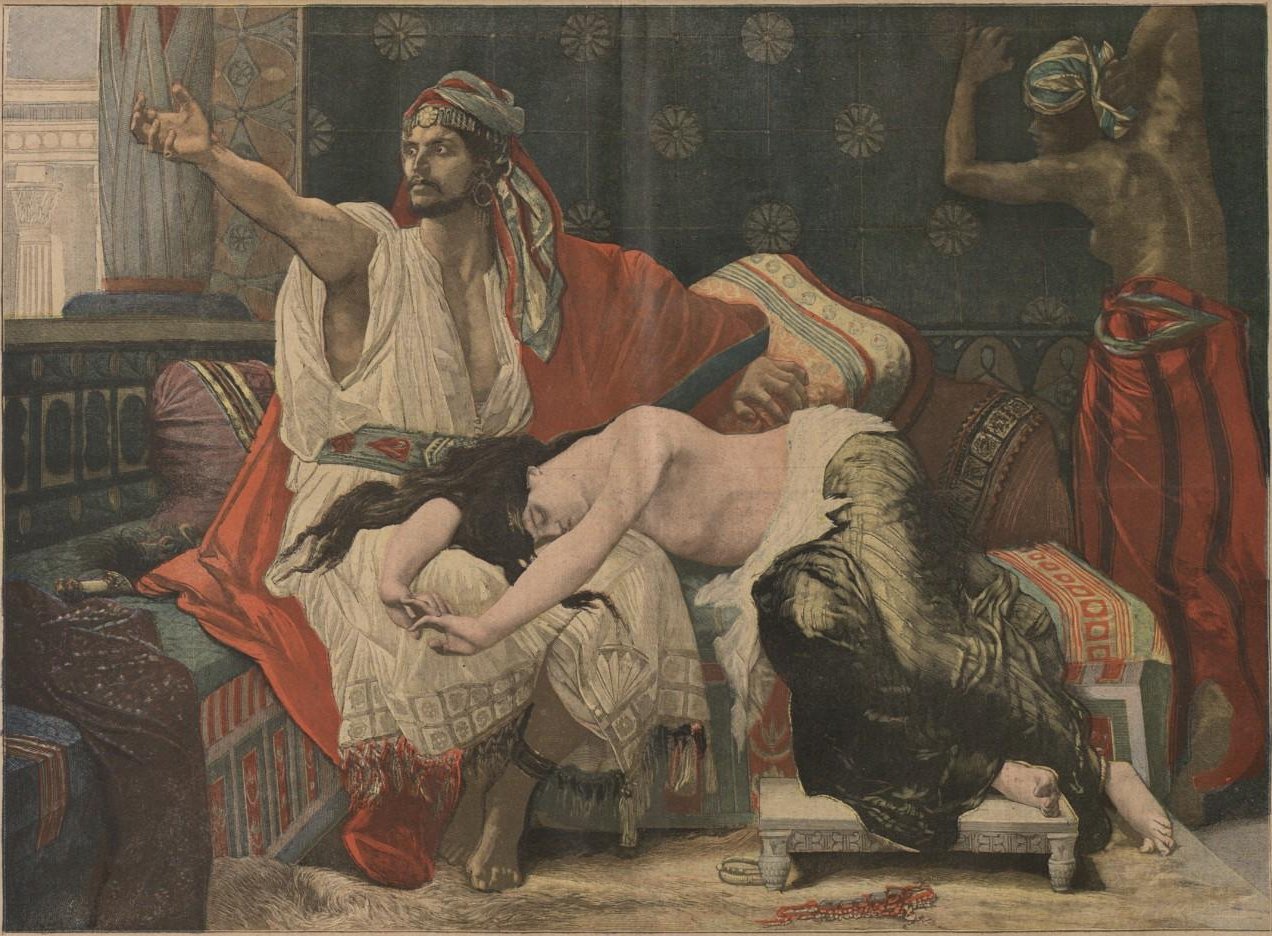
Picture by Alexandre Cabanel.

28 March 2015

Tamar: Shame


2. Samuel 13:1-22

Ashes.
Dust.
Don't look at me.
I am nothing now.
Why this?
Why me?
Don't look at me.

Don't tell me
it was all my fault -
I ask myself already
what I could have done,
why I didn't see.
Ashes.
Dust.
Don't look at me.

Don't tell me
it was not my fault -
it changes nothing,
does not take the shame.
I could confess,
though it's his sin.
My shame would stay.
You could show pity,
say you forgive,
though it's his sin.
My shame would stay.
Call me innocent -
it will not change
the truth of my shame.
Don't look at me.

I feel dirty.
Nothing can wash me.
I feel hurt.
Nothing can heal me.
I feel lost.
No one can find me.
I don't want them to,
don't want them to see
my shame.

Lord -
are you like those
who avoid me now?
Are you like those
who pretend I am fine,
or those who condemn,
denying relief?

Or
are you the listening ear
that lets me scream,
the one who covers
my shame with clothes,
the God of vengeance,
the God who forgives,
who sees my shame
but honours me?

________________________________________________________

[September 2013]

Tamar, David's daughter, was raped by her half-brother Amnon. Not to be confused with Judah's daughter-in-law. There's a second (older) poem about David's daughter, here.

This was influenced by my "homework" for the paper I'm writing about shame / honour cultures. Western theologies often look at the Gospel in terms of guilt, when what bothers people in most other cultures is not guilt but shame. And at some point I had to think of Thamar (though I've written a poem for her already...), and victims of abuse. You can feel terrible about what happened to you, even though it was not your fault. Even if you know it was not your fault, you can still blame yourself, feel broken, and what helps people in such a situation (I think) is not so much someone telling you Jesus died to take your guilt away, but knowing that He died also to take your shame away. Because I think one can feel ashamed even if one is not guilty.

The part with the clothes is based on Genesis 3, where God gave Adam and Eve (who were ashamed after having taken the fruit) clothes to cover them. Shame has a lot to do with the feeling of exposure. I was thinking also of all those verses in the New Testament (and also some in the OT) about putting on salvation and righteousness and putting on Jesus "like clothes".

Tamar: Dirty Laundry


2. Samuel 13:1-22

Unclean.
I want to SCREAM,
to tear my clothes -
but that's what HE did,
tore them clean off me,
and then -

DON'T.
Don't remind me.
Don't take me back there,
don't let him touch me,
don't you touch me either -
I'm afraid,
so afraid
of every look
   every touch
   every man ogling my way,
   every brother
   even Father -
Don't want to trust again.
I can't,
CAN'T.

He said
he was sick with love.
Then he used me
like dirty laundry
and threw me away -
is that what love is?
Forcing.
Over powering.
Not heeding cries of NO.
Is that what love is?
Then let me die
                         die
                              die -

I'm already dead,
wish I were dead,
he killed me,
killed my love
          my trust
          everything
and I'm dirty,
so dirty -
just throw me away,

like he did -
threw me away,
one-time-use,
like a worthless piece of rubbish.
And that's how I feel
because that
is what he's made of me.

Oh GOD.
Are you here?
Were you there
when it happened?
Why didn't you stop him
with some lightning from heaven
or send down an angel
to whisk me away?
WHY must I live
with this shame that's killing
                                          killing
                                                killing me?

Oh GOD.
Do you care?
Or am I dirty
in your eyes too?

He's a man.
He'll get away with it
again.
Father won't say a word,
of course.
While I bury myself in shame
and hope
that YOU
who comfort the suffering
are
  on
    my
      side.

_______________________________________________________________

[2011]

Not to be confused with the daughter-in-law of Judah, whose poem is right here.
David's daughter Tamar was raped by her own half-brother, Amnon, who for a long time moped about how he was so in love with her and couldn't bear it, then pretended to be sick, tricking her, and raped her. Afterwards he lost interest and sent her away - which to her was almost the worse shame. (I feel Amnon really had no clue what love is...) And one of the many many terrible things in this story is that Amnon just gets away with it; David doesn't move a finger. I have a feeling this episode contributed to Absalom's later uprising against David - Tamar was Absalom's sister. 

What I tried to focus on here was Tamar's feelings of shame - as well as the inequality which enabled Amnon to do what he wanted, without even getting in trouble, while her life was probably ruined for ever ("violated women" carry huge stigma even now in some cultures, even though what happend wasn't their fault).

There's another (newer) poem for Tamar over here if you want to compare... see if I've improved or de-proved over the past few years... ;-)

Picture by N. Regnier