Showing posts with label Samuel/Kings/Chronicles. Show all posts

11 February 2023

Bathsheba: Butchered

TRIGGER WARNING: rape


2. Samuel 11:1-12:15

I could not say no.
I would not have said yes.
I was not asked,
and if I had been,
what could I have said?

Caught
like a deer in the hunter's sight,
should I flee?
should I fight?
maybe
if I cower before him
and fawn at his feet
do what he wants
he'll be kind to me?

(but still
in the end
he'll butcher me,
won't he)

I could not say no.
I would not have said yes.
If I had screamed,
who would have cared?
who would have dared
come to my rescue?

I could not say no.
Should I have?
I should.
Does that make me complicit?
Does that make this my sin?
Is it my fault
that it went so far
because I didn't say stop,
couldn't say no?

I could not say no.
I would not have said yes.
"Come," he said,
and sanctimoniously:
"I won't do anything you don't want"

and just like that
the burden is on me
and it's my responsibility
and I can go home with the guilt
of "maybe he didn't know better"
"maybe he misunderstood"
"maybe it's my own fault".

I could not say no.
I would not have said yes.
But who will know?
Who will care?

Now I am set before the door
to gather up the shattered pieces of my dignity
with the tattered remains of my clothes
butchered
bearing the shame
questioning myself
while he rests free and easy
certain he's not to blame
because I couldn't say no

but
I did not say yes.

__________________________________________________________

[11. February 2023]

Growing up I always learnt David "had an affair", or the even worse version: "Bathsheba seduced David" (by "bathing on the roof"). It was only more recently, during my theological studies, that I discovered this is actually a story of rape. And there are still Christians who will fight against this interpretation and insist Bathsheba was somehow at fault! I feel like how we handle this story has a lot in common with how abuse and rape are still handled in the wider culture and by Christians.

Here in Switzerland at the moment feminists are fighting for the legal definition of rape to be changed so that "only yes means yes". At the moment, it's only rape if you said no, pretty much. But what if you can't say no?

Recently I have been thinking about the complexities of consent (partly because of this initiative in Swiss politics, partly from watching "Anatomy of a Scandal" which handles this question). And really it should not be so hard. But the way stories like Bathsheba's are still handled shows that society has not learnt at all yet. As long as we still say things like "she could have said no", "why didn't she call for help", "what was she wearing", etc, there's still something very wrong in society. This kind of mentality endangers women.

The Bible is really, really clear on Bathsheba's story though. The prophet Nathan in 1. Sam 12 gives a very clear explanation of how the incident should be understood, in his story of the rich man slaughtering the poor man's lamb. The Bible itself compares Bathsheba to a lamb being slaughtered, a sacrifice to David's lust. There is no way a sheep can be complicit in its butchering. I feel like we have spent so much energy trying to make David a "good guy" because there's this half verse somewhere about David being a "man after God's own heart" - instead of just honestly reading the Bible and letting the Bible speak for itself. The Bible is on Bathsheba's side, God is on Bathsheba's side. Bathsheba was raped. And it shouldn't matter to us whether she said no or not. Because without a yes it was rape. The Bible text uses only passive verbs for Bathsheba in this story, she is all victim here.

I need to write another poem though for later in Bathsheba's life, because she rose up and became very influential in David's court, so much so that it was through her actions that her son Solomon became king after David's death despite being pretty far down in the line. She does not remain passive.

Other Bathsheba poem: O Child (about the child she lost after this)

Picture: 17th Century Anonymous

19 July 2022

Haggith: Don't Heal Me


Don't heal my broken heart, God.
I want to feel the pain.
I want the wound
to stay open, bleeding.
I want to stay shattered;
Don't gather my pieces.
Let me grieve.

Don't heal my broken heart, God.
Let me stay here instead,
wallowing in bleeding love,
bleeding for him.
Healing would feel
like forgetting
getting over him
betraying him.
Losing him forever.

Don't heal my broken heart, God.
Don't take the pain,
don't comfort me.
For as the pain fades
so does he.
Keep my tears flowing.
Silence my laughter.
Keep me broken;
I don't want to be fixed.
I need him to stay present
in my pain, in my tears.
I need him to keep haunting me,
I need it to keep hurting me.

So don't heal my broken heart, God.
Let me grieve.

___________________________

[19. July 2022]

I read about a most terrible loss of a baby today. While I was praying for the mother the thought came to me that with such a loss, I would not want to be comforted. "Feeling better", ever, would feel like a betrayal.

Modern-day Western culture is very uncomfortable about grief. We try to make people feel better because that makes us feel better. But sometimes we just need to feel our feelings. It is so important to have and give permission to grieve. To feel all of it for as long as it takes, in whatever way it takes (everyone grieves differently!), instead of feeling under any pressure to "go back to normal".

I chose Haggith for this poem because she is one of many grieving mothers in the Bible. Her son Adonijah is one of the contenders for David's throne and almost becomes king. Bathsheba manages to get her son Solomon on the throne instead. Solomon then has Adonijah and his supporters killed. Politics and intrigue and we can have all sorts of theological conclusions about what went on here, but in the end you will always have people experiencing loss and grief.

I believe God allows us to grieve, that being a Christian does not mean having to be always happy, that it is perfectly fine to not want to get better yet. God lets us take our time to grieve. He will heal when we are ready.
So this also makes me think about how I am there for people in grief. How I pray for them. "Heal the broken hearts" - yes, but are they ready to be healed? What do they actually want and need? Maybe instead of being released from their feelings, they want a safe place to express them? Maybe I can be that safe place for someone. Just listening, not trying to comfort. Maybe a better prayer would be that grieving people can receive what they need - be that comfort, sleep, a listening ear or the courage to be angry.

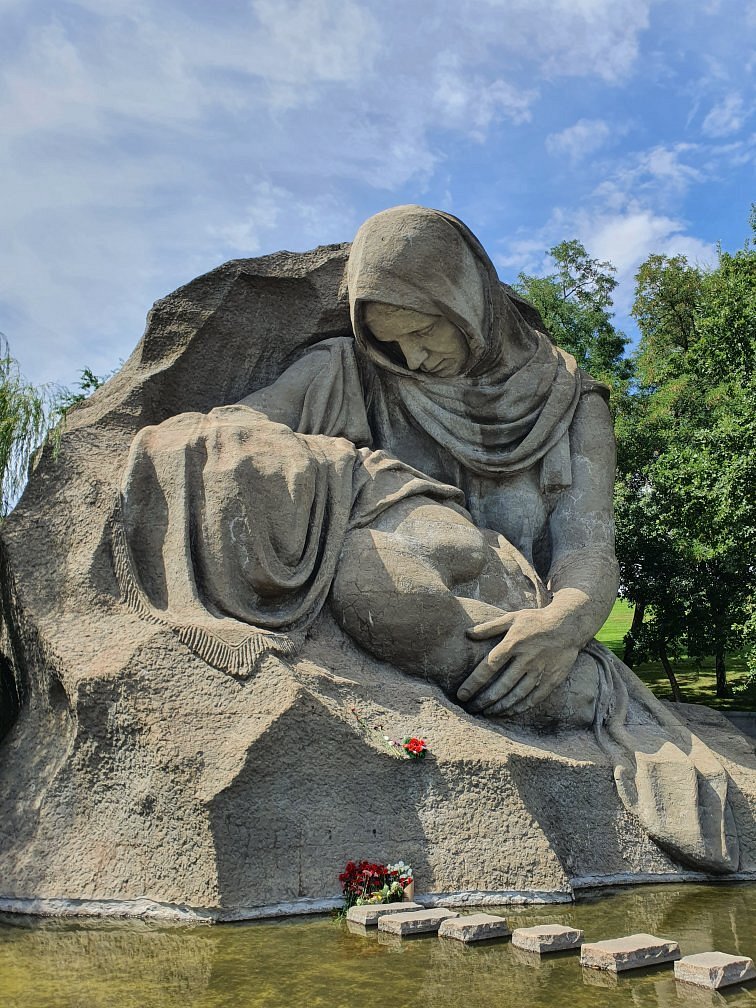
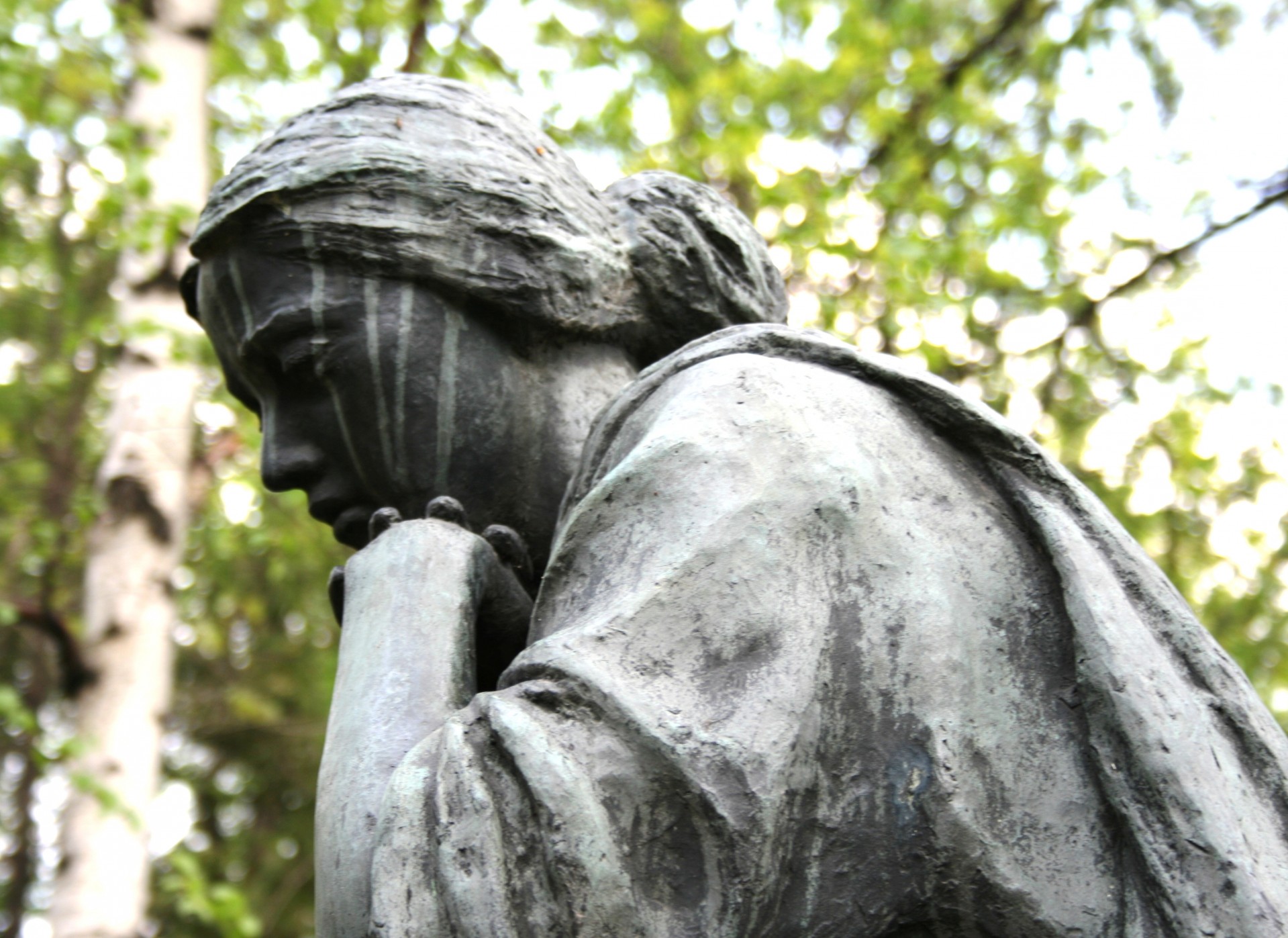
Picture: "Grieving Mother" in Volgograd

23 January 2022

Widow of Zarephath: My Cup Overflows

1. Kings 17

I am alone
but my cup overflows.
No husband to support me
but my cup overflows.
Sole provider for my child
but my cup overflows.
Troubled are our times
but my cup overflows.

Your abundance
comes flowing down
covering our needs.
My cup overflows.
All the strength that I needed
to live through this time,
endurance and joy,
my cup overflows.

Faced with starvation
but my cup overflows.
Faced with illness
but my cup overflows.
Faced with loss
but my cup overflows.
In all adversity
my cup overflows.

All your riches,
your luxurious love,
pouring into our lives,
more than enough.
My cup overflows
enough to share
with hungry prophets
and weary guests.
My cup overflows.

_____________________________________________________

[23. January 2022]

The other day I randomly pondered whether there were any single mothers in the Bible. Of course there are quite a bunch. This is one of them and the first who came to mind.

Her story really spoke to me in the moment that I thought about her. She is a single mother like me. She lives in challenging times like we do currently (for her: drought and famine, for us: pandemic). She experiences miraculous provision - which I have been experiencing too ever since the separation. Oil in the Bible is a symbol of joy and abundance. She experiences the miracle of her tiny remainder of oil never being used up. What if we read this not only as the literal kitchen ingredient never running out, but as God providing all she needs? Personally these past few months I have somehow always had the strength and courage to get through all the challenges of becoming a single mother. Reading the widow's story, the "oil" in my life is these things.

So yes this is one of those cases where I write a poem for a woman of the Bible from the perspective of my own current experience. This story is an encouragement to me.

I also find it interesting how the whole thing connects to hospitality. The widow has too little for herself and her son, then suddenly has a guest on her hands when Elijah basically invites himself. It is in this situation that the oil and flour never run out. The widow dared to be hospitable - and it paid out. I have also made this experience that sometimes when I'm going through a hard time, helping others actually helped me. Weird maybe, but it happens - miracles of provision I think are more common than we might expect.

"My cup overflows" from Psalm 23:5 jumped into my head for this one, and I decided on the repetitive pattern to emulate the "his love endures forever" refrain in Psalm 136.

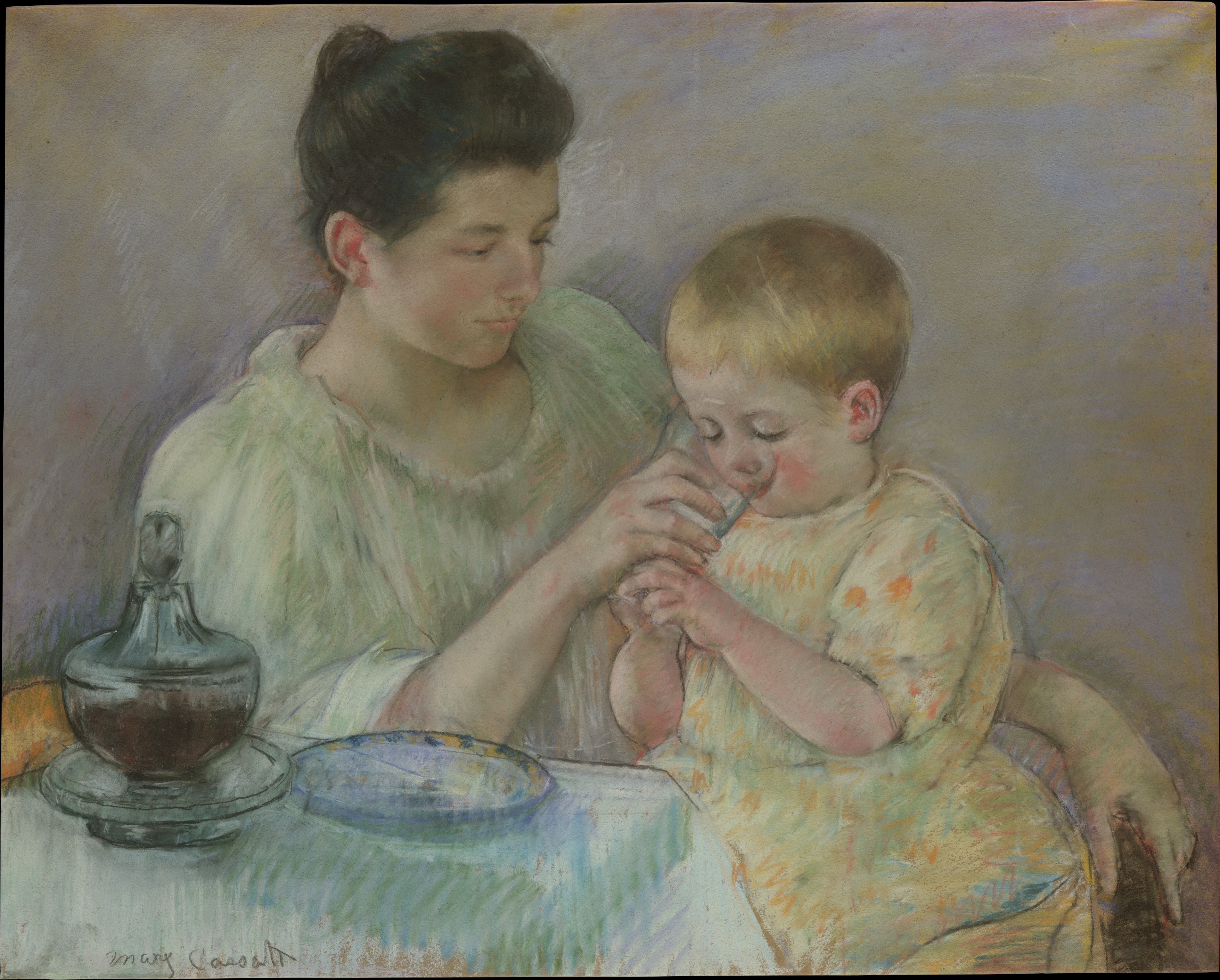
Picture by Mary Cassatt

29 August 2021

Solomon's Judgement: Rent Hearts


 I.
You were all I had.
My bright light
in this dark life,
something to live for,
a small thread of meaning
in the drudgery.
You were all I had.

But now
the light is snuffed out,
the thread is cut.
My arms are empty.

My arms are empty,
longing,
desperate to be filled.
So I will fill them -
I must, I must.
I will pretend
that he is you
back in my arms again.

You were all I had.
I can't give you up.
I will pretend
that he is you.
And if I can't - then so be it.
Let them rend him with a sword,
my heart is rent already.
I'm too broken to care,
too deep in grief
to grant her what I can't have.
If I must suffer,
she should too.
If I can't have you
no one should.

Let them rend him with a sword.
My heart is rent already.


II.
You are all I have.
My bright light
in this dark life,
something to live for,
a small thread of meaning
in the drudgery.
You are all I have.

But now
the threat of losing you -
snatched, stolen, ripped from my side,
my arms are empty.

My arms are empty,
fighting,
fighting to get you back.
I love you,
I need you,
I need you to be safe.
Come back to me,
back to my arms again.

You are all I have.
I can't give you up.
I need you
back in my arms -
but if I can't, then please be safe.
My heart is rent without you,
but I need you to be whole,
need you to live
and shine your light,
if not for me,
then for yourself.
If the only way 
to keep you safe
is letting you go -
then so be it.

My heart is rent without you,
but I need you to be whole.

_________________________________

[29. August 2021]

Actually had other ladies higher up on my to do list but spontaneously decided to write the p.o.v. of the two prostitutes who fought over a baby. One had accidentally smothered hers in her sleep and now both were claiming the living one. Solomon suggested cutting the baby in half to find out who the real mother was, because she would be more concerned with keeping her child alive.

Anyway because this poetry project is about compassion with the characters / trying to imagine what they are feeling, I did not want to do a "bad mother / good mother" thing. Was the mother of the dead baby selfish for not caring if the live one was killed? Maybe, or maybe she was just too full of grief (which can make us not think straight). One mother's primary concern is her grief, which makes her care about little else. The other's main concern is her child's safety, which makes her willing to sacrifice. Both women are in a terrible situation though - each in some way has her heart broken. One can't do anything for her child anymore - the other can still try to keep him safe.

Picture by William Blake


03 July 2021

Rizpa: Ich bin Mutter

 1. Samuel 21,1-17


Ich bin Trauer –
zerrissen von Verlust,
ein Loch in meinem Herzen
wo du einmal warst.

Ich bin Verlust –
allein nun, verlassen,
meiner Söhne beraubt –
grausames Menschenopfer
im Namen Gottes getan.

Ich bin Liebe, ausgegossen
aus gebrochenem Herzen,
fliessende Tränen
die dich nicht auferwecken können,
schützende Arme
die dich umhüllen
dass dich am Tag die Sonne nicht steche
noch der Mond des Nachts.


Ich bin Zorn
der kämpft für meine Kinder
gegen alle Gewalten der Natur,
wenn es sein muss: gegen Gott;
gegen die Verwesung,
gegen den Tod.

Ich bin Treue
mächtiger als Hass,
schärfer als ein Schwert,
stärker als der Tod;
ich ertrage jeden Sturm,
ertrage jeden Schmerz –
deine Beschützerin
über das Ende hinaus.

Ich bin Mutter.
Meine Liebe stirbt nie.
Ich würde den Tod töten
wenn ich es nur könnte.

Wo ist nun Gott?
Freut er sich über Menschenopfer?
Oder bekämpft sie den Tod mit mir?

__________________________________

[Übersetzung 7. Mai 2021]

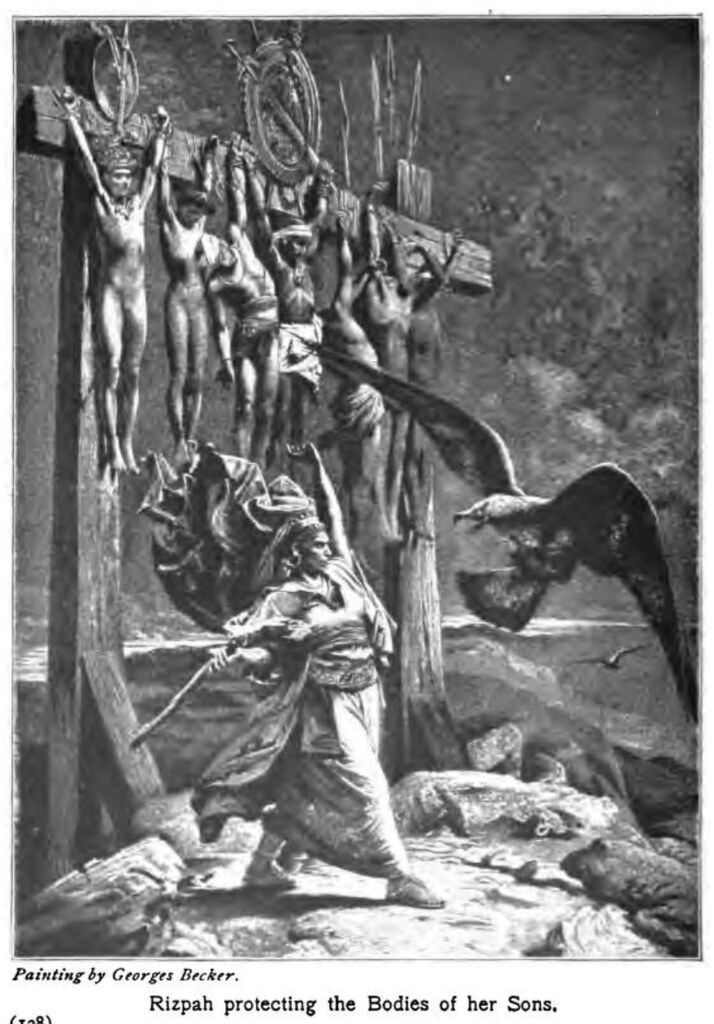
Bild von George Becker

01 May 2021

Mephibosheth's Nurse: Forgive Myself


Jonathan son of Saul had a son who was lame in both feet. He was five years old when the news about Saul and Jonathan came from Jezreel. His nurse picked him up and fled, but as she hurried to leave, he fell and became disabled. His name was Mephibosheth.
(2. Samuel 4:4)

I will hate myself forever.
I will carry this guilt
for as long as I live.
Maybe you can forgive me,
but God, it's hard
to forgive myself.

They trusted me -
a trust that I shattered
with his poor little bones.
Responsibility
weighs me down like gravity
that pulled him to the ground.
How I wish
those seconds could have slowed
where he slipped from my hands.
Maybe they can forgive me
but God, it's hard
to forgive myself.

It was an accident,
they will say.
I did my best,
they will say.
Better that I ran,
ran for our lives,
ran for his life
and dropped him,
better he live on like this,
better crippled than dead.
Maybe they can forgive me
but God, it's hard
to forgive myself.

They say that I saved him -
I see that I ruined his life forever.
What if some nights
the thought crossed his mind
that he'd rather be dead?
Maybe he can forgive me
but God, it's hard
to forgive myself.

God, help me
to forgive myself.

_____________________________________________

[1. May 2021]

Mephibosheth was a son of Jonathan, son of Saul the first king of Israel. After Saul was defeated by the Philistines, Mephibosheth's nurse fled with him - and dropped him. This had lifelong consequences for him.

What a thing for the poor nurse to be living with! I'm hard enough on myself when I make a mistake with my own child - with someone else's child (the king's son's child!) you have the added burden of others having entrusted their child to you. Ican't imagine the burden the nurse will have carried with her. Even though she saved him and the accident happened in the act of saving him, sometimes our failures impress us more strongly than our successes. Sometimes we are the ones who are hardest on ourselves.

So I made this about the inability to forgive oneself even when forgiveness is there, even when we are not actually at fault.

Picture: Wilhelm Amberg

15 November 2017

Rizpa: I Am Mother

2. Samuel 21:1-14


I am grief,
My heart torn with loss,
an aching hole
where once you were.

I am loss,
alone now, forsaken,
robbed of my sons,
bereft in a cruel sacrifice
done in the name of god.

I am love,
pouring from a shattered heart
flowing in tears
that can't bring you to life,
enveloping arms
to shield you from the sun and rain.

I am fury,
fighting for my children
against all forces of nature,
if must be: against god,
spitting in the face of death,
battling down decay.

I am fidelity,
more powerful than hate,
sharper than a sword,
stronger than death,
enduring all storms,
ignoring my own pain,
your protectress
beyond the end.

I am Mother.
My love never dies.
I would kill death
if only I could.

Where now is God?
Delighting over human sacrifice,
or fighting death with me?

________________________________

[15. November 2017]

I have been intrigued by the picture of Rizpa furiously fighting off the carrion birds to protect her dead family members.

Rizpa's story is a terrible one. After David's rule has been established, there is a famine, and David asks God why. The answer: there is "bloodguilt" on the family of Saul because Saul killed the Gibeonites, i.e. in the tribal system of those days, revenge was still pending. Now instead of asking God what to do, David asked the Gibeonites what they wanted - and they demanded human sacrifice. So David had all the remaining male descendants of Saul killed (except Jonathan's family).

Here's where Rizpa, Saul's concubine, comes in. She goes out to the corpses and defends them - throughout the harvest season! Rizpa remains mother even in death. I find that picture very impressive.

Interesting to note: the famine does not end after the men were sacrificed - but after they were given a decent burial. Not only they, but also Saul and Jonathan who had been dead for years. Which to me shows that God clearly did NOT accept the human sacrifice. There is a lot of ugly violence in the Old Testament, and this is one example of it. But God does not condone it. The hero in this story is Rizpa, who shows David what is to be done. The end of bloodguilt is not punishment and sacrifice but forgiveness and burial.

Rizpa fighting death made me think of how in Jesus God conquered death for us. I see God in her, in this story - not delighting over the murder of men innocemt of their forebearer's crimes.

10 June 2017

Maacah Mother of Tamar: Mother Lioness

2 Samuel 13

Tear my clothes,
throw ash upon my head.
Today my daughter is dead.

Why do we bear daughters
only to watch them be consumed
by the fires of the lust of a man
eating them alive?
Today my daughter is dead,
alive but dead,
an empty shell,
a rejected husk,
a ghost condemned
for another's lust.
Why do we bear daughters
only to watch them be destroyed
by a world that blames the helpless
and lets evil win the day?

They say a snake corrupted Eve -
today, it speaks to Adam
for it lives between his legs.
Why do we bear daughters
only to watch them be devoured
by merciless greed,
then cast away shamed,
a broken reed?

I want to tear him apart,
I want to rip his throat,
I want to bite off his manhood,
show no mercy to this merciless brute
who had no mercy for her.
Why do we bear daughters
only to watch them be regarded as objects,
playthings to be used and cast aside?
Why do we bear sons
if this is what they become?

I want to devour him
and leave nothing left,
I want him destroyed
the way he destroyed her.
I want to wail to the skies
forty days and forty nights,
tear my clothes,
throw ashes on my head
for today my daughter is dead.

Why did you create us
only to watch us like this,
tearing at each other
like wild beasts?
O God, like me you bore children
and you watched them fall apart.
Does your Mother-heart
break like mine?
O God, do you mourn
every day and every night
for your degenerate children
who wander as though dead?
O God, do you long, like me,
to go out in fury
like a mother lioness,
tearing evil limb from limb?

Or do you, like me,
tear your clothes,
throw ash upon your head,
and mourn your broken children,
alive but dead?

_______________________________________________________

[10. June 2017]

Thought I'd write from the point of view of Maacah, mother of Tamar. Tamar, daughter of David, was raped by her half-brother Amnon. With "alive but dead" I try to refer to how in a shame culture, being shamed in this way (by rape) can make a woman completely lose her worth in society. Tamar would have been made unmarriagable, all her chances for a future destroyed. To society, she was as good as dead.

Victims of rape generally reap more consequences than the perpetrators. Perpetrators get away; punishments are all too often not at all proportionate to the crime. A raped woman is innocent of what happened, but all too often is treated like a sinner. She suffers because of the sin of another.

When the Bible talks about justice and punishment and judgement, I believe it talks about things like this... about God standing in for the suffering and abused.

I decided to play with female imagery of God again here... not everyone's cup of tea, but it is a fact that God as God is "genderless", i.e. definitely not male, and that the Bible uses a lot of feminine imagery for God. I think the mother lioness fits to God... mother animals can be extremely ferocious when their children are attacked. While I am certain that God loves both perpetrators and victims, and salvation is about restoration and healing for both, I also believe (also from some of the pretty gory imagery that we read e.g. in the prophets) that God can be as ferocious as a worried mother animal when it comes to defending those who are wronged. The hard part is that we are all His children (tried to touch on that a bit in the last two stanzas which talk about all the children, not just the daughters), perpetrators and victims alike. God wants all to be saved; at the same time He does not stand for injustice. God's mourning over us must be all the greater, then... a combination of Maacah here, and Ahinoam, Amnon's mother.

Other poems about Tamar and Amnon here.

15 May 2017

Wise Woman of Tekoa: Justice and Mercy


2. Samuel 14:1-24

Justice must be served,
the guilty must be punished;
justice must prevail
through the hand of the King.
As a just ruler
you must deal out judgement,
appeasing the masses
that clamour for blood.
Wrongs can't be ignored,
evil can't be covered -
the guilty must be punished,
justice must be served.

But, Lord,
I am a Mother,
and you, Lord, are a Father.
Does not your father's heart
throb in you like mine?

Justice must be served
on my son who killed his brother;
the thirsty masses cry for blood.
I can't ignore his wrongs
that tear my heart asunder -
but vengeance will not heal me,
retribution won't atone my loss.
I have lost one son -
would you have me lose another?
Justice must be served,
but is this truly justice?

For, Lord,
I am a Mother,
and you, Lord, are a Father.
Does not your father's heart
throb in you like mine?

Justice must be served
on your son who killed his brother.
As a just ruler
you must deal out judgement.
But Lord,
you are a Father
and he is your son.
Close the eyes of the ruler,
look with the eyes of a Father,
and tell me what you see.
Put aside the ruler's iron mind
and listen to your father's heart.
See your child
and find mercy.

Evil can't be covered,
but mercy covers all.
Wrongs can't be ignored,
but a Parent's heart sees
the broken child beneath the sin.
Open your arms,
give in to your longing,
invite your child home
to the embrace where he belongs.
Let love restore
that which was broken;
let the tears of mercy
wash away the pain -

For justice is not retribution;
wrongs can't be healed by revenge -
justice is mercy and restoration,
justice is a parent's love,
justice is God
sparing His weak children,
granting us life again and again.
Justice is a Mother's embrace,
a Father's grace.

________________________________________________

[15. May 2017]

So: King David's eldest son Amnon raped his half-sister Thamar. Thamar's brother Absalom, seeing David do nothing, took justice into his own hands and murdered Amnon. David reacted by banishing Absalom. The wise woman of Tekoa comes in as an attempt of David's general Joab to convince David to end the banishment and let Absalom return.

I really like this story. It shows the complexity of justice and mercy and a parent's love - and it made me think about God's mercy and what that means.

The wise woman of Tekoa basically told a story similar to David's: the case of one of her sons killing his brother, and the people demanding punishment. The way she told the story she nudged David into saying the murderer should be spared for the mother's sake - because otherwise she would lose both sons. That way she could "twist" David into realising that the right decision for him would be to call Absalom back. That's how Bible wisdom works, apparently. ;-) (Nathan used the same method to bring David to indict himself on the Bathsheba incident...)

What the wise woman of Tekoa showed David was: he should look at the matter not as a ruler, but as a father. She showed him it was all right to give in to his love for his son - that it was not any less "just", but more so, than punishing him.

How do we imagine God looking at us and "judging" us? As a ruler? Or as a Father? A ruler or judge looks at the law and how well we followed it. He is completely neutral. A parent is not neutral: a parent loves his/her child. I believe God looks upon us as a parent; He sees us as His children and wants to save us. His aim is salvation, not ensuring all the rules are followed. "We must all die; we are like water spilled on the ground, which cannot be gathered up. But God will not take away a life; he will devise plans so as not to keep an outcast banished for ever from his presence." (v.14)

And, yes, there are perpetrators and victims, as the complicated story of Amon, Thamar and Absalom (including later Absalom's rebellion) shows all too well! But both perpetrators and victims are loved by God. God wants salvation for all. God's justice is justice for perpetrators and victims - which means it is more than just retributive justice or "paying back" what was done. I love the concept of "restorative justice"; I believe that is what all of us actually need... because victims are not really served by retributive justice either. The woman of Tekoa, a victim because she was robbed of her son, is not helped by the execution of her second son! I believe the justice of God is restorative justice: healing and restoring relationships, helping perpetrators to stop being perpetrators, bringing victims to their rights. And that is the kind of justice we Christians are called to live as well.. giving people a chance to change, helping up the downtrodden, working for peace and healing between people who otherwise would hurt each other.

As for "justice is mercy"...this is on my mind a lot. It bothers me how, very often, I see the word "justice" abused in the Christian context, as though justice were the opposite of mercy. As in: "God is a merciful God but He is also just", as if justice and mercy were opposites. Biblically, they are not - they are tightly and inseparably interlinked.

03 March 2017

Merab: What Could Have Been

1. Samuel 18:17-19

Strange to think now
I could once have been yours,
that it could have been me
gracing your side.
What might life have been
if my father kept his promise?
What might life have been
if you had married me?

Strange to think now
that I ever wanted you,
that there was a time
when I'd see you and swoon,
when my heart would beat faster
each time you looked my way.
Such a silly girl,
young and in love,
protesting when they gave me
to another man.

Strange to think now
what I might have endured -
could I have endured it
the way she did?
Could I have stood by you
against my own father,
abandoning my family?
Could I have lied to protect you
from the people I loved?
Could I have endured
years of separation,
fearing for your life?
Could I have endured
being reunited with you,
when you no longer loved me
but had married many more?
Could I have endured
a life torn in two?

Strange to think now
I could once have been yours.
Strange to think now
that I ever wanted you.
Could I have endured it
the way she did?
I was such a silly girl,
young and in love.
But today I look back
and thank the wiser hand of God
for not granting me my wishes
and not letting dreams come true.

___________________________________________________

[2. March 2017]

Merab was the elder daughter of Saul. Saul originally promised her to David, not her sister Michal - but then gave her away to be married to someone else (probably to spite David). Merab doesn't really get a voice in any of it; we don't see how she felt, whether she actually "liked" David the way I portrayed it here (though he was so popular, especially with the ladies, that I think it's quite possible). As often happened to women (especially princesses) in those times, others decided her fate for her and she had no say.

The theme I decided to pick up on here was how sometimes, it's better not to get what we wish for - that sometimes, we only see later how things would have unfolded, and have to admit that not getting what we wanted was better. We may sometimes be disappointed by God not answering prayers or not letting things happen the way we'd like them to - but "the wiser hand of God" knows what and how much we can take. I keep marvelling at how much Michal, Merab's sister (who became David's first wife), had to go through (and I'd like to write many more poems about her!) - and that she didn't break under all that. She had to take sides between her father and her husband - a dreadfully painful thing! So when Merab says in this poem, "Could I have endured it / the way she did?" she is talking about Michal. Not everyone can bear things the same way. God knows which trials to give us, and which to spare us from.

But often we need the wisdom of hindsight to see that it was better not to get what we wanted.
For me this means: I need to trust that God knows what He's doing when He doesn't make all my dreams and ideas and plans come true.

Picture by Ernest J. Rowley, The veiled lady (1903).

13 December 2016

The Witch of Endor: Poor Child


1. Samuel 28:3-25

You used to be the mighty King,
persecutor of the likes of me;
the scourge of all who practised my craft,
enemy of those not loyal to your god.
Your name alone meant dread to me -
today, do you bring death to me?

But now
your shell is cracked
and you seep through:
wounds and tears
from beneath the armour,
a broken man
underneath the mask.
I thought you were a mighty King -
but I all I see is a lost child
cowering frightened at my feet.

You believe yourself forsaken
by God and by men,
thrown aside and replaced
by a better man.
You believe yourself hated,
feel lost and alone -
my hunter is hunted
my persecutor brought low.
You have clung to your power;
you fought and you fought...
but not even the mighty
can stay the hand of God.

You used to be the mighty King,
persecutor of the likes of me.
Now here you are, a lost child,
cowering frightened at my feet.
Now I could gloat
to see my hunter hunted,
to see you brought low
by the god you disobeyed.
But all I see is a lost child
cowering frightened at my feet.

So I will be the comforting arms
to rock you, poor child, into much-needed sleep.
So I will be the motherly love
that you so hungered for.
So I'll provide you with one last meal,
with strength for the road,
that last heavy road
into failure and death.
So I, the heathen, will be God's final sign
that he hasn't forsaken you.

____________________________________________

[13. December 2016]

The story of Saul, first king of Israel, is a very interesting and tragic one. Saul is chosen by God to be the first king when the Israelites pressure Him for one. He is a quiet, reserved, taller-than-average guy, used to farming. But he becomes Israel's leader in the wars against the Philistines. But then, he falls into disgrace with God and things start spiralling down. Saul is "rejected" by God, and a new king, David, is annointed. My Old Testament professor once pointed out that Saul was not rejected or forsaken as a person, but as king. Saul's mistake was clinging on to power after God had told him it was over. The Israelites wanted a king - God gave them a king, but on His own terms, meaning this kingship would not be like that of the gentile kings. God would be above the king, and God would be the one to decide who is king and for how long, i.e. the kingship wouldn't be a lifelong or inheritable thing.

This story of Saul's encounter with the witch / medium in Endor (1. Sam 28) begins with silence... Saul stands before a war with the Philistines and no matter what methods he tries to communicate with God and find out God's will, God is silent. Which of course only increases his feeling of forsakenness which has been following him for years now. In utter desperation, Saul goes to a medium - someone practising the forbidden Canaanite practices that he had tried to exterminate. He wants to try to talk to his dead mentor Samuel to find out God's will.

Is Saul really as forsaken as he feels? My OT prof's view that God did not reject Saul as person, but in his role as king, really opened my eyes to a new understanding of Saul's story. Saul develops a kind of "persecution complex", especially once he starts to see David as a rival. But David never tries to forcefully take the kingship from him - i.e. Saul's fear is not really warranted. It is Saul's insistence on clinging to power that drives him mad and makes him paranoid. And maybe Saul himself, like many interpreters of his story, believes God has rejected him personally.

What Saul doesn't see is the many little messages of grace along his way. David sparing his life multiple times is one of the more obvious ones. But especially towards the end of his life, there are little pinpoints of love which I believe (and maybe I'm reading too much from the p.o.v. of the New Testament but I don't care) are from God. One is the witch insisting on giving Saul food and rest before he goes to the battle that will kill him. Another (after Saul's death) is the people of Jabesh ensuring he gets a proper, honourable burial when no one else seems to care.

And yes, I do believe that God can work through unexpected, "unholy" people like this medium who did stuff that the Bible calls an "abomination". As I said: I'm coming from the NT in this. Because in the NT we see Jesus praising gentiles for their faith (the centurion, the Syro-Phoenician woman), saying prostitutes will get to heaven before Pharisees and Saducees (the religious people of the day). It's not even just in the NT actually; already in the OT we often see non-believers showing more understanding and faith than the believers (the people of Israel), e.g. the prostitute Rahab, Uriah the Hittite who was more just than David, and quite a few others. God works in weird ways and not at all in our neatly bounded system - and I think through that shows us all the more strongly that He is God of all the world. I believe the fact that a "heathen" shows love and care to Saul at the end of his life shows all the more emphatically that God has not forsaken him - and that He does speak, just not the way Saul expected him to.

Picture by Dmitri Martynov

22 November 2016

Ishbosheth's Porter: Was it me?


2 Samuel 4 (LXX)

Was it me?
Was it my fault?
Because I left open the door?
Because I fell asleep?
Was it my failure
that let them slip in?
Was it my negligence
that killed my king?

I know, it was them
who wielded the knife.
I know, it was them
who committed the crime.
And yet it is I
weighed down by guilt.
And yet it is I
weighed down by shame.

What if
I had stayed awake?
What if
I had locked the door?
What if
I had been there to stop them,
to prevent their evil plan?
What if
I had not lain
huddled in a corner
fast asleep?

I know it is foolish,
but my mind twists and turns,
playing with "what ifs",
repeating the scene
in all the variations
of what might have been,
what could have been prevented
if not for me.

There is no punishment -
there is no reprieve.
I am alone,
imprisoned in this guilt
that makes no sense to feel.
Who can set me free
from these what ifs
screaming in my mind,
accusing me?

Was it my negligence
that killed my king?
Was it my fault?
Was it me?

_________________________________________________

[21. November 2016]

Actually this woman doesn't exist. Maybe. I found her in 2. Samuel 4:6 in my 1982 Luther translation - turns out she shows up nowhere else, and the 2017 Luther Bible has her removed. After discovering that the verse is so very different in all other Bibles I checked, and even looking up the Hebrew (although my Hebrew sucks), I decided to check the Septuagint (Greek translation of the OT, which in a few places is different from the Hebrew basis of our modern Bibles), and - tadaa - there we have our porter, though the English version I linked above makes it male (Luther clearly makes it female). I checked my Greek dictionary: the porter is ἡ θυρωρὸς - according to the dictionary the usually masculine -ὸς ending stays the same in the feminine form, but the feminine article ἡ shows it's a female porter. Which means Luther is correct and in the Septuagint it is a woman!

Anyway, the story behind this: Saul has been killed in battle, and David has finally become king - but only of Judah. The rest of Israel is ruled by Saul's son Ishbosheth. A war ensues. But Ishbosheth is starting to lose support. Two of his captains plan to kill him. They sneak into his house and kill him in his bed.
The porter is only mentioned in passing - and only in the Septuagint. I wonder why older versions of the Luther Bible have this Septuagint verse. I don't mind really - it added me another lady to my list and let me write this poem. ;-)

The porter was asleep when the two assassins sneaked in. I decided to write about the guilt she might have felt... I can imagine that when you are involved in a tragedy or crime or surprising loss, you start wondering whether you could have prevented it from happening, what you might have done, what you did wrong. That she fell asleep is already one thing she can hang a lot of guilt on: maybe she thinks that if only she had been awake, she would have been able to keep the men out. (But would she, though? They were his captains. She would probably have trusted them and they might have made plausible excuses. Being awake would probably not have prevented the crime either! But when you're running through the "what ifs", you don't consider that!)

That kind of guilt is very hard to deal with, because we have no answers - we don't know what would have happened if we had only done this or that differently. And it's easy to imagine that one little thing might have changed the whole outcome of what happened - but who knows? I guess going through such feelings of guilt is also a natural part of grief... as long as we don't stay stuck in it. I'm thinking what's helpful is to voice the guilt, to let it out (to God, to another person). And for others to take the guilt seriously, but also be comforting and remind the one affected that it is not their fault.

09 October 2016

Abigail: Disobedient


1. Samuel 25

I will disobey you,
my Husband -
I will ignore your command.
I will subvert your decision,
I will counter your wish.
I will disobey you,
my Husband -
and save us all.

How can I idly sit and watch
as your choice risks our destruction?
How can I stay silent and passive
in the face of such danger?
How can I submit
to the threat of war
when in my hands
lies the chance to make peace?

I will disobey you,
my Husband -
I will do what you refused:
I will share of our wealth
with these men who have asked us
before they take it by force.
I will disobey you,
my Husband -
and save us all.

I will not let my weapons rust,
my gifts of wit and diplomacy.
I will not bury God's gift of wisdom
beneath a false submissiveness
when I can use it now for peace,
to reconcile
and save us all.

No,
God does not ask me
to submit without question
and obey you unconditionally.
No,
God does not ask me
to sit silent at home
while all around me
the world crashes down.
No,
God does not ask me
to quash my own will
beneath that of a man,
be it my husband
or my future king -

I will disobey you,
my Husband -
I will take initiative.
I will go out and save you
from certain death,
I will go out and save him
from the sin of murder,
I will go out and save us all.

_____________________________________________________

[9. October 2016]

Recently I read this story again... David (on the run from Saul with a band of outlaws) asks the wealthy landowner Nabal to provide food for his men - in return for the protection they have given Nabal's shepherds. Nabal refuses. David is angered and decides to kill everyone on Nabal's estate.

This is where Abigail, Nabal's wife, steps in. She decides to override Nabal's decision and goes out to meet David with the provisions he asked for - thus preventing the massacre David had planned. She saves Nabal (and the servants, shepherds etc) from being killed, and saves David from bringing sin upon himself. Abigail becomes the mediator between Nabal and David, and becomes their "saviour" - all this by being disobedient and insubmissive!
(The help comes too late for Nabal, who is so frustrated with what Abigail has done that he "becomes like stone" and dies some days later. David, on the other hand, takes Abigail to be his third wife.)

This made me think of how conservatives like to talk about "biblical womanhood", i.e. what the role of women should be according to the Bible. According to conservatives ("complementarianism"), God has given men and women distinct roles: men shall lead, women submit and follow. The man is the head of the family, the woman should obey him. Leadership roles in the church also are reserved for men alone; women are not allowed to become pastors, preach or teach men. This is based mainly on a few texts in the letters of Paul (e.g. Eph 5:22, 1. Tim 2:11-15).

I believe this is a highly selective reading - and one that is not "counter-cultural", but clinging on to the patriarchal culture the Bible continuously subverts. The Bible is full of stories of women who dance out of this pattern of submissiveness and through their insubordination actually end up saving the day or fulfilling God's plan. Abigail is just one example. Others include:
  • Zipporah, who saved Moses' life by circumcising his sons (Ex 4:24-26) - something he for some reason had failed to or refused to do.
  • Deborah, who was a prophet and judge (leadership role), and in her story comes across as the strong woman warrior braver than the male captain Barak. Her husband hardly features in her story. (Judges 4)
  • Esther, who broke the rules and dared to approach the king unbidden to speak up for her persecuted people (Esther 5). Even as his wife, Esther was barred (on threat of death!) from coming to the king unless he called her.
  • Women in the early church like Philipp's daughters, the deacon Phoebe or the apostle Junia who did not stick to the traditional "women's roles" dictated by their culture, but served God in the church and in teaching and leadership roles.
There is hardly a single woman in the Bible who fits the "subservient" role conservative Christian leaders call "biblical". If we want to understand texts like Eph 5 and 1. Tim 2 properly, then we need to understand them in the context of the whole Bible, which includes stories of women disobeying their husbands, taking initiative and taking on roles conservatives like to reserve for men.

I believe true biblical womanhood is not unquestioning submission to your husband. Men can be wrong. We have been given gifts by God which we are to use. Marriage is about teamwork, not about my husband telling me what to do and me slavishly following without asking whether he's leading me in the right direction. Being a wife is not about simply doing all my husband wants, because there's a world out there and maybe his decisions harm us, or himself, or people out there. We are responsible before God and we can't hide behind submission - we have been given gifts to use them, when God calls us we are to follow (even if He calls us into a role our culture doesn't agree with), and when our husbands' decisions are harmful and we know it, we are in a position to do something. Like Abigail, like Esther, like many other women in the Bible who "disobeyed" - and in doing so, saved the day and did right in the eyes of God.

"Submission" is not about unconditional obedience, but about love, honour and respect - and sometimes love, honour and respect are exactly what call us to disobedience... (Btw for more on the correct meaning of "submit" in Eph 5, check out this article.)

Picture by Juan Antonio Escalante.

21 August 2016

Michal: The Love is Gone

"Now as the ark of the LORD came into the City of David, Michal, Saul’s daughter, looked through a window and saw King David leaping and whirling before the LORD; and she despised him in her heart. (...) Then David returned to bless his household. And Michal the daughter of Saul came out to meet David, and said, 'How glorious was the king of Israel today, uncovering himself today in the eyes of the maids of his servants, as one of the base fellows shamelessly uncovers himself!'" (2. Samuel 6:16+20)

The world has lost
its rose-tinted hue.
The butterflies
have flown away.
What I once felt for you
has gone.
I don't know where.

Now
when I look at you
I feel only resentment
and pain;
regret
at having been so stupid
to fall in love with you.

You were my hero,
you were my hope.
I gave everything for you.
I lied for you,
I would have died for you.
All these years
I waited for you,
I pined for you,
I wanted to stay true to you -
But what did you give to me?

I thought
that you loved me too,
as strongly and dearly
as I loved you -
was it asking too much
to expect you to be
faithful to only one woman - me?

The world has lost
its rose-tinted hue -
I see you now
as you truly are,
and can't believe
I ever loved
this womanising man
for whom I'm just a trophy,
something you paid for
to add to your collection,
one among many -
you disgust me.

I look at you
and all the love is gone.
I look at you

and despise you.

____________________________________________________

[23. / 24. November 2012] - one of the very old ones

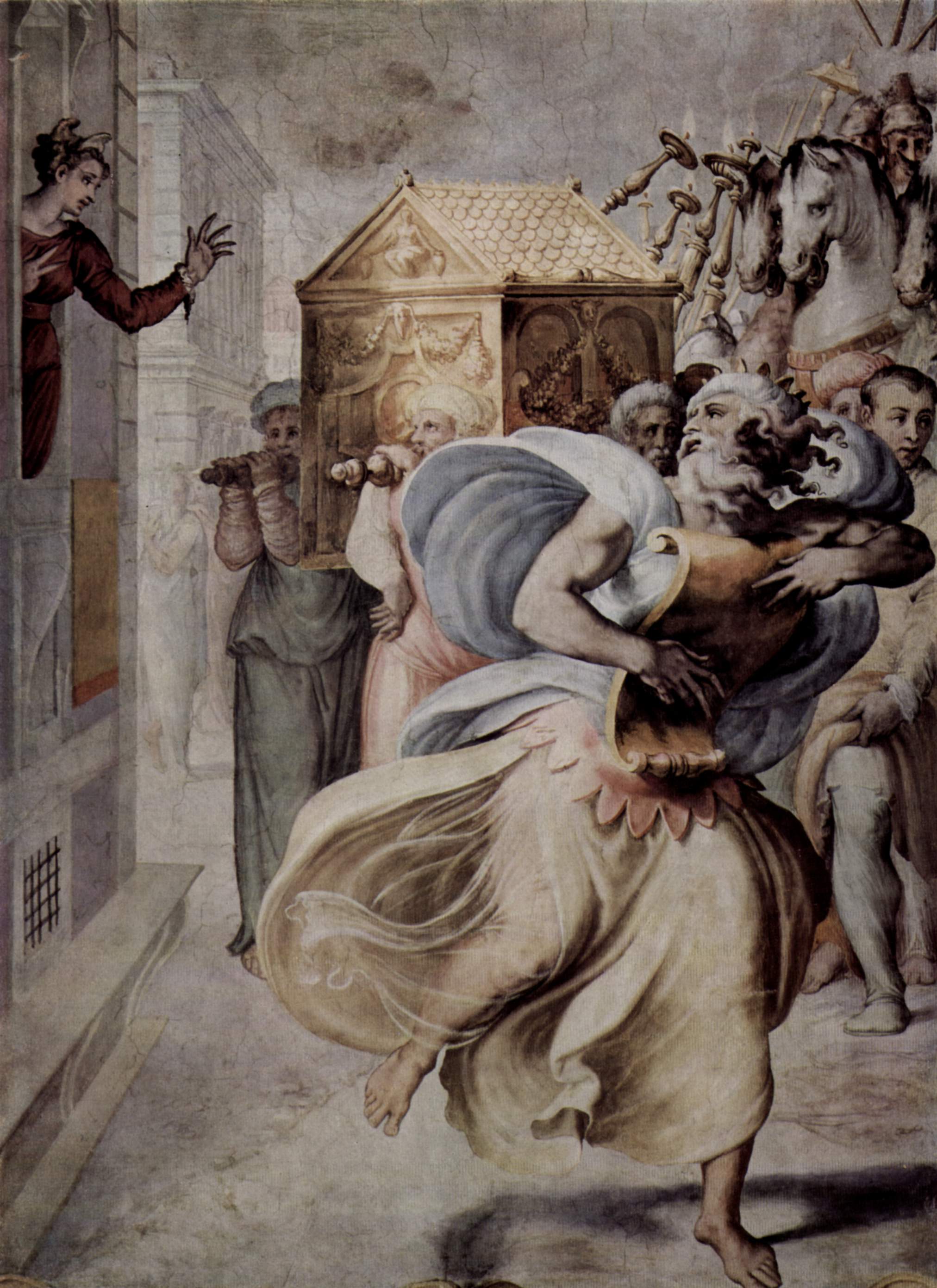
Michal was David's first wife. She was in love with him (1 Sam 18:20); he "won" her from Saul by killing 200 Philistines and bringing back their foreskins (ew). When Saul wanted to kill David, she saved him. (1 Sam 19) Later when David was in hiding, Saul married her off to someone else (1 Sam 25:44). Once David became king, he fetched her back (2 Sam 3).

I've noticed people often view Michal negatively. Probably mainly because of her reaction in 2 Sam 6:16-23 to David's dancing in front of the Ark of the Covenant:
"Now as the ark of the LORD came into the City of David, Michal, Saul’s daughter, looked through a window and saw King David leaping and whirling before the LORD; and she despised him in her heart. (...) Then David returned to bless his household. And Michal the daughter of Saul came out to meet David, and said, 'How glorious was the king of Israel today, uncovering himself today in the eyes of the maids of his servants, as one of the base fellows shamelessly uncovers himself!'" (2. Sam 6:16+20)

But isn't her reaction understandable? She was David's first wife. He had how many other wives after that - and then danced around (half?)naked in full view of everyone. Sure, he said it was for the Lord (v.21) - but after all the womanising she'd seen I think it's understandable that she did not accept that for an answer.

So this poem is basically about "falling out of love". At first we see only this perfect image of our partner - and with time, that perfect image gives way to who he really is. Question is: do I like it, can I forgive him, can I live with it? Michal's answer was: no.


Picture by Francesco Salviati

27 July 2016

Abishag: Pity is not Love

[Warning: mild sexual content]

1. Kings 1:1-4

Here I lie,
afraid, ashamed,
in the arms of a man
who can no more;
trying to give you
what you cannot take,
caught in an embrace
that cannot satisfy.

Ashamed of my thoughts.
Ashamed of my feelings.
Ashamed that I recoil
at the sight of your body.
Ashamed that I flinch
at the feel of your touch.
Ashamed of my daydreams
of younger men,
the temptation to seek
my fulfillment elsewhere.

I want to be a good wife,
to make you happy -
but it's trapping me
in unhappiness.
It hurts to watch you
frustrated with yourself,
trying and failing
to be a husband again.

It fills me with revulsion,
it fills me with pity -
how I wish I could respect you
and love you instead!
But pity is not love,
and it can't help me endure.
Pity is not enough
to keep me true to you.

How I wish
they could just let you be old
and live out your days
calm and at peace.
How I wish
you must not bear this pressure
of being a king,
a potent man to the last.
How I wish
we could just admit weakness,
that failure must not be a shame.
How I wish
we could just be friends,
talking, playing games,
not trying every night
to do what we cannot.

Here I lie,
afraid, ashamed,
in the arms of this man.
Pity is not love.

__________________________________________________

[25. July 2016 above the South China Sea]

I've read a few interpretations about Abishag (including a feminist one I rather liked according to which Abishag had some power in government). I based this poem mainly on a quote from the Interpreter's Bible which I found on Wikipedia:
[T]he Hebrews...believed that the fertility of the soil and the general prosperity of the people were bound up with the fertility of the king. David by this time was old and decrepit and his sexual vigor is called into question. Attempts are made to remedy the situation. The first cure is to heap clothes upon his bed in order to secure such physical heat as might render him capable. When this fails a search is made for the most beautiful woman in the land. Great emphasis is placed upon her [Abishag's] charms. The LXX supports this by translating in vs. 2, "and let her excite him and lie with him." The fact that the king did not have intercourse with her is decisive in the story. If David was impotent he could no longer be king.
I also felt (after having read the story of someone who married an old man she was caring for out of pity, and then felt guilty for feeling disgusted, unsatisfied or attracted to other men) that I wanted to write about this situation of being a young woman with many opportunities (Abishag was said to be very beautiful), in an unhappy relationship with an older man.

What I realised while writing (and it comes out in the second-to-last stanza, "How I wish...") was that the attempt to keep David potent, and the belief that he could only be a proper king if he was, is once again the kind of human thinking that won't allow for weakness - a way of thinking that is not (from my understanding of the Bible) God's way.

In an ethics class I read a book by Wolfgang Huber (German bishop and ethicist) in which he differentiates between the "olympic man" and the "Jesus man". Human thinking wants the "olympic man", the athlete, strong and able, healthy, successful. This is what David's people were going for when they tried to keep him sexually fit to the last. You're not allowed to get old and decrepit and weak - and if you do, in today's Western culture, you all too often get pushed out of society e.g. into an old-age home. Contrast to that the "Jesus man": Jesus on the cross, weak and suffering. Jesus on the cross means that we are allowed to be weak, that there is nothing wrong about not being completely fit, active and capable of everything. God allows us to be weak and to fail, it is not "bad" or sinful to fail. In fact Jesus' failure on the cross was His victory!

So we ought to change our thinking... David's and Abishag's relationship could have been so different, if he had been allowed to be old and impotent. And I believe this also says something about how men need to be liberated and emancipated too from wrong ideas about manhood (an issue which - some of you might be surprised - feminism has started touching upon) which focus too much on strength and power. There is nothing "unmanly" about weakness - and thinking it is will only cause difficulty when, like David, you are stuck in a position where you are weak and there is no way out. We need to accept ourselves instead of trying to fit some human standard. Because that human standard is not God's standard...

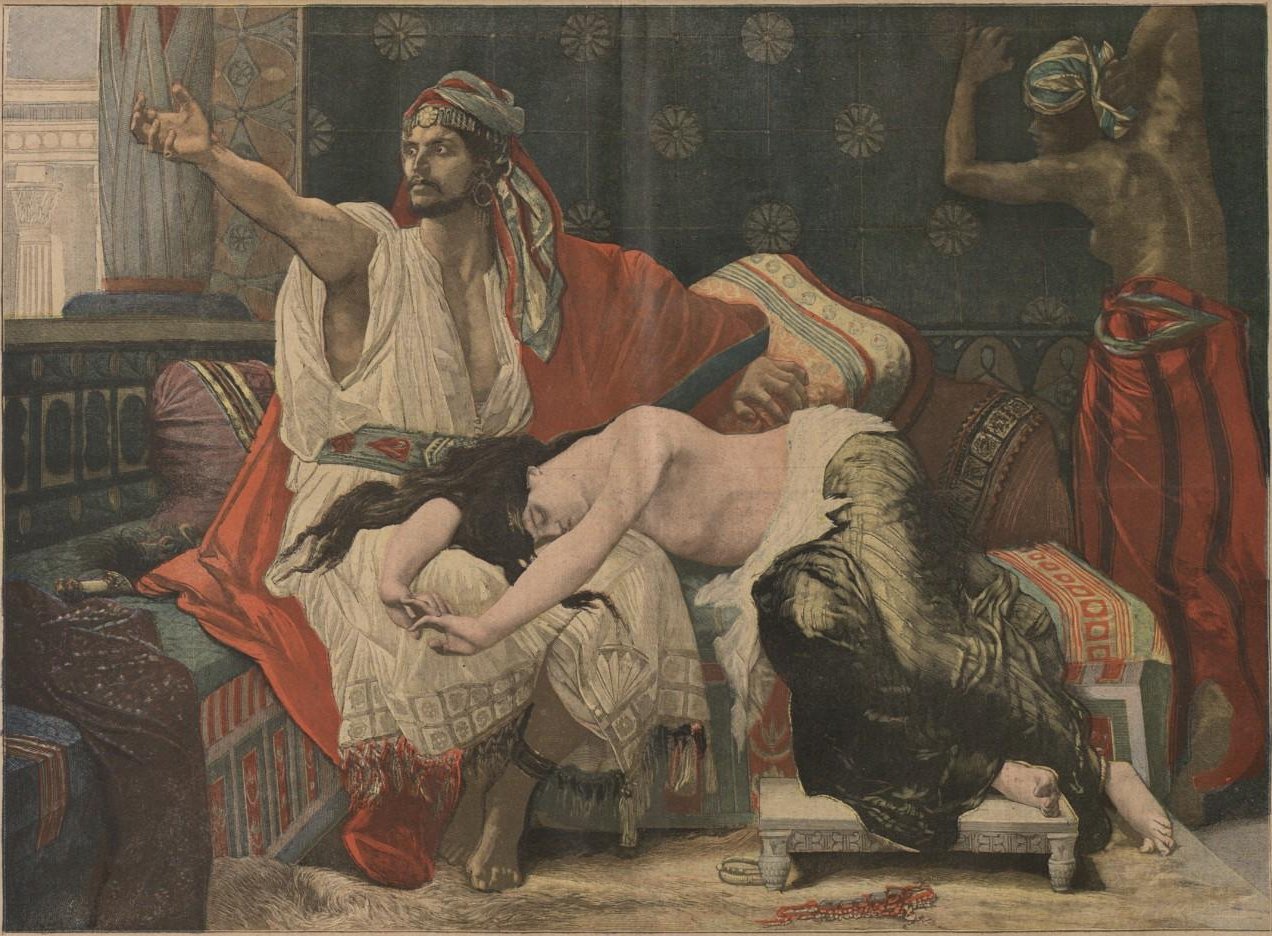
Picture by Pedro Americo

30 April 2016

Bathsheba: O Child


2. Samuel 11:1-12:25

It cannot be true.
It cannot be real.
This is the end
of everything.
Gone my plans,
gone my future,
gone my marriage,
gone my life.

O child,
I wish I could accept you,
I wish I could love you
as a mother should,
not feel this horror
at your presence in me.
O child,
I wish I could rejoice
as a mother would
if things were as they should
- but they are not.

Sick with fear
as my future slips away,
as my life slowly crumbles
before my eyes,
as another blow
follows the one already dealt.

Was it not enough
to be taken by force
by a man I could not fight?
Was it not enough
to bear the pain and misery?
Must I now also bear his child
and the penalty of death
for a crime I never wanted to commit?

O child,
I wish I could give you
a better home,
a loving family,
complete, not torn,
not ruined by greed, by lust, by rape.
O child,
I wish I could bring you
into a better world
where things are as they should
- but they are not.

Soon they will see.
Soon they will know.
What should be joy
will be a brandmark of shame,
and I will hear derision
in place of congratulation.
(Why?)

And you,
o child,
will pay the price;
the brunt of it all
will fall upon you:
helpless and small,
pure and innocent,
sacrifice to another's sin
- and here I am,
sick with fear,
unable to save you,
unable to save myself.

O child,
I wish I could love you,
I wish I could give you
the welcome I should.
Instead
I bear you in fear, in sorrow and shame,
wishing you had never been.

______________________________________________________________

[29. April 2016]

I tried to put myself into Bathsheba's head a bit, imagining what it might have been like for her when she realised she was expecting David's baby. Adultery was punishable by death - and in any case, an unplanned pregnancy at the wrong moment can have huge consequences. The hardest probably being for the child, coming into the world weak and helpless. Even though Bathsheba is often portrayed as a seductress, it is very likely that she had little say in the matter of David wanting to sleep with her. Various biblical scholars suspect what happened there was rape. Which adds another burden to Bathsheba and to her child.

I have been thinking: the reactions to a pregnancy can be vastly different, depending on whether it's a "wanted" pregnancy in "ordered" conditions ("normal" family), or an unexpected, unplanned pregnancy. Especially in those days, Bathsheba's pregnancy would have been a cause of shame and a reason to condemn her to death for adultery. Why is that? The same thing - a new life - can be a reason for joy, a celebrated event, or a source of shame and derision which in some circles can even lead to being ostracised and looked down upon. Isn't that sad?!

I hope we as a church don't make this difference between "legitimate" and "illegitimate" pregnancies in such a way that affected women feel shamed, threatened and looked down upon... because wouldn't that just make it harder for them to accept and love their unborn child? Expecting a child should be something wonderful, not something to be afraid of.
(So on another note: if we want there to be less abortions happening, maybe instead of staging protests we should be more accepting towards such mothers?)

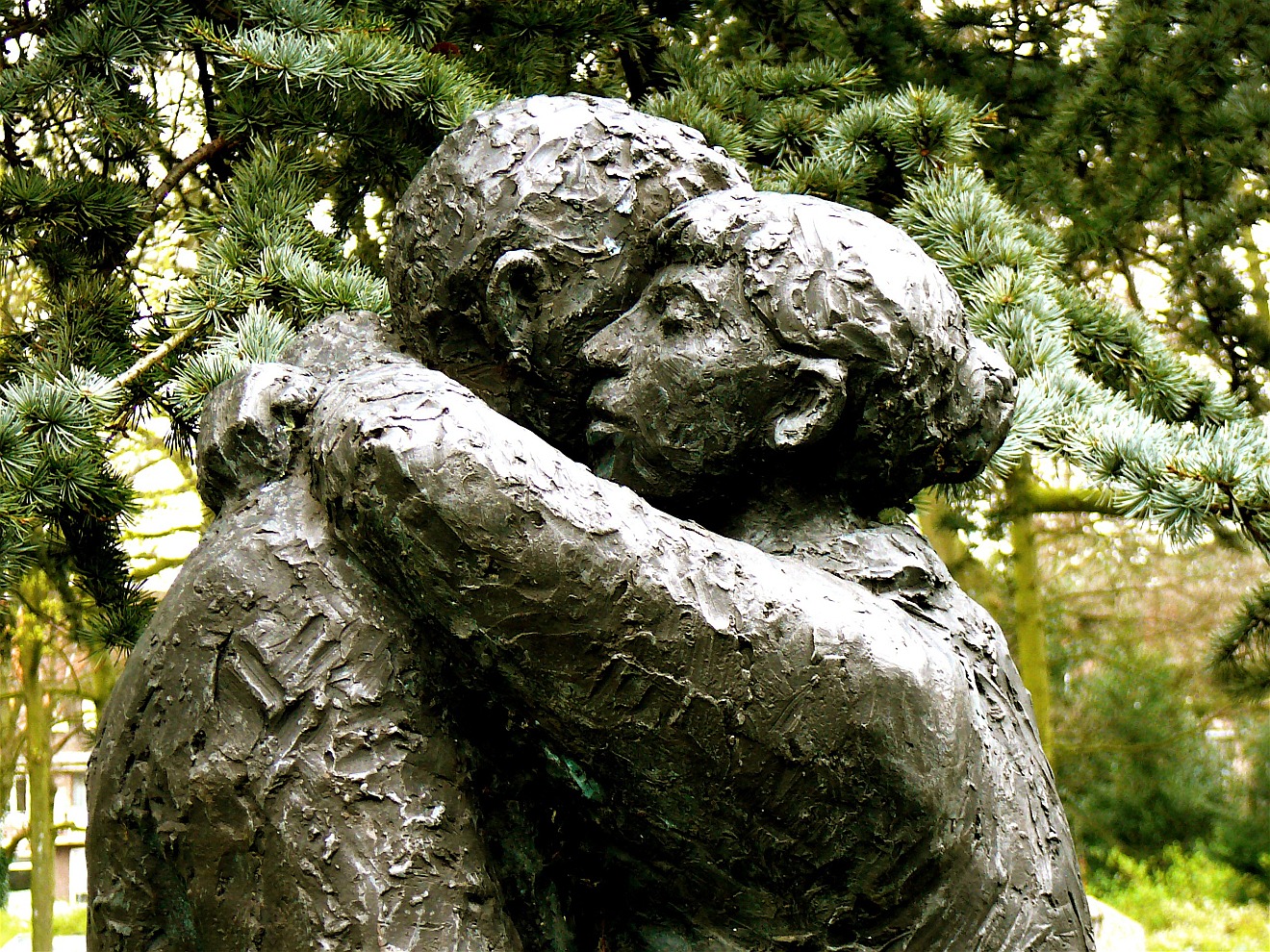
Picture: sculpture by Danny Osborne.

13 April 2016

Ahinoam: Two-Faced Man

"Now the spirit of the Lord departed from Saul, and an evil spirit from the Lord tormented him." (1. Samuel 16:14)


I hardly know you anymore:
one minute yourself,
the next – a stranger.
An evil spirit is gripping you,
gnawing from the inside,
consuming you within.

You wear two faces –
I hardly know you.
When are you yourself?
When are you It?
Where is the man I fell in love with?
Is there a hope I can have him back?
Or has the evil spirit consumed you,
stolen you from me forever?

I can't bear to watch
as it slowly destroys you,
as you plummet
into a whirlpool of despair,
spiraling down,
                       down,
                                down,
caught in a vicious circle of pain,
going under,
                  under,
                            under
into darkness,
no longer yourself.

I can't bear to watch,
for it slowly destroys me,
poisoning my love
into worry and pain.
I want to be your helper,
surrounding you with love,
but now I only cut myself
on the broken shards of my heart.
I promised I would love you
in sickness and in health,
in good times and in bad,
but...
what if this burden is too heavy,

and bearing it too much?

Come back to me, my love –
wake up from this nightmare,
rise up from this death!
Come back to me, my love –
please,
I want you free again.


______________________________________________________________

[13. April 2016]

Ahinoam is the wife of Saul (1. Samuel 14:50). Saul was the first king of Israel, but lost his right to the kingship. I find Saul a very interesting and complex character. An important thing I learnt from my Old Testament professor is that God did not reject Saul as person, but as king - and Saul's mistake was clinging on to the kingship after God had actually already taken it away from him.

Saul was plagued by an "evil spirit", a kind of depression. David was brought to Saul's court to give him "music therapy"; it did not always succeed in calming him, though, because he still tried to kill David under the evil spirit's influence (1. Sam 18:10-11).

From the perspective of his wife, Saul's condition must have been near unbearable. It is very hard to have to watch someone you love suffer, practically turning into someone else ("two faces"). You feel totally helpless, it can become too much for you to handle. At the same time you feel the responsibility to help (even while failing at it again and again), and your love presses you to do something - but sometimes your help is not accepted, or causes more damage, or pulls you down as well. There's a limit as to how much you can do and how much you should do. It's important to know when the point comes to get professional help. And it's important not to stay alone with this kind of thing, to find someone to talk to and share the burden with.
Poor Ahinoam did not have much more than a music therapist for her husband...

If you are going through a similar situation as Ahinoam, maybe these links might help you...
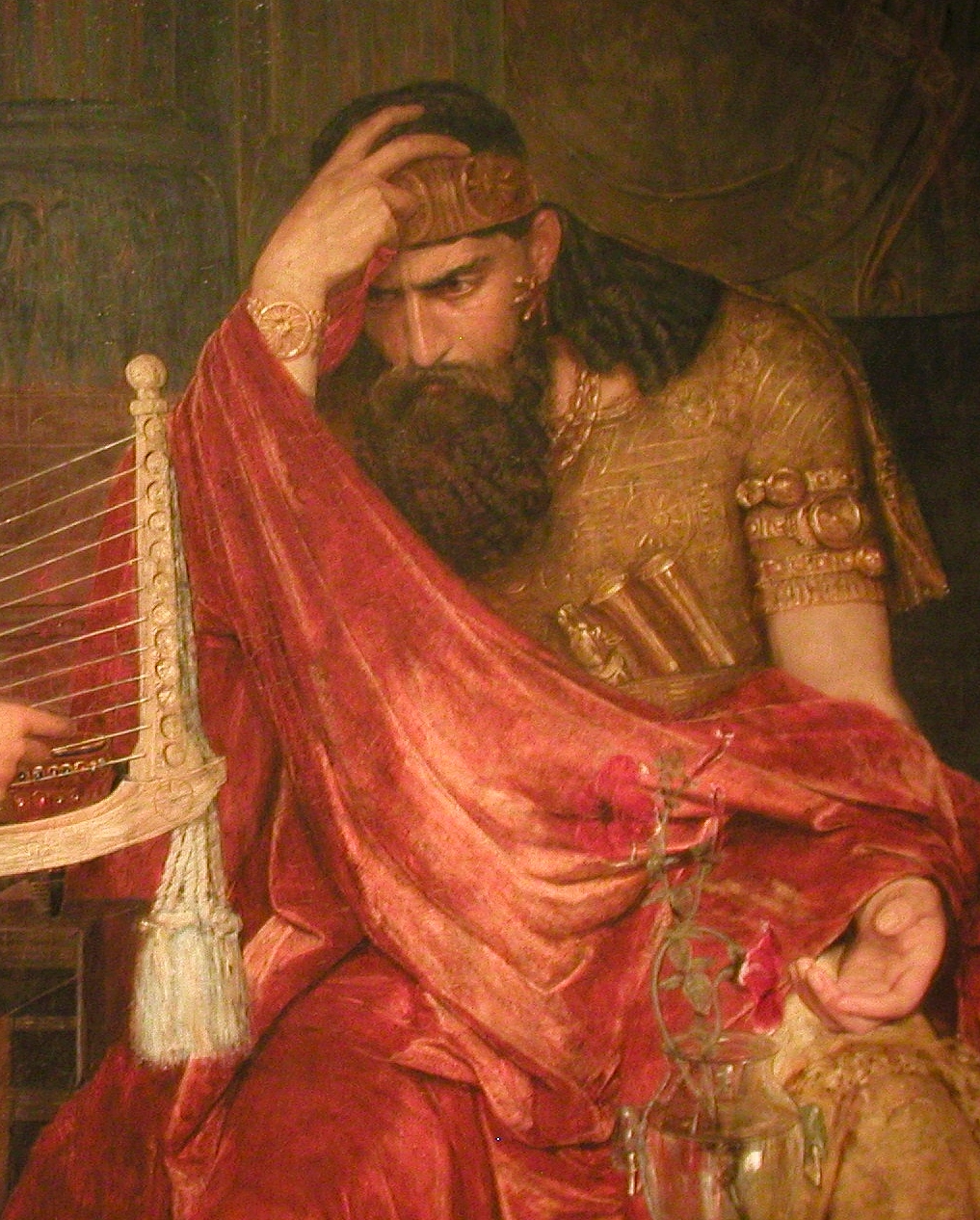
Picture by Ernst Josephson

08 April 2016

Eli's daughter-in-law: Ichabod

1. Samuel 4:12-22

My God, my God,
why have you forsaken me?
Here I lie in my blood alone,
robbed of my husband, my family,
dying, leaving behind a child
even more forsaken than me.

My God, my God,
why have you forsaken us?
Why let your glory be taken away,
withdrawing your presence, causing defeat?
Why leave us here in our blood alone,
your people - forsaken by you?

My God, my God,
why have you forsaken him?
Why give him life on this darkest of days,
born fatherless, motherless - godless?
Why bring him into this dark, cruel world,
empty, forsaken by you?

"My God, my God,
why have you forsaken me?"
I hear my cry
from your lips, o God,
as you die on a cross alone,
robbed of all glory,
cast out and shamed,
forsaken
with your people
with my child
and with me.

So maybe I am no longer alone,
for you are here,
forsaken like me.
Maybe my cries are not in vain,
for you are here,
crying out with me.
Maybe your glory is not far away -
for you fill this forsakenness
with your presence
and turn this brokenness
into glory.

_______________________________________________________

[8. April 2016]

This was going to be my Good Friday poem for this year, but I had too much going on so didn't get to finish it in time...

I was reading 1. Sam 4, the story of the ark of the Covenant being taken away by the Philistines. In the middle of this story we have Eli's daughter-in-law, giving birth to her son and naming him "Ichabod", which means "The glory has departed from Israel." The ark of the Covenant stood for the presence of God with His people, His glory among them. That it was lost was a heavy blow - the Israelites understood it as God forsaking them. They had thought He would give them victory if they brought along the ark into the battle - instead they were defeated, and instead of concluding from that that the ark "didn't work", that God wasn't stronger than the Philistines (which would have been a plausible thought in the worldview of those times), they realised God had allowed the defeat and distanced Himself from them.

Eli's sons, priests who lived only for themselves and abused their position, were both killed in the battle. Eli died upon hearing the news. Eli's daughter-in-law was the last who was left - and she too died while giving birth to Ichabod, the poor forsaken child whose name expresses the deep forsakenness his mother felt.

Is God cruel? He had warned beforehand that he would punish the family of Eli because of the injustices they committed. It seems harsh that a new-born child has to suffer because of that. I see it this way: Much evil happens in this world where people harm other people, just like Eli's sons. And we want God to take away this evil. But all that we do, all our actions, connects and knots up and in the end, there is no solution without more problems, without more people being hurt - that is the consequence of sin. We can't escape the consequences, even if God intervenes. In this case, God's intervention led to the hopeless situation of new-born Ichabod.

And this is where I had to think of the Cross - the place of Jesus' forsakenness. Jesus was forsaken too, just like Ichabod. He was in a position of deepest shame: the cross, a place not just of torture and death, but of public shaming! The glory had been taken away. And this too was part of an intervention of God to set aright what we had messed up. Jesus bore those consequences. Jesus became Ichabod.

And by doing so, He turned the whole forsakenness around. Because God Himself experienced being forsaken by God, our feeling of forsakenness no longer separates us from Him, but is a place where we can meet Him - because He is right there with us. Because the Cross as place of shame became the place of glory (the Gospel of John focuses on the Cross as the place where Jesus reaches His highest glory, it is where He is enthroned), Ichabod no longer needs to be Ichabod - God's glory is no longer absent, but right there in the middle of our shame. We can no longer be forsaken by God because God, in Jesus, is right there in our forsakenness sharing it with us!

Picture by Diego Velázquez

08 January 2016

Tamar: Unashamed


"There were born to Absalom three sons, and one daughter whose name was Tamar; she was a beautiful woman." (2. Samuel 14:27)

Ashamed
of my name:
Tamar.

Tamar,
my namesake:
a girl who was shamed.
A fallen woman,
violated, disgraced;
raped by her own brother,
then shunned, hidden away.
A story "not for children's ears",
hushed up, censored,
ignored or forgotten.
Tamar,
a heavy name to bear.

Why
name me after
Tamar?

Tamar,
my namesake:
a girl loved by you.
A human being
with a life and dignity;
no less precious, no less pure
after all that she endured.
And I am named
to honour her,
this innocent so wrongly blamed,
a pure woman,
wrongly shamed.
Tamar,
a name I am honoured to wear.

Proud
of my name:
Tamar.

______________________________________________________

[8. January 2016]

There are (at least) 3 women called Tamar in the Bible. One is Judah's daughter-in-law, the other David's daughter who was raped by her brother, the third (the one this poem is about) the daughter of Absalom, who was the second Tamar's brother and most likely named his daughter after his sister. So as you may have noticed, this poem refers to her story too (2. Samuel 13:1-22).

What do your namesakes mean to you? My father is interested in the Napoleonic wars, so pretty early on he told me all about my namesake who was Napoleon's first girlfriend and became queen of Sweden. There's a novel and a movie about her, which I of course delved into. And simply because of the shared name, I felt somehow connected to her.
I've met a few girls who are named after women who don't appear in children's Bibles (because their stories include violence, sex or sexual violence). I had a Tamar in my class when I first heard the Tamar story. I know a few girls called Jael. What do you do with an uncomfortable namesake?

Writing this I was partly thinking about namesakes, but also thinking about the response to rape. Even today, victims of rape are often shamed, blamed or ignored. David's daughter Tamar, after being raped by her half-brother, disappears into seclusion - we don't hear about her anymore. She was "damaged goods" because she had lost her virginity - while no one really bat an eye about Amnon who had raped her (except Absalom, who killed him after David failed to react). So I wanted to move here from shame in the first part, to honouring her in the second part. Because putting shame on the victim is the wrong response. Rape victims are most of the time innocent and need support, not blame. They need to be appreciated and valued, not judged.

So I think it is right and good to be named after someone who suffered, who was judged, who was looked down upon - because the naming shows love, and honours the namesake. Absalom wanted to remember and honour his sister, and express his love for her - so he named his daughter Tamar. After what had happened, his sister was still just as precious to him as before.

I was influenced a bit by Tess of the d'Urbervilles while writing this. The sub-title for Tess of the d'Urbervilles is "A Pure Woman" (and as you might notice, in the second-to-last stanza "pure woman" comes up a few times - that was on purpose). Tess is an example of a girl who suffered under the reactions of the world around her after she was raped. She was judged because of her lost virginity - but in truth she was pure, purer than those who judged her. Excellent book, you should read it. ^^

Picture by Alexandre Cabanel.

07 January 2016

Wise Woman of Abel: Headless

 
2. Samuel 20:14-22

When all run around
in panicked circles
like headless chickens,
someone must keep a clear head.

Someone must stop,
someone must think
before the heads roll,
and prevent disaster.

When men run around
like headless chickens
women must keep their heads
and talk some sense.

Why don't you stop?
Why don't you think
before the heads roll?
Do you want it this way?

Let us all keep our heads,
let us think before we act,
let us limit the destrucion
instead of acting headlessly.

You want a head?
Here, have the one
you were hunting all the while,
but spare us ours
and start using yours.

___________________________________________________

[March 2013]

I suppose my latent feminism shows itself a bit here..
Just so you know: I don't mean to say men are all stupid. Just emphasising the "wise woman" here. The "wise woman of Abel" interrupted a battle by handing over the head of the person the whole battle was about... David's army (led by Joab) was after a rebel called Sheba - so they attacked the city he was in. The wise woman asked Joab what he wanted - and gave it to him. Thus ending a battle in which a lot of innocent people would have died, which is I guess what makes her actions wise.

I played a bit with head imagery due to Sheba's head being handed over at the end. ^^

Many people think the Bible shows only two types of women: Eves (sinful, seductive, sex objects, etc) and Marys (pure, saintly, meek, perfect, etc). When people tell me that the first thing I think of is the "wise women" appearing in 1 and 2 Samuel - e.g. the "wise woman of Tekoa", or the "wise woman of Abel". There are a lot more women in the Bible too who do not fall into the "pattern" of an Eve or a Mary (take Jael for instance, or Deborah). Sadly, people who do not read the Bible assume they know what the Bible says about women, when they only know the more famous bits or what tradition has emphasised. That's the nice thing about challenging yourself to learning about all the women in the Bible, though. You uncover stories you never knew before. I can only recommend it!