Showing posts with label God as Mother. Show all posts

07 May 2022

Born of God


John 1:10-13

we become
children of God

not by praying
a standard prayer
clean and tidy

not by checking off
the right beliefs
on a checklist

not of natural descent
nor of human decision
nor a husband's will


we become
children of God
through the blood, sweat and tears
of love
powerful as contractions
we become
children of God
through the raw, animal passion
of life that must come out
that will come out
though the little head seems
to keep slipping back up
we become
children of God
pushed between her thighs
drawn towards her chest
to suckle at her loving breast

we become
children of God
born of God

________________________________

[6.-7. May 2022]

Me reading John 1 on Tuesday: Ugh it's so hard to learn anything new from a text you know by heart.
Me reading John 1 on Wednesday: Hang on. "Born of God"? God gives birth?! *poem idea born*

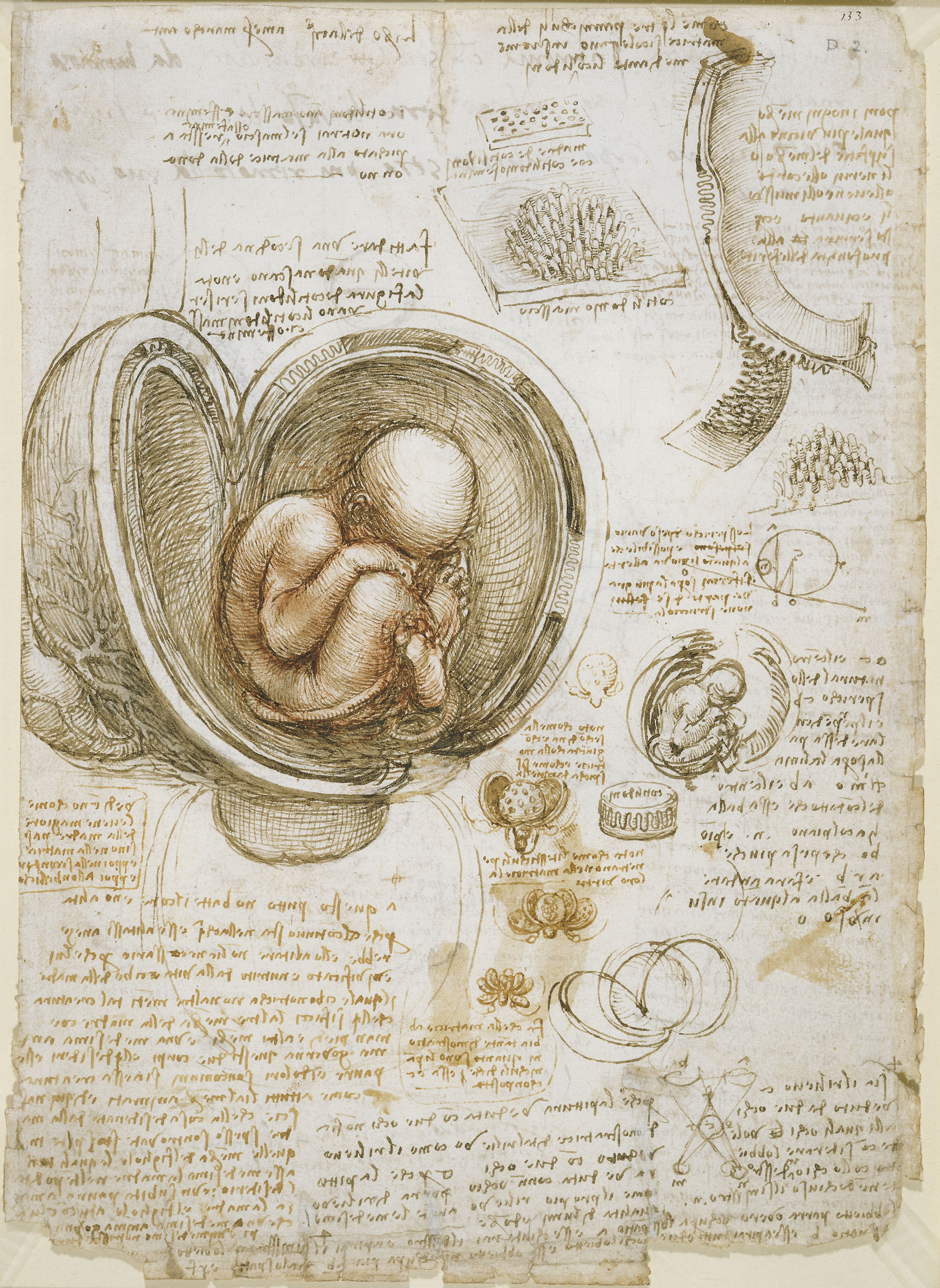
It's also John 1 where God has a uterus (v.18: the Greek "kolpos" often translated "bosom" is actually "womb"). So no, there's nothing "biblical" about God being "male", and there's nothing "unbiblical" about imagining God as a mother or (o horror) imagining God giving birth. God is neither male nor female, but male and female imagery can help us understand what God is like. Traditionally we have limited ourselves mostly to male imagery, but the Bible itself is full of feminine imagery as well, from the mother hen to the nursing mother to the uterus in John 1:18 and now this (which to be honest I only noticed this week).

We talk a lot about being "born again", but never really think the image through. What does it mean to be "born"? On the one hand it does signify a completely fresh start, the purity of a new beginning, maybe also the potential that is in every newborn child. But what we tend to omit is the actual act of giving birth and what that means to the mother. Maybe because (in Western culture at least) we speak of giving birth as being this terrible, scary, painful thing. And yes, it can be. But birth is also beautiful, and it can also be empowering. Maybe what makes it scary is how "feral" it is, how completely physical and instinctual. The pain comes from the powerful muscles working to get baby out. The mind only gets in the way here.

We like to view God as the one who brings order into chaos. Birth and the female sphere in general have often been relegated to the "chaotic". So what does it mean that God "gives birth" to us? I don't want to name conclusions, I'd rather let the image speak. So maybe next time we talk about being "born again" we consider what that means - what a raw connection that must be between us and God. How much we must mean to God.

Picture by Paula Modersohn-Becker

03 July 2021

Rizpa: Ich bin Mutter

 1. Samuel 21,1-17


Ich bin Trauer –
zerrissen von Verlust,
ein Loch in meinem Herzen
wo du einmal warst.

Ich bin Verlust –
allein nun, verlassen,
meiner Söhne beraubt –
grausames Menschenopfer
im Namen Gottes getan.

Ich bin Liebe, ausgegossen
aus gebrochenem Herzen,
fliessende Tränen
die dich nicht auferwecken können,
schützende Arme
die dich umhüllen
dass dich am Tag die Sonne nicht steche
noch der Mond des Nachts.


Ich bin Zorn
der kämpft für meine Kinder
gegen alle Gewalten der Natur,
wenn es sein muss: gegen Gott;
gegen die Verwesung,
gegen den Tod.

Ich bin Treue
mächtiger als Hass,
schärfer als ein Schwert,
stärker als der Tod;
ich ertrage jeden Sturm,
ertrage jeden Schmerz –
deine Beschützerin
über das Ende hinaus.

Ich bin Mutter.
Meine Liebe stirbt nie.
Ich würde den Tod töten
wenn ich es nur könnte.

Wo ist nun Gott?
Freut er sich über Menschenopfer?
Oder bekämpft sie den Tod mit mir?

__________________________________

[Übersetzung 7. Mai 2021]

Bild von George Becker

30 July 2019

Parable of the Lost Coin: God is a Poor Woman

Luke 15:8-10

It's just a coin.

Maybe, to you.
Something small,
replaceable.
Not to me.

Six hungry mouths to feed,
ten precious coins
for bread and meat,
ten times a hard day's work,
ten coins to last us
a week, maybe two.
And then?
We'll see
as we always do.

But now there's just nine.
Where is the lost?

It's just a coin.
Maybe, to you.
Not to me.

One night more
awake to the tune
of hungry children crying
themselves to sleep,
one day of labour wasted away,
one day's sweat poured out in vain,
precious hope and sustenance
collecting dust
somewhere under a cupboard.

It's just a coin.
But I will turn this house
upside-down if I must.
And I will sweep away the dust
and shine my light in the darkest corners,
move furniture, disturb the cat,
I will not rest
until I find that coin at last.
And when I do - celebration!

It's just a coin.
Maybe, to you.
And you can leave it where it lies,
and go on with your life.
But to me it's so much more -
and so much greater the joy
when I hold it in my hands again at last.


Imagine, then:
God,
a poor woman like me,
and you
the precious coin she seeks,
a precious coin she needs,
not worthless or small or replaceable,
not useless
but the fruit of sweat and tears,
valuable for the work ahead,
worth looking for.

____________________________________

[30. July 2019]

I looked up the estimated worth of a drachma in ancient times. It was the currency of ancient Greece, a silver coin. It would have been the daily wages for a skilled worker. I have read very different things about how much it was really worth, but I decided to bounce off the idea of it being the pay for a day's labour, as well as considering this woman had 10 in total so a whole tenth of her complete savings was missing. It makes me assume she can't have been a particularly rich woman.

The sentence "God is a poor woman" snuck into my mind. I like the thought. On the one hand the reminder that God knows our human experiences - including the experience of poverty. On the other hand the thought that poverty can teach you the value of things. God knows the value of things. He doesn't need "extra". We are precious to him like the coin to the poor woman, without being something "special" or especially "spiritual".

Also while writing I considered: money is payment for work, the result of work, and we are God's work - and also: money buys things, so what does God want to use us for, what is God "buying" with us? It made me think of our inclusion in God's mission. A poor woman can use money to buy food to feed her children, so I had to think of how we are called to serve others, feed the hungry, care for the needs of people around us, ... What could it mean for us to be God's coins?!

Art by James Tissot.

28 April 2018

Womb of God


In the beginning
was YES.
The Yes of a Mother
to new life inside her,
the Yes of Love
and potential.

In the beginning
was Your Womb,
and I was nurtured,
enveloped by Your love.

In the beginning
was the life you gave me.

Thrust out into the world,
I stumbled,
helpless.
Cut was the cord
and I foundered,
reaching for You.

I lost sight of You.
I forgot
the warm walls of love
that once surrounded me.
I doubted
your unconditional Yes to me.
I feared sternness;
I ran away,
seeing my shame,
separated, I believed, from You.

But in the end
is Your YES,
a Yes that will never be taken back,
a Mother's enduring, unconditional love,
Your mark on me
that I belong.
In the end
there is no chasm
between You
and me.
Only Your arms
waiting
to hold me,
to put me to your breast
and nurse me to strength,
to lead me as I find my feet
and make baby steps
into a world
that you prepared for me.

There is no rejection,
no condemnation,
no separation.
Teach me to see.

__________________________________________________

[28. April 2018]

So I have been itching to write about God as Mother (a perfectly biblical image btw; if in doubt see here). And about God's uterus because according to the Bible God has a uterus. :-P (John 1:18 bosom = κόλπος = womb) Finally managed...

What flowed into this was thoughts on "original blessing" from this podcast I listened the other day, and the book I am reading ("Original Blessing" by Danielle Shroyer). The idea is that the concept of original sin distorts our view of relationship with God. We see it in terms of separation, and basically make our sin more powerful than God by seeing it as an insurmountable obstacle that even God can't overcome without sacrifice. The idea of sin separating us from God did a lot of havoc in my mind as a child and teenager (because it's in every summary of the gospel / evangelistic presentation). Even with the sacrifice of Jesus, you keep asking yourself: am I really good enough for God? Because at the basis of everything lies God's distaste with sin, and original sin means we are all born sinful (or "totally depraved" depending on which theological corner you're in) and need to be made good enough first. Of course I repeated the "sinner's prayer" a few million times, but I was never confident that it had really "worked", because shouldn't a sign of being "born again" be that I don't sin anymore? But I was still fighting with my sister and doing things I regretted later (and sometimes my "Christian zeal" made me a bigger bitch [sorry not sorry] than I would have been without).


Original blessing is what I have discovered in my baptismal practice (as a pastor): in the beginning, before we are able to respond or understand, God's love is already there. Meaning: the basis is not God's distaste with sin, is not our depravity or evil which needs to be put away first, but pure love. I love baptising children / babies because I believe this is such an important message, in this day and age where young people / teenagers are often insecure about their own value. The message of original blessing is that before everything else stands God's love. That's my understanding of it, at least. :-)

Of course God does not agree with evil - because God loves everybody so if I hurt someone else I'm hurting God, right? But even there: God does not want to destroy the "sinner" or wrongdoer but bring them home.

I recently read the "Revelations of Divine Love" of Julian of Norwich. And what really intrigued me was this concept of sin: that the biggest problem is not the wrong deed itself, but running from God because we are afraid of his reaction to our sin. The solution to sin would be running to God who can comfort and heal and forgive - but too often because we think God is stern and punishing, we flee. For a long time I saw God as angry and punishing and was afraid of making mistakes. It was very freeing to realise that God really and truly is love.

And for that I think the image of womb and birth and mother is fitting. As it says in Jeremiah: "Can a mother forget her child?" God never rejects us. He wants to bring everyone home.

Here's if you want something meditative: [click me!]

10 June 2017

Maacah Mother of Tamar: Mother Lioness

2 Samuel 13

Tear my clothes,
throw ash upon my head.
Today my daughter is dead.

Why do we bear daughters
only to watch them be consumed
by the fires of the lust of a man
eating them alive?
Today my daughter is dead,
alive but dead,
an empty shell,
a rejected husk,
a ghost condemned
for another's lust.
Why do we bear daughters
only to watch them be destroyed
by a world that blames the helpless
and lets evil win the day?

They say a snake corrupted Eve -
today, it speaks to Adam
for it lives between his legs.
Why do we bear daughters
only to watch them be devoured
by merciless greed,
then cast away shamed,
a broken reed?

I want to tear him apart,
I want to rip his throat,
I want to bite off his manhood,
show no mercy to this merciless brute
who had no mercy for her.
Why do we bear daughters
only to watch them be regarded as objects,
playthings to be used and cast aside?
Why do we bear sons
if this is what they become?

I want to devour him
and leave nothing left,
I want him destroyed
the way he destroyed her.
I want to wail to the skies
forty days and forty nights,
tear my clothes,
throw ashes on my head
for today my daughter is dead.

Why did you create us
only to watch us like this,
tearing at each other
like wild beasts?
O God, like me you bore children
and you watched them fall apart.
Does your Mother-heart
break like mine?
O God, do you mourn
every day and every night
for your degenerate children
who wander as though dead?
O God, do you long, like me,
to go out in fury
like a mother lioness,
tearing evil limb from limb?

Or do you, like me,
tear your clothes,
throw ash upon your head,
and mourn your broken children,
alive but dead?

_______________________________________________________

[10. June 2017]

Thought I'd write from the point of view of Maacah, mother of Tamar. Tamar, daughter of David, was raped by her half-brother Amnon. With "alive but dead" I try to refer to how in a shame culture, being shamed in this way (by rape) can make a woman completely lose her worth in society. Tamar would have been made unmarriagable, all her chances for a future destroyed. To society, she was as good as dead.

Victims of rape generally reap more consequences than the perpetrators. Perpetrators get away; punishments are all too often not at all proportionate to the crime. A raped woman is innocent of what happened, but all too often is treated like a sinner. She suffers because of the sin of another.

When the Bible talks about justice and punishment and judgement, I believe it talks about things like this... about God standing in for the suffering and abused.

I decided to play with female imagery of God again here... not everyone's cup of tea, but it is a fact that God as God is "genderless", i.e. definitely not male, and that the Bible uses a lot of feminine imagery for God. I think the mother lioness fits to God... mother animals can be extremely ferocious when their children are attacked. While I am certain that God loves both perpetrators and victims, and salvation is about restoration and healing for both, I also believe (also from some of the pretty gory imagery that we read e.g. in the prophets) that God can be as ferocious as a worried mother animal when it comes to defending those who are wronged. The hard part is that we are all His children (tried to touch on that a bit in the last two stanzas which talk about all the children, not just the daughters), perpetrators and victims alike. God wants all to be saved; at the same time He does not stand for injustice. God's mourning over us must be all the greater, then... a combination of Maacah here, and Ahinoam, Amnon's mother.

Other poems about Tamar and Amnon here.

26 January 2017

Mother of Amnon: My Son, my Son


2. Samuel 13:1-32

My son, my son,
what have you done?
My son, what have you become?
Have I taught you nothing?
Has my love meant nothing?
How can I still look at you
after this?

Where is my sweet, sensitive boy?
Where has he gone?
Who is this selfish, brutal man?
What have you done?
Have I taught you nothing?
Who are you now?

Don't you see
the pain you're causing me,
digging claws into my heart,
tearing it apart?
Don't you have a mother?
Don't you have sisters?
Did I not teach you
love and respect?
Where did you learn
this violence, this greed,
this cruelty?
Not from me.

I want to beat you bloody.
I wish you weren't mine.
I want to cast you out
far from my sight.
My son, my son,
what have you done?
How could you do this?
Why?

And yet
you are my son,
my sweet, sensitive boy -
somehow, somewhere
that child is still there.
How I wish he could come out,
set himself free
from the blindness of self,
the chains of lust and greed.
How I wish
your evil deeds could fall away
to uncover the true you
buried beneath.

I want to beat you bloody.
I want to love you back to health.
I wish you weren't mine.
But how can a mother
forget her child?

You are not
what you have done.
I hate your deed
but I love my son.
I love you
and it hurts.
I love you
with the shattered pieces of my heart.
I want to love you back to health,
love you out from the depths of your dungeon,
love the selfish, brutal man
into my sweet, sensitive child again.
My son.

________________________________________________

[26. January 2017]

For some reason 2. Sam 13 is one of my most-written-about Bible texts (Tamar 1, Tamar 2, Tamar Absalom's daughter)... and I'm still planning on writing a fifth poem for it, from the p.o.v. of Tamar's mother.

Amnon's mother is Ahinoam of Jezreel (2. Sam 3:2). I realised it would be interesting to consider this story, of his rape of half-sister Tamar, from his mother's point of view.

While writing this I realised that, despite the way it has been misused and therefore fallen into disrepute, we still need the phrase, "love the sinner, hate the sin". We just need to understand it correctly. I find the phrase has been badly overused and misused in the context of discussions about homosexuality, and is almost only associated with such discussions. The way I first heard it, though, it meant something completely different. To me, "love the sinner, hate the sin" means differentiating between the deed and the person, acknowledging that something someone has done (e.g. in this case rape) is wrong (also for the sake of standing up for the victim), but still caring for the person and wanting them free. I believe we have really watered down this important message by associating it with a "sin" as negligible as homosexuality (I don't actually think it is one, but that's another fight I've already had too much of).

What someone has done does not have to "define" him as a person. I guess no one knows this better than a parent. That's why the Bible works with father and mother imagery to describe the love of God. God as a parent sees not only what we have done, but sees the trapped child beneath. And grace means we don't have to be what we have done, we don't have to be trapped, we aren't doomed to repeat our mistakes, there is a chance to change and to be free.

We need to "hate sin" in the sense that we need to stand up against injustice, cry out against rape and abuse of all kinds.
And we need to "hate sin" in the sense that we want the person imprisoned by it to come free and find their true self again, which was created for goodness, not for evil.
But we need to see the person as not defined by what he/she has done. And no one does that better than a loving parent, I think.
To me, that is what "love the sinner, hate the sin" should mean. It should be about standing up for victims and at the same time recognising the humanity of the perpetrator and giving him/her a chance to change.
I think one reason it's so dangerous to talk about "hating sin" mainly in the context of homosexuality is that we lose all credibility when we want to talk against real sin, or - even worse - ignore the real sin, which in my understanding of the Bible is abuse of others, especially the weak, failure to help the weak, oppression of others, and injustice of all kinds. Read the prophets: all about social justice.


Picture by Käthe Kollwitz, "Woman with Dead Child".

06 November 2015

Jochebed: Mother

Exodus 2:1-10

Here by the riverside,
as I watch him float away,
as I lose my greatest treasure
and he drifts out of my reach -
here by the riverside
I know what motherhood is.

It means to lose
so he can gain,
means putting his good
over mine,
although it hurts.
It means to bear pain
so he can be safe,
covering him with my wings,
protecting him with my life,
sending him downstream
although it rends my soul.
It means sacrificing
my happiness for his
- for his happiness is mine.

These tears I cry
are so he can have joy.
This ache in my heart
is so he can have life.

Lord, I lay my treasure
into your loving hands -
and ask you one thing only,
please:
that you be a Mother,
Lord,
to him.

________________________________________________

[4. September 2012 - during class ;-)]

I had a looooong time on this lady. I first had the idea about a year ago: on reading Exodus 2, I thought I'd write something about how letting go is worth it with God, that sometimes we have to let go of things to receive them back. Jochebed let go of Moses - if she hadn't, he would not have survived. She let him go, and she got him back and was able to keep him for a while without danger.

The whole thing changed though, when I wrote it. It ended up being about being a mother. And I'm quite content with it this way. This is dedicated to my beloved Mamma who has had to let go of her "grown-up" children - she's in one continent and we're in the other. Not easy! So this is dedicated to her. <3

God is not only Father but also Mother - the image appears a few times in the Bible. While writing this I became aware of how God is very much like this definition of motherhood: giving and sacrificing a so we can have life. He gave Himself for us in Jesus, bore pain for our sakes. And we weren't really the sweetest little children - while we were sinners, Jesus died for us! God loves us like a mother.

The "wings" image refers to how a mother hen covers her chicks with her wings when there is a fire, and lets herself burn to death protecting her chicks. I don't know if that really happens but that's how my father explained the verse where Jesus said that God has been wanting to gather Israel under His wings like a hen gathers her chicks. I put that image in on purpose, also to make the link to God as Mother.

Picture by Pedro Américo

06 October 2014

Parable of the Yeast: God is a Baker Woman

And again he said, "To what should I compare the kingdom of God? It is like yeast that a woman took and mixed in with three measures of flour until all of it was leavened." (Luke 13:20-21)

God
is a baker-woman
elbow-deep in dough,
kneading, kneading,
making bread
preparing for a feast.
Taking flour,
adding yeast,
until the dough is leavened through,
working, working
patiently
till all is ready for her feast.

God,
you became bread
for us to feast upon,
for us to be fed,
strengthened, restored,
filled by you.
You became bread 
for us to devour,
consumed for our sakes,
fulfilling our needs,
our hunger for you.

God,
we are your bread
to be shared with this world.
You knead us, prepare us,
to feed hungry mouths
in need of you.
You spread your yeast
into each corner
that we may rise
and glorify you
at your feast
where all will be fed.

So let us feed on you
in thanksgiving
as you knead us
into your image.
Give us grace
to feed the world
as you fed us,
with these gifts
you gave to us -
Bread of Life.

______________________________________________________________________

[5. - 6. October 2014]

One could say this is the first time I have ever used feminine pronouns on God - I'm  not usually that kind of feminist, but since it suits the parable I hope no one's going to complain, since the image of the baker-woman was made up by Jesus, not me...

The topic of "bread" kind of stalked me all day yesterday, so I ended up writing this, bringing together different thoughts that had been impressed on me during the day...
  1. In the morning, I read this month's "Word of Life" from the Focolare movement. The verse of the month happens to be all about bread! "I am the bread of life. Whoever comes to me will never be hungry, and whoever believes in me will never be thirsty." (John 6:35) You can read Chiara Lubich's interpretation here, it really inspired me and flowed into this poem. God is bread - Jesus became bread for us, in multiple senses. He fulfills our deepest needs - and we remember Him through bread in Communion / Eucharist.
  2. On the way to church in the evening, the words "God is a baker woman" sort of whacked into my brain and I started meditating on Lk 13:20-21 because I remembered that parable. It's one of a set of parables about what the "Kingdom of God" is like. The "feast" image slid into the poem because that is another image from another parable - sort of what the bread is being prepared for (the feast at the end of time).
  3. The sermon in my church also ended up involving bread and communion imagery! One thing that stayed with me was sharing: that we are not meant to hoard what God gives us, but share it. And I really loved this image: when we break the bread for communion, one half represents what we receive - the other half what we share. We are meant to share. In a sense, we can become bread to share with others what Jesus shared with us. And that can mean suffering too: being "consumed" like Jesus was.
  4. The "parable of the yeast" is basically about the influence of Jesus spreading through the world. In that sense, it's very much about sharing. What is the influence of Jesus, though? I believe it's becoming like Him, following Him, living like He did. But that means giving ourselves like He did, denying ourselves, being willing to be "consumed" by hungry people. Helping people in all their needs, be it literal hunger, or a hunger for love and acceptance, or another need. Bringing people the "Bread of Life", which is Jesus - but in a sense becoming bread too, by becoming like Him.


"Loving means 'making ourselves one' with everyone, making ourselves one in all the others want, in the least and most insignificant things and in those that perhaps might be of little interest to us but are important to them. [...] This is love, to make ourselves one in a way that makes others feel nourished by our love, comforted, uplifted, understood." (Chiara Lubich)

Picture by Jean-François Millet.