Showing posts with label social responsibility. Show all posts

16 October 2022

Daughters of Shiloh: In Your Own Eyes

 Judges 21:15-25


And we danced
in the sunshine

not a care in the world
and we sang
our God's praise
without trouble or fear
free
like our mothers
who left Egypt by His hand
free
in the shelter
of His justice and love.

But now
I am loot
to be carried away.
I am your quarry
to be hunted down.
I am prey to be caught,
a prize to be captured,
I am flesh to be used.

Oh you pious men
keeping your vows before God,
oh you righteous men
looking out for your brothers,
oh you faithful men -
you do what is right,
what is right in your own eyes -
but is it right in God's?

In God's,
whose will is shelter
in justice and love?
In God's,
who led our mothers
out of Egypt by His hand?
Would this Saviour of Slaves
have us treated like loot,
like quarry, like prey,
a prize to be captured,
flesh to be used?

You do what is right
in your own eyes
and think yourselves pious
and righteous and good
free
like your fathers
led from Egypt by His hand
but as long as your daughters
remain so enslaved,
as long as your actions
are not justice and love
your hearts will be stuck
in Egypt's land
and you'll still be slaves to sin.

Turn around, then.
Turn around and dance with me.
Dance with me
in the love of the God
who created us as equals.
Turn around to the King
whose commandment is love.
Turn around and let justice reign.
Then you and I can all be free
dancing in praise of the Saviour of Slaves,
not a care in the world,
without trouble or fear
doing right in the eyes
of God our king.

____________________________

[16. October 2022]

This story is so horrible (and this is just one part of the horror, the beginning of Judges 21 is about genocide as well as rape). At the end of the book of Judges, Israel is a mess. They just decimated the tribe of Benjamin as revenge for what happened with the Levite's concubine (awful, awful story of gang rape - the Bible really is not silent about the horrors of the human race). Anyway after the massacre the other tribes feel sorry and want to prevent the entire tribe of Benjamin dying out. However, they have vowed not to give any of their daughters as wives to the men of Benjamin. What follows is a lot of unnecessary pain and violence all to keep that vow while still helping the Benjaminites come to women.

The "daughters of Shiloh" are girls participating in a religious festival, the Israelites set up a kidnapping so that they won't have "given" the girls freely.

Like a refrain in the book of Judges, and again at the very end (Judges 21:25) is the sentence: they did what was right in their own eyes. Judges is about things going wrong. When we read about genocides and murder and gang rape and here the kidnapping and rape of hundreds of young women, it's nothing "condoned" by God. It's people making a big hash of things after having been shown by God how society can actually be different (law given on Sinai). And the tragic thing is, so often we human beings are capable of thinking we're on the right path while actually doing horrible things that are opposed to the will of God. These guys thought they were being good people doing their best to keep a vow, helping out their countrymen, etc.

Which is why I think we need to keep in connection with God, and always be open to repent and turn around. So many things were thought to be okay for the longest time, even by Christians (slavery, racism, subjugation of women). Change is hard but true salvation is not just a change of what we believe or a spiritual thing, but a change in how we live our lives and how our societies work. That's why the giving of the law,at Sinai was an important step on the way out of Egypt: Okay, you're not slaves anymore - here's how to live so you won't be slaves again! True freedom is not in having no one tell us what to do (doing what is right in our own eyes) but letting ourselves be guided to a way of living that is best for everybody.

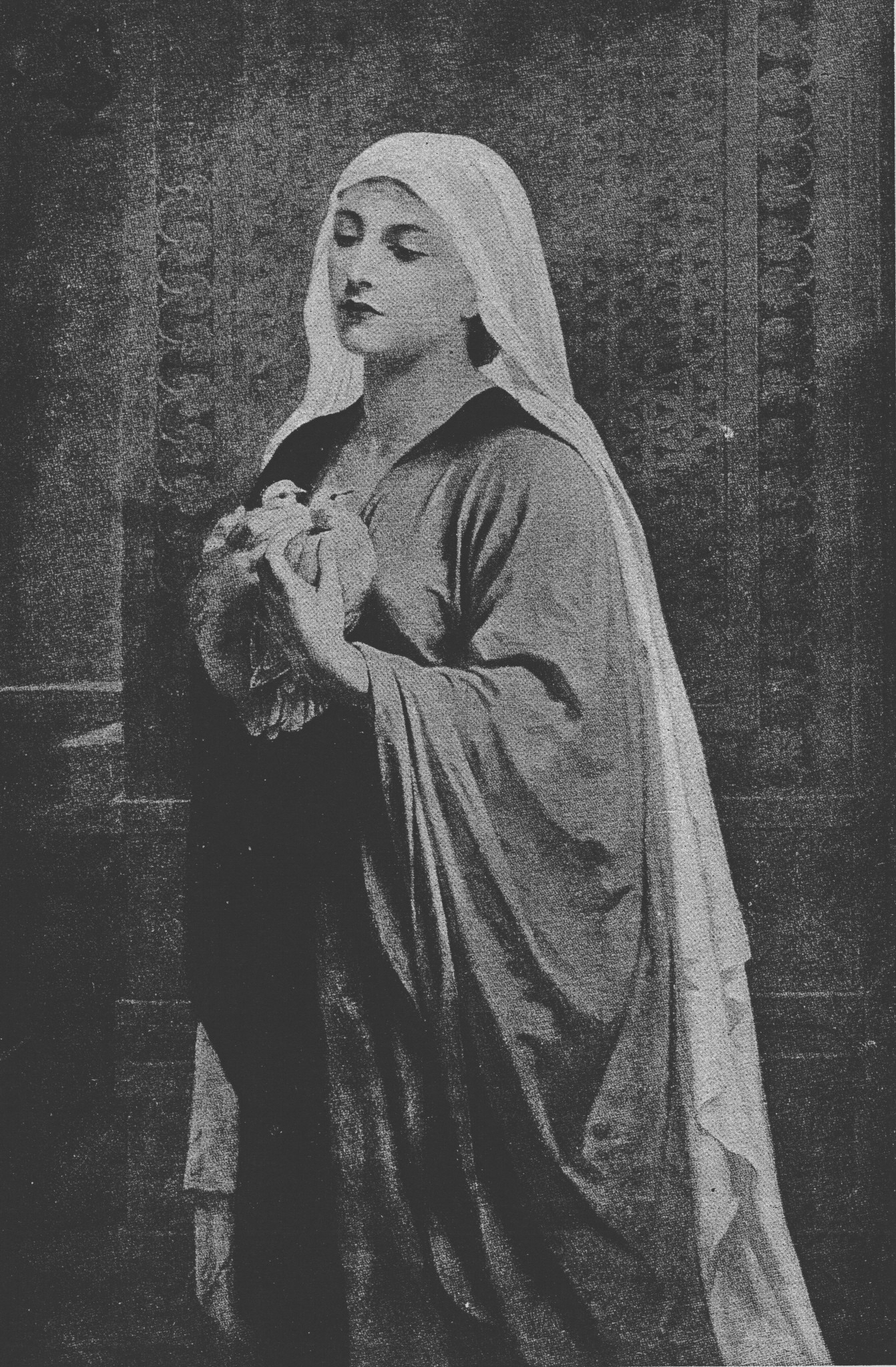
Picture by Franz von Stuck


21 July 2021

Dienerin: Hinter dem Schilf

 Exodus 2,1-10


Ich habe nie hinterfragt.
Warum auch?
Es hat mich nie betroffen.
Es waren nur Die Da.
Die Anderen.
Ausländer.

Ich habe mich nie gekümmert.
Warum auch?
Es war weit weg.
Fast wie ein Gerücht.
Dachte nicht daran,
denn was war dran wichtig?
Es hat mich nie berührt.

Bis jetzt.
Plötzlich
trennt sich das Schilf
über ein schreiendes Kind,
eröffnet sich mir
eine Welt von Schmerz und Trauer.
Ich öffne den Korb
und sehe Leid
das ich nie an mich rangelassen hab.

Jetzt
ist es nicht mehr weit weg.
Jetzt ist es hier.
Tod und Verlust,
kinderlose Mütter,
dieses Kind, ausgesetzt
als letzte sterbende Hoffnung.

Vielleicht
kümmerte ich mich nie
weil es zu schwer ist.
Es ist zu viel.
Denn jetzt
wie kann ich zurück
und es einfach heschehen lassen?
Wie kann ich zurück
jetzt wo ich dieses Kind -
ein Kind wie meines -
gesehen habe,
verlassen zu seiner Rettung,
nur ein kleiner Teil des Leidens
das jeden Tag geschieht?

Ich habe nie hinterfragt.
Jetzt muss ich.
Ich habe mich nie gekümmert.
Aber jetzt habe ich gesehen,
und es ist mir nahegekommen,
und ich kann nicht mehr
zurück.

_____________

[20. Juli 2021]


Wie viel Ungerechtigkeit lassen wir an uns vorbeigehen, weil wir nicht direkt betroffen sind? Manchmal brauchen wir die direkte Begegnung mit dem Leid, die direkte Konfrontation mit dem Unrecht, das geschieht, um es wirklich zu bemerken und ernstzunehmen. Das kann unangenehm sein aber ist heilvoll.

Der Pharaoh wollte die Israeliten in Schach halten und liess alle Jungen töten. Wie sahen das die "gewöhnlichen Ägypter"? Vielleicht war es für sie auch einfach weit weg. Waren ja "nur die Sklaven". Vielleicht war die Entdeckung des Mose so eine Begegnung, die die Perspektive geändert hat...


Bild von James Tissot

20 July 2021

Servant Girl: Parting The Reeds

 Exodus 2:1-10


I never questioned.
Why should I?
It never affected me.
It was always Them.
The Others.
Foreigners.

I never cared.
Why should I?
It was far away.
Almost like a rumour.
Didn't think about it,
because why should it matter?
It never touched me.

Until now.
Suddenly,
parting the reeds
to a screaming baby,
I part the curtains
to a world of pain and sorrow.
I open the basket
to suffering
I never let myself care about.

It's not far away
anymore.
It is right here.
Death and loss,
childless mothers,
this child left to drift
a last hope against hope.

Maybe
I never cared
because this is too hard.
It is too much.
Because now
how can I go back
and let this keep happening?
How can I go back
now that I have seen
this child just like mine,
abandoned for his safety,
a fragment of the suffering
that happens every day?

I never questioned.
Now, I must.
I never cared.
But now I have seen
and it's come close to me
and I cannot go back
to before.

_____________________

[20. July 2021]

Another one who wasn't on my list... XD I tell you, there are way more women in the Bible than we often realise. Today I led a workshop on my method of interpreting the Bible through identifying with figures in the text and writing poetry from their perspective - and this was our text. And I realised I had missed a bunch of women in here, namely the servant girls! So while everyone was writing I wrote too.

I considered the situation in Egypt with the Hebrews being persecuted, their boys murdered, and how the servant girl as an almost "ordinary" Egyptian might have perceived it. Often when we belong to the privileged group it's easy to ignore or overlook the oppression of other groups. Not even on purpose necessarily: it's simply not "on our radar", it doesn't affect us, we never even have to think about it. Or maybe we know but don't realise how terrible it actually is, maybe we even have our excuses to support the injustice.

Actually getting to know someone who is directly affected changes everything. Suddenly it comes much closer, we are confronted with the issue, we have to form an opinion, we have to grapple with our prejudices and maybe revise what we used to think. It's easier not to care when we don't need to come face to face with those who suffer.

So maybe the servant girl had her first brush with what was actually going on with the Hebrews, when she fished that basket out of the water. 

Picture: James Tissot

19 July 2019

Shiphrah and Puah: Breaking the Law


Exodus 1:8-21

I would love to
be an upstanding citizen,
do what the law says.
Usually, I do.
I would love to
submit to authority,
obey my rulers.
Usually, I do.
But I cannot, now.

For how can I obey
the laws of man
if they would have me break
the Law of God?

Don't you see
the death all around you?
No - you only see the law.
Don't you hear
the piercing cries of bereft mothers?
No - you only hear the law.
Don't you care
for the vulnerable trampled underfoot?
No - you only care about the law.

How
can you value something dead
above pulsing, screaming life?
How
can you expect me,
a servant of life
to obey the rule of death?

Sorry.
No.
I don't care anymore.
Take me.
Put me behind bars if you will.
Do what you like.
But don't speak to me
about your laws
when lives are at stake.
Don't expect me
to do what is wrong
just because it's the law.
For how can I obey
the laws of man
if they would have me break
the Law of God?

I will resist.
I will tell lies.
I will disobey.
I will fight.
And you may look on
in horror and disgust
as I trample your law.
But in the end,
in the eyes of God
I will be right.


_______________________________

[18. July 2019]

So I was sitting here with writer's block, not knowing how to start, when I realised that the story of Shiphrah and Puah is so very relevant right now. It has actually been replaying in the news recently. I ended up writing this with Captain Carola Rackete in mind, as well as other modern-day Shiphrahs and Puahs: brave people who stand up against unjust laws to do what is right.

Thousands of refugees trying to cross from Africa to Europe drown in the Mediterranean every year. Last year, 2'277 died or went missing (stats from UNHCR here). Meanwhile, many European countries are extremely restrictive. Carola Rackete, who does rescue missions on the Mediterranean, was arrested for docking a migrant rescue ship in an Italian port without authorisation - "against the law". Discussions about this on social media became truly sickening: people (many of them would call themselves "Bible-believing Christians") argued that people like Rackete are doing wrong rescuing the drowning because these actions break the law. One should not encourage illegal immigrants to come to Europe. In these discussions, the people suffering and drowning on the Mediterranean are dehumanised. I have in all honesty seen people claim it's "their own fault" and they should just stay in their countries. I can't believe this kind of terrible rhetoric. Since when is saving lives wrong? Since when is following "the law" more important than serving human beings loved by God?

I had to think of all this when I decided to write about Shiphrah and Puah - two Midwives who broke laws, told lies, and pretty much acted in a way that I know certain people, certain Christians even, would think wrong. They were commanded by the Pharaoh to kill Hebrew boys upon birth. They refused, saving many lives. They covered up their disobedience by lying that the Hebrew mothers gave birth too quickly for them to arrive on the scene in time.

Sometimes, we need to break laws to do what is right. Because it is more important to obey God than man (Acts 5:29). The worldly authorities are not God. I on purpose referenced Romans 13 for the first stanza, since that is often quoted to support submission to authority. But Paul is not talking about total, blind obedience in all things. He is talking about, as Christians (who will always be foreigners in this world because we serve a different master and belong to a different kingdom) respecting the society we live in as well as its rules. But it should be obivous to us that there is a very, very clear line in how much we can obey what other authorities dictate. Because ultimately, Jesus is our Lord, not our country or our government, and our allegiance should be to the Kingdom of God, not any country on this earth. There is a place for civil disobedience in obedience to God. Just because something is law does not mean it is right.

We need to discern and follow the will of God. Ask ourselves what Jesus would do - Jesus who died a criminal's death on a cross because he broke the law.

Art: Ancient Roman relief carving of a midwife

01 August 2018

Pharaoh's Daughter: Just Like Me


Exodus 2:1-10

Foreigners.
Outsiders.
With your strange religion,
your alien ways.
Taking our jobs,
threatening our culture,
hostile,
dangerous,
lazy ingrates.
Who knows what you're planning?
Who knows when you'll be more than us?
Who knows what you'll do?
What then?

Stereotypes
are like horoscopes:
broad enough to sound so true,
convincing enough
that you can't smell the lies.

But
I see you mourn your children.
You're just like me.

Stereotypes
are like horoscopes.
So easy to hate all of you,
for the actions of a few,
so easy to let fear
distort your features,
till you're no longer people
but monsters to be culled.

But
I see you mourn your children.
You're just like me.
Because
I've mourned my children too.

I know what it's like
when joy is replaced with emptiness.
I know what it's like
to have your hopes and dreams
smashed to smithereens
with your aching mother's heart.
I know what it's like
when your breasts weep milk
for a child no longer there.

I see you mourn your children.
You're just like me.

So you see,
I can't hate you,
can't watch them cull you like animals,
because you're not.
You're just like me.
I can't watch
as another child dies,
as another mother is left bereft,
because you're just like me.

We don't have to mourn this child.
You and I can both be mothers.
I can save us three.


______________________________________________________________________

[1. August 2018]

Some of what flowed into this:
  • Visiting my third home South Africa and experiencing the disconnect that still often remains between the races.
  • All the stuff here in Europe about refugees being turned away, deported, or talk about sinking boats on the Mediterranean to discourage more migrants from trying to cross over. The rhetoric is appalling.
  • Watching "Schindler's List" with my Ouma and seeing how horrible human beings can be (and they haven't changed one bit).
  • Islamophobic rhetoric which I often hear here in Switzerland (a lot of it from "Christian" circles which is sickening).
  • Reading a bit too many novels involving infertility / miscarriage / etc.
 Anyway I decided to look at Pharaoh's daughter from the angle of "What if she was desperate to have a baby but kept having miscarriages, and finding Moses for her was like an answer to that longing for a child?" Of course the Bible tells us hardly anything about her background; we only know she is Pharaoh's daughter, we don't know whether she has other children ("The Prince of Egypt" gives her a son), we don't know what moved her to adopt Moses except simply that she had pity for him (Ex 2:6). I played with the "what if" here. Thinking of how finding small connections to the people we're supposed to distrust or hate can open the door to compassion, break down stereotypes and remind us of their humanity.

There are so many stereotypes that you hear day by day. I included some common ones about immigrants in this poem. They sound correct enough that they're easy to believe. Stereotypes are often based on some aspect of truth which makes them so convincing. But they can make us forget the others' humanity, can blind us to the complexities of other people. It's all too easy to commit horrors against other human beings (see the Holocaust... the Nazis were normal people, not monsters) - and even to think it's okay or to think we're doing a good thing! (The people who killed Jesus thought they were doing God a service..)

We need to look beyond the stereotypes, generalisations and caricatures to the humanity of the people we're afraid of or being taught to distrust. In South Africa I heard a lot of things about all sorts of people but I saw all of them hanging out their laundry - and that to me was such a powerful reminder of how in the end, we are all human, with the same day-to-day hopes and fears. We need to stop generalising about each other and dehumanising each other, and start noticing the sufferings we have in common (e.g. child loss as I wrote about here) or the small details of life (like hanging laundry).

Pharaoh's daughter stepped beyond the stereotypes of her day and crossed a boundary by saving the life of a Hebrew child who her own father had commanded to be killed. She took a step towards dialogue by making the arrangement with Moses' mother that she should nurse him till he was weaned, and then let Pharaoh's daughter adopt him. What are the ways we can dare to dialogue with the people who are different from us?

Picture by Lawrence Alma Tadema.

11 October 2016

Susanna: The God Who Questions Me

Luke 8:1-3

God used to be easier
when his views fit my own,
when he affirmed what I already believed,
when he moved within my stereotypes,
proved right what I already knew.

God used to be easier
when my enemies were his,
when he affirmed my prejudice,
when he approved of the boundaries
drawn up between "us" and "them".

God used to live
in this comfortable box
of the culture I knew
and the worldview I treasured,
among people I loved
who thought just like me.

But now
You have opened the box
and He runs wild and free,
challenging me
and who I thought He is.

This God questions my long-held beliefs,
challenges all I thought I knew,
tears down my prejudices
and won't let me be
the way I used to be.

Now God is teaching me
to touch those who once disgusted me,
to love those I looked down upon,
to open my heart to the ones I rejected,
to open my eyes to wounds I was blind to see,
to embrace those who once were repulsive to me.

For you touch the lepers,
you eat with sinners,
you mingle with rabble,
commune with foreigners.
You show me the God
I have misunderstood,
the God I only saw
through my own clouded lenses
that sought confirmation of my distaste
instead of seeking truth.

So let me follow You, my Lord,
overcoming all hatred, disgust and fear.
Let me follow You, my Lord,
my God who questions me.

_________________________________________________

[11. October 2016]

Susanna is one of the female followers of Jesus listed in Luke 8:1-3. Most likely she was a wealthy woman, since it says she contributed financially to Jesus' ministry. We know little more than that about her - so in this poem she is the "voice" for a particular issue of following Jesus that has been on my mind lately.

I believe what makes Christianity different is (or should be) the overcoming of boundaries, loving people who are unlovable either to our society (outcasts, people our culture looks down upon) or to ourselves (enemies, personal disgust). "For if you love those who love you, what reward do you have? Do not even the tax collectors do the same? And if you greet only your brothers and sisters, what more are you doing than others? Do not even the Gentiles do the same?" (Mt 5:46-47)

Picture by Jean-Marie Melchior Doze (Jesus healing a leper).

20 August 2016

The Poor Widow's Offering: Generous

Mark 12:41-44

Generous God,
you have given me
all that I need -
not very much,
but it is enough.
Open my eyes
to see all you've provided -
more than possessions,
a wealth more than wealth.
I want to give thanks
for the riches you've given:
the breath in my body,
enough food to eat,
my beautiful children,
the knowledge of You.

Mysterious God,
it is true
my cup was not always sweet,
and much bitterness
has stained my years.
And I've cried and complained,
not understood your ways -
except this: you are love
and you understand my pain.
I have swallowed the dregs
of loss and poverty,
of loneliness
and a mother's worry.
Daily I struggle,
yet stubbornly believe,
though you lead me rocky ways,
that you care for me.

Bountiful God,
all I have is yours -
that's so easy to say,
yet so hard to do.
Give me the peace
to share generously -
just like You.
Let me live out the love
you have given to me,
with no fear of tomorrow,
with no fear of suffering.
Let me open my hand
knowing that yours
is always open to me.
You have covered my needs -
how can I not seek
to cover those
of others I meet?

Loving God,
I know my gift is small,
disappearingly small
beside the greater gifts
greater people can bring.
It shames me
as they give me looks
as though I were stingy,
whisper of "impertinence"
or say, "The more you give
the more you shall receive."
You see my gift,
worthless in their eyes -
worthy in yours,
for you see my heart
and what this means to me.
So here I bring
everything,
though to them it's nothing,
and I won't be ashamed,
for it's not their approval I seek.

Take my silver and my gold,
not a mite would I withhold -
and if I have no silver nor gold,
take my mite - take them both.

___________________________________________________

[20. August 2016]

Italicised bit at the end is from Frances Ridley Havergal's hymn "Take my life and let it be" (an old favourite of mine).
Parts of this poem were inspired directly by yesterday's "3 minute retreat" from Loyola Press - highly recommended; it's an app too, try it out (Apple / Android)!

A widow gives two small coins as an offering in the temple (the temple offering would probably have been for supporting the Levites / priests working there - they had no land to farm so were dependent upon tithes etc - and upkeep of the temple). Others give a lot more. Jesus, who is watching, says that the widow in fact gave more than those who brought big gifts, because she gave all she had while the wealthy gave just a portion. I believe she is a perfect example of what Jesus taught about giving in Mt 6. She received no admiration for her gift - and yet it was a big move for her (and God saw it).

There's a lot of (false) preachers pushing for congregations to give money. A huge deal is made out of tithing - often with the tagline "give and you will receive". Giving is good - that "tagline" is dangerous. Because if you give in order to get back, you are in fact acting like an idol-worshipper. A principle I have watched often when I grew up in Taiwan was "give and get back". In traditional religion, you give sacrifices so that the god will give his services to you. It's basically a "business contract". I believe this is the "natural" human way of living religion. But Jesus has taught us a new way. Which means giving is no longer part of a "business contract" with God, where God is "indebted" to give us something back, and where God's blessing is in proportion to the size of our gifts. We are in a relationship with God, welcomed to freely give out of love, not because we "must" and not because we "get something" out of it.

And that's how I view this widow's actions here. She gave out of the generosity of her heart (and possibly out of the experience of God's generosity despite her hardships), gave what she had (trusting in God's provision), and was brave enough to give what must have looked pretty measly to onlookers. Generosity is not giving with the hope of getting something back... it's also not something only possible if you have a lot to give. Generosity (not only when it comes to money, but also e.g. in treatment of others, giving time, giving kindness) takes courage - the trust that we are not going to "lose out" by giving to others.

I have discussions with my boyfriend about tithing sometimes (because he doesn't really believe in it, or the way some people do it). If we're tithing because "it's what one does", or because we "ought to", or because we think we'll "get something back", then I believe we are not tithing in the right way. The size of our gifts doesn't matter, the frequency of our gifts doesn't matter, what matters is our attitude. What matters is our relationship with God. So I believe ultimately it's better not to tithe regularly (but e.g. give randomly when we see a need) than to tithe out of a wrong attitude of legalism (just keeping the rules) or because we want to look good to others.

Picture is by Frederick Goodall.

15 August 2016

Euodia and Syntyche: Of One Mind

" I urge Euodia and I urge Syntyche to be of the same mind in the Lord." (Philippians 4:2)


How can I agree
with one who is so worldly,
accepts and serves
at expense of God's own truth?
Leaving that out
which is the most important:
salvation and change,
obedience to God?

How can you love God
and yet accept what's sinful?
How can you just preach
what people want to hear?
How can I agree
to what I see you doing?
I cannot be
of one mind with you.

But if my mind is Christ
and if my heart is love
He opens up my eyes,
I see in you
the same passion for Him.

And as we break this bread
and as we share this cup
we are one body, we
are One in the Lord,
Sisters in Christ.


How can I agree
with one who's so one-sided,
obeying the rules
at expense of those God loves?
Talking so much,
not standing up for justice,
not loving the lost
or the marginalised?

How can you love God
and yet not love your neighbour?
How can you condemn
with words that hurt his soul?
How can I agree
with what I see you doing?
I cannot be
of one mind with you.

But if my mind is Christ
and if my heart is love
He opens up my eyes,
I see in you
the same passion for Him.

And as we break this bread
and as we share this cup
we are one body, we
are One in the Lord,
Sisters in Christ.


He gives us gifts,
He gives us love,
He sends us out
to be His light.
The gifts we have
are different
yet incomplete
when separate.

So may our minds be Christ
and may our hearts be love
and may His Spirit work
through gifts that He
has given to us.

We may be different
yet we are meant to share;
we are one body, we
are One in the Lord,
Sisters in Christ.


___________________________________________

[23. June 2013]

Inspired by an awesome ecumenics course (June 2013). ^^

I suddenly had the idea that this would make a good "duet" - since it's about two people. And the idea is that they go from disagreeing to seeing that Christ unites them. So this turned into a song and yes it has a melody (but due to my music theory being really crappy I have still not written it down 3 years later).

I opposed two viewpoints in this poem; I'm not sure I chose the right positions to pit against each other, but since I had a melody in my head this was what fit the melody... ^^; (Yes melody sort of came first for this one.)

Both of these things are important (loving God and loving one's neighbour) but I get the feeling that certain (mostly theologically conservative) churches put more focus on loving God, sometimes to such an extent that they don't think so much about actually going out and changing the world, or even hurt people in the process of trying to teach them truth, while others (generally more "liberal" / "progressive" churches) put more focus on serving people, sometimes to such an extent that they bend the Bible a little or become selective so as to be more accepting of marginalised groups (e.g. concerning the homosexuality issue).


The Bible makes it clear that Jesus wants both love of God and love of neighbour from us, since He says the greatest commandment is both (Mt 22:36-40). And it's a sad thing that it's so easy to get one-sided and emphasise one thing so much that the other side gets neglected. We need both.

But this poem is not just about "balancing out" the viewpoints or which is "right". It's about church unity. Who are Euodia and Syntyche? They are two co-workers of Paul who disagreed about *something* (doesn't say what), and he exhorted them to be "of one mind" (Phil 4:2). I took them here as examples of disagreement, differences and unity in the church.

Recently I realised the beauty of being brothers and sisters in Christ, about how Jesus actually breaks down boundaries between people (story here). And I think denominational boundaries shouldn't block us from each other either. I sometimes see certain Christians venting against certain other Christians, and I think often the problem is that when we act like that, we fail to see the other person as someone just as passionate for Jesus. Last week I was with people I did not always fully agree with theologically. But I had the impression with most of them that they really have a genuine relationship with Jesus. In the end, only God knows who the "true believers" are - and those are scattered, in my opinion (and Augustine and Luther thought the same haha :D) throughout the different churches of the world (in the universal "invisible church"). We don't need to all think the same way - but we need to recognise others as our brothers and sisters even if we don't always agree with them 100%, and let ourselves and our way of thinking and doing be challenged by theirs. This past week I learnt that each denomination has its strengths which we can learn from. God has given us different gifts, different points of view, different areas of focus - and I believe we're meant to combine all this as one body, to His glory, instead of rejecting one another.


A true Christianity is in the end both positions together (i.e. loving God and loving our neighbour). Because we can't love and serve God without loving and serving our neighbour. I wouldn't compromise at all on that. If people use "serving God" as an excuse to trample on people, they are in the wrong and behaving in a non-Christian manner. Most of the time, though, where churches have a different "focus", we can learn from each other or be reminded by each other of certain aspects we are weaker on. Differences in theological detail do not mean that "something's wrong"; we should be open to working with and learning from other denominations, and recognising in them our brothers and sisters for whom Jesus is just as important as for us! (More here - from ages ago though)

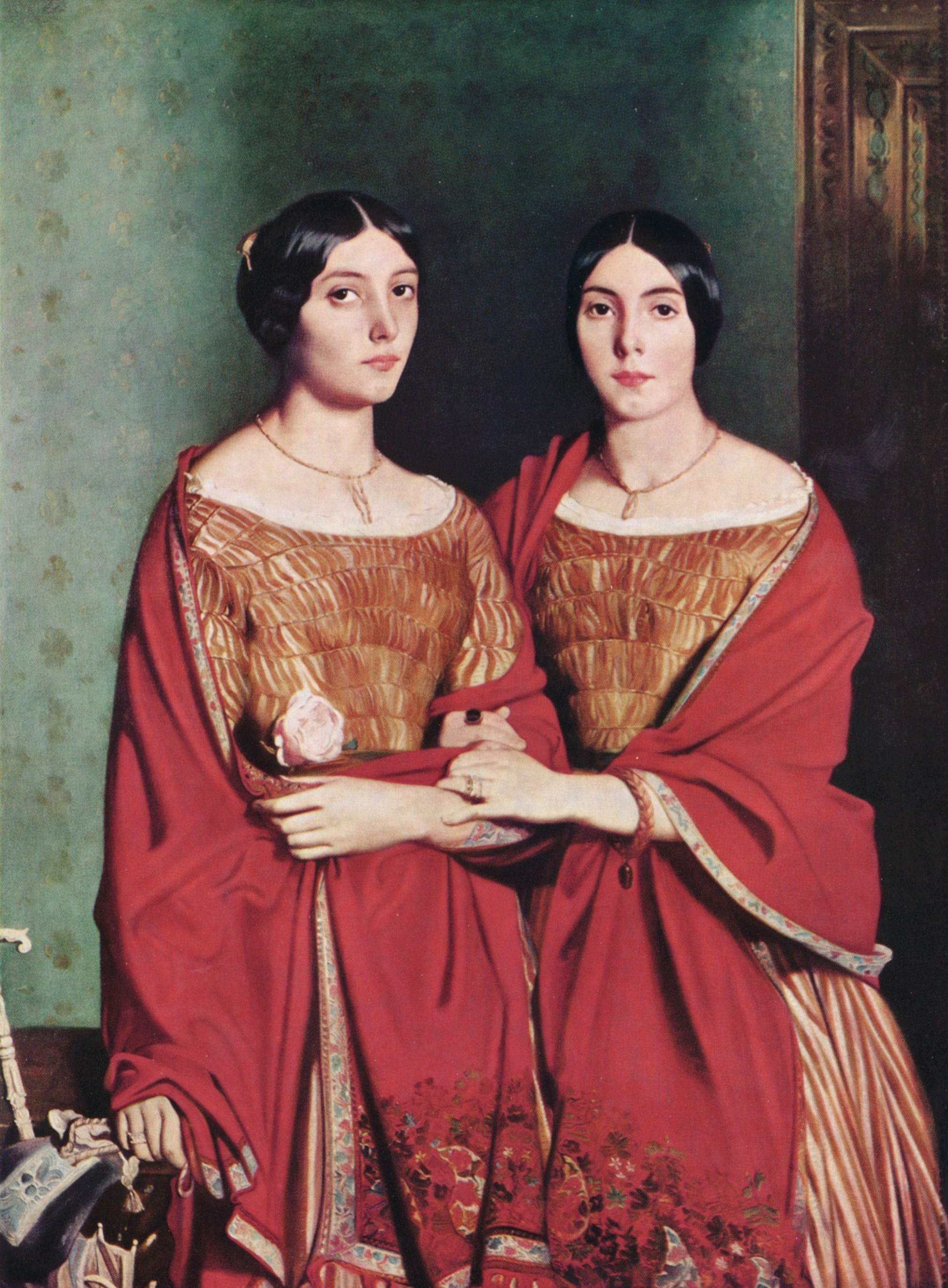
Picture by Théodore Chassériau

14 August 2016

Nympha: Make This House Your Own


"Give my greetings to the brothers and sisters at Laodicea, and to Nympha and the church in her house." (Colossians 4:15)

O Lord our God
who has brought us together,
turned this hodge-podge mix of people
into a family -
take this house, we pray,
and make it your own.


May this be a place
that strangers call home;
an open door
to the far and the near,
the lost and the seeking,
sinners and righteous,
Gentile and Jew.

May this be the place
where we can show our true face:
be ourselves without fear,
confess and find forgiveness,
be radically accepted
into bottomless grace.

May this be the place
where we learn to love each other
as you have loved us,
where enemy becomes brother
and stranger becomes friend.


O Lord our God
who has brought us together,
take this house, we pray,
and make it your own.

Save us from the temptation
of making it a fortress,
fenced off from the world,
from which we defend
our values and beliefs.

Save us from the temptation
of shutting ourselves in
and keeping for ourselves
what we were meant to share.

Save us from the temptation
of trying to create
a perfect kingdom here on Earth
at the cost of the broken
whom you have come to heal.


O Lord our God
who has brought us together,
take this house, we pray,
and make it your own.

May it be a refuge
from the storm of persecution,
a safe haven
in a world that's torn apart,
a rock for the castaways to cling to.

May it be a greenhouse
where your children can grow
ever deeper in the fullness
of your love and your mercy,
bringing fruit to feed
those who hunger for you.

May it be the table
at which we are strengthened,
prepared for the task you have set us to do,
from which we carry your gifts
to a waiting world.

O Lord our God
who has brought us together,
take this house, we pray,
and make it your own.

______________________________________________________________

[14. August 2016]

A prayer for a church...
In the early church, Christians met in each other's houses. More well-off people offered their houses to be used as meeting places. Nympha is one such "benefactress" who opened her house - probably quite a challenge, because the Church was and is truly a "hodge-podge mix of people", not all of whom would have been pleasant house guests.

Writing this poem, I had to think about what the Church is, or is meant to be. I believe that Jesus came to reconcile us to God and to each other, to heal broken relationships and begin reconciliation in this broken world. Jesus came to save everybody. The consequence of belonging to Jesus is, then, that I will be part of a very mixed group of people (the church), PLUS I have the call (together with this community) to bring reconciliation and the love of God into the world - to people who are different from me and whom I might prefer to avoid. A major challenge in the early church, for instance, was a cultural / racial one: overcoming the gap between Jews (the "original Christians" were all Jews) and non-Jews (Gentiles).

I believe the church is meant to be a community, like a new sort of family - but a family that is open to all, not just self-obsessed and closed off to strangers, or so tight-knit it's hard for people to get into. (Sometimes, I've realised, we Christians have developed a kind of language that non-Christians don't understand. We talk about the Gospel but our explanations make no sense because we don't speak the way non-Christians do; we throw around vocab that they don't really know the meaning of - and maybe we don't know the meaning either!) I have experienced church most strongly there where I was a visitor and felt completely adopted into the community. E.g. this April I visited an Anglocatholic church with a friend (beautiful church service with incense!! Loved it! Will go again!). In the prayers, people from the congregation were mentioned by name. When the priest found out that my friend and I are getting ordained later this year, he said they would pray for us. That's what I call Church. It doesn't matter whether your worship service has a band or incense or flashing lights or whatever, but it matters that we care for each other as the worldwide Christian family, no matter whether we know each other "personally" or not.

Another thing about church as family is that it is open for all. We need to learn to accept all the way Jesus accepted us - no matter the background, political leaning, race, "sinfulness", etc. The great miracle of the Church is that it is the place where "enemy becomes brother / and stranger becomes friend". Our old enmities or boundaries that we had in our "worldly thinking" no longer should count! Because Jesus wants us to love others the way He loved us.

And that is a challenge! But I believe that is what Jesus is calling the church to... not just to celebrate our salvation in comfortable groups of like-minded people we get along well with, but to go where it's dirty and invite more people into the embrace of Jesus, and to celebrate together with people who are different from us - an even greater celebration, don't you think?

One more thing: Church is where we can "show our true face". I realise that is not at all easy. Churches are often the first place we expect to be judged in. Why, though? Why has the church become a place where we feel the need to "fake ourselves"? I'm not saying there should be no reaction to sin in the church - where we hurt each other or make choices damaging for ourselves and others, it is right for the church (and with that I mean the people, the members, the "family", not "church leadership") to step in and say something. But any correction should be done carefully and in love. The Church needs to be a place where we are not afraid to be ourselves, where we can also be open about our mistakes and sins. I think a first step is to take away the pressure to be "perfect"... then also, to take away the fear of being shamed. Best way to do this is precisely by being the loving family I believe the Church is called to be. We are not the perfect elected, but people growing towards Jesus - and all supporting each other on this way, not punishing each other for every slip-up.

For me, the Church is the community of reconciled people who have come into touch with Jesus and want to follow Him. We are all at different stages of our walk with Him, we all come from different backgrounds, we might even be "natural enemies" if not for Jesus. It is a challenge to overcome old assumptions and old boundaries, but that is a first thing Jesus calls us to when He calls us into the Church. The second thing is the call that goes to the Church as a whole: we are to be messengers of reconciliation. I believe we do that by living the love of Jesus (by fulfilling the first calling of accepting each other within the church) and by sharing it in the world through word and deed. That is my personal "ecclesiology" for you, in a nutshell... ^^;

15 January 2016

The Tenth Plague: Empathy


Exodus 12:29-32 | Wisdom 11:2-16

Do to others as you would have them do to you. (Luke 6:31)

Only now I understand you,
only now I feel your pain.
Only now do I feel sorry -
     do you feel sorry for me?

It's something else when it happens to others,
to the outsiders, foreigners, the ones we don't like.
I could close my eyes, ignore it,
or pretend it was all right -
I did not know what it was like,
I did not care to ask.

But now I feel the pain you felt,
now I lose what you have lost,
now He has taken what we took from you,
and made me see what we did to you.

I did not care to ask,
I did not know what it was like.
Perhaps,
had I stopped to imagine
myself in your place,
my son in your son's place,
perhaps then
I would not have let them do to you
what I didn't want done to myself,
would not have made you lose your sons,
for I can't bear losing mine.

Only now I understand you,
only now I feel your pain.
Only now do I feel sorry -
    do you feel sorry for me?

__________________________________________________

[10. January 2016]

This is about / written from the p.o.v. of the mothers of the first-born who died during the tenth plague in Egypt. I decided to write about them after seeing the picture (above) by Charles Sprague Pearce - I must admit I had never considered their point of view before!

I hope this is understood correctly... in no way do I want to say the Egyptian mothers "deserved" what happened to them. Instead I see it as them having to learn empathy the hard way. Reading Wisdom 11 I found interesting that the Israelites had to learn empathy in the desert when they were thirsty (v. 8). And the sentence "one is punished by the very things by which one sins." (v. 16) The Egyptians actually got away considerably better during the tenth plague, I realised, than the Israelites who lost all their sons (except those like Moses who were hidden or saved) during the pharaoh's decree. The tenth plague was not simply a blow from above - it was the Egyptians being made to experience exactly that which they had done to the Israelites before.

So I wrote this considering how a bereft Egyptian mother might look differently at the Israelite mothers who had lost their children under the decree. I doubt that these Egyptian mothers really played a major part in killing Israelite children - but even if one does not play an active role, one plays a passive one (as happened a lot during the Holocaust): not standing up, not protesting, not defending those who are being abused by the system. Often we only realise what is going on and how wrong it is, and that we should be doing something, once we are ourselves affected.

Maybe we need to ask ourselves (before it's too late) who are those suffering today who need our voice. Before, like the Egyptian mothers, we have to be taught empathy the hard way...


Picture by Charles Sprague Pearce.

30 October 2015

Jehoshebah: Not My Fate


"...visiting the iniquity of the fathers upon the children unto the third and fourth generation." (Numbers 14:18)

2. Chronicles 22:10-12

Violence courses through my blood;
a curse runs in this family:
doomed we are to cruelty
    - can't help it.

Once,
a good man made a bad mistake,
and now we are cursed,
now David is fated
to spill David's blood,
and history repeats itself
over and over again
   - can't help it.

Generation to generation
the curse flows on;
violence courses through our blood,
drowning the promise,
strangling the blessing
that God said was ours.
A curse runs in this family
and can't be stopped
   - can't help it.

Or can we?

What if I rise and stem this flood?
What if I counter this violence with peace?
What if I refuse to be controlled by this curse?
What if I say this is not my fate?

There is no curse
except of our own making.
Nothing holds us back
from being free.
So I will rise and save a life;
I will rise, and bring violence to an end.
I will rise and break free from this curse
which was never imprisoning me.

__________________________________________________

[26. October 2015]

I'm currently working in a church with some "charismatic" tendencies - so the concept of "generational curse" has come up in a few conversations. I think the "generational curse" idea can be interpreted in a very problematic and unbiblical way (e.g. the idea bases mostly on a misinterpretation of Num 14:18 which I quoted at the start) - though I don't think it's an idea only charismatics have, nor is it completely totally "wrong" if looked at the right way.

The way I see it (and from what I have read in the Bible), the sins or mistakes of one generation can influence future generations: what we do and how we live influences how our children grow up, the example they learn from and copy, and the patterns which they take over. However, if we talk about it as a "curse", it can very quickly turn into "I can't help it; I'm trapped". And I don't believe that. We are not trapped in the bad habits and patterns we grew up in and grew into. We don't have to repeat history.

Jehoshebah was born into a very violent family. It all began with her grandfather Jehoshaphat's mistake. Jehoshaphat was a very good king who made important reforms in Judah and led people back to God by sending out teachers among them and even travelling the country to teach them himself. His mistake was connecting his family to the family of Ahab. He himself did not have to suffer many consequences for this - his family did. I do not see this as "God's punishment on future generations" - I see this as the natural consequences. Our actions affect others, they can affect generations after us. (E.g. the damage we do to the environment now will affect future generations.) God's punishment is in the sense that he allows this to happen. The trouble is that we "pass on" our sins; children learn from their parents and repeat things. This is not about "inheritance" as much as about learning and copying.

The consequences of Jehoshaphat's wrong choice played out in the second generation: his son Jehoram (Jehoshebah's father) killed all his brothers to ensure power for himself (that's why "David is fated / to spill David's blood"). His son Ahaziah was also not a good king. After Ahaziah's death, his mother Athaliah started killing all her grandchildren. Her grandchildren! I can't imagine how she could do that! So as you can see: a violent family, killing each other off for power.

I think saying something is a "curse" is a bad excuse. Of course our parents, our pasts, our experiences mark us and influence us and can to an extent also bind us powerfully to unhealthy patterns of thinking and living. But I don't believe we are "imprisoned" in a "can't help it" situation. The mistakes of the past don't have to be repeated. The curse can be broken when we realise it's not there. No one is "cursed" in the sense that they are "fated" to be some way. David's family had a promise and a blessing upon it - and through all the killing (over 3 generations, only 1 child per generation survived!) God always made sure that promise lived on: the promise of the Messiah from the family of David. But those involved seem to have seen the curse more than the blessing - and that made them stay stuck in the curse.

I believe we can be free, if only we realise we already are. No one forces us to repeat the mistakes of previous generations. Someone just has to break the pattern - and Jehoshebah did, by standing up and saving the life of her nephew, Joash, instead of letting Athaliah kill him with all his brothers. We are not "cursed" or "fated" to anything; it's our choices that matter, and we can always choose to break with the mistakes of the past and start something new.

01 September 2014

Rhoda: Until I am Equal

Acts 12

"Even on the male and female slaves, in those days, I will pour out my spirit." (Joel 2:29)

 A servant girl
should be seen, not heard,
speak when spoken to,
do her chores,
obey the Madam,
stay out of the way,
serve.

A servant girl
means little in society,
has no say,
no future of her own;
her words weigh nothing,
her opinion goes ignored -
what does a servant girl know?

But then I met You
and You changed my world;
You showed me I had worth,
that I was loved by You.
You showed me that a servant girl
can be a child of God,
can have a voice,
can have an opinion,
be part of a family
where all are the same.

But even though
I am free in Your eyes,
in their eyes
I am still a slave.
Though they belong to you
just as much as I,
though my Mistress is my Sister,
though they say that all is new,
deep down
so much is still the same.

I bring a message -
they do not hear.
What does a servant girl know?
A servant girl
should be seen, not heard,
serve,
not prophesy.

Lord,
I am free,
I am free in Your eyes,
though man would make me a slave.
Lord,
give me patience
until they have learnt
we all are equal in your sight.
Open their eyes
and help them to grow
beyond the lies of this world.
Help me to love them
although they're hurting me,
until they understand
your revolutionary truth,
until I am equal
in their sight as in yours.

___________________________________________________________________

[30. August 2014, on the plane]

When Peter was miraculously freed from prison, Rhoda the servant girl was the one who met him at the door. But when she told her mistress and the others gathered in prayer for his release, they did not believe her. Usually I view this as a case of lack of faith: praying, but not expecting anything to actually happen (see this one's sister poem, Prayer of Faith). Writing Rhoda's poem, though, I came to think of another aspect: lack of faith in the message-bearer, old prejudices taking a while to die even among Christians who were learning that "there is no longer slave or free [...] for all of you are one in Christ Jesus." (Galatians 3:28)

At Pentecost Peter quoted Joel 2:28-29 about God pouring out His Spirit on all people: men and women, young and old, slave and free. The church was to be something new, where all people could be family, equal before God, no longer split into hierarchies but one in Christ, of equal worth, equally endowed with the Holy Spirit to do God's work. But old habits die hard and it must have taken a while for Christian masters to fully accept their slaves as brothers and sisters, not inferiors.

There is still much prejudice today, even among Christians. And that prejudice has to go, because it is not Christian. We are all one in Christ, so we need to respect one another and treat one another as equals, no matter what categories the world would put us into.

Picture by Johann Christoph Weigel.

27 July 2014

Lydia: The Wall

Acts 16:11-15


"There is no longer Jew or Greek, there is no longer slave or free, there is no longer male and female; for all of you are one in Christ Jesus." (Galatians 3:28)

I used to live behind a wall,
a barrier separating me
from Those Out There,
and them from me,
tall and wide,
unbreakable.

Some bricks were laid
by society,
some by religion
or family,
some laid by others,
some by myself,
and so the wall grew.

Some bricks were pretty,
others I hated,
some made me feel safe,
others, imprisoned.
Some I wished I could break away -
others I never wanted to,
and so the wall stood,
my friend and my foe,
separating me
from Those Out There,
and them from me.

There it stood,
separating
Gentile and Jew,
woman and man,
Greek and foreigner,
slave and free,
rich and poor -
my neighbour and me,

and sometimes
I felt safe
because of the Wall -
sometimes
lonely.

Until,
o Lord,
you broke it down.

Down it fell
as men took women seriously -
this woman -
me.
Down it fell
as Jews entered a Gentile home -
my home -
to eat.
Down it fell
as you gave me
a new life,
a new perspective.

Let me live
a life without walls
in your House without locks
where all may come in.
Let me invite,
not push away,
and share your hospitality.
You broke down the wall
between Heaven and Earth -
you break down all walls
separating me
from Those Out There,
and them from me,
that we may live
the Kingdom of God
where all are welcome
and all are free.

_______________________________________________________

[27. July 2014]

As I read Lydia's story, I realised Paul and his team were breaking two taboos and overcoming two cultural-religious barriers:
  •  They shared the Gospel with a group of women - they took the women seriously, which was not so usual in those days, by speaking to them as equals who are also entitled to an opinion and to hearing the good news of Jesus.
  • They went to Lydia's house to eat there, even though Lydia was a Gentile (i.e. not a Jew). Jews did not eat in Gentiles' houses because it was deemed as "unclean". Even though she was a "worshipper of God" (a Gentile interested in Judaism and believing in the God of the Bible) she did not count as a Jew (there are practical steps of conversion first) and so that may have gotten her different treatment, and exclusion in some things (e.g. Gentiles were prohibited from entering the Temple in Jerusalem, on pain of death).
In many ways I believe the Gospel is about breaking down barriers. Sin causes barriers between us and God, and us and other people. We excuse many of these barriers by saying it's our culture, or bringing up religious reasons, or saying it's for security. So different from the first human beings, Adam and Eve, who had absolutely no barriers between them, being "naked but not ashamed" (Gen 2:25). When Jesus takes away our sin and renews our hearts, I believe He wants to take away those barriers as well: cultural barriers, barriers between locals and foreigners, barriers between generations, barriers between women and men.

What that means in practice is: we should no longer distrust or hate or look down on others. We should accept others because Christ accepted us - welcome them, allow them a space in this world and in our hearts. In my country, some people are afraid of foreigners and want to keep them out - I believe we need to drop that fear and reach out to foreigners instead, and show them welcome and love. Jesus wants to bring an end to "us" and "them" thinking. To bring an end to wars that base on demonising the opponent and just separate people further.

So while you're at it, please pray for an end to the war in Gaza, and for people on both sides to strive for reconciliation and an end to the violence. Pray for an end to "us" and "them" thinking, and that the walls of hatred can come down, in Jesus' name. He reconciled us with God - so let us now aim for the reconciliation between people, between us and our neighbours, because Jesus did not only die so we can "go to heaven" - He died and rose again so we can live a new life, a life in His example, and I believe that needs to be a life without walls, a life without hate, a life of reconciliation with others and of love even for our enemies.

16 April 2014

Mrs Pilate: I Will Not Be Silent

Matthew 27:15-30

While Pilate was sitting on the judgment seat, his wife sent word to him, "Have nothing to do with that innocent man, for today I have suffered a great deal because of a dream about him." (Matthew 27:19)


I could say that wrong is right,
do injustice to have my way,
close my eyes and close my ears
to truth and justice.

I could join in the injustice,
just because all others do it,
shout along with all the crowd:
CRUCIFY HIM.

I could stand there doing nothing
in the face of open wrong,
wash my hands in innocence,
refuse responsibility.

What can I do?
I'm powerless.
The powerful
do nothing, or ill.
What can I do?
I'm only a woman.
What can I do?

I can speak up for what is right,
stand up for justice, for this righteous man.
I will speak, though it be pointless.
Silent is what I will not be.

___________________________________________________________________

[24. April 2013]

On reading Matthew 27:15-30, what I noticed were different people's reactions to the injustice that was happening: Jesus, an obviously innocent man, being sentenced to die. Everyone let the injustice happen - one person spoke up: a heathen woman. I think that's showing something. Yes, Jesus HAD to die, He came to die. But what happened there, all the injustice, was not okay and it's shocking how everyone just let it happen. It's shocking how in the world today injustices still happen, innocent people still suffer, and no one does anything against it. Let's be like Mrs Pilate: even if you are just one lonely voice, and even if no one listens to you and nothing changes, be the one to stand up against injustice and say something.

Each stanza (except for the "what can I do" one) represents one of the groups or people appearing in the text, and their way of dealing with injustice:
1. The chief priests and elders, who did injustice out of self-interest (v.18)
2. The crowd - people in the crowd are just doing what everyone else is doing (v.20-23)
3. Pilate, who knows Jesus is innocent, but doesn't stand up for Him although he has the power, and who doesn't take responsibility (v.23-24)
4. Pilate's wife, who warns her husband and speaks up for Jesus (v.19)

Picture by Alphonse François

27 March 2014

Mrs Isaiah: Prophetess

Prophetess.
A title, an honour?
A position above others?
Holier than the rest?
A special skill, unusual gift?
Reader of the future?
Seventh sense?

Prophetess.
Called by God to be a servant
of the LOrd and His people
with all of my life.
I am a walking message:
actions, words,
even my children
whose names I did not choose.
I am one of you,
a woman of Israel,
hurting with my people
who won't hear or change.

Turn around, repent!
The future's not unchangeable.
God longs to save, be merciful -
if you but let Him.
Change your ways!


Prophetess.
My life is a tool
in the hands of God,
a letter to the world.
Sharing in His longing
for all to be saved.
Sharing in their search
for peace and salvation.
Sharing in His pain
when they turn away.
Sharing in their fear
of judgement.

Prophetess.
Here I am, o Lord.
Use me
and give me strength
to bear the consequences.

__________________________________________________________________

[August 2013]

In case you didn't know: yes, there are prophetesses in the Bible. Quite a few of them. Isaiah's wife is called "the prophetess" in Isaiah 8:3 but I don't think she's mentioned anywhere else.

So this pretty much reflects my understanding of prophecy, especially from reading Isaiah. People generally seem to see prophecy as a kind of "seeing the future" thing. I believe it's a lot more. If we only read the prophets to know "what's going to happen", we miss out the bit that applies most to us, namely their criticism of society. The summary of their message is very similar to the one of Jesus in Mk 1:15 "Repent!" - which means, "Change your ways!"

The prophets are not like Greek oracles. The Greek oracle says what will happen, and no matter how hard people try to prevent it, it happens anyway. The prophets of the Bible give a warning, and encourage people to change. The future is not unchangeable: God was going to destroy Ninive when He sent Jonah, but because they reacted to the warning and repented He changed His mind.

What I find really interesting about the prophets too is that they are not really different from the people. Most of them are speaking to their own people. They know that what they are preaching counts for them too. Jeremiah had to suffer together with his people. I think they also suffered for their people. In a way they were between God and people, knowing both and "hurting both ways", in a sense. And they care for the people just like God cares for them, because they are their people, and they aren't simply detached. To be able to criticise others, I think we need to have enough love that criticising does not turn into judging, and that when we criticise we do not enjoy the thought of the other being punished.

Another really interesting thing is that the prophet's whole life gets involved. Isaiah walks around practically naked for 3 years. (Isaiah 20) His children's names were messages (Isaiah 7-8). Serving God is a full-time thing. What we do and how we act says something. If our life says something differently from what we believe, then something is not right.

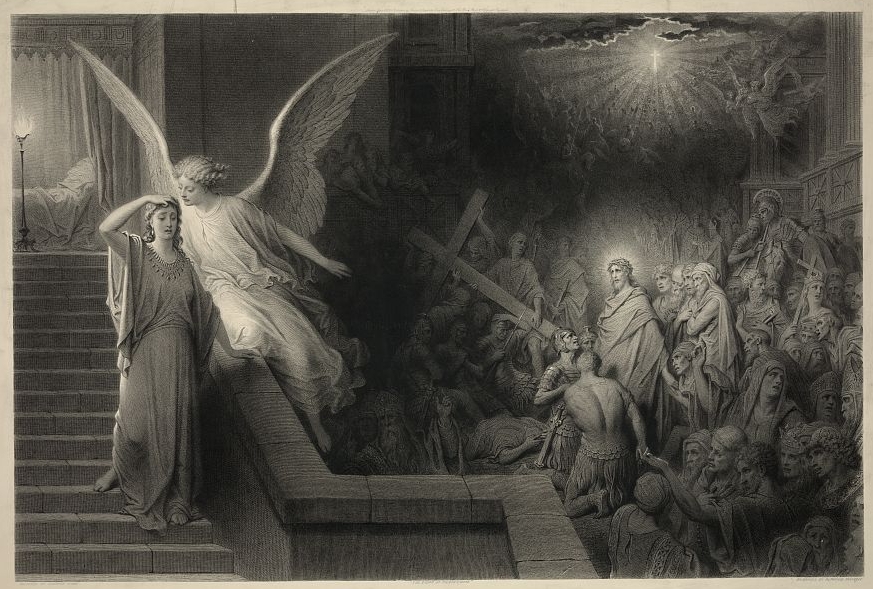
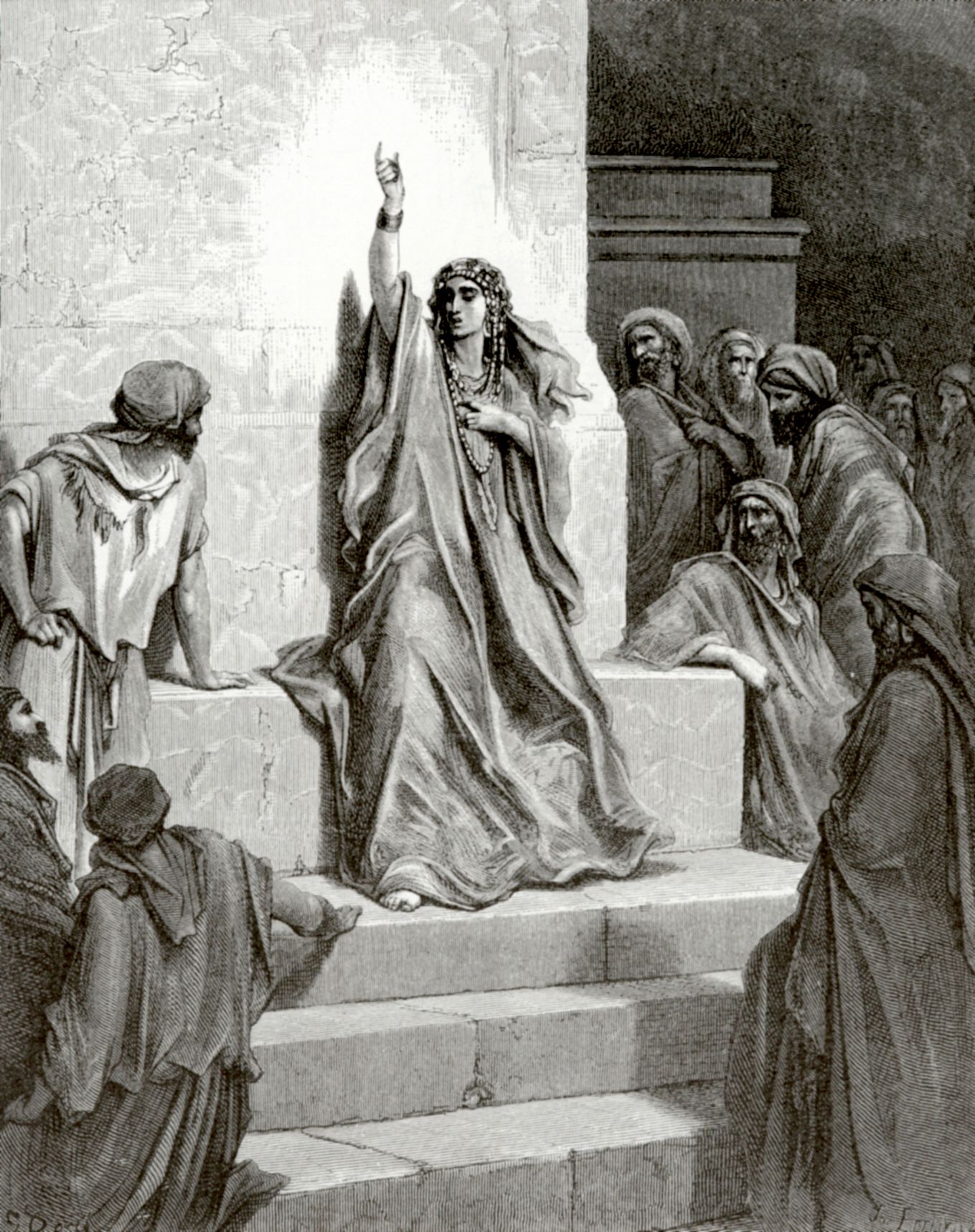
Picture by Gustave Doré, actually depicting the prophetess Deborah.

05 March 2014

Sincerely, Ruth

Ruth 1-2

My story is not yet over,
I am still here today
in other people who cross your way -
do you see me?

I am the widow who's lost everything.
I am the foreigner - different and strange.
I am the immigrant in a strange new world.
I am the refugee, left homeless suddenly.
I am the mourning one, uncomforted.
I am your neighbour,
waiting for your love,
wanting to be your friend.

Will you, like Boaz, welcome me,
invite me, accept me, help me?
Will you meet me with words of love,
of blessing,
and be a neighbour to me?

I want
your land to be my land -
will you help me?

_______________________________________________________________________

 [May 2012]

Ruth was a Moabite, a foreigner. She had lost everything except for her mother-in-law. What I admire about her is how, despite having experienced so much trouble herself, she gave everything to help Naomi, her mother-in-law. But another thing her story impressed on me was how there's still many Ruths (not only women but also men) around us today. Foreigners, people who have had hard experiences, people who have lost everything, people who are trying to adapt to a new country.

So often, the reaction to foreigners is xenophobia. People are always complaining about immigrants and foreigners, here in Europe the far-right are harping on and on about "islamisation" and acting very coldly towards foreigners, especially Muslims, instead of showing them love and acceptance.

As a Christian I believe we are meant to meet foreigners - whatever their background, race, or religion - with love and acceptance. It's what Jesus would do. It's what Boaz did to Ruth - a woman from a country which had often been the enemy of his!

Look around you: are there any Ruths there? People who have been displaced, who are new in the area and still can't find the post office on their own, who have trouble with the language, who have a troublesome past behind them and need comfort, who are waiting for you to give them love and be their friend?

The story of Ruth is not just a story about a woman who lived long ago that we can read and think "nice story" and then put it down again. It should make us think today, it should make us realise what people around us, especially immigrants, foreigners, refugees, are going through and how we can help them.

Read Ruth 1-2
Take a look at how Boaz treats Ruth.
Where is there a Ruth today whom you can be a Boaz to?

I wrote this simultaneously in German and English, so as to use the German for a mini-sermon back in '12. Can't find the "decent" German one though, only the scrappy version, so... tut mir leid! :( Vielleicht taucht's noch auf...