10 June 2017

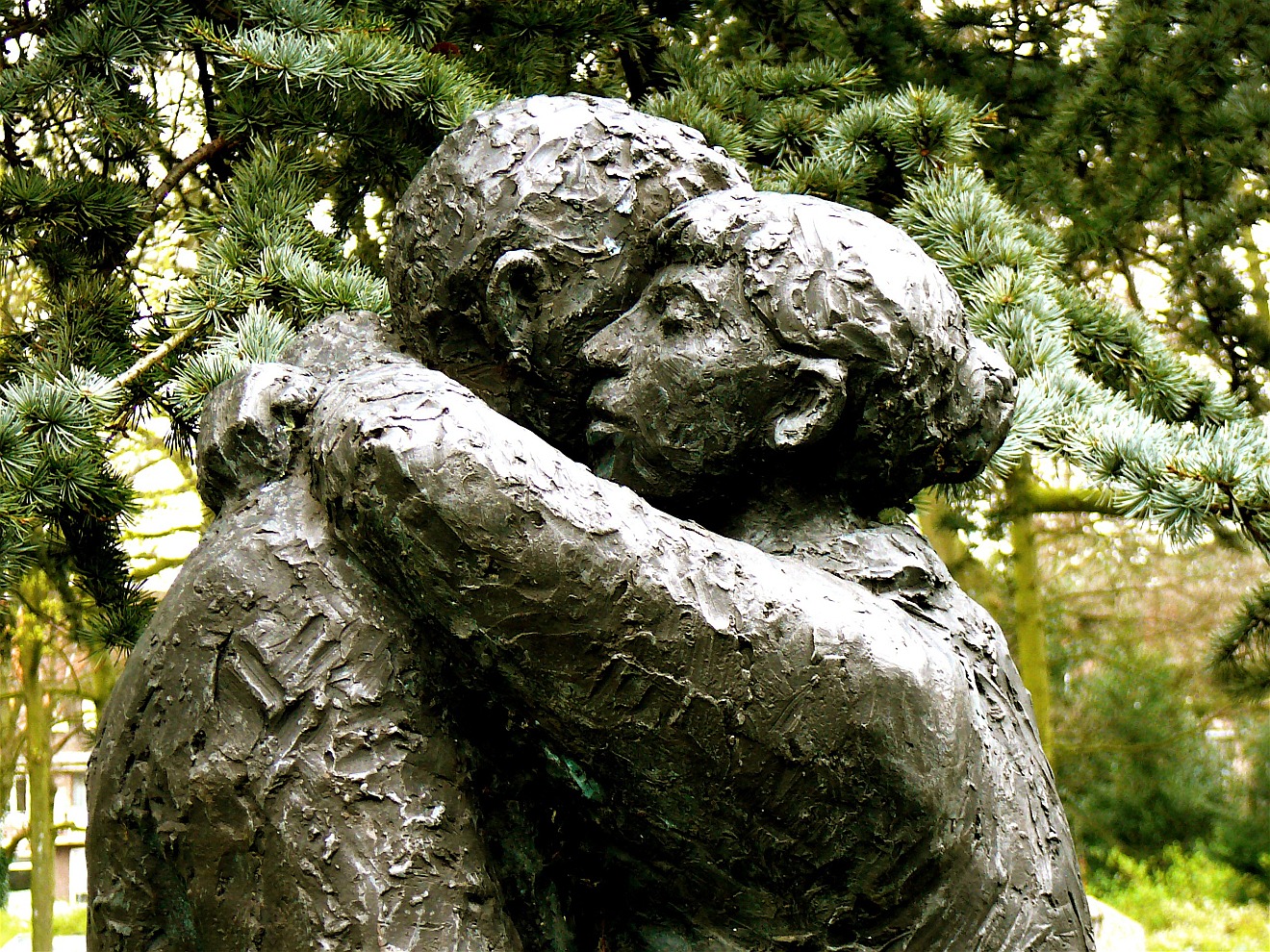
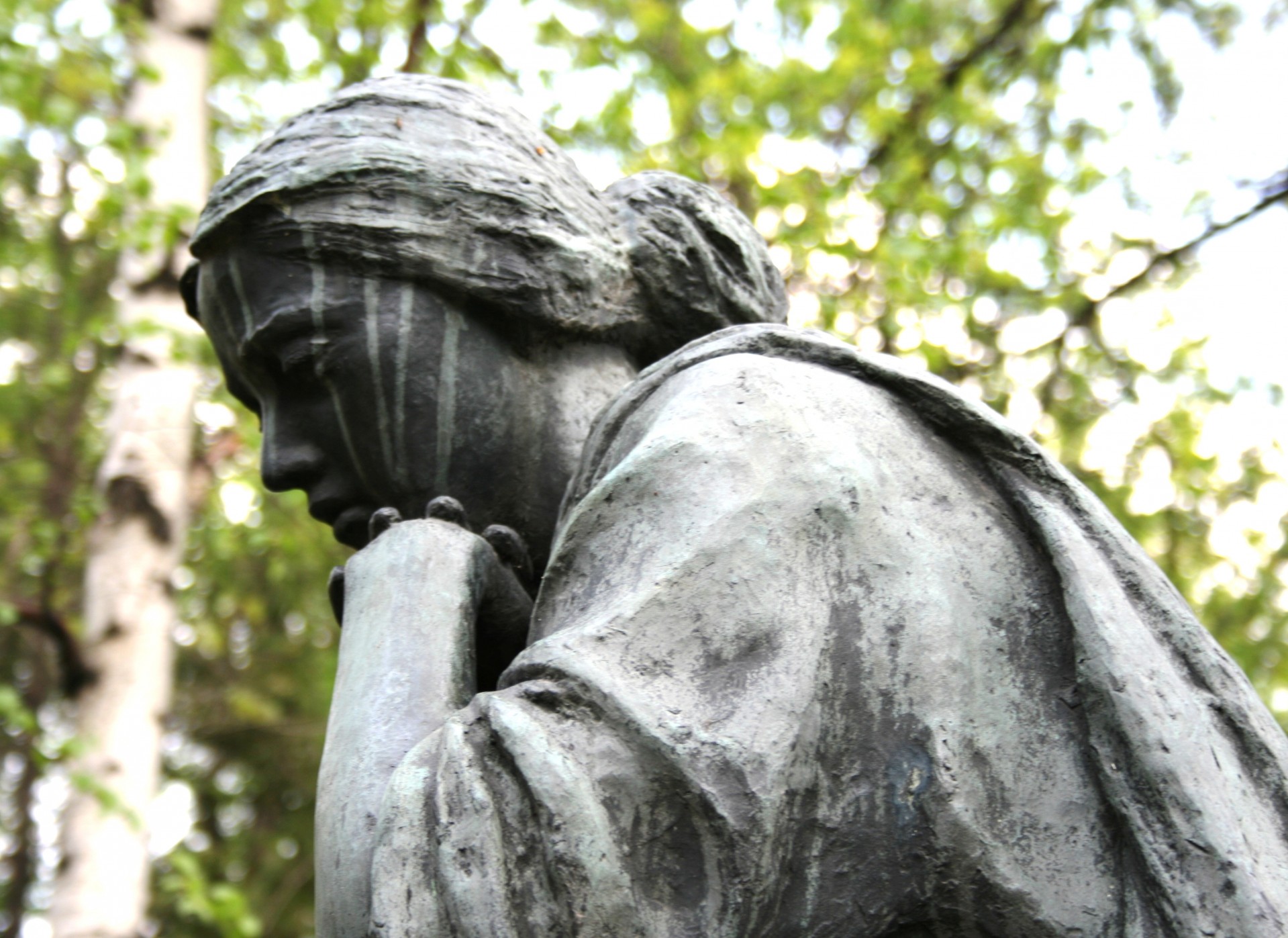
Maacah Mother of Tamar: Mother Lioness

2 Samuel 13

Tear my clothes,
throw ash upon my head.
Today my daughter is dead.

Why do we bear daughters
only to watch them be consumed
by the fires of the lust of a man
eating them alive?
Today my daughter is dead,
alive but dead,
an empty shell,
a rejected husk,
a ghost condemned
for another's lust.
Why do we bear daughters
only to watch them be destroyed
by a world that blames the helpless
and lets evil win the day?

They say a snake corrupted Eve -
today, it speaks to Adam
for it lives between his legs.
Why do we bear daughters
only to watch them be devoured
by merciless greed,
then cast away shamed,
a broken reed?

I want to tear him apart,
I want to rip his throat,
I want to bite off his manhood,
show no mercy to this merciless brute
who had no mercy for her.
Why do we bear daughters
only to watch them be regarded as objects,
playthings to be used and cast aside?
Why do we bear sons
if this is what they become?

I want to devour him
and leave nothing left,
I want him destroyed
the way he destroyed her.
I want to wail to the skies
forty days and forty nights,
tear my clothes,
throw ashes on my head
for today my daughter is dead.

Why did you create us
only to watch us like this,
tearing at each other
like wild beasts?
O God, like me you bore children
and you watched them fall apart.
Does your Mother-heart
break like mine?
O God, do you mourn
every day and every night
for your degenerate children
who wander as though dead?
O God, do you long, like me,
to go out in fury
like a mother lioness,
tearing evil limb from limb?

Or do you, like me,
tear your clothes,
throw ash upon your head,
and mourn your broken children,
alive but dead?

_______________________________________________________

[10. June 2017]

Thought I'd write from the point of view of Maacah, mother of Tamar. Tamar, daughter of David, was raped by her half-brother Amnon. With "alive but dead" I try to refer to how in a shame culture, being shamed in this way (by rape) can make a woman completely lose her worth in society. Tamar would have been made unmarriagable, all her chances for a future destroyed. To society, she was as good as dead.

Victims of rape generally reap more consequences than the perpetrators. Perpetrators get away; punishments are all too often not at all proportionate to the crime. A raped woman is innocent of what happened, but all too often is treated like a sinner. She suffers because of the sin of another.

When the Bible talks about justice and punishment and judgement, I believe it talks about things like this... about God standing in for the suffering and abused.

I decided to play with female imagery of God again here... not everyone's cup of tea, but it is a fact that God as God is "genderless", i.e. definitely not male, and that the Bible uses a lot of feminine imagery for God. I think the mother lioness fits to God... mother animals can be extremely ferocious when their children are attacked. While I am certain that God loves both perpetrators and victims, and salvation is about restoration and healing for both, I also believe (also from some of the pretty gory imagery that we read e.g. in the prophets) that God can be as ferocious as a worried mother animal when it comes to defending those who are wronged. The hard part is that we are all His children (tried to touch on that a bit in the last two stanzas which talk about all the children, not just the daughters), perpetrators and victims alike. God wants all to be saved; at the same time He does not stand for injustice. God's mourning over us must be all the greater, then... a combination of Maacah here, and Ahinoam, Amnon's mother.

Other poems about Tamar and Amnon here.

15 May 2017

Wise Woman of Tekoa: Justice and Mercy


2. Samuel 14:1-24

Justice must be served,
the guilty must be punished;
justice must prevail
through the hand of the King.
As a just ruler
you must deal out judgement,
appeasing the masses
that clamour for blood.
Wrongs can't be ignored,
evil can't be covered -
the guilty must be punished,
justice must be served.

But, Lord,
I am a Mother,
and you, Lord, are a Father.
Does not your father's heart
throb in you like mine?

Justice must be served
on my son who killed his brother;
the thirsty masses cry for blood.
I can't ignore his wrongs
that tear my heart asunder -
but vengeance will not heal me,
retribution won't atone my loss.
I have lost one son -
would you have me lose another?
Justice must be served,
but is this truly justice?

For, Lord,
I am a Mother,
and you, Lord, are a Father.
Does not your father's heart
throb in you like mine?

Justice must be served
on your son who killed his brother.
As a just ruler
you must deal out judgement.
But Lord,
you are a Father
and he is your son.
Close the eyes of the ruler,
look with the eyes of a Father,
and tell me what you see.
Put aside the ruler's iron mind
and listen to your father's heart.
See your child
and find mercy.

Evil can't be covered,
but mercy covers all.
Wrongs can't be ignored,
but a Parent's heart sees
the broken child beneath the sin.
Open your arms,
give in to your longing,
invite your child home
to the embrace where he belongs.
Let love restore
that which was broken;
let the tears of mercy
wash away the pain -

For justice is not retribution;
wrongs can't be healed by revenge -
justice is mercy and restoration,
justice is a parent's love,
justice is God
sparing His weak children,
granting us life again and again.
Justice is a Mother's embrace,
a Father's grace.

________________________________________________

[15. May 2017]

So: King David's eldest son Amnon raped his half-sister Thamar. Thamar's brother Absalom, seeing David do nothing, took justice into his own hands and murdered Amnon. David reacted by banishing Absalom. The wise woman of Tekoa comes in as an attempt of David's general Joab to convince David to end the banishment and let Absalom return.

I really like this story. It shows the complexity of justice and mercy and a parent's love - and it made me think about God's mercy and what that means.

The wise woman of Tekoa basically told a story similar to David's: the case of one of her sons killing his brother, and the people demanding punishment. The way she told the story she nudged David into saying the murderer should be spared for the mother's sake - because otherwise she would lose both sons. That way she could "twist" David into realising that the right decision for him would be to call Absalom back. That's how Bible wisdom works, apparently. ;-) (Nathan used the same method to bring David to indict himself on the Bathsheba incident...)

What the wise woman of Tekoa showed David was: he should look at the matter not as a ruler, but as a father. She showed him it was all right to give in to his love for his son - that it was not any less "just", but more so, than punishing him.

How do we imagine God looking at us and "judging" us? As a ruler? Or as a Father? A ruler or judge looks at the law and how well we followed it. He is completely neutral. A parent is not neutral: a parent loves his/her child. I believe God looks upon us as a parent; He sees us as His children and wants to save us. His aim is salvation, not ensuring all the rules are followed. "We must all die; we are like water spilled on the ground, which cannot be gathered up. But God will not take away a life; he will devise plans so as not to keep an outcast banished for ever from his presence." (v.14)

And, yes, there are perpetrators and victims, as the complicated story of Amon, Thamar and Absalom (including later Absalom's rebellion) shows all too well! But both perpetrators and victims are loved by God. God wants salvation for all. God's justice is justice for perpetrators and victims - which means it is more than just retributive justice or "paying back" what was done. I love the concept of "restorative justice"; I believe that is what all of us actually need... because victims are not really served by retributive justice either. The woman of Tekoa, a victim because she was robbed of her son, is not helped by the execution of her second son! I believe the justice of God is restorative justice: healing and restoring relationships, helping perpetrators to stop being perpetrators, bringing victims to their rights. And that is the kind of justice we Christians are called to live as well.. giving people a chance to change, helping up the downtrodden, working for peace and healing between people who otherwise would hurt each other.

As for "justice is mercy"...this is on my mind a lot. It bothers me how, very often, I see the word "justice" abused in the Christian context, as though justice were the opposite of mercy. As in: "God is a merciful God but He is also just", as if justice and mercy were opposites. Biblically, they are not - they are tightly and inseparably interlinked.

06 March 2017

Éowyn: The Cage


"What do you fear, lady?" He asked.
"A cage," she said. "To stay behind bars, until use and old age accept them, and all chance of doing great deeds is gone beyond recall or desire."

Too often have I heard of duty,
too often been told what a woman should do.
Too often have I heard of duty,
and duty has become my cage.

My duty to cheer as the men ride to war,
my duty to stay behind.
My duty to rule while they are away,
my duty to submit when they return.
My duty to fill empty bellies,
my duty to keep hearth and home,
my duty to marry a nobleman someday,
my duty to give him sons.
My duty to watch them ride away
to shed their blood on a foreign field,
my duty to suffer and wait.
My duty to mourn them when they fall,
my duty to praise their glory in song,
my duty to while the nights away,
left behind, alone.
My duty never to question
where my life has gone.

Too often have I heard of duty,
and duty has become my cage.
Imprisoned behind the bars
of your expectations,
I do what I must, but without joy,
I am what you want, but not myself,
I gaze through the bars longingly
at the life that should belong to me.

I was born for more
than cleaning up after men,
than singing their praises
and sitting at home.
I am a daughter of Eorl,
no dry-nurse, no serving-woman;
a sword is at home in my hand.
The call to war resounds in my blood -
how can you tell me 'no'?

I was born for more
in this time of need;
I am filled with purpose,
I have so much to give.
I am a shieldmaiden
and this will not be my fate:
I won't stay behind bars
and let my gifts go to waste.
If I will die on a sword,
let me wield one first
and make my death worthwhile.

Too often have I heard of duty.
All your words are but to say:
'you are a woman -
this is not your part.'
Yes, I am a woman.
Alas, I am a woman
and you are blind
because you are a man.
Yes, my Lord: I love you.
And yes: I know
it is but a shadow and a thought.
For it is not you I love
but the dream
of being like you,
respected and free.

_________________________________________

[6. March 2017]

The Lord of the Rings is one of the books that has most impacted me growing up, and Éowyn is one of the characters who most left an impression on me (partly because during 7th grade my friends and I roleplayed as LOTR characters and I was Éowyn). I have often found myself identifying with Éowyn, especially with her fear of a "cage".

Re-reading that conversation between Éowyn and Aragorn (The Return of the King V. chapt. 2 The Passing of the Grey Company), I realised something about Éowyn's inner conflict. Society (and the men around her: her uncle Théoden, her brother, and Aragorn) have expectations towards her - and always she is fulfilling these expectations, always doing her duty. But she wants more. She knows that she is completely capable of more - but nobody lets her do it.

Writing this I have to admit I had to think about the debate over whether women are allowed to preach / be pastors. I think the situation is similar.. women find they have gifts that fit current needs (like Éowyn knew she had what it took to contribute in the battle against Sauron) - but too often men restrict them by saying it is "not their part to play". I understand Éowyn's frustration. She had to "hide her light", "bury her talent" - like many women who are called and gifted for the pastorate are still told to do today. In the end, however, she played a vital part by killing the Witch-King whom it was said no man could kill. Her "rebellion", riding to war disguised as Dernhelm, was necessary.

I talk about women's ordination etc because that is my context and the kind of debate (as a woman pastor) I have had to deal with. But I guess Éowyn's example applies to and inspires in other situations too.


Here's a good article to read about her: http://www.themarysue.com/the-story-of-eowyn/

Picture by Edmund Blair Leighton

03 March 2017

Merab: What Could Have Been

1. Samuel 18:17-19

Strange to think now
I could once have been yours,
that it could have been me
gracing your side.
What might life have been
if my father kept his promise?
What might life have been
if you had married me?

Strange to think now
that I ever wanted you,
that there was a time
when I'd see you and swoon,
when my heart would beat faster
each time you looked my way.
Such a silly girl,
young and in love,
protesting when they gave me
to another man.

Strange to think now
what I might have endured -
could I have endured it
the way she did?
Could I have stood by you
against my own father,
abandoning my family?
Could I have lied to protect you
from the people I loved?
Could I have endured
years of separation,
fearing for your life?
Could I have endured
being reunited with you,
when you no longer loved me
but had married many more?
Could I have endured
a life torn in two?

Strange to think now
I could once have been yours.
Strange to think now
that I ever wanted you.
Could I have endured it
the way she did?
I was such a silly girl,
young and in love.
But today I look back
and thank the wiser hand of God
for not granting me my wishes
and not letting dreams come true.

___________________________________________________

[2. March 2017]

Merab was the elder daughter of Saul. Saul originally promised her to David, not her sister Michal - but then gave her away to be married to someone else (probably to spite David). Merab doesn't really get a voice in any of it; we don't see how she felt, whether she actually "liked" David the way I portrayed it here (though he was so popular, especially with the ladies, that I think it's quite possible). As often happened to women (especially princesses) in those times, others decided her fate for her and she had no say.

The theme I decided to pick up on here was how sometimes, it's better not to get what we wish for - that sometimes, we only see later how things would have unfolded, and have to admit that not getting what we wanted was better. We may sometimes be disappointed by God not answering prayers or not letting things happen the way we'd like them to - but "the wiser hand of God" knows what and how much we can take. I keep marvelling at how much Michal, Merab's sister (who became David's first wife), had to go through (and I'd like to write many more poems about her!) - and that she didn't break under all that. She had to take sides between her father and her husband - a dreadfully painful thing! So when Merab says in this poem, "Could I have endured it / the way she did?" she is talking about Michal. Not everyone can bear things the same way. God knows which trials to give us, and which to spare us from.

But often we need the wisdom of hindsight to see that it was better not to get what we wanted.
For me this means: I need to trust that God knows what He's doing when He doesn't make all my dreams and ideas and plans come true.

Picture by Ernest J. Rowley, The veiled lady (1903).

26 January 2017

Mother of Amnon: My Son, my Son


2. Samuel 13:1-32

My son, my son,
what have you done?
My son, what have you become?
Have I taught you nothing?
Has my love meant nothing?
How can I still look at you
after this?

Where is my sweet, sensitive boy?
Where has he gone?
Who is this selfish, brutal man?
What have you done?
Have I taught you nothing?
Who are you now?

Don't you see
the pain you're causing me,
digging claws into my heart,
tearing it apart?
Don't you have a mother?
Don't you have sisters?
Did I not teach you
love and respect?
Where did you learn
this violence, this greed,
this cruelty?
Not from me.

I want to beat you bloody.
I wish you weren't mine.
I want to cast you out
far from my sight.
My son, my son,
what have you done?
How could you do this?
Why?

And yet
you are my son,
my sweet, sensitive boy -
somehow, somewhere
that child is still there.
How I wish he could come out,
set himself free
from the blindness of self,
the chains of lust and greed.
How I wish
your evil deeds could fall away
to uncover the true you
buried beneath.

I want to beat you bloody.
I want to love you back to health.
I wish you weren't mine.
But how can a mother
forget her child?

You are not
what you have done.
I hate your deed
but I love my son.
I love you
and it hurts.
I love you
with the shattered pieces of my heart.
I want to love you back to health,
love you out from the depths of your dungeon,
love the selfish, brutal man
into my sweet, sensitive child again.
My son.

________________________________________________

[26. January 2017]

For some reason 2. Sam 13 is one of my most-written-about Bible texts (Tamar 1, Tamar 2, Tamar Absalom's daughter)... and I'm still planning on writing a fifth poem for it, from the p.o.v. of Tamar's mother.

Amnon's mother is Ahinoam of Jezreel (2. Sam 3:2). I realised it would be interesting to consider this story, of his rape of half-sister Tamar, from his mother's point of view.

While writing this I realised that, despite the way it has been misused and therefore fallen into disrepute, we still need the phrase, "love the sinner, hate the sin". We just need to understand it correctly. I find the phrase has been badly overused and misused in the context of discussions about homosexuality, and is almost only associated with such discussions. The way I first heard it, though, it meant something completely different. To me, "love the sinner, hate the sin" means differentiating between the deed and the person, acknowledging that something someone has done (e.g. in this case rape) is wrong (also for the sake of standing up for the victim), but still caring for the person and wanting them free. I believe we have really watered down this important message by associating it with a "sin" as negligible as homosexuality (I don't actually think it is one, but that's another fight I've already had too much of).

What someone has done does not have to "define" him as a person. I guess no one knows this better than a parent. That's why the Bible works with father and mother imagery to describe the love of God. God as a parent sees not only what we have done, but sees the trapped child beneath. And grace means we don't have to be what we have done, we don't have to be trapped, we aren't doomed to repeat our mistakes, there is a chance to change and to be free.

We need to "hate sin" in the sense that we need to stand up against injustice, cry out against rape and abuse of all kinds.
And we need to "hate sin" in the sense that we want the person imprisoned by it to come free and find their true self again, which was created for goodness, not for evil.
But we need to see the person as not defined by what he/she has done. And no one does that better than a loving parent, I think.
To me, that is what "love the sinner, hate the sin" should mean. It should be about standing up for victims and at the same time recognising the humanity of the perpetrator and giving him/her a chance to change.
I think one reason it's so dangerous to talk about "hating sin" mainly in the context of homosexuality is that we lose all credibility when we want to talk against real sin, or - even worse - ignore the real sin, which in my understanding of the Bible is abuse of others, especially the weak, failure to help the weak, oppression of others, and injustice of all kinds. Read the prophets: all about social justice.


Picture by Käthe Kollwitz, "Woman with Dead Child".

13 December 2016

The Witch of Endor: Poor Child


1. Samuel 28:3-25

You used to be the mighty King,
persecutor of the likes of me;
the scourge of all who practised my craft,
enemy of those not loyal to your god.
Your name alone meant dread to me -
today, do you bring death to me?

But now
your shell is cracked
and you seep through:
wounds and tears
from beneath the armour,
a broken man
underneath the mask.
I thought you were a mighty King -
but I all I see is a lost child
cowering frightened at my feet.

You believe yourself forsaken
by God and by men,
thrown aside and replaced
by a better man.
You believe yourself hated,
feel lost and alone -
my hunter is hunted
my persecutor brought low.
You have clung to your power;
you fought and you fought...
but not even the mighty
can stay the hand of God.

You used to be the mighty King,
persecutor of the likes of me.
Now here you are, a lost child,
cowering frightened at my feet.
Now I could gloat
to see my hunter hunted,
to see you brought low
by the god you disobeyed.
But all I see is a lost child
cowering frightened at my feet.

So I will be the comforting arms
to rock you, poor child, into much-needed sleep.
So I will be the motherly love
that you so hungered for.
So I'll provide you with one last meal,
with strength for the road,
that last heavy road
into failure and death.
So I, the heathen, will be God's final sign
that he hasn't forsaken you.

____________________________________________

[13. December 2016]

The story of Saul, first king of Israel, is a very interesting and tragic one. Saul is chosen by God to be the first king when the Israelites pressure Him for one. He is a quiet, reserved, taller-than-average guy, used to farming. But he becomes Israel's leader in the wars against the Philistines. But then, he falls into disgrace with God and things start spiralling down. Saul is "rejected" by God, and a new king, David, is annointed. My Old Testament professor once pointed out that Saul was not rejected or forsaken as a person, but as king. Saul's mistake was clinging on to power after God had told him it was over. The Israelites wanted a king - God gave them a king, but on His own terms, meaning this kingship would not be like that of the gentile kings. God would be above the king, and God would be the one to decide who is king and for how long, i.e. the kingship wouldn't be a lifelong or inheritable thing.

This story of Saul's encounter with the witch / medium in Endor (1. Sam 28) begins with silence... Saul stands before a war with the Philistines and no matter what methods he tries to communicate with God and find out God's will, God is silent. Which of course only increases his feeling of forsakenness which has been following him for years now. In utter desperation, Saul goes to a medium - someone practising the forbidden Canaanite practices that he had tried to exterminate. He wants to try to talk to his dead mentor Samuel to find out God's will.

Is Saul really as forsaken as he feels? My OT prof's view that God did not reject Saul as person, but in his role as king, really opened my eyes to a new understanding of Saul's story. Saul develops a kind of "persecution complex", especially once he starts to see David as a rival. But David never tries to forcefully take the kingship from him - i.e. Saul's fear is not really warranted. It is Saul's insistence on clinging to power that drives him mad and makes him paranoid. And maybe Saul himself, like many interpreters of his story, believes God has rejected him personally.

What Saul doesn't see is the many little messages of grace along his way. David sparing his life multiple times is one of the more obvious ones. But especially towards the end of his life, there are little pinpoints of love which I believe (and maybe I'm reading too much from the p.o.v. of the New Testament but I don't care) are from God. One is the witch insisting on giving Saul food and rest before he goes to the battle that will kill him. Another (after Saul's death) is the people of Jabesh ensuring he gets a proper, honourable burial when no one else seems to care.

And yes, I do believe that God can work through unexpected, "unholy" people like this medium who did stuff that the Bible calls an "abomination". As I said: I'm coming from the NT in this. Because in the NT we see Jesus praising gentiles for their faith (the centurion, the Syro-Phoenician woman), saying prostitutes will get to heaven before Pharisees and Saducees (the religious people of the day). It's not even just in the NT actually; already in the OT we often see non-believers showing more understanding and faith than the believers (the people of Israel), e.g. the prostitute Rahab, Uriah the Hittite who was more just than David, and quite a few others. God works in weird ways and not at all in our neatly bounded system - and I think through that shows us all the more strongly that He is God of all the world. I believe the fact that a "heathen" shows love and care to Saul at the end of his life shows all the more emphatically that God has not forsaken him - and that He does speak, just not the way Saul expected him to.

Picture by Dmitri Martynov

22 November 2016

Ishbosheth's Porter: Was it me?


2 Samuel 4 (LXX)

Was it me?
Was it my fault?
Because I left open the door?
Because I fell asleep?
Was it my failure
that let them slip in?
Was it my negligence
that killed my king?

I know, it was them
who wielded the knife.
I know, it was them
who committed the crime.
And yet it is I
weighed down by guilt.
And yet it is I
weighed down by shame.

What if
I had stayed awake?
What if
I had locked the door?
What if
I had been there to stop them,
to prevent their evil plan?
What if
I had not lain
huddled in a corner
fast asleep?

I know it is foolish,
but my mind twists and turns,
playing with "what ifs",
repeating the scene
in all the variations
of what might have been,
what could have been prevented
if not for me.

There is no punishment -
there is no reprieve.
I am alone,
imprisoned in this guilt
that makes no sense to feel.
Who can set me free
from these what ifs
screaming in my mind,
accusing me?

Was it my negligence
that killed my king?
Was it my fault?
Was it me?

_________________________________________________

[21. November 2016]

Actually this woman doesn't exist. Maybe. I found her in 2. Samuel 4:6 in my 1982 Luther translation - turns out she shows up nowhere else, and the 2017 Luther Bible has her removed. After discovering that the verse is so very different in all other Bibles I checked, and even looking up the Hebrew (although my Hebrew sucks), I decided to check the Septuagint (Greek translation of the OT, which in a few places is different from the Hebrew basis of our modern Bibles), and - tadaa - there we have our porter, though the English version I linked above makes it male (Luther clearly makes it female). I checked my Greek dictionary: the porter is ἡ θυρωρὸς - according to the dictionary the usually masculine -ὸς ending stays the same in the feminine form, but the feminine article ἡ shows it's a female porter. Which means Luther is correct and in the Septuagint it is a woman!

Anyway, the story behind this: Saul has been killed in battle, and David has finally become king - but only of Judah. The rest of Israel is ruled by Saul's son Ishbosheth. A war ensues. But Ishbosheth is starting to lose support. Two of his captains plan to kill him. They sneak into his house and kill him in his bed.
The porter is only mentioned in passing - and only in the Septuagint. I wonder why older versions of the Luther Bible have this Septuagint verse. I don't mind really - it added me another lady to my list and let me write this poem. ;-)

The porter was asleep when the two assassins sneaked in. I decided to write about the guilt she might have felt... I can imagine that when you are involved in a tragedy or crime or surprising loss, you start wondering whether you could have prevented it from happening, what you might have done, what you did wrong. That she fell asleep is already one thing she can hang a lot of guilt on: maybe she thinks that if only she had been awake, she would have been able to keep the men out. (But would she, though? They were his captains. She would probably have trusted them and they might have made plausible excuses. Being awake would probably not have prevented the crime either! But when you're running through the "what ifs", you don't consider that!)

That kind of guilt is very hard to deal with, because we have no answers - we don't know what would have happened if we had only done this or that differently. And it's easy to imagine that one little thing might have changed the whole outcome of what happened - but who knows? I guess going through such feelings of guilt is also a natural part of grief... as long as we don't stay stuck in it. I'm thinking what's helpful is to voice the guilt, to let it out (to God, to another person). And for others to take the guilt seriously, but also be comforting and remind the one affected that it is not their fault.