22 November 2016
Ishbosheth's Porter: Was it me?
2 Samuel 4 (LXX)
Was it me?
Was it my fault?
Because I left open the door?
Because I fell asleep?
Was it my failure
that let them slip in?
Was it my negligence
that killed my king?
I know, it was them
who wielded the knife.
I know, it was them
who committed the crime.
And yet it is I
weighed down by guilt.
And yet it is I
weighed down by shame.
What if
I had stayed awake?
What if
I had locked the door?
What if
I had been there to stop them,
to prevent their evil plan?
What if
I had not lain
huddled in a corner
fast asleep?
I know it is foolish,
but my mind twists and turns,
playing with "what ifs",
repeating the scene
in all the variations
of what might have been,
what could have been prevented
if not for me.
There is no punishment -
there is no reprieve.
I am alone,
imprisoned in this guilt
that makes no sense to feel.
Who can set me free
from these what ifs
screaming in my mind,
accusing me?
Was it my negligence
that killed my king?
Was it my fault?
Was it me?
_________________________________________________
[21. November 2016]
Actually this woman doesn't exist. Maybe. I found her in 2. Samuel 4:6 in my 1982 Luther translation - turns out she shows up nowhere else, and the 2017 Luther Bible has her removed. After discovering that the verse is so very different in all other Bibles I checked, and even looking up the Hebrew (although my Hebrew sucks), I decided to check the Septuagint (Greek translation of the OT, which in a few places is different from the Hebrew basis of our modern Bibles), and - tadaa - there we have our porter, though the English version I linked above makes it male (Luther clearly makes it female). I checked my Greek dictionary: the porter is ἡ θυρωρὸς - according to the dictionary the usually masculine -ὸς ending stays the same in the feminine form, but the feminine article ἡ shows it's a female porter. Which means Luther is correct and in the Septuagint it is a woman!
Anyway, the story behind this: Saul has been killed in battle, and David has finally become king - but only of Judah. The rest of Israel is ruled by Saul's son Ishbosheth. A war ensues. But Ishbosheth is starting to lose support. Two of his captains plan to kill him. They sneak into his house and kill him in his bed.
The porter is only mentioned in passing - and only in the Septuagint. I wonder why older versions of the Luther Bible have this Septuagint verse. I don't mind really - it added me another lady to my list and let me write this poem. ;-)
The porter was asleep when the two assassins sneaked in. I decided to write about the guilt she might have felt... I can imagine that when you are involved in a tragedy or crime or surprising loss, you start wondering whether you could have prevented it from happening, what you might have done, what you did wrong. That she fell asleep is already one thing she can hang a lot of guilt on: maybe she thinks that if only she had been awake, she would have been able to keep the men out. (But would she, though? They were his captains. She would probably have trusted them and they might have made plausible excuses. Being awake would probably not have prevented the crime either! But when you're running through the "what ifs", you don't consider that!)
That kind of guilt is very hard to deal with, because we have no answers - we don't know what would have happened if we had only done this or that differently. And it's easy to imagine that one little thing might have changed the whole outcome of what happened - but who knows? I guess going through such feelings of guilt is also a natural part of grief... as long as we don't stay stuck in it. I'm thinking what's helpful is to voice the guilt, to let it out (to God, to another person). And for others to take the guilt seriously, but also be comforting and remind the one affected that it is not their fault.
06 November 2016
Eve: The Fall
Genesis 3Lies plant the seed
of distrust, clutching like a weed,
whisp'ring to my heart,
tearing me apart.
Distrust clouds my eyes;
feeling wronged, deprived
wrongfully - why
why can't I take what I desire?
Greed feeds the fire,
distrust rankles, the gap grows wider -
I,
I am on the throne.
I rule myself now.
I, not you,
and I am free.
You call my name -
I flee in shame.
What have I done?
I need you near,
but, filled with fear,
repel you. I run
but cannot hide
from this guilt that stings inside.
What have I done?
Gnawing and biting,
a monster growing,
unwashable stain,
unquenchable pain,
sorrow and night,
no help in sight.
Homesick, I cry,
but the gap is too wide,
the road back fissured and torn.
I seek and wander aimlessly,
ensnared, when I would be free.
I reach - I fall - I fall again,
burning with the fire
of unsatisfied desire:
a hunger for you.
What can I do
to be saved from this death?
You reach - you die.
Why, oh why?
Into my destruction,
into my night,
you bring your light,
pull out the weeds,
rekindle trust.
No longer lost
I live again,
reconciled.
You,
you are on the throne.
You rule my life now.
You, loving you,
and I am free.
______________________________________
[July 2013 - commentary November 2016]
I originally wrote this poem as a reaction J.R.R. Tolkien's Silmarillion (excellent book!), which had made me think more deeply about what the "fall" (Sündenfall) means and how it came about. A prose version of those thoughts can be found here. ^^;
I find this poem really suits Eve. It was written sort of from the point of view of the "falling one" - though I believe that all of us go through our own "fall" and it is wrong to put the whole burden on Eve, as though she were the one who first brought sin into the world. We each bring sin into the world again and again, by repeating the mindset that got it all rolling... I know that I went through the kind of thing this poem describes!
What I realised reading The Sil (I love how novels and other books sometimes open my eyes anew to the Bible) and, at the same time, studying the themes of sin, atonement and justification from a shame-culture perspective, was that sin is not about breaking rules or being disobedient. It's actually about a break in relationship, about a loss of trust which leads to all sorts of other ills. The break of relationship with God leads to a break of relationship with others: we see that when Adam and Eve start pushing blame. And it goes on and spreads and grows: Cain kills Abel, committing the first murder. We see violent people like Lamech in the early genealogies of Gen 4-5. Sin is not just about me and God - it affects everything, it is a "social" thing. That is why when Jesus calls us to repentance, He calls us not just to love God, but to love others. Because reconciliation is not just about receiving forgiveness from God, but about peace with other people and with all creation, too.
Many people are uncomfortable with being called "sinners". Maybe because Christians have used the concept of "sin" almost like a weapon, or pressured others with it. But I believe that deep down we all know we have a problem, that we keep hurting each other, hurting ourselves, that something is broken between ourselves and God, ourselves and other people, and also within ourselves in the way we look at ourselves. And I believe that is sin. Sin is not about the things we "do wrong" (although that's part of it). Sin goes deeper; it's about the fissures and cracks, the distrust and fear and harmful attitudes, that keep us restless bring about the wrong that we do.
I know many are uncomfortable talking about sin - but I believe we must talk about sin, we must be able to confess sin, we must be able to openly face our brokenness. Because we know it's there and we struggle with it. I believe - and have experienced - that it is very liberating to be able to admit to what is broken in me - and to know that this brokenness is not everything, that there is healing, that God does not want to cast us out but comes looking for us (as He looked for Adam and Eve in the garden), that He wants to reconcile us to Him and help us find reconciliation with others and with all of creation. Confessing sin does not mean saying you're a bad person - it means being yourself before God, with all parts of you, even those you don't like - and knowing that, just as you are, you are loved.
Picture by Lucas Cranach der Ältere.
11 October 2016
Susanna: The God Who Questions Me
Luke 8:1-3
God used to be easier
when his views fit my own,
when he affirmed what I already believed,
when he moved within my stereotypes,
proved right what I already knew.
God used to be easier
when my enemies were his,
when he affirmed my prejudice,
when he approved of the boundaries
drawn up between "us" and "them".
God used to live
in this comfortable box
of the culture I knew
and the worldview I treasured,
among people I loved
who thought just like me.
But now
You have opened the box
and He runs wild and free,
challenging me
and who I thought He is.
This God questions my long-held beliefs,
challenges all I thought I knew,
tears down my prejudices
and won't let me be
the way I used to be.
Now God is teaching me
to touch those who once disgusted me,
to love those I looked down upon,
to open my heart to the ones I rejected,
to open my eyes to wounds I was blind to see,
to embrace those who once were repulsive to me.
For you touch the lepers,
you eat with sinners,
you mingle with rabble,
commune with foreigners.
You show me the God
I have misunderstood,
the God I only saw
through my own clouded lenses
that sought confirmation of my distaste
instead of seeking truth.
So let me follow You, my Lord,
overcoming all hatred, disgust and fear.
Let me follow You, my Lord,
my God who questions me.
_________________________________________________
[11. October 2016]
Susanna is one of the female followers of Jesus listed in Luke 8:1-3. Most likely she was a wealthy woman, since it says she contributed financially to Jesus' ministry. We know little more than that about her - so in this poem she is the "voice" for a particular issue of following Jesus that has been on my mind lately.
I believe what makes Christianity different is (or should be) the overcoming of boundaries, loving people who are unlovable either to our society (outcasts, people our culture looks down upon) or to ourselves (enemies, personal disgust). "For if you love those who love you, what reward do you have? Do not even the tax collectors do the same? And if you greet only your brothers and sisters, what more are you doing than others? Do not even the Gentiles do the same?" (Mt 5:46-47)
Picture by Jean-Marie Melchior Doze (Jesus healing a leper).
God used to be easierwhen his views fit my own,
when he affirmed what I already believed,
when he moved within my stereotypes,
proved right what I already knew.
God used to be easier
when my enemies were his,
when he affirmed my prejudice,
when he approved of the boundaries
drawn up between "us" and "them".
God used to live
in this comfortable box
of the culture I knew
and the worldview I treasured,
among people I loved
who thought just like me.
But now
You have opened the box
and He runs wild and free,
challenging me
and who I thought He is.
This God questions my long-held beliefs,
challenges all I thought I knew,
tears down my prejudices
and won't let me be
the way I used to be.
Now God is teaching me
to touch those who once disgusted me,
to love those I looked down upon,
to open my heart to the ones I rejected,
to open my eyes to wounds I was blind to see,
to embrace those who once were repulsive to me.
For you touch the lepers,
you eat with sinners,
you mingle with rabble,
commune with foreigners.
You show me the God
I have misunderstood,
the God I only saw
through my own clouded lenses
that sought confirmation of my distaste
instead of seeking truth.
So let me follow You, my Lord,
overcoming all hatred, disgust and fear.
Let me follow You, my Lord,
my God who questions me.
_________________________________________________
[11. October 2016]
Susanna is one of the female followers of Jesus listed in Luke 8:1-3. Most likely she was a wealthy woman, since it says she contributed financially to Jesus' ministry. We know little more than that about her - so in this poem she is the "voice" for a particular issue of following Jesus that has been on my mind lately.
I believe what makes Christianity different is (or should be) the overcoming of boundaries, loving people who are unlovable either to our society (outcasts, people our culture looks down upon) or to ourselves (enemies, personal disgust). "For if you love those who love you, what reward do you have? Do not even the tax collectors do the same? And if you greet only your brothers and sisters, what more are you doing than others? Do not even the Gentiles do the same?" (Mt 5:46-47)
Picture by Jean-Marie Melchior Doze (Jesus healing a leper).
09 October 2016
Abigail: Disobedient
1. Samuel 25
I will disobey you,
my Husband -
I will ignore your command.
I will subvert your decision,
I will counter your wish.
I will disobey you,
my Husband -
and save us all.
How can I idly sit and watch
as your choice risks our destruction?
How can I stay silent and passive
in the face of such danger?
How can I submit
to the threat of war
when in my hands
lies the chance to make peace?
I will disobey you,
my Husband -
I will do what you refused:
I will share of our wealth
with these men who have asked us
before they take it by force.
I will disobey you,
my Husband -
and save us all.
I will not let my weapons rust,
my gifts of wit and diplomacy.
I will not bury God's gift of wisdom
beneath a false submissiveness
when I can use it now for peace,
to reconcile
and save us all.
No,
God does not ask me
to submit without question
and obey you unconditionally.
No,
God does not ask me
to sit silent at home
while all around me
the world crashes down.
No,
God does not ask me
to quash my own will
beneath that of a man,
be it my husband
or my future king -
I will disobey you,
my Husband -
I will take initiative.
I will go out and save you
from certain death,
I will go out and save him
from the sin of murder,
I will go out and save us all.
_____________________________________________________
[9. October 2016]
Recently I read this story again... David (on the run from Saul with a band of outlaws) asks the wealthy landowner Nabal to provide food for his men - in return for the protection they have given Nabal's shepherds. Nabal refuses. David is angered and decides to kill everyone on Nabal's estate.
This is where Abigail, Nabal's wife, steps in. She decides to override Nabal's decision and goes out to meet David with the provisions he asked for - thus preventing the massacre David had planned. She saves Nabal (and the servants, shepherds etc) from being killed, and saves David from bringing sin upon himself. Abigail becomes the mediator between Nabal and David, and becomes their "saviour" - all this by being disobedient and insubmissive!
(The help comes too late for Nabal, who is so frustrated with what Abigail has done that he "becomes like stone" and dies some days later. David, on the other hand, takes Abigail to be his third wife.)
This made me think of how conservatives like to talk about "biblical womanhood", i.e. what the role of women should be according to the Bible. According to conservatives ("complementarianism"), God has given men and women distinct roles: men shall lead, women submit and follow. The man is the head of the family, the woman should obey him. Leadership roles in the church also are reserved for men alone; women are not allowed to become pastors, preach or teach men. This is based mainly on a few texts in the letters of Paul (e.g. Eph 5:22, 1. Tim 2:11-15).
I believe this is a highly selective reading - and one that is not "counter-cultural", but clinging on to the patriarchal culture the Bible continuously subverts. The Bible is full of stories of women who dance out of this pattern of submissiveness and through their insubordination actually end up saving the day or fulfilling God's plan. Abigail is just one example. Others include:
- Zipporah, who saved Moses' life by circumcising his sons (Ex 4:24-26) - something he for some reason had failed to or refused to do.
- Deborah, who was a prophet and judge (leadership role), and in her story comes across as the strong woman warrior braver than the male captain Barak. Her husband hardly features in her story. (Judges 4)
- Esther, who broke the rules and dared to approach the king unbidden to speak up for her persecuted people (Esther 5). Even as his wife, Esther was barred (on threat of death!) from coming to the king unless he called her.
- Women in the early church like Philipp's daughters, the deacon Phoebe or the apostle Junia who did not stick to the traditional "women's roles" dictated by their culture, but served God in the church and in teaching and leadership roles.
I believe true biblical womanhood is not unquestioning submission to your husband. Men can be wrong. We have been given gifts by God which we are to use. Marriage is about teamwork, not about my husband telling me what to do and me slavishly following without asking whether he's leading me in the right direction. Being a wife is not about simply doing all my husband wants, because there's a world out there and maybe his decisions harm us, or himself, or people out there. We are responsible before God and we can't hide behind submission - we have been given gifts to use them, when God calls us we are to follow (even if He calls us into a role our culture doesn't agree with), and when our husbands' decisions are harmful and we know it, we are in a position to do something. Like Abigail, like Esther, like many other women in the Bible who "disobeyed" - and in doing so, saved the day and did right in the eyes of God.
"Submission" is not about unconditional obedience, but about love, honour and respect - and sometimes love, honour and respect are exactly what call us to disobedience... (Btw for more on the correct meaning of "submit" in Eph 5, check out this article.)
Picture by Juan Antonio Escalante.
24 August 2016
Mother of James and John: Greatness
Matthew 20:20-28
I thought you had come to bring success,
health, wealth and all the rest.
I thought you had come to fulfill all our dreams,
restore our nation to greatness,
grant prosperity.
I thought you chose my sons
to lift them into power,
helming your revolution with you,
mighty and glorious in your splendourous reign.
How disappointing
to be turned away.
But here at your cross
I understand.
I sought greatness, fulfillment and glory -
you taught the path of selflessness.
I wanted God to grant me my wishes -
you chose humble obedience.
I wanted power -
you carried the cross.
I wanted to win -
you freely chose loss.
I was serving myself,
while you served God
and served us all
through your self-denying love.
Here at your cross
I understand
that the first will be last
and the last will be first;
that greatest is she
who makes herself small -
for the Lord of all Lords
became servant to all.
Here at your cross
I understand,
as God is revealed
in godforsakenness,
as a weapon of torture
becomes your throne,
as your shame becomes your glory -
I understand.
___________________________________________________
[24. August 2016, between Kaohsiung and Hong Kong]
Mrs Zebedee had high hopes for her sons. The other Gospels have James and John ask Jesus themselves; only in Matthew does their mother ask him for them (I picture her as an ambitious Tiger Mother): Might James and John not become Jesus' "second in command", top ministers in his Kingdom, at his right and left?
Jesus said no - they did not understand what they were asking for (v. 22). The places at his right and left were already decided on (v. 23 - said to be the criminals crucified with Jesus). The greatest in God's Kingdom is not the one who has power over others, but the one who serves (v. 25-28).
Mrs Zebedee is thinking in very human terms, our own human ideas of what greatness is, what prayer / asking things from God means, etc. She has human expectations. Jesus revolutionises that kind of thinking. It's what Paul describes in 1. Cor 2-3 as the wisdom of God and "spiritual" thinking replacing our "fleshly" way of thinking. That is a process (growth and discipleship), as the Holy Spirit works in us.
It is very easy to stay stuck in Mrs Zebedee's way of thinking, though... to remain in some way self-obsessed (maybe even unconsciously, maybe even supported by bad theology e.g. the "prosperity gospel"), wanting only blessing and success from God, expecting him to give us a comfortable life, when really he calls us to emulate his Son in self-denial, service and love to the others (especially those hard to love).
I believe we need to look at the cross of Jesus... Some traditions (comparing the different Gospels) equate Mrs Zebedee with Salome, one of the women who stood by the cross as Jesus died. Maybe she did not really have her "aha moment" there, but I believe a good look at the cross can give us one! I especially like John's representation of the crucifixion as Jesus' "enthronement", his moment of highest glory. Jesus' glory was where by our human thinking we would have seen total shame. God subversively turns around our thinking and our understanding of greatness and glory. Glory is not to be found in power, the cross shows us, but in weakness.
So our priorities should not be success and comfort and getting all we want. Our priority should be the good of others (just as it was for Jesus), even at the cost of suffering and failure. Jesus did not call us to become "great" - he called us to be a blessing.
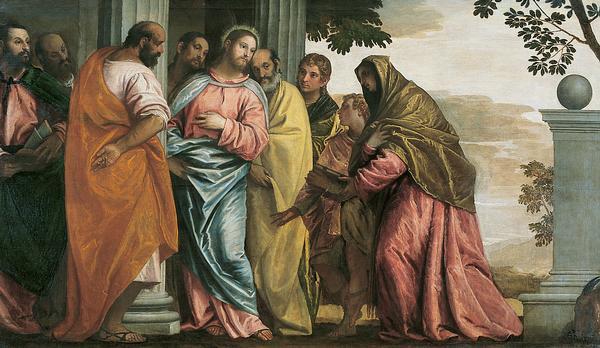
Picture by Paolo Veronese.
21 August 2016
Michal: The Love is Gone
"Now as the ark of the LORD came into the City of David, Michal, Saul’s daughter, looked through a window and saw King David leaping and whirling before the LORD; and she despised him in her heart. (...) Then David returned to bless his household. And Michal the daughter of Saul came out to meet David, and said, 'How glorious was the king of Israel today, uncovering himself today in the eyes of the maids of his servants, as one of the base fellows shamelessly uncovers himself!'" (2. Samuel 6:16+20)
The world has lost
its rose-tinted hue.
The butterflies
have flown away.
What I once felt for you
has gone.
I don't know where.
Now
when I look at you
I feel only resentment
and pain;
regret
at having been so stupid
to fall in love with you.
You were my hero,
you were my hope.
I gave everything for you.
I lied for you,
I would have died for you.
All these years
I waited for you,
I pined for you,
I wanted to stay true to you -
But what did you give to me?
I thought
that you loved me too,
as strongly and dearly
as I loved you -
was it asking too much
to expect you to be
faithful to only one woman - me?
The world has lost
its rose-tinted hue -
I see you now
as you truly are,
and can't believe
I ever loved
this womanising man
for whom I'm just a trophy,
something you paid for
to add to your collection,
one among many -
you disgust me.
I look at you
and all the love is gone.
I look at you
and despise you.
____________________________________________________
[23. / 24. November 2012] - one of the very old ones
Michal was David's first wife. She was in love with him (1 Sam 18:20); he "won" her from Saul by killing 200 Philistines and bringing back their foreskins (ew). When Saul wanted to kill David, she saved him. (1 Sam 19) Later when David was in hiding, Saul married her off to someone else (1 Sam 25:44). Once David became king, he fetched her back (2 Sam 3).
I've noticed people often view Michal negatively. Probably mainly because of her reaction in 2 Sam 6:16-23 to David's dancing in front of the Ark of the Covenant:
"Now as the ark of the LORD came into the City of David, Michal, Saul’s daughter, looked through a window and saw King David leaping and whirling before the LORD; and she despised him in her heart. (...) Then David returned to bless his household. And Michal the daughter of Saul came out to meet David, and said, 'How glorious was the king of Israel today, uncovering himself today in the eyes of the maids of his servants, as one of the base fellows shamelessly uncovers himself!'" (2. Sam 6:16+20)
But isn't her reaction understandable? She was David's first wife. He had how many other wives after that - and then danced around (half?)naked in full view of everyone. Sure, he said it was for the Lord (v.21) - but after all the womanising she'd seen I think it's understandable that she did not accept that for an answer.
So this poem is basically about "falling out of love". At first we see only this perfect image of our partner - and with time, that perfect image gives way to who he really is. Question is: do I like it, can I forgive him, can I live with it? Michal's answer was: no.
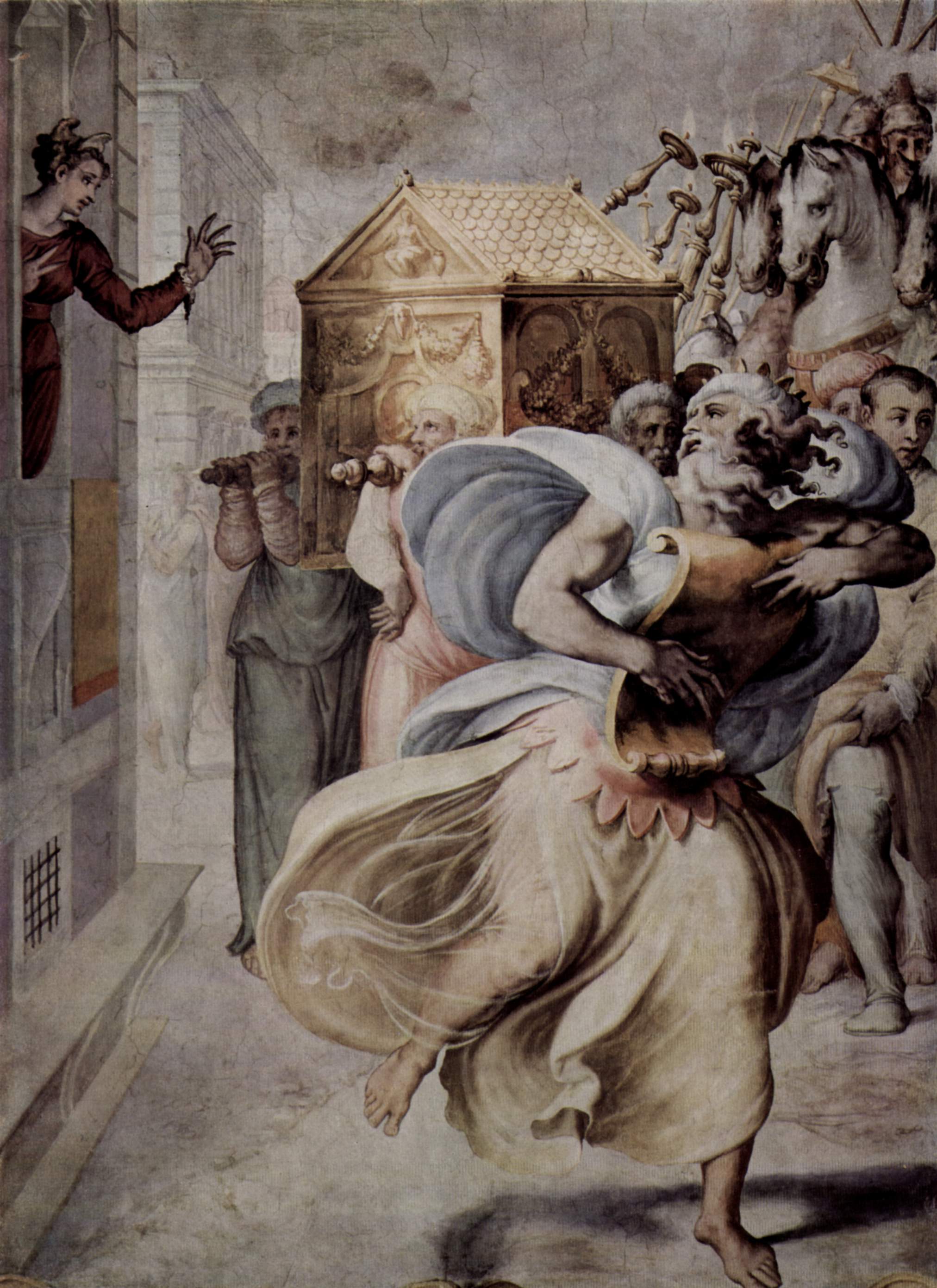
Picture by Francesco Salviati
The world has lostits rose-tinted hue.
The butterflies
have flown away.
What I once felt for you
has gone.
I don't know where.
Now
when I look at you
I feel only resentment
and pain;
regret
at having been so stupid
to fall in love with you.
You were my hero,
you were my hope.
I gave everything for you.
I lied for you,
I would have died for you.
All these years
I waited for you,
I pined for you,
I wanted to stay true to you -
But what did you give to me?
I thought
that you loved me too,
as strongly and dearly
as I loved you -
was it asking too much
to expect you to be
faithful to only one woman - me?
The world has lost
its rose-tinted hue -
I see you now
as you truly are,
and can't believe
I ever loved
this womanising man
for whom I'm just a trophy,
something you paid for
to add to your collection,
one among many -
you disgust me.
I look at you
and all the love is gone.
I look at you
and despise you.
____________________________________________________
[23. / 24. November 2012] - one of the very old ones
Michal was David's first wife. She was in love with him (1 Sam 18:20); he "won" her from Saul by killing 200 Philistines and bringing back their foreskins (ew). When Saul wanted to kill David, she saved him. (1 Sam 19) Later when David was in hiding, Saul married her off to someone else (1 Sam 25:44). Once David became king, he fetched her back (2 Sam 3).
I've noticed people often view Michal negatively. Probably mainly because of her reaction in 2 Sam 6:16-23 to David's dancing in front of the Ark of the Covenant:
"Now as the ark of the LORD came into the City of David, Michal, Saul’s daughter, looked through a window and saw King David leaping and whirling before the LORD; and she despised him in her heart. (...) Then David returned to bless his household. And Michal the daughter of Saul came out to meet David, and said, 'How glorious was the king of Israel today, uncovering himself today in the eyes of the maids of his servants, as one of the base fellows shamelessly uncovers himself!'" (2. Sam 6:16+20)
But isn't her reaction understandable? She was David's first wife. He had how many other wives after that - and then danced around (half?)naked in full view of everyone. Sure, he said it was for the Lord (v.21) - but after all the womanising she'd seen I think it's understandable that she did not accept that for an answer.
So this poem is basically about "falling out of love". At first we see only this perfect image of our partner - and with time, that perfect image gives way to who he really is. Question is: do I like it, can I forgive him, can I live with it? Michal's answer was: no.
Picture by Francesco Salviati
20 August 2016
The Poor Widow's Offering: Generous
Mark 12:41-44Generous God,
you have given me
all that I need -
not very much,
but it is enough.
Open my eyes
to see all you've provided -
more than possessions,
a wealth more than wealth.
I want to give thanks
for the riches you've given:
the breath in my body,
enough food to eat,
my beautiful children,
the knowledge of You.
Mysterious God,
it is true
my cup was not always sweet,
and much bitterness
has stained my years.
And I've cried and complained,
not understood your ways -
except this: you are love
and you understand my pain.
I have swallowed the dregs
of loss and poverty,
of loneliness
and a mother's worry.
Daily I struggle,
yet stubbornly believe,
though you lead me rocky ways,
that you care for me.
Bountiful God,
all I have is yours -
that's so easy to say,
yet so hard to do.
Give me the peace
to share generously -
just like You.
Let me live out the love
you have given to me,
with no fear of tomorrow,
with no fear of suffering.
Let me open my hand
knowing that yours
is always open to me.
You have covered my needs -
how can I not seek
to cover those
of others I meet?
Loving God,
I know my gift is small,
disappearingly small
beside the greater gifts
greater people can bring.
It shames me
as they give me looks
as though I were stingy,
whisper of "impertinence"
or say, "The more you give
the more you shall receive."
You see my gift,
worthless in their eyes -
worthy in yours,
for you see my heart
and what this means to me.
So here I bring
everything,
though to them it's nothing,
and I won't be ashamed,
for it's not their approval I seek.
Take my silver and my gold,
not a mite would I withhold -
and if I have no silver nor gold,
take my mite - take them both.
___________________________________________________
[20. August 2016]
Italicised bit at the end is from Frances Ridley Havergal's hymn "Take my life and let it be" (an old favourite of mine).
Parts of this poem were inspired directly by yesterday's "3 minute retreat" from Loyola Press - highly recommended; it's an app too, try it out (Apple / Android)!
A widow gives two small coins as an offering in the temple (the temple offering would probably have been for supporting the Levites / priests working there - they had no land to farm so were dependent upon tithes etc - and upkeep of the temple). Others give a lot more. Jesus, who is watching, says that the widow in fact gave more than those who brought big gifts, because she gave all she had while the wealthy gave just a portion. I believe she is a perfect example of what Jesus taught about giving in Mt 6. She received no admiration for her gift - and yet it was a big move for her (and God saw it).
There's a lot of (false) preachers pushing for congregations to give money. A huge deal is made out of tithing - often with the tagline "give and you will receive". Giving is good - that "tagline" is dangerous. Because if you give in order to get back, you are in fact acting like an idol-worshipper. A principle I have watched often when I grew up in Taiwan was "give and get back". In traditional religion, you give sacrifices so that the god will give his services to you. It's basically a "business contract". I believe this is the "natural" human way of living religion. But Jesus has taught us a new way. Which means giving is no longer part of a "business contract" with God, where God is "indebted" to give us something back, and where God's blessing is in proportion to the size of our gifts. We are in a relationship with God, welcomed to freely give out of love, not because we "must" and not because we "get something" out of it.
And that's how I view this widow's actions here. She gave out of the generosity of her heart (and possibly out of the experience of God's generosity despite her hardships), gave what she had (trusting in God's provision), and was brave enough to give what must have looked pretty measly to onlookers. Generosity is not giving with the hope of getting something back... it's also not something only possible if you have a lot to give. Generosity (not only when it comes to money, but also e.g. in treatment of others, giving time, giving kindness) takes courage - the trust that we are not going to "lose out" by giving to others.
I have discussions with my boyfriend about tithing sometimes (because he doesn't really believe in it, or the way some people do it). If we're tithing because "it's what one does", or because we "ought to", or because we think we'll "get something back", then I believe we are not tithing in the right way. The size of our gifts doesn't matter, the frequency of our gifts doesn't matter, what matters is our attitude. What matters is our relationship with God. So I believe ultimately it's better not to tithe regularly (but e.g. give randomly when we see a need) than to tithe out of a wrong attitude of legalism (just keeping the rules) or because we want to look good to others.
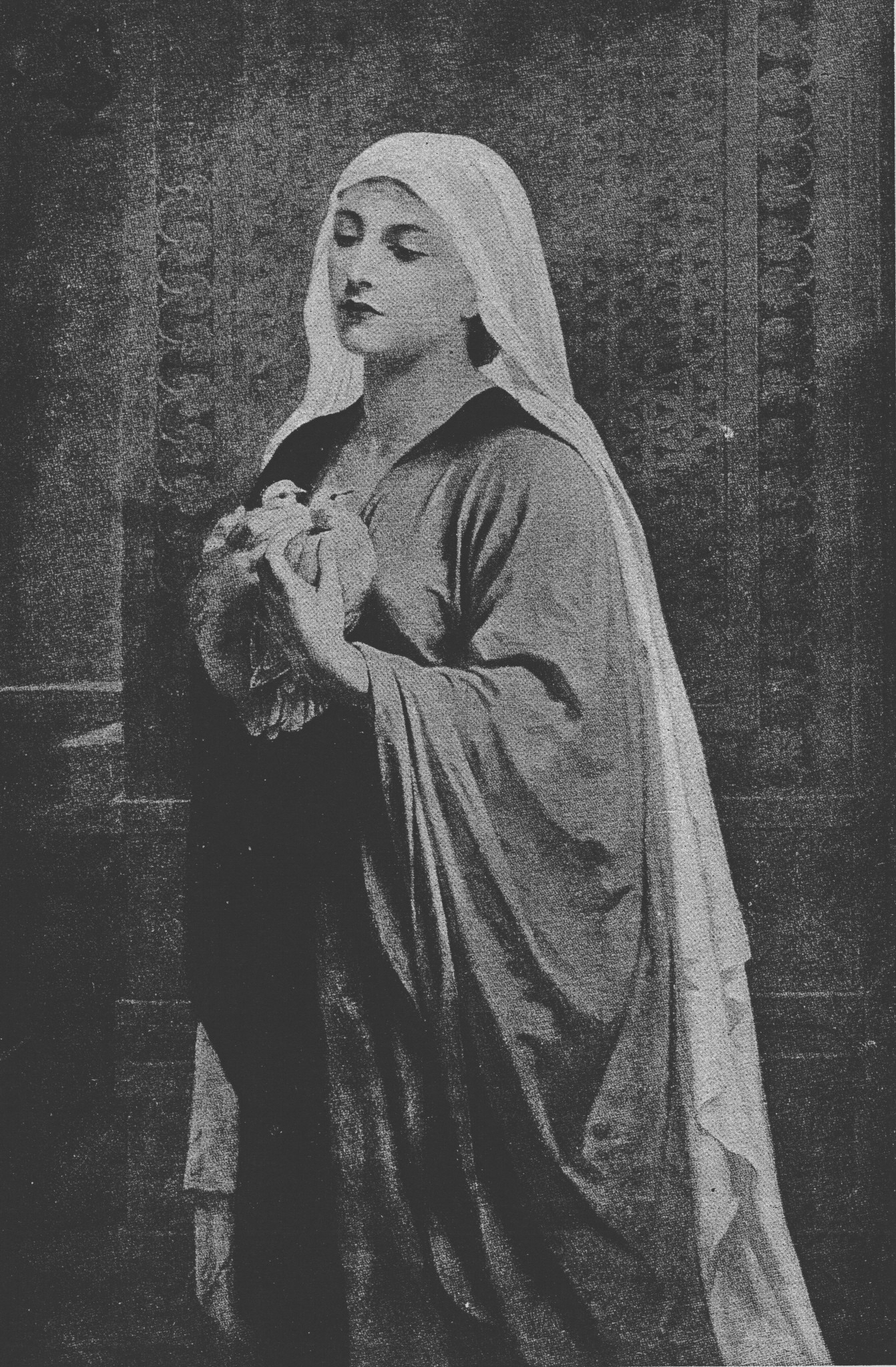
Picture is by Frederick Goodall.
Subscribe to:
Posts (Atom)