27 July 2016

Abishag: Pity is not Love

[Warning: mild sexual content]

1. Kings 1:1-4

Here I lie,
afraid, ashamed,
in the arms of a man
who can no more;
trying to give you
what you cannot take,
caught in an embrace
that cannot satisfy.

Ashamed of my thoughts.
Ashamed of my feelings.
Ashamed that I recoil
at the sight of your body.
Ashamed that I flinch
at the feel of your touch.
Ashamed of my daydreams
of younger men,
the temptation to seek
my fulfillment elsewhere.

I want to be a good wife,
to make you happy -
but it's trapping me
in unhappiness.
It hurts to watch you
frustrated with yourself,
trying and failing
to be a husband again.

It fills me with revulsion,
it fills me with pity -
how I wish I could respect you
and love you instead!
But pity is not love,
and it can't help me endure.
Pity is not enough
to keep me true to you.

How I wish
they could just let you be old
and live out your days
calm and at peace.
How I wish
you must not bear this pressure
of being a king,
a potent man to the last.
How I wish
we could just admit weakness,
that failure must not be a shame.
How I wish
we could just be friends,
talking, playing games,
not trying every night
to do what we cannot.

Here I lie,
afraid, ashamed,
in the arms of this man.
Pity is not love.

__________________________________________________

[25. July 2016 above the South China Sea]

I've read a few interpretations about Abishag (including a feminist one I rather liked according to which Abishag had some power in government). I based this poem mainly on a quote from the Interpreter's Bible which I found on Wikipedia:
[T]he Hebrews...believed that the fertility of the soil and the general prosperity of the people were bound up with the fertility of the king. David by this time was old and decrepit and his sexual vigor is called into question. Attempts are made to remedy the situation. The first cure is to heap clothes upon his bed in order to secure such physical heat as might render him capable. When this fails a search is made for the most beautiful woman in the land. Great emphasis is placed upon her [Abishag's] charms. The LXX supports this by translating in vs. 2, "and let her excite him and lie with him." The fact that the king did not have intercourse with her is decisive in the story. If David was impotent he could no longer be king.
I also felt (after having read the story of someone who married an old man she was caring for out of pity, and then felt guilty for feeling disgusted, unsatisfied or attracted to other men) that I wanted to write about this situation of being a young woman with many opportunities (Abishag was said to be very beautiful), in an unhappy relationship with an older man.

What I realised while writing (and it comes out in the second-to-last stanza, "How I wish...") was that the attempt to keep David potent, and the belief that he could only be a proper king if he was, is once again the kind of human thinking that won't allow for weakness - a way of thinking that is not (from my understanding of the Bible) God's way.

In an ethics class I read a book by Wolfgang Huber (German bishop and ethicist) in which he differentiates between the "olympic man" and the "Jesus man". Human thinking wants the "olympic man", the athlete, strong and able, healthy, successful. This is what David's people were going for when they tried to keep him sexually fit to the last. You're not allowed to get old and decrepit and weak - and if you do, in today's Western culture, you all too often get pushed out of society e.g. into an old-age home. Contrast to that the "Jesus man": Jesus on the cross, weak and suffering. Jesus on the cross means that we are allowed to be weak, that there is nothing wrong about not being completely fit, active and capable of everything. God allows us to be weak and to fail, it is not "bad" or sinful to fail. In fact Jesus' failure on the cross was His victory!

So we ought to change our thinking... David's and Abishag's relationship could have been so different, if he had been allowed to be old and impotent. And I believe this also says something about how men need to be liberated and emancipated too from wrong ideas about manhood (an issue which - some of you might be surprised - feminism has started touching upon) which focus too much on strength and power. There is nothing "unmanly" about weakness - and thinking it is will only cause difficulty when, like David, you are stuck in a position where you are weak and there is no way out. We need to accept ourselves instead of trying to fit some human standard. Because that human standard is not God's standard...

Picture by Pedro Americo

14 July 2016

Gomer: Looking for Love

Hosea 2:2-25


Looking for love
in all the wrong places -
feels like I'm wandering
blind through a desert,
chasing mirages,
consumed by my thirst -
never satisfied.

I once had love
but I did not see it -
didn't recognise what I had.
Instead I set to wandering
towards the greener grass
only to find a desert
on the other side.

So burn me now,
my cuckold husband:
destroy me with your love
that I've turned into hate!
You loved me with a fire -
now it's a flame of rage.
So burn me with the anger
of your jealous revenge!

I once had love
and I threw it away,
looking for love
in all the wrong places.
Why should you accept me
into your arms again?
Why should you lead me
back out of this wasteland?
I know the power
of a man's jealousy -
I cannot expect you to love me again.

So what is this love
greater than jealousy?
What is this love
that overcomes revenge?
What is this love
that comes looking for me
out in this void that I lost myself in?
What is this love
that chases after me
drawing me back
into its arms again?

This is the love
I was looking for:
the love I had all along.
This is the love
I was looking for:
I see you - and I am complete.

______________________________________________________________

[14. July 2016]

"And I will take you for my wife forever; I will take you for my wife in righteousness and in justice, in steadfast love, and in mercy. I will take you for my wife in faithfulness; and you shall know the Lord." (Hosea 2:19-20)

Gomer is the wife of Hosea - an unfaithful wife. At the same time, she is a parable for the unfaithful people of Israel, who have turned away from God to idols, and away from the life God meant for them to a life that harms and oppresses others. The book of Hosea is full of calls back to the relationship with God and to a life of mercy and justice towards others (e.g. Hosea 12:7).

I find interesting how the book of Hosea portrays God's reaction to His people's sin to the reaction of a jealous husband to the wife who was unfaithful to him. Jealousy can be very powerful... I guess the greater the love, the greater the hurt when you find out you've been cheated on. The book of Hosea describes strong feelings of anger. And yet again and again it shows: God is not man; He won't be controlled by anger and jealousy, but goes beyond righteous anger to grace and mercy, giving new chances again and again. God overcomes the pain we cause Him, and invites us back where a human husband probably would have balked (and had a right to - the Bible allows and in places even encourages divorce from an unfaithful partner).

God does feel righteous anger and jealousy - because He loves us, and our unfaithfulness causes Him pain, and seeing us hurt ourselves in our fruitless search for love elsewhere pains Him too. But God is not fixated on anger. He wants to draw us back. That is why He has spoken again and again through the prophets: because He never forsakes us, but wants to win us back to Him again. It's up to us to recognise this love and return to Him. The doors are open!

24 May 2016

Job's Sisters: The Abyss


"Then there came to him all his brothers and sisters and all who had known him before, and they ate bread with him in his house; they showed him sympathy and comforted him for all the evil that the Lord had brought upon him; and each of them gave him a piece of money and a gold ring." (Job 42:11)

Standing
before this abyss of pain.
What can I do?
The words that I speak
are but pebbles that fall
down
down
echoing
into its depths,
swallowed,
useless in its bowels.

Helpless I face this yawning chasm
that consumes and destroys
all attempts at consolation,
my oh-so-spiritual explanations,
every piece of well-meant advice.

The words that I speak
are but pebbles in my hand -
but pebbles can wound and maim and break
an already broken heart.

Standing
before this abyss of pain.
Am I afraid
that if I silently sit
and listen to your tortured tale
it might suck me down
down
down
into the mire of despair
alongside you?
Am I afraid
of sharing your hurt,
of bearing with you this agony,
of wounding my heart
for the sake of healing yours?

What can I do
but stand here by the abyss,
stand here by you?
What can I do
but silently hold you
and listen to your pain
until my tears fall
together with yours?
What can I do
but pour compassion and love
into the bottomless pit
until it is filled?

________________________________________________________________

[23. - 24. May 2016]

I only discovered Job's sisters in Job 42:11 "by accident" a few months ago. You see, there's a lot of women in the Bible who keep jumping at me from around corners just when I thought I was getting close to finishing with the challenge...

Job suffered a whole mass of misfortunes, one after the other, losing all of his possessions, his children and even his health within one day. His friends came to him and sat with him in silence in the beginning - then began trying to explain, to find reasons, to find something, anything sinful in Job's past to somehow explain why God would let something so terrible happen to him. The whole book of Job is basically about these discussions.

I think all too often we Christians act like Job's friends. We look for explanations, or try to give good spiritual advice (I do this too). Or if someone starts lamenting like Job, actually really fighting with God and even telling God off, we quickly try to correct them (well, I do). But does that really help them? God ends up telling off Job's friends. Job was just (even while yelling and complaining all the time), his friends, on the other hand, were in the wrong. Maybe they should have kept quiet, sitting beside Job in his suffering as they did at the beginning.

Job's sisters show up at the very end, after Job gets "rehabilitated" with God. They're at the start of his upward curve. There's not much about them, so writing this I decided to focus on the theme of comforting (since it says that's what they did, along with financial support that probably helped Job get going again).

I often find myself lost for words when I hear stories of suffering. Anything I could say feels meaningless. I know that this isn't always the case, that sometimes people need words. But I find that if I open my mouth too quickly, often the kind of things that come out are not what the person I'm speaking to really needs. Words can wound, whether on purpose or not, and sometimes our attempted "words of comfort" can cause just the reverse of what we want them to. I believe that the most important thing in supporting, comforting and counselling someone is to listen, to give them room to talk. To show empathy. This means making ourselves vulnerable, though - letting what we hear get to us instead of hiding behind advice and correct theology etc.

I think we need to be slower to words and explanations and advice, and quick to compassion in the sense of com-passion / Mit-leid, "suffering with".

Picture by William Blake.

03 May 2016

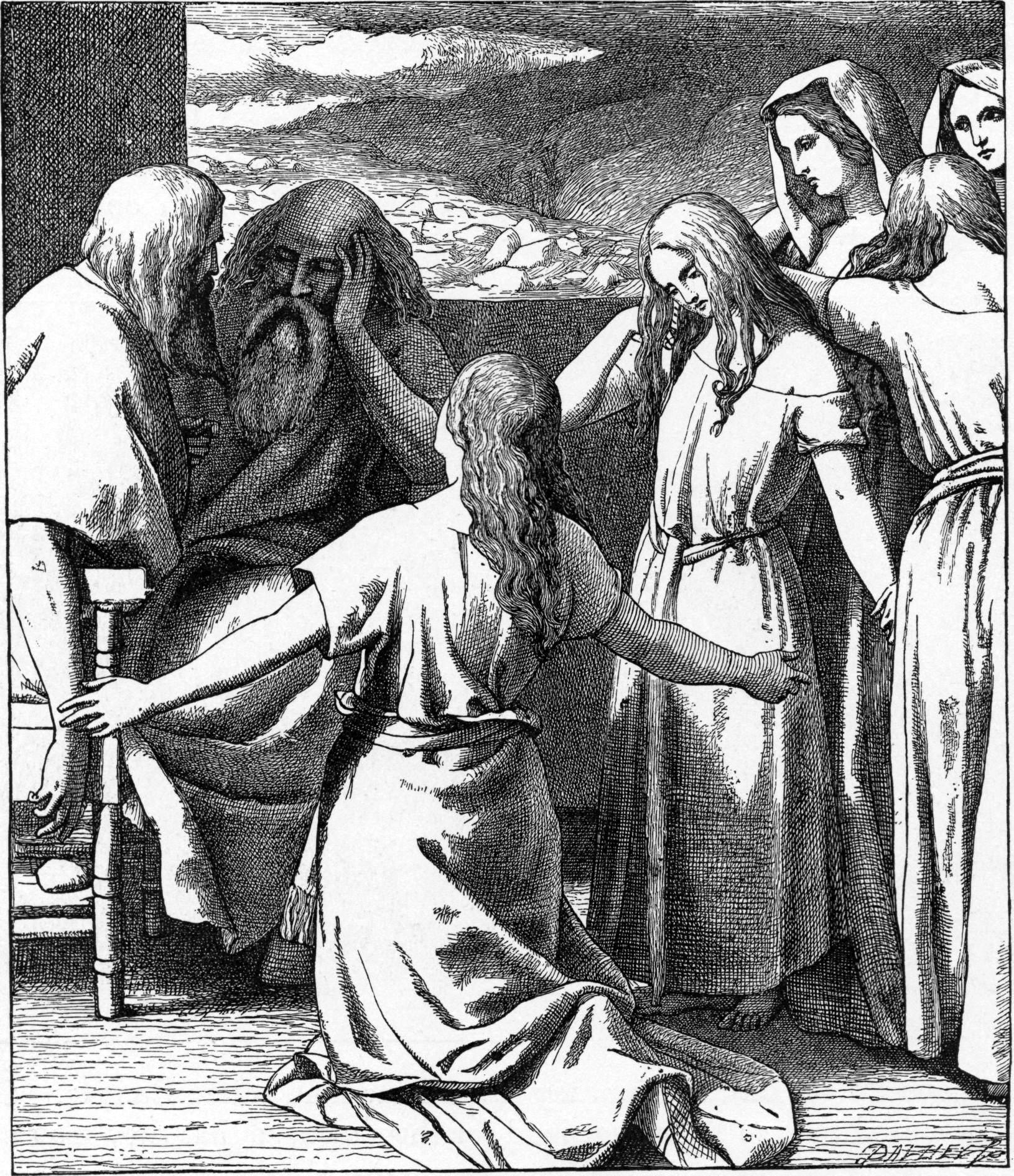
Zelophehad's Daughters: What Makes Us Stay

Numbers 27:1-11

This is what makes us girls:
always coming second
because they put boys first;
shackled to men,
our fate is bound to theirs -
we pay for what we cannot help.

This is what makes us girls:
always losing double
just because of our birth.
Now our father's gone,
our fate is bound to his -
left destitute, we'll lose everything.

Is this what makes us girls?
Must we remain victims,
and take this lying down?
No - we won't cry about it
but do something about it,
for we are bound to God
who sees everything.

This is what makes us stay:
knowing our God
created us the same;
trusting He's above
this culture we are in,
not preferring boys,
not preferring girls
but caring for our needs
and giving us our right.


____________________________________________________________

[7. June 2013 / edited 3. May 2016]

Zelophehad, an Israelite in the exodus before they reached the promised land, had five daughters. He died. Because women couldn't inherit, this would basically leave them with nothing (hence the "losing double": they lost their father and at the same time were bound to lose all they had). But they went to Moses and asked in the presence of God to be allowed to inherit. And this was granted to them.

The last part ("This is what makes us stay") was inspired by the conference on women's contribution to religions I went to recently (June 2013). One of the speakers started the conference with the question: "Why do women choose to stay in a system which oppresses them?" In many religions (we looked at Christianity, Judaism, Islam and New Religious Movements) women are, let's admit it, restricted a bit. For instance, in some of my churches I would not be allowed to preach or be ordained (though this appears to be changing).

Why do we stay? The answer I got through writing this poem was: God is not a patriarchalist; He created both men and women in His image so in His eyes, we have the same worth. In the end it doesn't matter what society / culture thinks and says, but what God says. In my opinion, if read in context, the Bible is way less oppressive of women than certain churches. The Bible is for equality, but the fallen world (culture) has created a false hierarchy.

Picture by Charles Foster.

And yes I'll admit that I was thinking of the Lana del Rey song "This Is What Makes Us Girls" while writing this. I was thinking there's more to being a woman than what the song portrays, and considering the kinds of things that "make us girls". Then I thought of Zelophehad's daughters and - voilà.

30 April 2016

Bathsheba: O Child


2. Samuel 11:1-12:25

It cannot be true.
It cannot be real.
This is the end
of everything.
Gone my plans,
gone my future,
gone my marriage,
gone my life.

O child,
I wish I could accept you,
I wish I could love you
as a mother should,
not feel this horror
at your presence in me.
O child,
I wish I could rejoice
as a mother would
if things were as they should
- but they are not.

Sick with fear
as my future slips away,
as my life slowly crumbles
before my eyes,
as another blow
follows the one already dealt.

Was it not enough
to be taken by force
by a man I could not fight?
Was it not enough
to bear the pain and misery?
Must I now also bear his child
and the penalty of death
for a crime I never wanted to commit?

O child,
I wish I could give you
a better home,
a loving family,
complete, not torn,
not ruined by greed, by lust, by rape.
O child,
I wish I could bring you
into a better world
where things are as they should
- but they are not.

Soon they will see.
Soon they will know.
What should be joy
will be a brandmark of shame,
and I will hear derision
in place of congratulation.
(Why?)

And you,
o child,
will pay the price;
the brunt of it all
will fall upon you:
helpless and small,
pure and innocent,
sacrifice to another's sin
- and here I am,
sick with fear,
unable to save you,
unable to save myself.

O child,
I wish I could love you,
I wish I could give you
the welcome I should.
Instead
I bear you in fear, in sorrow and shame,
wishing you had never been.

______________________________________________________________

[29. April 2016]

I tried to put myself into Bathsheba's head a bit, imagining what it might have been like for her when she realised she was expecting David's baby. Adultery was punishable by death - and in any case, an unplanned pregnancy at the wrong moment can have huge consequences. The hardest probably being for the child, coming into the world weak and helpless. Even though Bathsheba is often portrayed as a seductress, it is very likely that she had little say in the matter of David wanting to sleep with her. Various biblical scholars suspect what happened there was rape. Which adds another burden to Bathsheba and to her child.

I have been thinking: the reactions to a pregnancy can be vastly different, depending on whether it's a "wanted" pregnancy in "ordered" conditions ("normal" family), or an unexpected, unplanned pregnancy. Especially in those days, Bathsheba's pregnancy would have been a cause of shame and a reason to condemn her to death for adultery. Why is that? The same thing - a new life - can be a reason for joy, a celebrated event, or a source of shame and derision which in some circles can even lead to being ostracised and looked down upon. Isn't that sad?!

I hope we as a church don't make this difference between "legitimate" and "illegitimate" pregnancies in such a way that affected women feel shamed, threatened and looked down upon... because wouldn't that just make it harder for them to accept and love their unborn child? Expecting a child should be something wonderful, not something to be afraid of.
(So on another note: if we want there to be less abortions happening, maybe instead of staging protests we should be more accepting towards such mothers?)

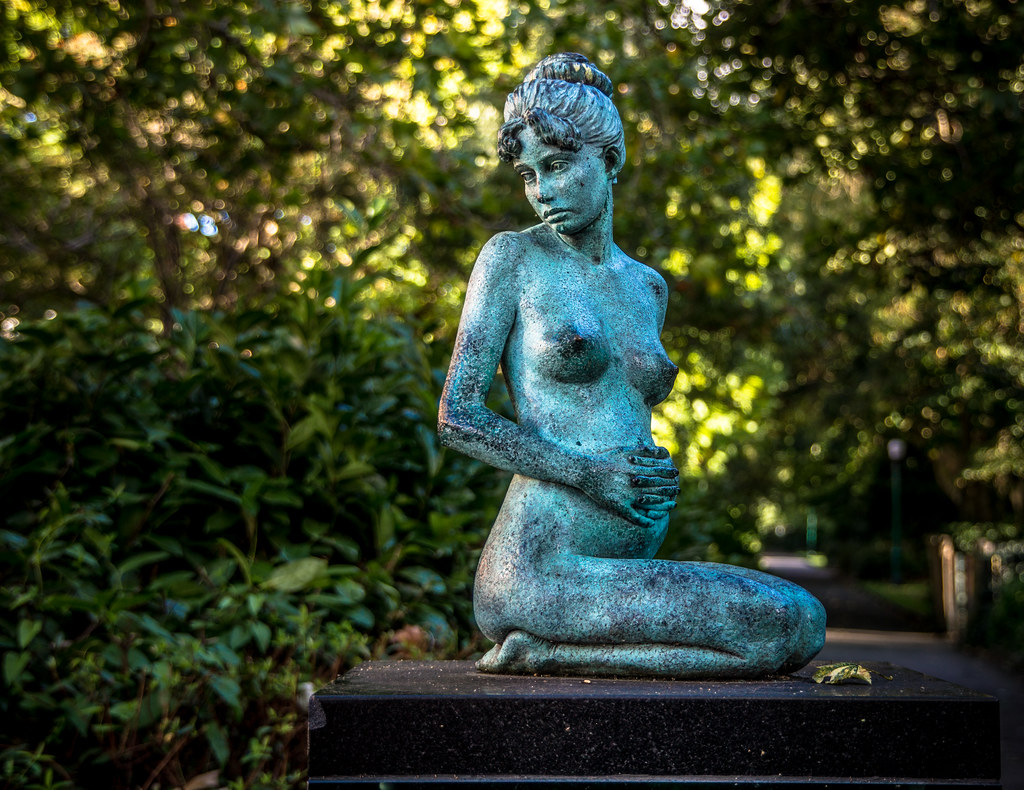
Picture: sculpture by Danny Osborne.

29 April 2016

Zipporah: Costly Love


Exodus 2:15-21 | 4:18-26 | 18:1-9

I will pay the price of love,
giving up my independence,
entrusting my life into your hands
which, not so long ago,
were strangers' hands to me.

I will pay the price of love,
forsaking my security,
following you to a foreign land
pursuing a call I don't yet understand,
leaving behind all I have known.

I will pay the price of love
as you face the ghosts of your past;
I will fight for your faith where you cannot believe,
I will serve your God where you cannot,
I will save your life if I need to -
my bridegroom of blood.

I will pay the price of love,
giving up my peace to bear your burdens,
comforting you in the face of failure,
embracing you when you meet rejection,
rejoicing with you in each victory won.

I will pay the price of love,
following you into uncertainty,
falling with you into the hands of a God
who used to be a strange God to me.

I will pay the price of love,
obeying when you send me from you,
waiting, hoping, wondering, pining
out in the distance away from you.

And all the while
I will reap the benefits
of being yours
and calling you mine.
No matter how high the price I pay,
I receive back hundredfold
and I will never regret
the blood and the tears,
the worries and fears,
the burdens and sighs -
this love is worthwhile.

__________________________________________________________________

[29. April 2016]

To understand everything in this poem you'll have to read the three texts in the link at the top... (ahem... I'm hoping everyone reads the Bible texts too and not just my interpretations!)

Zipporah is mentioned mainly in those three chapters of Exodus... where she meets and gets married to Moses, where he takes her with him to Egypt, and where (at some point) he sends her back to her father (to be reunited again later when the Israelites had crossed the wilderness, Ex 18). I followed that "track" here.

Zipporah had various challenges to face in her marriage to Moses - on the one hand I guess he would have been burdened by his complicated past (close shave with death as a baby, adoption, finding out about his true identity, committing murder, persecution and exile...), on the other hand she became wrapped up in his calling to free the people of Israel from Egypt. We often view Moses as the powerful, confident leader, but when God called him he was not all that confident (e.g. saying God should find a better speaker) - and who was he at home, alone with his wife? With all he was going through - the Pharaoh not yielding, the Israelites doubting him - he probably did not reach home in the brightest of moods and could use some comfort and someone to ease the rejection he was feeling from everyone else.

The middle stanza with the "bridegroom of blood" refers to the (somewhat weird) scene where God wants to kill Moses and Zipporah cuts off her son's foreskin to save his life. I can't say yet how best to interpret that episode, but out of my gut I see it as Zipporah doing what Moses failed to (circumcision of their sons - sign of their belonging to God), stepping in for him in a moment of crisis.

Basically I guess this is about love and marriage not just being simple and easy... there are always challenges (of various kinds) to face, be it finding out your spouse has character weaknesses that start bothering you after a while, be it outside challenges like having to move somewhere for the other's sake (as Zipporah did...), be it sharing burdens, etc. Maybe that's why so many marriages get strained after a while? The question is whether we are willing to pay the price, i.e. not just take and receive, but sacrifice our own freedoms / comforts / wishes too. Taking the bad days along with the good, bearing the burdens along with the victories, is all worthwhile in the end.

Years ago, my Papa once wrote something very wise to me which I share with you here:
"To love someone, you need to think of what is good for the other person, not what is nice for me. That type of life is limited to what I like, what feels good for me. There is too little willingness to sacrifice, which is what builds a relationship. The more we both surrender, the more common space we create between us to establish something new, belonging to us both. What we do not surrender remains just the possession of one of the two."
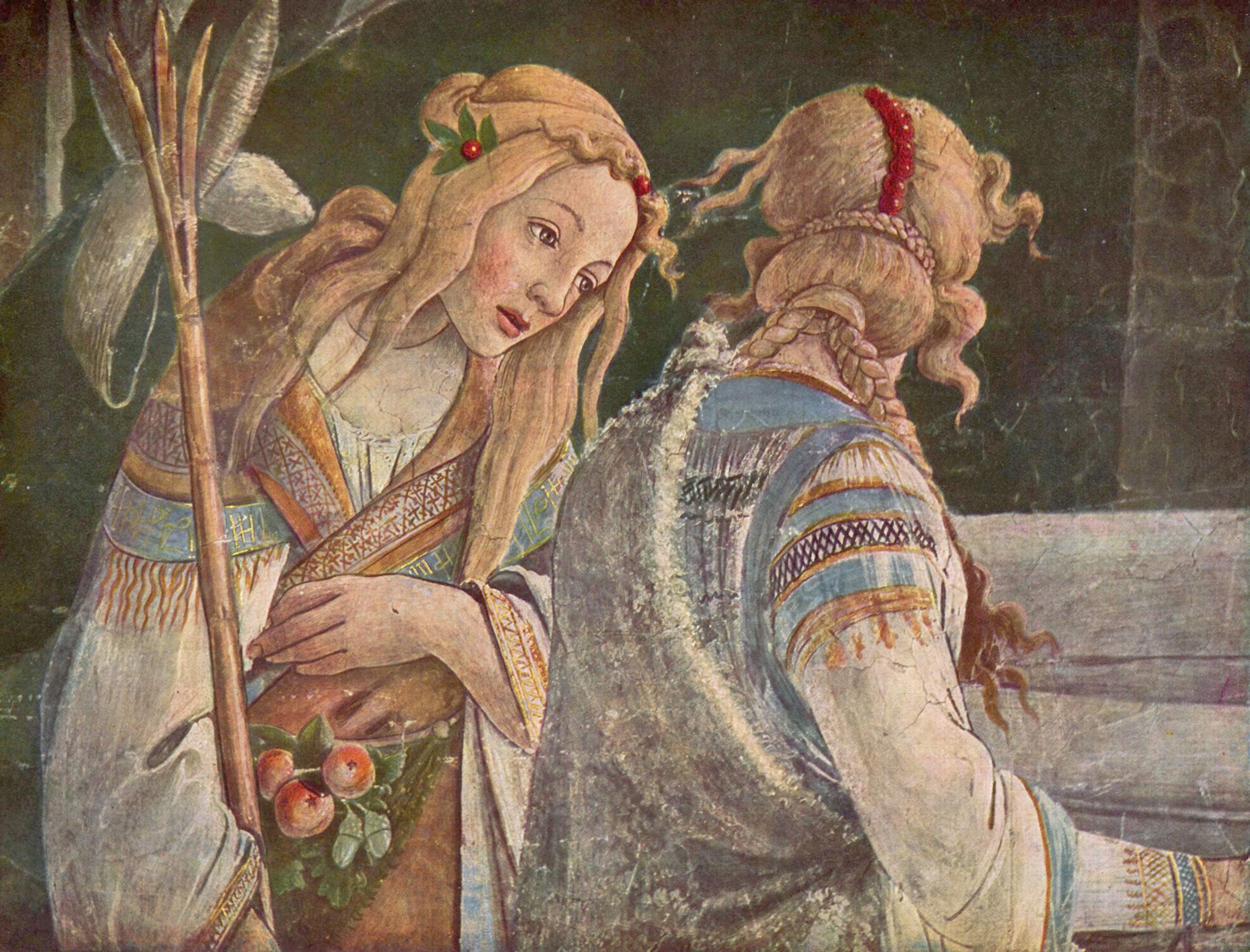
Picture by Sandro Botticelli - detail from "The Trials of Moses"

13 April 2016

Ahinoam: Two-Faced Man

"Now the spirit of the Lord departed from Saul, and an evil spirit from the Lord tormented him." (1. Samuel 16:14)


I hardly know you anymore:
one minute yourself,
the next – a stranger.
An evil spirit is gripping you,
gnawing from the inside,
consuming you within.

You wear two faces –
I hardly know you.
When are you yourself?
When are you It?
Where is the man I fell in love with?
Is there a hope I can have him back?
Or has the evil spirit consumed you,
stolen you from me forever?

I can't bear to watch
as it slowly destroys you,
as you plummet
into a whirlpool of despair,
spiraling down,
                       down,
                                down,
caught in a vicious circle of pain,
going under,
                  under,
                            under
into darkness,
no longer yourself.

I can't bear to watch,
for it slowly destroys me,
poisoning my love
into worry and pain.
I want to be your helper,
surrounding you with love,
but now I only cut myself
on the broken shards of my heart.
I promised I would love you
in sickness and in health,
in good times and in bad,
but...
what if this burden is too heavy,

and bearing it too much?

Come back to me, my love –
wake up from this nightmare,
rise up from this death!
Come back to me, my love –
please,
I want you free again.


______________________________________________________________

[13. April 2016]

Ahinoam is the wife of Saul (1. Samuel 14:50). Saul was the first king of Israel, but lost his right to the kingship. I find Saul a very interesting and complex character. An important thing I learnt from my Old Testament professor is that God did not reject Saul as person, but as king - and Saul's mistake was clinging on to the kingship after God had actually already taken it away from him.

Saul was plagued by an "evil spirit", a kind of depression. David was brought to Saul's court to give him "music therapy"; it did not always succeed in calming him, though, because he still tried to kill David under the evil spirit's influence (1. Sam 18:10-11).

From the perspective of his wife, Saul's condition must have been near unbearable. It is very hard to have to watch someone you love suffer, practically turning into someone else ("two faces"). You feel totally helpless, it can become too much for you to handle. At the same time you feel the responsibility to help (even while failing at it again and again), and your love presses you to do something - but sometimes your help is not accepted, or causes more damage, or pulls you down as well. There's a limit as to how much you can do and how much you should do. It's important to know when the point comes to get professional help. And it's important not to stay alone with this kind of thing, to find someone to talk to and share the burden with.
Poor Ahinoam did not have much more than a music therapist for her husband...

If you are going through a similar situation as Ahinoam, maybe these links might help you...
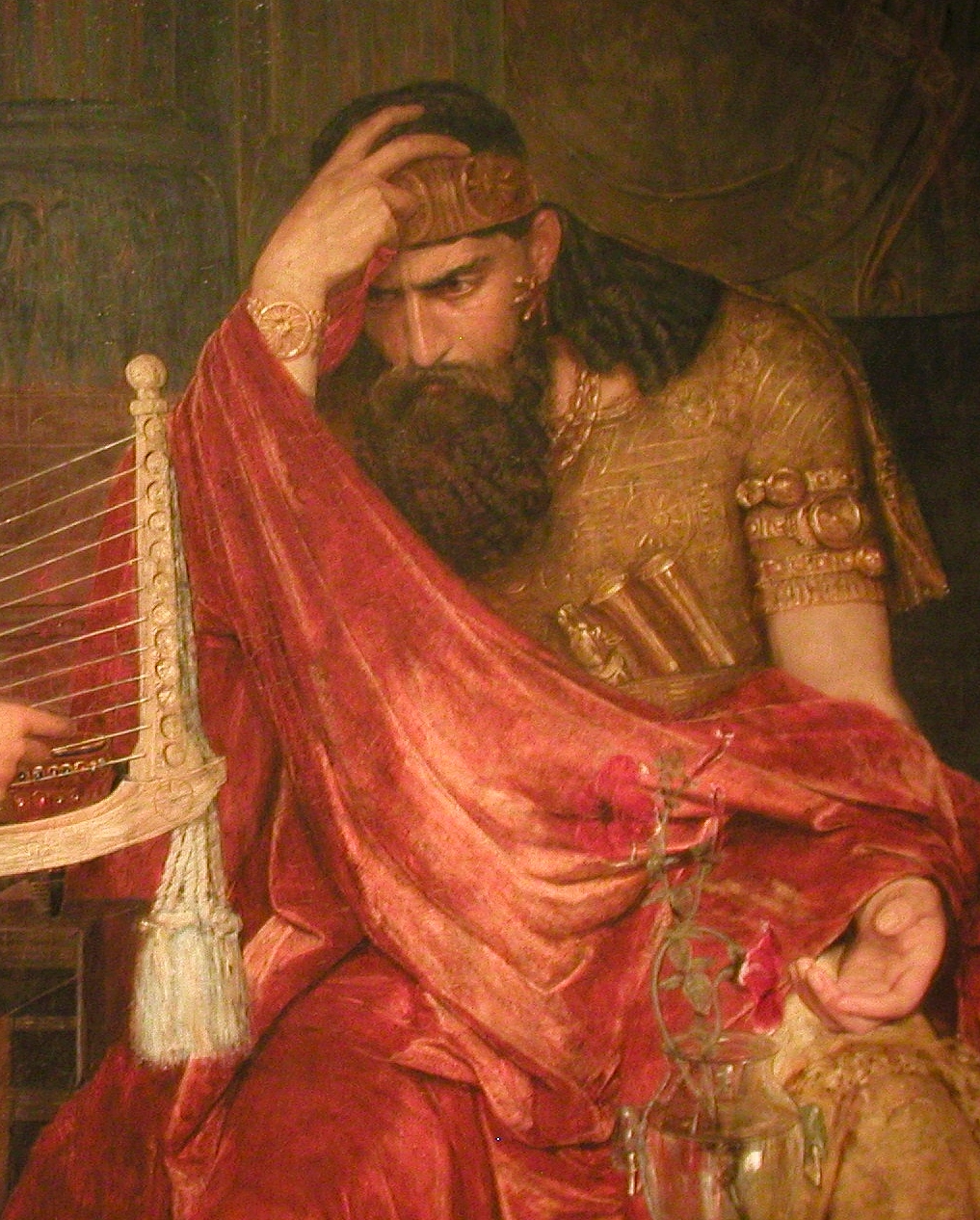
Picture by Ernst Josephson