24 February 2015

Jairus' Daughter: Ex Nihilo

Mark 5:21-43


And,
just when it got interesting,


the story is over,
gone,
and I'm not part of it anymore.
I'll never know how it goes on -
never see the ending.

I guess
none of us do.

So away I drift
into eternal nothingness -
I'm sure it will be boring
to no longer exist.
But I won't be there
to care anymore,
will I?

I'll miss Father.
I'll miss Mother.
I'll miss my friends,
the fun we had,
the fun we could have had.
I'll miss the future
that You've taken away.
But I won't be there
to care anymore,
will I?

I'll miss being alive.
I'll miss the breath You blew into me.
I'll miss being part of Your story -
I'll miss being Yours,
out in no-man's-land,
where You don't come
to breathe on the bones,
because we're not there
for You to care
anymore.

So away I drift,
away, away,
and soon I won't be there.
Some will care - for a while,
until even my memory
disappears.
Will You remember me?

A light
drifts down into my darkness.
A voice
wakes me, lifts me
into life,
like diving up from under water,
like drawing the curtains for light to come in -
Talitha cumi! - Girl, arise!
My story is not over.
It has only begun.

You are the One
who can create Something
even out of Nothing.
You are the One
who will always care -
even when I am not there,
still You will find me
and hold me again.
Because of Your love
I am never forgotten,
nor lost in the darkness of death -
for You come,
You come, Lord,
to breathe life into the ashes
and raise up these bones,
to gather those You love
so we must never leave your side.

Death
will have no victory.
And this story
never ends.

______________________________________________________________

[2. + 24. February 2015]

(Yes, the big "break" at the start is intentional... to emphasise the "interruption")
So probably you noticed how this poem moves from "death as nothingness" to resurrection (breathing life into the ashes) and eternal life (never-ending story). I hope the ending is strong enough to "outweigh" the kind of "heavy" start. ^^; (And that the whole thought process doesn't weird you out...) (I sometimes try to imagine what it would be like if death really meant no longer existing and to me it's the freakiest thing ever.)

I wrote this not long after writing an essay about Old Testament ideas of death and the afterlife (had a class on this topic last semester), so some of those thoughts flowed in  - not necessarily that death means "disappearing" (I find it interesting how that is a relatively recent idea), but that it means falling out of God's reach (which according to the OT is pretty much the worst thing about death). In the Ancient Near East, the idea was generally that once people die, they go into an "Underworld" where they exist in a sort of stupour (and don't particularly like being disturbed), but are separated from God. The OT does, however, already suggest that God does have power over the Underworld too, that He can be present there too (e.g. Ps 139), and that He can take people back out. (You can find a sort of "summary" of this stuff here from my essay notes.) All this became much more pronounced in the New Testament though.

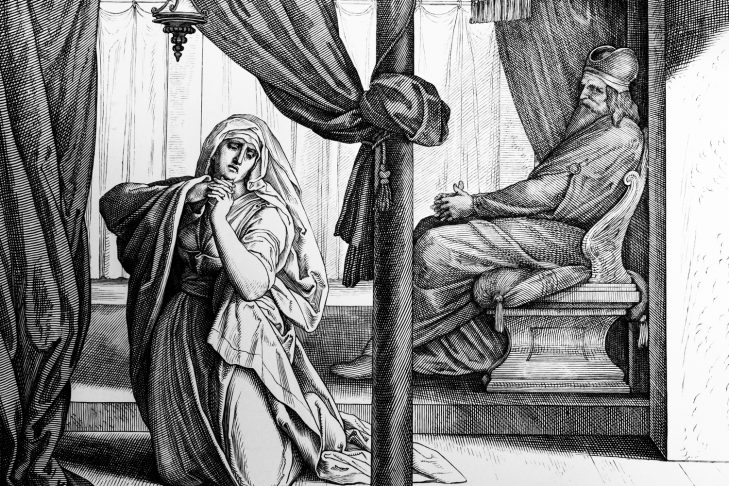
So I tried to depict that move from "death as separation from God" to "God's intervention into death", in the context of this girl's resurrection. We can have eternal life simply because of God's love, and because He wants to give life to us, and keep fellowship with us forever.
"Ex nihilo" = from / out of nothing (usually used to describe creation "out of nothing")
I think resurrection is also in a way "creation out of nothing" - in the sense that God doesn't really need anything to "be left" in order to raise us back to life. And just as God created all that there is, out of nothing, so He can create life anew. :)

Some little references here and there... in case you didn't catch them... The "breath You blew into me" alludes to Gen 2:7 (the creation of Man), the breath into the ashes / bones refers to Ezekiel's vision of God resurrecting the bones.
And the "story" imagery comes from little children hating cliffhangers! ;-) Or at least, I always used to!

Picture by Gabriel Max.

23 December 2014

Bride of Christ: Vows

Revelation 19:6-8 | Jeremiah 31:3 | Isaiah 61:10

Here,
with you,
before the altar,
words fail.

What joys now lie within my grasp -
but oh what fears
that even now
it could all slip away.

For what vow can I make,
what words can I say?
Nothing is enough.
Only this little handful of love,
a paper boat
that capsizes with every wind.
There will be days
when my trust in you
will be smothered by my useless fears,
days when I will have affairs
with worries and doubts
instead of hiding myself
in your strong arms.

I am not good enugh for this -
my days are doomed
to infidelity
and broken vows
will litter my paths
because I am too weak
to hold your hand.

Here,
with you,
before the altar,
I fail.

But
your love does not,
and you reach out to me,
and hold me where I can't hold you.
Not my vow counts,
but yours alone,
sealed with blood -
your grace is enough.

"I have loved you with an everlasting love;
Therefore with lovingkindness I have drawn you."


I will greatly rejoice in the LORD,
My soul shall be joyful in my God;
For He has clothed me with the garments of salvation,
He has covered me with the robe of righteousness,
As a bridegroom decks himself with ornaments,
And as a bride adorns herself with her jewels.

_______________________________________________________________

[January 2011]

Recently God helped me realise how helpful the bridegroom / bride imagery in the Bible can be. I was fretting again as I usually do, and then wrote this, and then noticed: I should imagine what I'd do if I had a problem and I had a husband. I think I'd want to tell my husband everything instead of spooking around the house at night worrying my head off.
Then why do I not in the same way tell Jesus everything and trust that I'm safe with Him???

More poems connected to the "bride of Christ" imagery here.

03 December 2014

Out in the Desert


Isaiah 43:18-19


"Therefore, I will charm her, and bring her into the desert, and speak tenderly to her heart." (Hosea 2:14 CEB)

"He who believes in Me, as the Scripture has said, out of his heart will flow rivers of living water." (John 7:38 NKJV)

You led me
into the desert,
stripped me
of all but you,
emptied me
till I was dry,
parched.

Out in the desert
I found your living water.
Out in the desert,
when all was stripped away,
I learnt that you are all I need,
all I could want.
Jesus.

You led me
into the desert -
the desert land of my heart.
You showed me
my deepest need
was you -
you alone.

Out in the desert
I found your living water.
Out in the desert
you changed my heart,
became in me a fountain
turning this desert
into a garden
flowering for you.

You lead me
into the desert -
your water-bearer,
to heal dry land
and water hopeless cases
and lead them to you.

Out in the desert
your living water
flows out from my heart.
Out in the desert
flowers are growing,
rivers are spreading,
until the desert
becomes
Paradise.

____________________________________________________

[3. December 2014]

Wrote this during a "prayer night" organised by fellow students.

During the opening worship time, a friend read Isaiah 43:18-21 - some of the prayers afterwards expounded on the image of living water, of the desert blooming and becoming green wherever the water touches it, also quoting John 7:38 and bringing in the thought of reaching "dry people" with the living water of Jesus. Later, we had a text meditation on Hosea 2:16 and the desert image just fit so perfectly! As my "response" to the meditation, I put together all those images that had moved me.

Picture by Antal Ligeti.

02 December 2014

Peninnah: Insecure

1 Samuel 1

It slips out of me
constantly:
a comment here,
a snide remark there.
I don't even think -
it just blurts out
and when the regret comes
it's already too late.

Why must I be
so horrible to her?
Why can't I be friendly,
why can't I be nice?
Sometimes when we're together
mending clothes
or cooking stew
I think I almost like her -
but then it comes again
like bile:
a hateful word
I should not have said.

I know,
deep down,
I'm insecure,
afraid of just being
Number Two.
It's as if
if I don't bring her down
she'll bring down me
and he'll love her more -
the one he fell for first.

Who can tame
this dark creature in me,
this insecurity,
this fear of being second-best
to the man that I love?
One of us
must come second
and I don't want it to be me -
but is hurting her
really the right way?

I want his love
so desperately
but nothing can change
his love for her,
and all my attempts
only backfire
as I pace up and down
night after night
plagued by my conscience.
This can't be right.

__________________________________________________________________

[August 2012]

 Peninnah is the "rival" of Hannah (mother of Samuel). She was nasty to Hannah because Hannah had no children.

I had to think a bit about polygamy while writing this one. What does it mean to be Wife Number Two? What does it feel like to have to share one's husband? I'm sure there must be lots of competition and insecurity involved (one can see that with quite a few OT wives, e.g. Sarah and Hagar, Rachel and Leah, Hannah and Peninnah). I can imagine that Peninnah pestered Hannah not so much out of spite as out of insecurity and wanting to prove herself against the first wife.

Polygamy is no longer so common, fortunately. But I think we can still get into similar situations. Marrying a widower or divorcé for instance, and having to deal with the memory of the first wife and all that she could do better. Or being someone's girlfriend and knowing there's still an ex or more out there whom he might just still have feelings for if only she was willing to take him back. Men probably go through such insecurities too, though I guess they react differently. Then there's insecurities about other things, too.

What do we do with our insecurities? Do we, like Peninnah, try to make ourselves feel better by bringing the other person down? Or do we take our insecurity to God, who knows how we feel and can heal all our pain if we just let Him?

27 November 2014

Hannah: The Other Woman


1 Samuel 1:1-2:11

Forgive these tears -
I can't stop them anymore.
My sadness is an ocean
so deep I cannot eat,
so deep I cannot sleep.

Awake at night I hear them
sometimes, in the room next door -
him and her -
the other woman.
It had to be, he said.
And I understand.
But that doesn't help.
You'll always be my first love, he says.
And I believe him.
But that doesn't help either.
For my problem is not jealousy -
my problem is me.

Who is the other woman?
She, or me?
Who of us fulfills her purpose
as woman and as wife?
Who has done her duty -
and who has had to be replaced?
Are her tauntings true?
Sometimes I think they are
and I cry and I cry
and I can't tell him why
because he wouldn't understand.

Am I not more than sons? he says.
Of course he is -
but that doesn't help.
I love you even so, he says.
I know -
but that doesn't help either.
For nothing can help me -
nothing
but YOU.

Lord, you are the island
in my stormy ocean,
the rock I can hold on to,
the only hope for me.
You lift up the weak,
you feed the hungry,
you turn the barren woman
into a mother.
Your power can turn
the world upside-down.

Turn my world upside-down.
Change this sadness into joy,
and my begging into thanks.
Fill my empty rooms
with children's laughter
and give my life purpose again.
But not for me -
no, for your glory,
that your power can be seen
on a small, weak thing like me.
And I will give you all I have,
my greatest treasure,
my most valued gift:
the child
that you are giving me.

________________________________________________________

[January 2012]

I was trying to imagine what it might feel like for Hannah to be one of two wives - especially because she was the one who couldn't have children. In those days, a central part of a woman's life was bearing children. There's still cultures where women mainly exist as "baby machines" (extremely said). I can imagine that Elkanah married Peninnah because Hannah couldn't have children, and sort of "added" her so that he'd have heirs. Anyway, those were my background thoughts to this poem. ^^

I based a lot around Hannah's prayer in 1 Sam 2 - which is very similar to the Magnificat (Mary's prayer) in the Gospel of Luke: God turns the world around, He does things differently from our expectations, He is not like us. To the world, Hannah was a failure: a woman who couldn't fulfill her purpose in life, namely that of bringing children into the world. But God loved her - and He loves all of us too, even if the world does not accept us. God loves broken people - and He can make them whole.

22 November 2014

Queen of Sheba: Drawn by the Light


1 Kings 10:1-13 | Matthew 5:14-16

Nations shall come to your light, and kings to the brightness of your dawn. (Isaiah 60:3)

I saw your light shine from afar,
heard stories of riches,
of wisdom incomparable -
rumours, I thought,
but I could not help
but be drawn,
drawn to your light.

I have come to see
if the rumours are true.
I have come to see
your riches and fame.
I have come to see
if you're as wise as they say.
I have come,
drawn by your light.

And I see that the truth
surpasses wildest rumour,
that the light is even brighter
when seen up close,
and I wish I could take
and keep a little spark,
take it home so it can spread
and envelop the world.

I want to know
more about you,
I want to know
the source of your wisdom,
I want to know
the meaning of this blessing -
I want to know your God.

For He is the one
who put the light in you -
He is the one
who draws all to you -
He is the one
who can light a spark in me -
now I am drawn,
drawn to Him.

__________________________________________________________________

[15. November 2014]

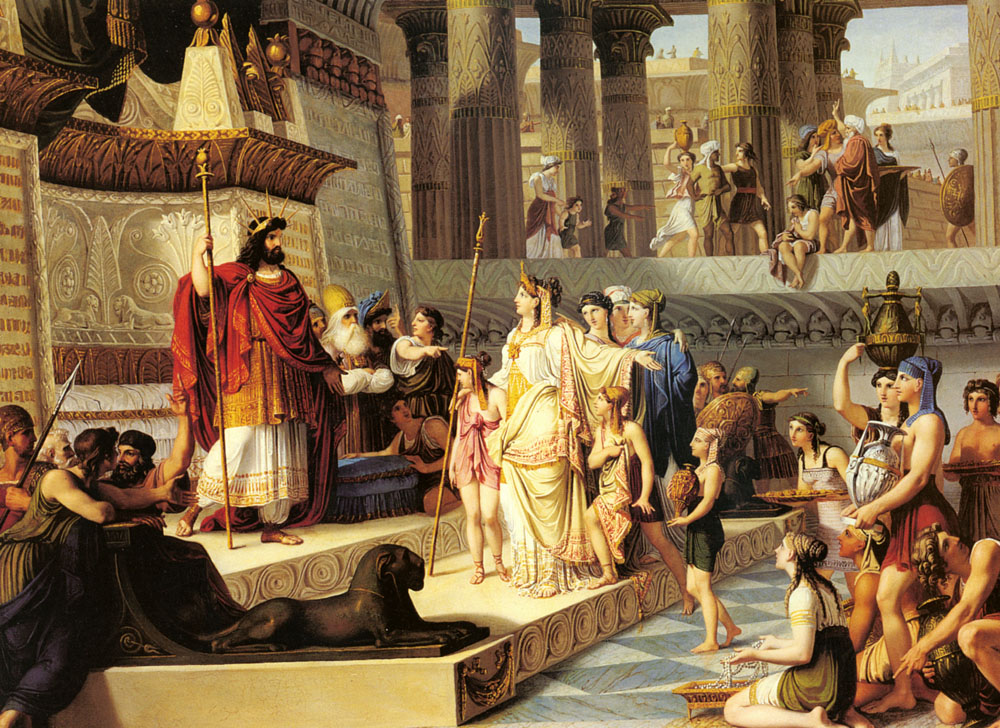
The Queen of Sheba (assumed to be in today's Yemen or Ethiopia) heard about Solomon from far away, and wanted to see for herself whether what she had heard was true. She actually brought riddles and questions to properly "test" Solomon's famed wisdom!! This story made me think of the "light of the world" passage in Mt 5, and also of the "light" passage in Isaiah 60.

When God's light shines in us, when we belong to Him and live according to His will and He lives with us and in us, then other people will (or should) notice something about us. Even without saying anything at all (and maybe even without realising it) we "preach" the Gospel by the way we live, the way God is present in and among us. This can lead to people asking questions, wanting to know why we are different - or, as Peter puts it: wanting to know the reason for the hope in us (1 Peter 3:15).

Being a Christian is not a "private matter"... if we are truly following Jesus, then it will be visible. You can't hide a city that's standing on a hill - even if you try to! Also, people watch us - maybe with a critical eye, maybe with a curious eye. The way we live out our faith can attract people to it. I have heard of families in East Asia, where after one person became a Christian, the rest of the family was at first very sceptical, until they saw how that person's life changed for the better, and that either made them accept his decision, or seek out Christianity themselves!

So let us live out our faith and follow Jesus in such a way that people will ask questions! They might be like the Queen of Sheba and ask riddles and "trick questions" first. ;) But that can lead on to them realising the truth about Jesus, and praising God like the Queen of Sheba did at the end of her visit!


Picture by Giovanni Demin.

15 November 2014

Sisera's Mother: Waiting

Judges 5:28-30


Waiting.
It is late.
Call me silly - but I worry,
I worry as I wait.

I know
you are a grown man now,
independent,
can care for yourself.
I know
your old mother annoys you
when she worries too much,
when she asks too many questions,
when she pressures you
to come home in time
as if you were still a little boy
getting into scrapes,
vulnerable.
I know -
but I worry,
I worry as I wait.

Don't you know
that to me you are still
that vulnerable child,
coming home crying
after a fight?
A great warrior you may be -
but to me you'll always be
my baby.
And so I worry,
I worry as I wait.

Don't worry, they say.
Don't be silly, they say.
You must be celebrating
another victory
(what else could it be?
You never lose.)
with a girl or two -
why shouldn't you?
Why think of
this old mother of yours,
why care about me
in your hour of victory?
Maybe they're right -
I believe they are right -
because I don't want to consider
what it would mean if
they're wrong.

But still I worry,
I worry as I wait.
It is late.
Please
come home.

______________________________________________________________________

[15. November 2014]

Sisera is the guy who was killed with a tent pole, stuck through his head by Jael. (So yes: he's not coming back...) The whole story is in Judges 4-5. Sisera was the commander of the army of a Canaanite king who was oppressing the Israelites during the time of the Judges.

I decided with this poem to focus on the feelings of a mother who stays up late waiting and worried. Young people like me might find it a bit annoying to be asked "Where have you been?" or "When are you coming home?" or "Can't you take the earlier train??" (Frequently Asked Question by my Mamma some years back, haha..) but maybe we need to understand that mothers aren't trying to curb our independence or control our movements or keep us small and dependent (at least not intentionally) - they're simply concerned out of love for their children, they want their children to be safe. Maybe a better way to react to (what seems like "over-the-top") motherly concern is to be thankful and say "I love you too", instead of getting annoyed? :-)

(And thinking of Sisera and his waiting mother: "I know, I'm late... at least I'm not dead with a tent pole through my head...") (DON'T try that kind of comment though!!)

Picture by Joseph Albert Moore.