30 April 2016
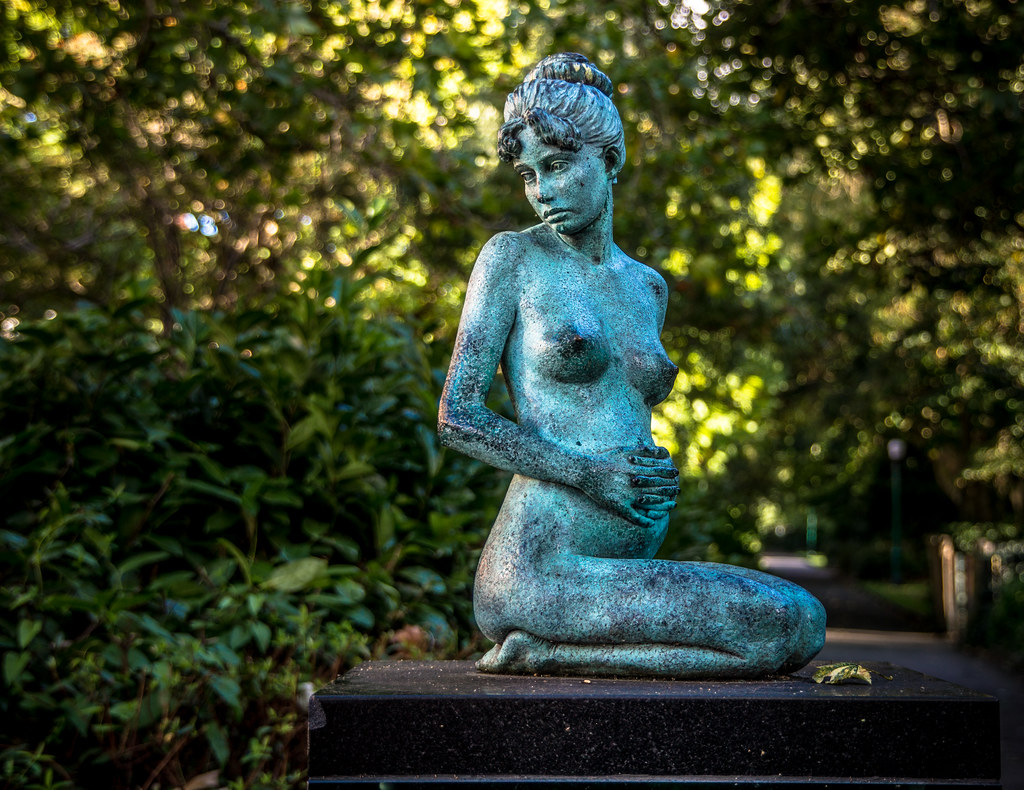
Bathsheba: O Child
2. Samuel 11:1-12:25
It cannot be true.
It cannot be real.
This is the end
of everything.
Gone my plans,
gone my future,
gone my marriage,
gone my life.
O child,
I wish I could accept you,
I wish I could love you
as a mother should,
not feel this horror
at your presence in me.
O child,
I wish I could rejoice
as a mother would
if things were as they should
- but they are not.
Sick with fear
as my future slips away,
as my life slowly crumbles
before my eyes,
as another blow
follows the one already dealt.
Was it not enough
to be taken by force
by a man I could not fight?
Was it not enough
to bear the pain and misery?
Must I now also bear his child
and the penalty of death
for a crime I never wanted to commit?
O child,
I wish I could give you
a better home,
a loving family,
complete, not torn,
not ruined by greed, by lust, by rape.
O child,
I wish I could bring you
into a better world
where things are as they should
- but they are not.
Soon they will see.
Soon they will know.
What should be joy
will be a brandmark of shame,
and I will hear derision
in place of congratulation.
(Why?)
And you,
o child,
will pay the price;
the brunt of it all
will fall upon you:
helpless and small,
pure and innocent,
sacrifice to another's sin
- and here I am,
sick with fear,
unable to save you,
unable to save myself.
O child,
I wish I could love you,
I wish I could give you
the welcome I should.
Instead
I bear you in fear, in sorrow and shame,
wishing you had never been.
______________________________________________________________
[29. April 2016]
I tried to put myself into Bathsheba's head a bit, imagining what it might have been like for her when she realised she was expecting David's baby. Adultery was punishable by death - and in any case, an unplanned pregnancy at the wrong moment can have huge consequences. The hardest probably being for the child, coming into the world weak and helpless. Even though Bathsheba is often portrayed as a seductress, it is very likely that she had little say in the matter of David wanting to sleep with her. Various biblical scholars suspect what happened there was rape. Which adds another burden to Bathsheba and to her child.
I have been thinking: the reactions to a pregnancy can be vastly different, depending on whether it's a "wanted" pregnancy in "ordered" conditions ("normal" family), or an unexpected, unplanned pregnancy. Especially in those days, Bathsheba's pregnancy would have been a cause of shame and a reason to condemn her to death for adultery. Why is that? The same thing - a new life - can be a reason for joy, a celebrated event, or a source of shame and derision which in some circles can even lead to being ostracised and looked down upon. Isn't that sad?!
I hope we as a church don't make this difference between "legitimate" and "illegitimate" pregnancies in such a way that affected women feel shamed, threatened and looked down upon... because wouldn't that just make it harder for them to accept and love their unborn child? Expecting a child should be something wonderful, not something to be afraid of.
(So on another note: if we want there to be less abortions happening, maybe instead of staging protests we should be more accepting towards such mothers?)
Picture: sculpture by Danny Osborne.
29 April 2016
Zipporah: Costly Love
Exodus 2:15-21 | 4:18-26 | 18:1-9
I will pay the price of love,
giving up my independence,
entrusting my life into your hands
which, not so long ago,
were strangers' hands to me.
I will pay the price of love,
forsaking my security,
following you to a foreign land
pursuing a call I don't yet understand,
leaving behind all I have known.
I will pay the price of love
as you face the ghosts of your past;
I will fight for your faith where you cannot believe,
I will serve your God where you cannot,
I will save your life if I need to -
my bridegroom of blood.
I will pay the price of love,
giving up my peace to bear your burdens,
comforting you in the face of failure,
embracing you when you meet rejection,
rejoicing with you in each victory won.
I will pay the price of love,
following you into uncertainty,
falling with you into the hands of a God
who used to be a strange God to me.
I will pay the price of love,
obeying when you send me from you,
waiting, hoping, wondering, pining
out in the distance away from you.
And all the while
I will reap the benefits
of being yours
and calling you mine.
No matter how high the price I pay,
I receive back hundredfold
and I will never regret
the blood and the tears,
the worries and fears,
the burdens and sighs -
this love is worthwhile.
__________________________________________________________________
[29. April 2016]
To understand everything in this poem you'll have to read the three texts in the link at the top... (ahem... I'm hoping everyone reads the Bible texts too and not just my interpretations!)
Zipporah is mentioned mainly in those three chapters of Exodus... where she meets and gets married to Moses, where he takes her with him to Egypt, and where (at some point) he sends her back to her father (to be reunited again later when the Israelites had crossed the wilderness, Ex 18). I followed that "track" here.
Zipporah had various challenges to face in her marriage to Moses - on the one hand I guess he would have been burdened by his complicated past (close shave with death as a baby, adoption, finding out about his true identity, committing murder, persecution and exile...), on the other hand she became wrapped up in his calling to free the people of Israel from Egypt. We often view Moses as the powerful, confident leader, but when God called him he was not all that confident (e.g. saying God should find a better speaker) - and who was he at home, alone with his wife? With all he was going through - the Pharaoh not yielding, the Israelites doubting him - he probably did not reach home in the brightest of moods and could use some comfort and someone to ease the rejection he was feeling from everyone else.
The middle stanza with the "bridegroom of blood" refers to the (somewhat weird) scene where God wants to kill Moses and Zipporah cuts off her son's foreskin to save his life. I can't say yet how best to interpret that episode, but out of my gut I see it as Zipporah doing what Moses failed to (circumcision of their sons - sign of their belonging to God), stepping in for him in a moment of crisis.
Basically I guess this is about love and marriage not just being simple and easy... there are always challenges (of various kinds) to face, be it finding out your spouse has character weaknesses that start bothering you after a while, be it outside challenges like having to move somewhere for the other's sake (as Zipporah did...), be it sharing burdens, etc. Maybe that's why so many marriages get strained after a while? The question is whether we are willing to pay the price, i.e. not just take and receive, but sacrifice our own freedoms / comforts / wishes too. Taking the bad days along with the good, bearing the burdens along with the victories, is all worthwhile in the end.
Years ago, my Papa once wrote something very wise to me which I share with you here:
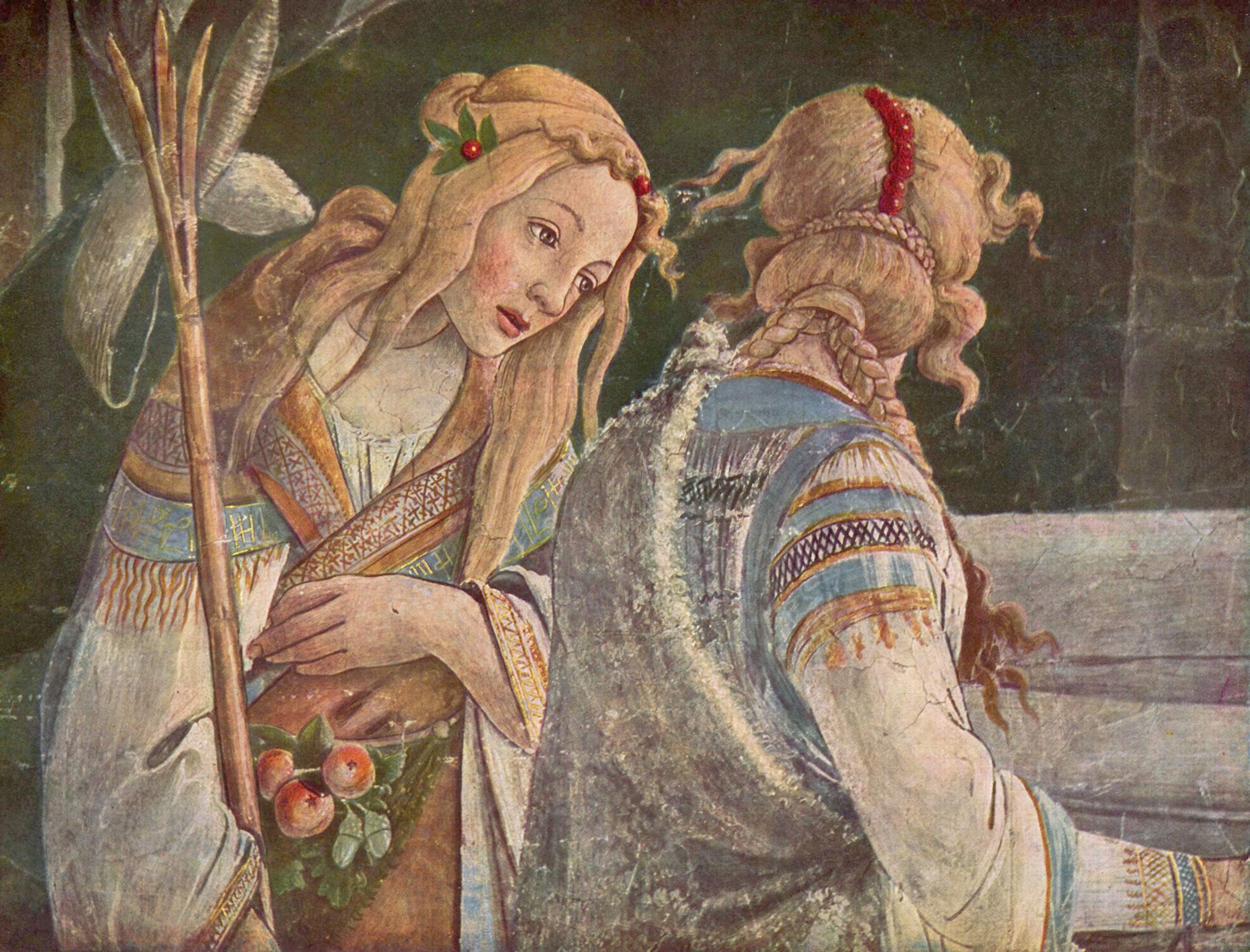
"To love someone, you need to think of what is good for the other person, not what is nice for me. That type of life is limited to what I like, what feels good for me. There is too little willingness to sacrifice, which is what builds a relationship. The more we both surrender, the more common space we create between us to establish something new, belonging to us both. What we do not surrender remains just the possession of one of the two."Picture by Sandro Botticelli - detail from "The Trials of Moses"
13 April 2016
Ahinoam: Two-Faced Man
"Now the spirit of the Lord departed from Saul, and an evil spirit from the Lord tormented him." (1. Samuel 16:14)I hardly know you anymore:
one minute yourself,
the next – a stranger.
An evil spirit is gripping you,
gnawing from the inside,
consuming you within.
You wear two faces –
I hardly know you.
When are you yourself?
When are you It?
Where is the man I fell in love with?
Is there a hope I can have him back?
Or has the evil spirit consumed you,
stolen you from me forever?
I can't bear to watch
as it slowly destroys you,
as you plummet
into a whirlpool of despair,
spiraling down,
down,
down,
caught in a vicious circle of pain,
going under,
under,
under
into darkness,
no longer yourself.
I can't bear to watch,
for it slowly destroys me,
poisoning my love
into worry and pain.
I want to be your helper,
surrounding you with love,
but now I only cut myself
on the broken shards of my heart.
I promised I would love you
in sickness and in health,
in good times and in bad,
but...
what if this burden is too heavy,
and bearing it too much?
Come back to me, my love –
wake up from this nightmare,
rise up from this death!
Come back to me, my love –
please,
I want you free again.
______________________________________________________________
[13. April 2016]
Ahinoam is the wife of Saul (1. Samuel 14:50). Saul was the first king of Israel, but lost his right to the kingship. I find Saul a very interesting and complex character. An important thing I learnt from my Old Testament professor is that God did not reject Saul as person, but as king - and Saul's mistake was clinging on to the kingship after God had actually already taken it away from him.
Saul was plagued by an "evil spirit", a kind of depression. David was brought to Saul's court to give him "music therapy"; it did not always succeed in calming him, though, because he still tried to kill David under the evil spirit's influence (1. Sam 18:10-11).
From the perspective of his wife, Saul's condition must have been near unbearable. It is very hard to have to watch someone you love suffer, practically turning into someone else ("two faces"). You feel totally helpless, it can become too much for you to handle. At the same time you feel the responsibility to help (even while failing at it again and again), and your love presses you to do something - but sometimes your help is not accepted, or causes more damage, or pulls you down as well. There's a limit as to how much you can do and how much you should do. It's important to know when the point comes to get professional help. And it's important not to stay alone with this kind of thing, to find someone to talk to and share the burden with.
Poor Ahinoam did not have much more than a music therapist for her husband...
If you are going through a similar situation as Ahinoam, maybe these links might help you...
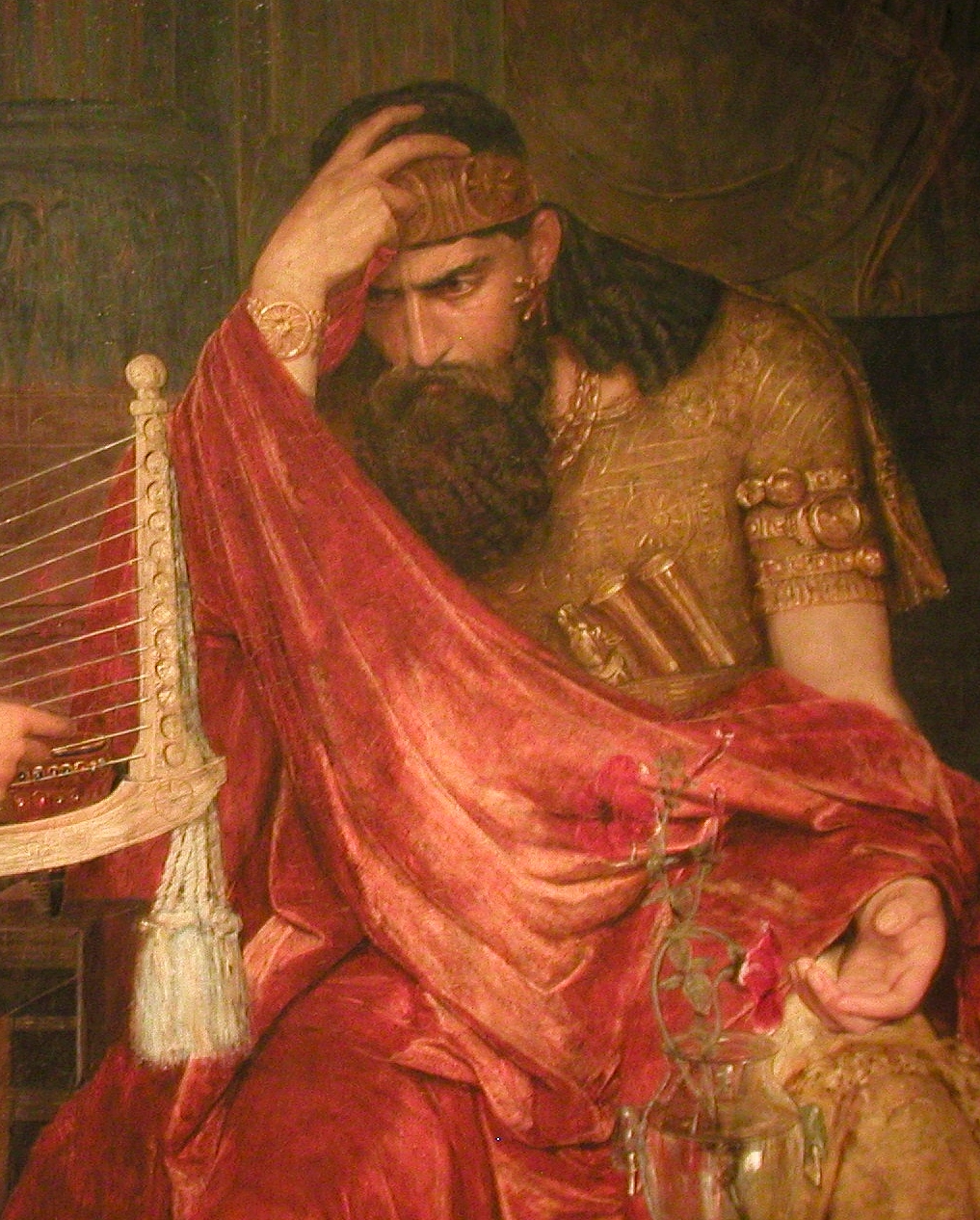
Picture by Ernst Josephson
08 April 2016
Eli's daughter-in-law: Ichabod
1. Samuel 4:12-22My God, my God,
why have you forsaken me?
Here I lie in my blood alone,
robbed of my husband, my family,
dying, leaving behind a child
even more forsaken than me.
My God, my God,
why have you forsaken us?
Why let your glory be taken away,
withdrawing your presence, causing defeat?
Why leave us here in our blood alone,
your people - forsaken by you?
My God, my God,
why have you forsaken him?
Why give him life on this darkest of days,
born fatherless, motherless - godless?
Why bring him into this dark, cruel world,
empty, forsaken by you?
"My God, my God,
why have you forsaken me?"
I hear my cry
from your lips, o God,
as you die on a cross alone,
robbed of all glory,
cast out and shamed,
forsaken
with your people
with my child
and with me.
So maybe I am no longer alone,
for you are here,
forsaken like me.
Maybe my cries are not in vain,
for you are here,
crying out with me.
Maybe your glory is not far away -
for you fill this forsakenness
with your presence
and turn this brokenness
into glory.
_______________________________________________________
[8. April 2016]
This was going to be my Good Friday poem for this year, but I had too much going on so didn't get to finish it in time...
I was reading 1. Sam 4, the story of the ark of the Covenant being taken away by the Philistines. In the middle of this story we have Eli's daughter-in-law, giving birth to her son and naming him "Ichabod", which means "The glory has departed from Israel." The ark of the Covenant stood for the presence of God with His people, His glory among them. That it was lost was a heavy blow - the Israelites understood it as God forsaking them. They had thought He would give them victory if they brought along the ark into the battle - instead they were defeated, and instead of concluding from that that the ark "didn't work", that God wasn't stronger than the Philistines (which would have been a plausible thought in the worldview of those times), they realised God had allowed the defeat and distanced Himself from them.
Eli's sons, priests who lived only for themselves and abused their position, were both killed in the battle. Eli died upon hearing the news. Eli's daughter-in-law was the last who was left - and she too died while giving birth to Ichabod, the poor forsaken child whose name expresses the deep forsakenness his mother felt.
Is God cruel? He had warned beforehand that he would punish the family of Eli because of the injustices they committed. It seems harsh that a new-born child has to suffer because of that. I see it this way: Much evil happens in this world where people harm other people, just like Eli's sons. And we want God to take away this evil. But all that we do, all our actions, connects and knots up and in the end, there is no solution without more problems, without more people being hurt - that is the consequence of sin. We can't escape the consequences, even if God intervenes. In this case, God's intervention led to the hopeless situation of new-born Ichabod.
And this is where I had to think of the Cross - the place of Jesus' forsakenness. Jesus was forsaken too, just like Ichabod. He was in a position of deepest shame: the cross, a place not just of torture and death, but of public shaming! The glory had been taken away. And this too was part of an intervention of God to set aright what we had messed up. Jesus bore those consequences. Jesus became Ichabod.
And by doing so, He turned the whole forsakenness around. Because God Himself experienced being forsaken by God, our feeling of forsakenness no longer separates us from Him, but is a place where we can meet Him - because He is right there with us. Because the Cross as place of shame became the place of glory (the Gospel of John focuses on the Cross as the place where Jesus reaches His highest glory, it is where He is enthroned), Ichabod no longer needs to be Ichabod - God's glory is no longer absent, but right there in the middle of our shame. We can no longer be forsaken by God because God, in Jesus, is right there in our forsakenness sharing it with us!
Picture by Diego Velázquez
11 March 2016
Noadiah: Listen
"Remember [...], O my God, [...] also the prophetess Noadiah and the rest of the prophets who wanted to make me afraid." (Nehemiah 6:14)
Listen, listen,
hear my words.
Drink them up,
let them grip you within,
until they echo
round and round
inside your mind,
inside your heart.
Listen, listen -
it's only advice.
It's for your own good.
It's for everyone's best.
Listen, listen -
I'm only being honest.
This is God,
challenging you.
Listen, listen,
listen to me.
Listen, listen -
how do you know
that what you say is from God
and what I say is not?
Listen, listen -
you only reject
what you don't like,
what's uncomfortable.
Listen, listen,
listen to me.
Listen, listen,
drink my poison up.
Listen, listen,
let me fill you with doubt.
Listen, listen,
let me confuse you.
Listen, listen,
as I make you small,
as I bend you and break you
and make you fall.
Listen, listen,
listen to me.
Listen, listen,
ssssssssssssss...
________________________________________________________
[9. March 2016]
Noadiah was a false prophet who tried to discourage Nehemiah from rebuilding the wall around Jerusalem after the return from the Exile. I tried here to touch on the issue of false prophecy. Of course Noadiah would never admit to the last stanza, but that is what often happens (intentionally or not) in such a situation.
How do you recognise whether a message is truly from God or not? Are all the uncomfortable messages from God? No - even though God often does tell us challenging things. We need wisdom and discernment to differentiate between a real challenge from God (which it is important to respond to the right way) and discouragement that comes from people. And this is very hard! I believe the best way to be safe from this kind of attack is to know the Bible, to know what God is like, to have a general idea what His will is, so that we can measure the more specific messages to what we know of God from His word. Also, the question is what motives the "prophet" / messenger has. Is this person serving him/herself, or truly serving God? Jesus taught us that we can recognise a false prophet by his/her "fruits" (works / lifestyle). Do they live in a way that would please the God of love?
As for the snake: I discovered a few lines into this poem that "listen, listen" has a sibilance (an "s" sound) - and that the snake is a lovely metaphor for someone who lies, manipulates, and fills you with poison. That's why this ends with a hiss. ;)
Picture by Helena Forde.
09 March 2016
Esther: Just A Girl
Esther 4
"Who knows? Perhaps you have come to royal dignity for just such a time as this." (Esther 4:14b)
Why me, God?
I'm just a girl,
longing to belong -
why let me be uprooted,
torn from those I love?
Why take me to this foreign place
where I know no one?
Why me, God?
I'm just a girl,
longing to be loved -
why place me in the power
of such a cruel man?
Why take away my freedom,
imprisoned in his hand?
Why me, God?
I'm just a girl,
longing for peace -
why this burden on my shoulders?
Why this responsibility?
Should I pay with my own life
to buy my people free?
It's me, God -
I am a queen
placed here by you
for just this purpose,
for such a time as this.
My life makes sense
in your perfect plan -
so give me strength to do
what you have called me to.
______________________________________________________________
[9. March 2016]
We can look at Esther's story as a "rags-to-riches" story about a girl rising from orphaned nobody to queen of a huge empire (comprising 127 provinces) - or we can read it as the story of a girl who was forcefully taken from her family without any say in the matter, to marry a man who we found out in the first chapter has a rather volatile temper. Esther hardly speaks a word for much of the first part of the book. She has no say in what is happening to her. So despite her rise to queenship, I believe Esther is actually in a situation of suffering. She is practically imprisoned, unable to return to her family (though she is still able to communicate with Mordecai) and (on pain of death) forbidden from approaching her husband on her own initiative, bound into the rules and restrictions of palace life. So I can very well imagine her asking: "Why me?"
One of my favourite parts of the book of Esther is chapter 4, where Mordecai moves Esther to stand up for her people. The Jews are in danger: a day has been set on which they are all to be exterminated. Mordecai wants Esther to use her position with the king to save the Jews. And this is the point where all that has gone before, Esther's separation from her family and her marriage to the king, is given some sense: "Who knows? Perhaps you have come to royal dignity for just such a time as this." (Esther 4:14)
Esther is a very interesting book in that it nowhere mentions God directly. However, God is hinted at in statements like this one. He is active in the background, behind all the occurrences and the actions of individuals, behind some of the things we don't understand. Mordecai explains what Esther has been going through: it has all had a purpose, it has led to this point in which Esther has a vital role to play for her people. She has become queen for a reason, she has been given this responsibility for a reason, and so she should not be afraid to act.
I suppose all this wasn't clear as it was occurring. Esther did not see God's purpose when she was taken away from her adoptive parents. She did not see God's purpose when she ended up married to the Persian king. But sometimes we come into a situation where God's leading hand becomes visible, where things become clear. Often we only see clearly in hindsight.
It's not always wise to tell someone, "Oh, your suffering has a purpose and God has a plan." They might not understand it at the moment. We need wisdom and discernment when it is right to help someone who is suffering to view their suffering in the larger context of God's guidance. But I do believe it can be comforting and helpful to recognise: what has happened to me has a purpose. And from experience I can say that being entrusted with a task is one of the greatest comforts one can be given.
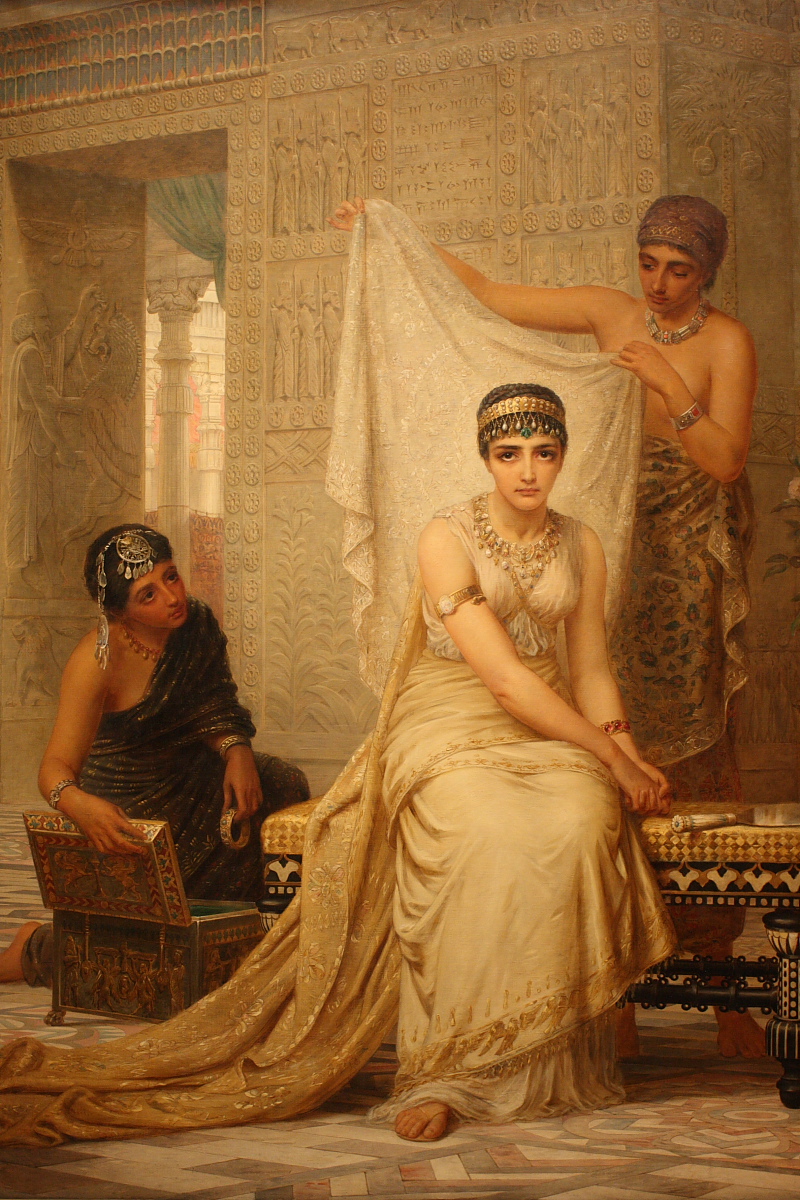
Picture by Edwin Long.
"Who knows? Perhaps you have come to royal dignity for just such a time as this." (Esther 4:14b)Why me, God?
I'm just a girl,
longing to belong -
why let me be uprooted,
torn from those I love?
Why take me to this foreign place
where I know no one?
Why me, God?
I'm just a girl,
longing to be loved -
why place me in the power
of such a cruel man?
Why take away my freedom,
imprisoned in his hand?
Why me, God?
I'm just a girl,
longing for peace -
why this burden on my shoulders?
Why this responsibility?
Should I pay with my own life
to buy my people free?
It's me, God -
I am a queen
placed here by you
for just this purpose,
for such a time as this.
My life makes sense
in your perfect plan -
so give me strength to do
what you have called me to.
______________________________________________________________
[9. March 2016]
We can look at Esther's story as a "rags-to-riches" story about a girl rising from orphaned nobody to queen of a huge empire (comprising 127 provinces) - or we can read it as the story of a girl who was forcefully taken from her family without any say in the matter, to marry a man who we found out in the first chapter has a rather volatile temper. Esther hardly speaks a word for much of the first part of the book. She has no say in what is happening to her. So despite her rise to queenship, I believe Esther is actually in a situation of suffering. She is practically imprisoned, unable to return to her family (though she is still able to communicate with Mordecai) and (on pain of death) forbidden from approaching her husband on her own initiative, bound into the rules and restrictions of palace life. So I can very well imagine her asking: "Why me?"
One of my favourite parts of the book of Esther is chapter 4, where Mordecai moves Esther to stand up for her people. The Jews are in danger: a day has been set on which they are all to be exterminated. Mordecai wants Esther to use her position with the king to save the Jews. And this is the point where all that has gone before, Esther's separation from her family and her marriage to the king, is given some sense: "Who knows? Perhaps you have come to royal dignity for just such a time as this." (Esther 4:14)
Esther is a very interesting book in that it nowhere mentions God directly. However, God is hinted at in statements like this one. He is active in the background, behind all the occurrences and the actions of individuals, behind some of the things we don't understand. Mordecai explains what Esther has been going through: it has all had a purpose, it has led to this point in which Esther has a vital role to play for her people. She has become queen for a reason, she has been given this responsibility for a reason, and so she should not be afraid to act.
I suppose all this wasn't clear as it was occurring. Esther did not see God's purpose when she was taken away from her adoptive parents. She did not see God's purpose when she ended up married to the Persian king. But sometimes we come into a situation where God's leading hand becomes visible, where things become clear. Often we only see clearly in hindsight.
It's not always wise to tell someone, "Oh, your suffering has a purpose and God has a plan." They might not understand it at the moment. We need wisdom and discernment when it is right to help someone who is suffering to view their suffering in the larger context of God's guidance. But I do believe it can be comforting and helpful to recognise: what has happened to me has a purpose. And from experience I can say that being entrusted with a task is one of the greatest comforts one can be given.
Picture by Edwin Long.
26 February 2016
Anna: An Old Woman
Luke 2:36-38

Lord,
I am an old woman.
My body hurts and aches,
my teeth have all but disappeared,
and wrinkles line my face.
Let this not be a hindrance
as I lift up your praise.
Lord,
I am an old woman.
There is not much I need.
But one thing I must ask of you,
o Father, hear my plea:
Send us the promised Saviour
to set your people free.
Lord,
I am an old woman.
I've known you many years.
I've known you in both joy and pain,
in laughter and in tears,
and so I know your faithfulness
and love will never cease.
Lord,
I am an old woman.
I have seen many things,
but I'd never have imagined
THIS.
You are too wonderful for words,
for you have heard my prayer
and in my arms the Saviour lies:
a poor woman's child,
helpless and small,
beautiful -
not what I'd have thought -
no: BETTER.
People!
I am an old woman,
but hear the words I have to say:
the Saviour has come here today,
meek and mild,
only a child,
the power of God
in weakness revealed.
Thanks be to God.
_________________________________________________________
[January 2012]
Anna sees Jesus when Joseph and Mary bring him to be presented at the temple.
Isn't it sad how old age, and old people, are nowadays being sort of relegated to the edge, as if they don't exist? If you look at magazines, you see no old people. I find old people really beautiful. You know, the really wrinkled faces and the only-two-really-black-teeth smile? I love that. It's much more beautiful than all these painted celebrities caked with make-up.
Anyway, old people still have a LOT to say. And two old people, Simeon and Anna, were among the first to recognise Jesus as Lord and pass it on. I really admire their joy. I recently read Luke 2 and I'm really setting these two old people as my examples now. I keep praying that I'll have joy like Anna.

Lord,
I am an old woman.
My body hurts and aches,
my teeth have all but disappeared,
and wrinkles line my face.
Let this not be a hindrance
as I lift up your praise.
Lord,
I am an old woman.
There is not much I need.
But one thing I must ask of you,
o Father, hear my plea:
Send us the promised Saviour
to set your people free.
Lord,
I am an old woman.
I've known you many years.
I've known you in both joy and pain,
in laughter and in tears,
and so I know your faithfulness
and love will never cease.
Lord,
I am an old woman.
I have seen many things,
but I'd never have imagined
THIS.
You are too wonderful for words,
for you have heard my prayer
and in my arms the Saviour lies:
a poor woman's child,
helpless and small,
beautiful -
not what I'd have thought -
no: BETTER.
People!
I am an old woman,
but hear the words I have to say:
the Saviour has come here today,
meek and mild,
only a child,
the power of God
in weakness revealed.
Thanks be to God.
_________________________________________________________
[January 2012]
Anna sees Jesus when Joseph and Mary bring him to be presented at the temple.
Isn't it sad how old age, and old people, are nowadays being sort of relegated to the edge, as if they don't exist? If you look at magazines, you see no old people. I find old people really beautiful. You know, the really wrinkled faces and the only-two-really-black-teeth smile? I love that. It's much more beautiful than all these painted celebrities caked with make-up.
Anyway, old people still have a LOT to say. And two old people, Simeon and Anna, were among the first to recognise Jesus as Lord and pass it on. I really admire their joy. I recently read Luke 2 and I'm really setting these two old people as my examples now. I keep praying that I'll have joy like Anna.
Subscribe to:
Posts (Atom)